Two Chinese cities join a wider cultural network
Quanzhou in Fujian has been named a UNESCO City of Gastronomy, while Wuxi in Jiangsu has become a City of Music, placing their food traditions, performers and instrument makers within a growing international network. UNESCO announced 58 new Creative Cities on World Cities Day 2025, taking membership to 408 cities across more than 100 countries.
Contents
- Two Chinese cities join a wider cultural network
- What membership asks cities to do
- Wuxi's music starts with the erhu
- How Wuxi could turn recognition into access
- Quanzhou's food carries its maritime history
- Preserving recipes while supporting food businesses
- Architecture becomes the eighth creative field
- New partners across every region
- The dates behind the new designations
- Jobs and tourism need livable neighborhoods
- What the cities will need to deliver
- Key Points
The two additions bring China's total to 20 member cities, with recognition spanning literature, design, film, gastronomy, music and other creative fields. Quanzhou's designation draws attention to a culinary culture shaped by maritime trade and southern Fujian traditions. Wuxi's recognition connects its erhu heritage with contemporary orchestras, music education and instrument manufacturing.
The 2025 expansion also introduces architecture as the network's eighth creative field. Buildings, historic neighborhoods and contemporary urban design now have their own place alongside crafts and folk art, design, film, gastronomy, literature, media arts and music.
For the new members, the designation begins a continuing commitment to use culture in practical ways. The network connects cities with international peers, shared knowledge and resources that can support jobs, education, tourism and community life. Its work includes cultural exchanges, training, public programs and support for creative businesses.
Wuxi already has a major project approaching: its Symphony Concert Hall is scheduled to open on January 1, 2026. Quanzhou can connect its new gastronomy title with the maritime heritage recognized by UNESCO in 2021. Both cities face the same task of turning international recognition into opportunities that residents can use, while balancing growth with quality of life.
What membership asks cities to do
UNESCO launched the Creative Cities Network in 2004 to connect places that use culture and creativity to strengthen local economies and community life. Members share knowledge, learn from one another and develop joint projects. Festivals, public space programs, education initiatives and support for creative industries are among the activities cities can refine and expand through those exchanges.
Joining involves a commitment to action plans covering several years. Those plans explain how creative sectors will support sustainable development goals, including decent work, inclusive education and greener infrastructure. In everyday terms, cities are expected to connect cultural activity with better livelihoods, wider access to learning and more environmentally responsible facilities.
Members take part in workshops, meetings held every two years and working groups organized around particular themes. They gather data, publish progress updates and collaborate on events for residents, students and visitors. The purpose is to turn existing cultural strengths into skills, jobs, community programs and opportunities available to many people.
New members are selected every two years through a competitive process. Candidate cities present their cultural assets, proposed action plans and evidence of partnerships involving government, businesses, universities and community groups. Applications receive national endorsement before international review by experts and existing members.
The selection process considers heritage and contemporary activity, the depth of local participation, and plans addressing social inclusion, young people, gender equality and environmental responsibility. Membership continues beyond the initial award: cities are expected to carry out their plans, invest in education and training, provide space for creative entrepreneurs and widen access to cultural programs.
Progress can be measured through participation numbers, the growth of creative businesses and work to safeguard local heritage. Successful members can also become regional centers for cooperation, sharing lessons with neighboring places and building collaborations across borders.
Wuxi's music starts with the erhu
Wuxi, on the shores of Taihu Lake and about half an hour from Shanghai by high speed rail, has a musical identity that reaches from traditional performance to modern industry. Music education, ensembles and instrument craftsmanship all form part of that identity.
The city is closely associated with the erhu, a bowed instrument with two strings that is central to Chinese classical and folk music. The legacy of the blind musician A Bing remains part of Wuxi's cultural life. His composition Erquan Yingyue, known in English as Moon Reflected on Second Spring, is among the most beloved works in the repertoire.
Wuxi's recognition also reflects the institutions around its performers. Schools, conservatories, community centers and private studios connect early music education with professional careers. Local ensembles perform across China and abroad, while concerts, festivals and community music events provide a continuing calendar of activity.
The Wuxi Symphony Orchestra, launched in 2023, has been developing programs that combine Chinese compositions with the global repertoire. Its planned Symphony Concert Hall, scheduled to open on January 1, 2026, is intended to provide a new center for international exchange and audience development.
Wuxi is also a manufacturing base for instruments including the erhu, harmonica and accordion. That practical knowledge supports performers and teachers at home and abroad. Its City of Music designation therefore brings together several connected activities: learning music, making instruments, performing and creating places where audiences can listen.
How Wuxi could turn recognition into access
Wuxi can use the designation to connect education, venues and industry through a common plan. Possible programs include support for small performance spaces, residencies for composers and instrument makers, youth orchestras, businesses developing music technology, and accessible music education in public schools.
Residents could gain a wider choice of concerts and learning opportunities. Visitors could find themed routes, festivals and cultural tourism linked to Taihu Lake and the wider Yangtze River Delta. Those possibilities depend on how the city develops its programs and who can participate.
The upcoming symphony hall can bring international performers together with local composers and students. Practice rooms, rehearsal studios and smaller venues would give new creators places to work and perform beyond the main concert stage.
Exchanges with other music cities could support jointly commissioned works, shared tours and technical training. Documentation and archives of local traditions, including erhu repertoire and Kunqu opera salons, could be paired with digital projects that reach audiences around the world.
Wuxi's opportunity extends across generations. Its established musical heritage gives education and performance programs a local foundation, while its orchestra, planned hall and manufacturing sector provide different routes into contemporary creative work.
Quanzhou's food carries its maritime history
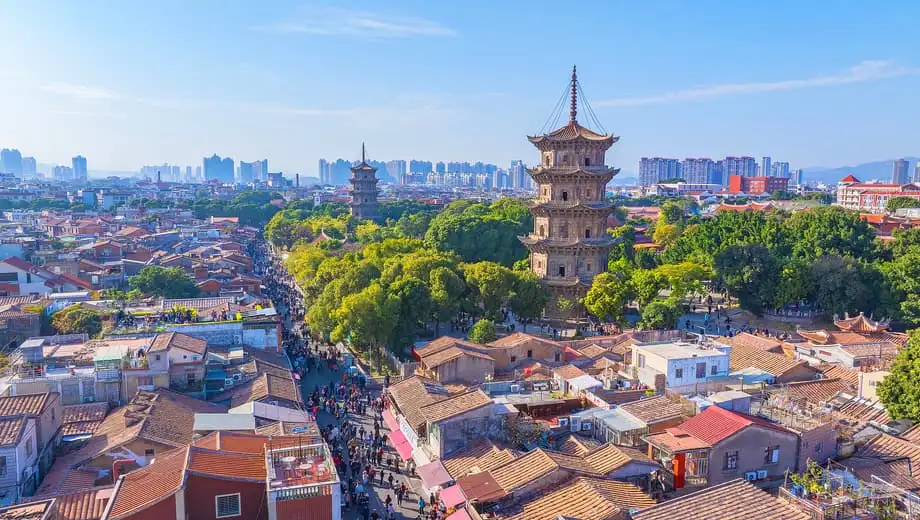
Quanzhou's gastronomy grew from its position as a major maritime Silk Road port during the Song and Yuan dynasties. Traders from across Asia and beyond met there, bringing cultural influences that remain visible in the city's religious sites, neighborhoods and kitchens.
UNESCO recognized that trading history in 2021 through the World Heritage inscription Quanzhou, Emporium of the World in Song Yuan China. The new City of Gastronomy designation adds recognition of a culinary scene shaped by the same mixture of local traditions and exchange across cultures.
Southern Fujian cooking favors clear broths, delicate seafood, noodles and a subtle use of fermented ingredients. Quanzhou's markets and food stalls place particular value on freshness and texture. Seafood soups, thin wheat noodles and oyster omelets popular across Minnan communities are among the foods that express those preferences.
Anxi, administered by Quanzhou, is famous for Tieguanyin oolong tea. Tea culture shapes hospitality and daily life, providing a distinctive companion to the city's food. Its place in everyday gatherings connects gastronomy with social customs as well as ingredients and recipes.
Centuries of contact with traders from Southeast Asia and the Middle East also left a culinary imprint. Spices, sesame and dishes respecting halal traditions sit alongside classic Fujian fare. Quanzhou's food identity therefore includes local produce and techniques as well as the exchanges that passed through its port.
Preserving recipes while supporting food businesses
Quanzhou can use its designation to preserve recipes, improve street food safety and quality, and build sustainable supply chains connecting fishers and farmers with city kitchens. A supply chain is the route food takes from production to preparation and sale; improvements along that route can support both producers and restaurants.
Chef training could be paired with nutrition programs in schools. Food festivals designed to produce less waste, mentoring for small family restaurants and access to small loans are other possible steps. Recording techniques practiced in home kitchens would help pass skills to a new generation.
Visitors often seek authentic food experiences. Quanzhou can develop culinary tourism while protecting neighborhoods from overcrowding, keeping everyday food businesses and residential life part of the city's appeal.
Future work could bring chefs, food safety teams, farmers and fishers together. Options include better kitchen training, refrigerated storage and transport to reduce spoilage, healthier cooking and reduced salt in school meals, and improved infrastructure for street food vendors.
Festivals could highlight seafood brought from local waters to the table and Minnan classics. Grants could help family restaurants adopt equipment that uses less energy or creates less waste. Virtual food tours and online archives of recipes and techniques could reach the diaspora, meaning communities living away from their place of origin, and encourage return visits.
These are possible uses of the designation. Detailed local action plans, budgets and partners for the two cities were not set out in the announcement described here.
Architecture becomes the eighth creative field
Architecture joins the Creative Cities Network for the first time in 2025. The new field connects heritage, design and social needs, recognizing that buildings and urban spaces shape daily life.
Architecture can help cities respond to heat, storms and flooding while conserving cultural memory. Historic neighborhoods and contemporary design also have roles in inclusive growth, climate action and the continuation of cultural traditions.
Quito, Kashan, Lusail, Rovaniemi and Bistrita are among the cities in the inaugural architecture group. Their strengths range from historic centers and indigenous building knowledge to contemporary design and planning practices aimed at reducing emissions and widening access to public space.
The new category also connects with the network's existing fields. Music needs venues, gastronomy needs markets, and crafts and media arts benefit from studios and cultural districts. Literature and film depend on facilities such as libraries, cinemas and archives.
Architecture adds attention to materials, construction skills and urban planning. Those areas can help cities secure resources for conservation and develop affordable, attractive and efficient buildings. For Quanzhou and Wuxi, the practical connection is straightforward: cultural programs need suitable places where people can work, learn, perform and gather.
New partners across every region
The 58 new designations span every region, expanding the range of potential partners for cultural exchanges. UNESCO's 2025 membership announcement provides the full list and an overview of the program's goals.
New music cities include New Orleans, Kyiv, Liège, Lalitpur and Kisumu. Gastronomy additions include Zaragoza, Kelowna, Lucknow, Cuenca and Songkhla. These memberships give Wuxi and Quanzhou more potential connections within their own creative fields.
São Paulo, Quezon City, Ho Chi Minh City and Giza joined in film. Kuala Lumpur, Riyadh, La Spezia and Daugavpils received design recognition, while Varna and Malang joined in media arts.
Crafts and folk art additions include Echizen, Masaya, Safi and Sarchí. Literature welcomed cities including Abuja, Tangier and San Luis Potosi. Alongside the new architecture group, the expanded membership brings a larger pool of experiences and ideas into the network.
For Quanzhou and Wuxi, that variety creates possibilities for food and music exchanges, paired residencies and festivals developed with partner cities. Members can also share examples of how they measure cultural programs' effects on education, neighborhood life and small business growth.
A partnership can extend beyond an event itself. Training, technical exchanges and shared approaches to community participation can help cities connect international activity with the people who cook, teach, make instruments or perform locally.
The dates behind the new designations
The 2025 announcement brings together institutions and traditions developed over different periods. Wuxi's recent orchestra project and Quanzhou's earlier heritage recognition form part of the sequence leading to their new memberships.
- 2004: UNESCO launched the Creative Cities Network.
- 2021: Quanzhou, Emporium of the World in Song Yuan China received UNESCO World Heritage inscription.
- 2023: The Wuxi Symphony Orchestra was launched.
- World Cities Day 2025: UNESCO added 58 Creative Cities, including Quanzhou in gastronomy and Wuxi in music, bringing the network to 408 members across more than 100 countries.
- January 1, 2026: Wuxi's Symphony Concert Hall is scheduled to open.
As of November 5, 2025, the hall opening remains an upcoming milestone. The two designations place existing cultural assets within a framework that also expects continuing investment, participation and progress reporting.
Jobs and tourism need livable neighborhoods
Chefs, musicians, technicians, designers, archivists and tour guides are among the workers who can benefit from a strong creative sector. Cultural activity also generates demand for materials and services, from farm produce to instrument parts.
Tourism can benefit when heritage and contemporary creativity become experiences that respect local life. Spreading events across the calendar and different districts, investing in transport and facilities, and keeping quiet times and spaces for residents can help cities manage that balance.
Popular festivals can increase rents near venues. Food tourism can put pressure on historic streets when visitor flows are poorly managed. Affordable workspaces, support for small vendors, noise management and community participation in planning are ways to keep neighborhoods livable while cultural activity grows.
Data can help cities adjust their programs. Attendance, business creation, training outcomes and residents' views of neighborhood conditions provide different measures of whether benefits are reaching people.
Quanzhou and Wuxi can spread programs into schools and parks, create opportunities for young people and direct visitors beyond a few crowded locations to other neighborhoods and towns. Cultural events can also connect with climate goals through reduced waste, travel that produces fewer emissions and venues that use energy efficiently.
The same approach links economic activity with social life. A concert, food festival or training program can provide work while also creating a place for residents to meet, learn and share traditions.
What the cities will need to deliver
Quanzhou and Wuxi are expected to publish clear action plans with timelines, budgets and partners. Both will need to report progress, take part in learning sessions with other members and host visiting delegations.
Wuxi can organize work around its upcoming concert hall, music education, performance spaces and instrument industry. Quanzhou can connect recipe preservation, restaurant support, food safety and production with its maritime heritage and tea traditions.
The breadth of participation across neighborhoods and age groups will help show whether the programs are reaching residents. The health of small businesses and the visibility of local creators, on stages and in kitchens, are further measures of success.
International recognition gives both cities more opportunities for collaboration. Patient delivery, open cooperation and continuing attention to everyday needs will determine how those opportunities become useful cultural experiences, training and livelihoods.
Key Points
- UNESCO added 58 Creative Cities on World Cities Day 2025, bringing membership to 408 cities across more than 100 countries.
- Quanzhou became a City of Gastronomy and Wuxi a City of Music, taking China's membership total to 20 cities.
- Architecture became the network's eighth creative field in 2025.
- Wuxi's musical assets include erhu traditions, instrument manufacturing and a symphony orchestra launched in 2023.
- The Wuxi Symphony Concert Hall is scheduled to open on January 1, 2026.
- Quanzhou's food culture combines Minnan cooking, maritime trading influences and Anxi's Tieguanyin tea traditions.
- Membership involves action plans, community participation, international cooperation and regular progress reporting.
- Both cities can use the network to support education, small businesses, cultural tourism and wider access to creative opportunities.