Faster crossings and longer permits begin on November 5
Mainland China's National Immigration Administration will begin introducing a package of 10 measures on Wednesday, November 5, 2025, expanding facial recognition fast lanes at designated ports in Shanghai, Xiamen, Guangzhou, Shenzhen and Zhuhai. The changes will also give eligible mainland professionals access to permits for repeated visits to Hong Kong and Macao, valid for between one and five years.
Contents
- Faster crossings and longer permits begin on November 5
- Which checkpoints are adding facial recognition?
- Who qualifies and what happens at the gate?
- What shorter queues could mean for everyday journeys
- Mainland professionals gain permits lasting up to five years
- Special arrangements for the Hetao research zone
- Family visits and transit changes follow on November 20
- Hong Kong's own facial recognition rollout
- Airport arrivals through the Face Easy e-Channel
- Consent, identity checks and choices for passengers
- Connecting the Greater Bay Area's people and goods
- Key Points
The package combines faster border processing with more flexible travel arrangements for business, research and family visits. Its first measures take effect on November 5, with further changes scheduled for November 20. Each visit under the expanded talent endorsement program can last up to 30 days.
Hong Kong residents will see the most immediate change at checkpoints where intelligent fast lanes are being added. These lanes use a camera to compare a traveler's face with identity records linked to their travel permit. For eligible people using approved arrangements, the process can remove the need to present a document during each crossing.
The expansion follows pilots launched in late 2024 at Shenzhen Bay and Zhuhai's Gongbei port. Those pilots allowed consenting travelers to pass through biometric gates without presenting documents. Biometrics are physical features, such as a face or fingerprint, that a system uses to check identity.
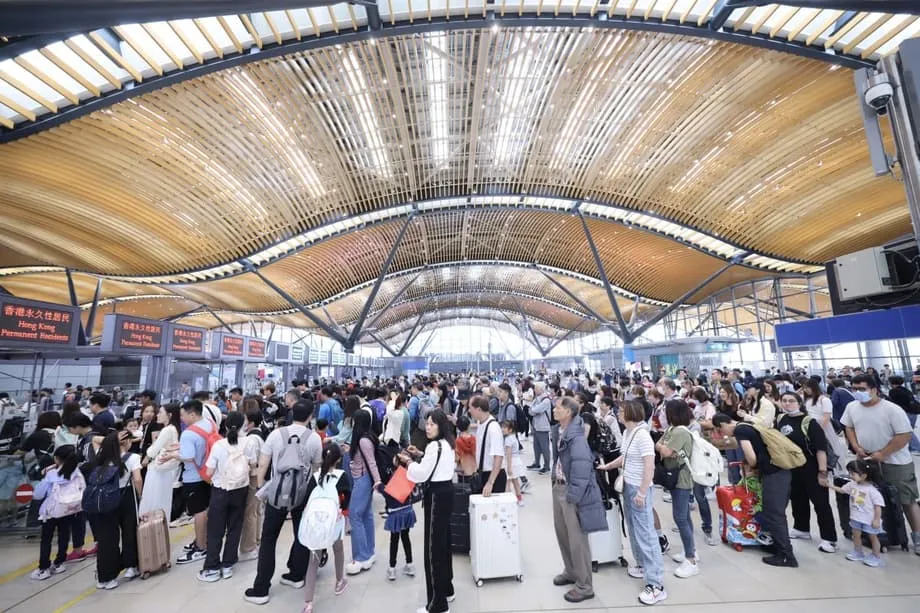
The wider network is intended to reduce queues and support economic activity across the border. It reaches cities connected to Hong Kong through air, rail and road routes, while addressing pressure at land checkpoints in Shenzhen and Zhuhai during Lunar New Year, Golden Week and school breaks.
For researchers and businesses, longer permit validity could make repeated visits easier to arrange. For families, commuters and tourists, the practical benefit is a potentially shorter wait at busy immigration checkpoints.
Which checkpoints are adding facial recognition?
The National Immigration Administration's November 5 rollout covers designated ports in five cities: Shanghai, Xiamen, Guangzhou, Shenzhen and Zhuhai. It extends the approach tested at Shenzhen Bay and Gongbei rather than introducing an entirely new clearance method.
Local announcements point to additional crossings joining the network, including Huanggang and Luohu in Shenzhen, the Hong Kong Zhuhai Macao Bridge and Hengqin in Zhuhai. Liantang is also slated for smart clearance as the program grows.
Operating hours and the number of lanes vary by port. Travelers should follow signs at the checkpoint they use, since the arrangements can differ from one crossing to another.
The fast lanes are voluntary. Eligible passengers can continue to use fingerprint e-channels or traditional counters. An e-channel is an automated immigration lane that checks a traveler's identity before opening its barriers.
More automated lanes are intended to move frequent travelers away from manual counters while maintaining identity checks. With all available lanes operating, authorities expect less crowding at bottlenecks during family reunions, large events and other periods of heavy travel.
Who qualifies and what happens at the gate?
Eligibility follows the rules used in the Shenzhen Bay and Gongbei pilots. Checkpoints display the applicable age limits and accepted document types, and travelers must consent to biometric capture before using the new lanes.
- Hong Kong and Macao residents need a valid Mainland Travel Permit for Hong Kong and Macao Residents, commonly called a home return permit.
- Mainland residents need valid endorsements allowing multiple entries for the relevant destination.
- Taiwan residents need a Mainland Travel Permit for Taiwan Residents valid for five years.
- Official notices generally set the minimum age at 14, although travelers should check the rules posted at their port.
The traveler enters a self service lane, faces the camera and holds still while the system compares the live image with records associated with the travel permit. At ports using both facial and fingerprint checks, a fingerprint scan may follow. A green light or screen message signals successful clearance, and the barrier opens.
Some ports allow people on approved lists to cross without presenting a document after initial checks have been completed. Others still require a document scan. In the pilots, successful identity matches have taken only a few seconds for most users.
Staff are available to help travelers who need assistance or prefer inspection by an officer. If the system cannot confirm a match, the traveler is directed to assisted clearance or a staffed counter.
What shorter queues could mean for everyday journeys
Shenzhen and Zhuhai's popular land crossings face some of their greatest pressure during holidays. Moving frequent passengers through automated lanes can leave officers more time for complicated cases and people who need help.
Contactless processing also removes the need to hand a document across the glass at a booth. That is a small step in an individual journey, but it becomes a repeated task when thousands of people pass through a checkpoint each hour.
Timothy Chui Ting pong, executive director of the Hong Kong Tourism Association, said the expanded lanes should help Hong Kong residents, particularly older travelers, and ease congestion when people return home during busy periods. He described the expected benefit in terms of shorter immigration processing times.
It will provide convenience for Hongkongers crossing the border through land based checkpoints, especially for the elderly. Checkpoints can be crowded during the holiday season. The move can shorten the immigration clearance times.
Commuters crossing for work, students in programs spanning the border and small business owners visiting suppliers could also benefit. Saving a few minutes on repeated trips can add up to hours over a month.
The gates are intended to keep passengers moving while retaining identity checks. Their value will be felt most directly where large numbers of eligible travelers can use them and where queues regularly build during peak periods.
Mainland professionals gain permits lasting up to five years
Certified professionals in the Yangtze River Delta, the Beijing Tianjin Hebei region and all national free trade pilot zones will be able to apply for the expanded talent endorsements from November 5. The policy broadens a program previously piloted in selected regions.
The endorsements allow multiple visits to Hong Kong or Macao over a validity period of one to five years. Each entry permits a stay of up to 30 days. In practical terms, the validity period is the window for making repeated trips, while the 30 days is the maximum stay for an individual visit.
Eligible fields include scientific research, education and culture, healthcare, law and other categories recognized by talent authorities. The aim is to make short business trips and visits for particular projects easier to plan without repeatedly completing paperwork.
Jesse Shang Hailong, founder of the Hong Kong Top Talent Services Association, has said the broader approach could attract tens of thousands of new professionals to Hong Kong. Business groups expect the travel changes to make short visits simpler and reduce friction for conferences and project work.
Special arrangements for the Hetao research zone
Qualified staff at research institutes and technology companies in the Shenzhen Park of the Hetao Shenzhen Hong Kong Science and Technology Innovation Cooperation Zone will have a separate route to longer travel access.
They can obtain a permit valid for three years, allowing multiple entries to Hong Kong and Macao, without submitting separate talent certification. That removes one application requirement for eligible workers in the park.
Dedicated lanes and streamlined arrangements are planned at key ports including Huanggang and Futian. These are intended to help people linked to the zone who cross frequently for their work.
A green channel for vehicles carrying research supplies is also planned to reduce customs clearance time for sensitive equipment. Immigration processing concerns the people making the journey; customs clearance concerns the goods they move across the border.
The arrangements fit the needs of researchers traveling between the zone's Shenzhen and Hong Kong parks. Suppliers moving prototypes and executives making day trips can also benefit from time saved at the boundary.
Family visits and transit changes follow on November 20
Mainland residents staying in Hong Kong or Macao on family visit permits will gain a local renewal option from November 20. They will be able to apply within the city before their authorized stay expires, provided they submit the application at least seven working days in advance.
The National Immigration Administration is also extending transit conveniences. These include adding airports to the arrangement for direct transit within 24 hours without inspection, and adding Guangdong ports to the scheme allowing eligible foreign travelers 240 hours of transit without a visa.
The package brings together several kinds of travel, but its measures start on different dates. The main sequence is:
- Late 2024: Shenzhen Bay and Gongbei began pilots allowing consenting eligible travelers to use biometric clearance without presenting documents.
- November 5, 2025: Facial recognition fast lanes expand at designated ports in five cities, and the wider talent endorsement arrangements begin.
- November 20, 2025: Further measures take effect, including applications within Hong Kong and Macao to renew family visit permits and wider transit conveniences.
For families, the seven working days requirement is the key deadline to remember. For professionals making repeated visits, the longer endorsement validity is intended to reduce the need for frequent applications.
Hong Kong's own facial recognition rollout
Hong Kong has been introducing contactless immigration tools on its side of the boundary. A pilot at the new Sha Tau Kok land checkpoint in late 2024 brought facial recognition to a cross border facility in Hong Kong for the first time.
Enrolled travelers can walk through a short tunnel where cameras capture their facial signature and compare it with registered records. The arrangement replaces document handover and fingerprint scans. Authorities said it was intended to increase capacity and improve passenger flow, with manual options retained.
In October 2025, Hong Kong established dedicated facial recognition e-channels for about 5,000 accredited athletes and staff associated with the 15th National Games. Sixteen gates were installed across four control points: Hong Kong International Airport, West Kowloon High Speed Rail Station, the Hong Kong Zhuhai Macao Bridge and Shenzhen Bay Port.
After completing one standard immigration clearance, accredited users could enter and leave through the dedicated lanes in as little as seven seconds. The gates were kept separate from channels used by the public, and officials said additional counters would open if needed to manage passenger numbers.
The Sha Tau Kok pilot and National Games arrangements show how Hong Kong is applying facial recognition in different settings. One serves enrolled travelers at a land checkpoint, while the other provides dedicated access for an accredited group moving between event locations.
Airport arrivals through the Face Easy e-Channel
Hong Kong is also rolling out the Face Easy e-Channel at its airport. Eligible residents returning to the city can complete arrival clearance by looking at a camera, without presenting documents or a QR code.
The Immigration Department says the arrangement is available to residents aged 11 or above who use the airport's Flight Token when departing and return with the same travel document. Those conditions connect the passenger's departure record with the later arrival check.
The department sets out the requirements in its Face Easy e-Channel notice. Traditional fingerprint e-channels and staffed counters remain available.
Hong Kong's airport arrangement and the mainland fast lanes have different eligibility requirements. The airport service starts at age 11 for qualifying residents, while official notices for most mainland ports set the minimum age at 14.
Consent, identity checks and choices for passengers
Facial recognition clearance requires the collection and verification of sensitive personal data. On the mainland side, passengers must consent to facial capture at the gate, and some ports also require consent to fingerprint verification.
A traveler who declines facial recognition can choose a conventional channel. If the system cannot confirm the person's identity, staff direct the traveler to an officer for manual inspection. Hong Kong authorities likewise say document based counters and fingerprint e-channels continue to operate alongside new facial recognition lanes.
Face matching has become more accurate in recent years, and border authorities around the world use biometric tools to reduce identity fraud and speed up processing. Privacy advocates continue to monitor where facial data is used and how it is handled.
In parts of China, hotels and some other sectors have reduced mandatory facial scans following public feedback. Border control uses identity confirmation under the law, with the new fast lanes offering a voluntary route through that process.
Travelers who want to limit data sharing can use staffed counters, avoid lanes offering clearance without document presentation and ask officers about the local rules for handling biometric information before deciding whether to use them.
Connecting the Greater Bay Area's people and goods
The Greater Bay Area depends on large daily movements of people and goods. Faster immigration gates and longer travel permits support closer connections between Hong Kong and neighboring mainland cities, especially for activities requiring frequent journeys.
Researchers working across the Hetao zone, businesses transporting prototypes and executives visiting partners all have reasons to cross repeatedly. Reducing the time spent at a checkpoint can make those journeys easier to fit around work, while longer permits simplify repeat visits.
Some crossings in the region already use joint inspection arrangements, placing the two sets of controls close together so travelers can join a single queue. Adding smart gates to that setup can shorten processing and improve movement during busy hours.
Other jurisdictions are also using more biometric border technology. United States authorities use facial recognition for airport entry and exit and have extended biometric checks to some land crossings. European hubs have expanded automated gates connected to new entry and exit systems.
The technology and eligibility rules vary between jurisdictions. Across these arrangements, document scans and combinations of biometric checks are taking over part of the work previously handled at staffed counters, while manual options remain for passengers who need or prefer them.
For Hong Kong travelers, the immediate dates are November 5 and November 20. The first brings wider fast lane coverage and longer access for eligible professionals; the second adds family visit renewal arrangements and further transit conveniences.
Key Points
- From November 5, 2025, mainland facial recognition fast lanes expand at designated ports in Shanghai, Xiamen, Guangzhou, Shenzhen and Zhuhai.
- Eligible users include Hong Kong and Macao residents with home return permits, mainland residents with valid endorsements allowing multiple entries, and Taiwan residents with travel permits valid for five years.
- Most mainland ports set a minimum age of 14. Biometric consent is required, and conventional clearance options remain available.
- Certified mainland professionals in the expanded regions can apply for permits valid for one to five years, with stays of up to 30 days per visit.
- Qualified staff in the Hetao zone's Shenzhen Park can obtain permits valid for three years without separate talent certification. Dedicated passenger arrangements and a channel for research supplies are planned.
- From November 20, family visit permit holders can apply for renewal within Hong Kong or Macao at least seven working days before their authorized stay expires. Transit conveniences also expand.
- Hong Kong has introduced a Sha Tau Kok pilot and 16 dedicated facial recognition gates at four control points for about 5,000 accredited National Games athletes and staff.
- The airport's Face Easy e-Channel serves qualifying residents aged 11 or above who depart using Flight Token and return with the same document.