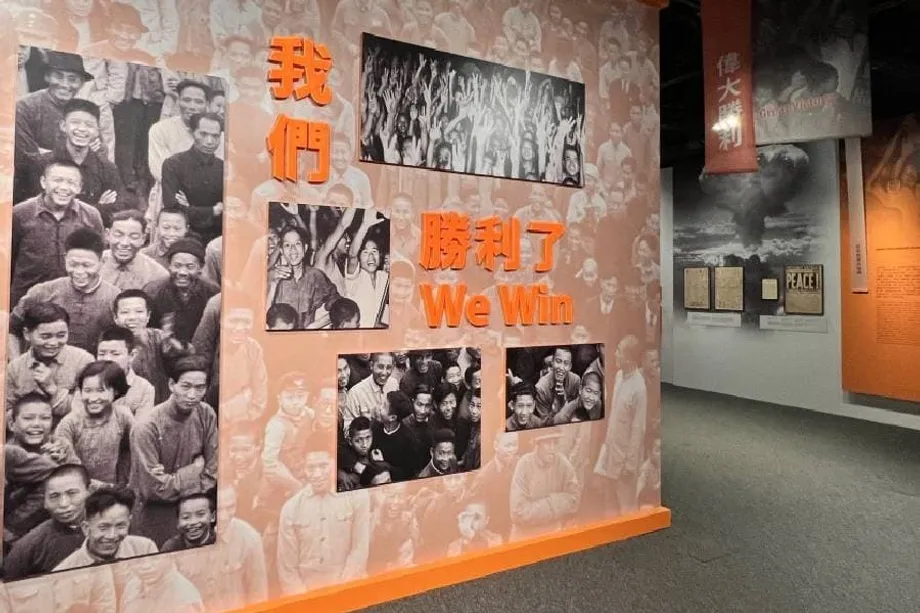
Diplomats gather around Hong Kong's wartime history
More than 20 consuls general, consuls and representatives of foreign business chambers visited the Hong Kong Museum of History this week for a World War II exhibition marking 80 years since victory in 1945. The visit brought a diplomatic audience to a display featuring 60 exhibits being shown in Hong Kong for the first time, with a central message: remembering war should help protect peace.
Contents
- Diplomats gather around Hong Kong's wartime history
- Sixty exhibits bring individual lives into view
- Li Yongsheng calls for remembrance without hatred
- Why business representatives joined the visit
- A Russian exhibition adds another wartime connection
- Hong Kong's battle and occupation
- China's resistance within the Allied war
- Scholars examine education and the war's lasting effects
- Museums turn remembrance into preservation
- Key Points
The exhibition, United in Arms, Standing for Peace: 80th Anniversary of Chinese Victory in the War of Resistance, traces China's resistance against Japan through artifacts, photographs and personal stories. It connects the conflict across China with Hong Kong's experience of invasion, occupation and recovery.
The Office of the Commissioner of the Ministry of Foreign Affairs in the Hong Kong Special Administrative Region arranged the special tour. Organizers described its purpose as honoring history and safeguarding peace. Curators stressed remembrance without hostility, an approach that resonated with the visiting diplomatic audience.
The gathering was one of Hong Kong's most visible international commemorations during the anniversary year. It also formed part of a wider program of talks, photographic displays and wreath laying ceremonies organized by cultural institutions and consulates in 2025.
Hong Kong's own wartime experience gave the visit a local focus. Japanese forces attacked the city in December 1941, and a short, intense battle was followed by more than three years of occupation. Civilian hardship from that period remains part of the history preserved by museums, schools and community organizations, including through oral histories and commemorative events each September.
Foreign envoys attending a local museum also gave the occasion a diplomatic purpose. Historical remembrance offered a shared subject for discussion across borders, placing education and the human cost of conflict alongside the usual business of international relations.
Sixty exhibits bring individual lives into view
Wartime photographs, documents, letters and personal effects formed the core of the museum presentation. Curators said 60 exhibits were being displayed in Hong Kong for the first time, giving visitors access to material that connected the scale of the war with the experiences of individual people.
The selection followed the conflict across China's cities and countryside, showing the extent of sacrifice and placing Hong Kong within a wider timeline from the late 1930s to 1945. Letters and belongings helped turn large historical events into stories about lives interrupted, families separated and people lost.
The galleries traced China's eight years of resistance beginning in 1937. They then connected that struggle with the broader Allied effort and the final campaigns that broke Japan's military position in Northeast Asia. Panels also described how communities rebuilt after the fighting ended.
For visitors, the exhibition linked two scales of history: military campaigns involving several countries and the everyday consequences for people living through them. The account of reconstruction carried the story beyond surrender to the work of restoring communities.
Li Yongsheng calls for remembrance without hatred
Li Yongsheng, deputy commissioner at the foreign ministry commissioner's office in Hong Kong, told the visiting envoys that commemoration should bring people together. His remarks framed the museum visit as an opportunity to learn from history and make peace a guiding value.
The commemoration of history is not the advocacy of hatred. It represents a wish to learn from the past, to cherish peace and to create a better future.
Li also connected remembrance with present challenges in international relations. He described a rapidly changing world facing repeated tests, echoing a theme in official speeches during the anniversary year that historical commemoration can strengthen dialogue.
Addressing the international situation, Li said global governance, the arrangements through which countries respond to common problems, had reached a difficult moment.
The world has entered a new period of governance and transformation. Global governance has come to a new crossroads faced with a fluid international situation and various risks and challenges.
The museum setting gave diplomats a place to discuss education, culture and ties between communities outside their daily policy debates. The focus on peace connected those conversations with the exhibition's account of wartime suffering.
Why business representatives joined the visit
Foreign chambers of commerce joined the diplomatic delegation, widening the audience beyond officials, historians and groups representing veterans. Their participation pointed to the part business communities can play in cultural programs, museum partnerships and outreach to students.
Business chambers sponsor scholarships and support community programs. Their networks can help museums reach young people, new arrivals and others who may know little about Hong Kong's wartime experience. The visit brought those networks into contact with the work of curators and historians.
Diplomatic representatives in international cities also support cultural events that connect different communities. At this tour, the human cost of war and the role of education in preventing further conflict provided a common focus across professional and national backgrounds.
The emphasis on peace directed the program toward shared values that could inform conversations in classrooms, civic meeting places and business settings. Bringing commercial and diplomatic representatives together treated remembrance as a wider public responsibility.
A Russian exhibition adds another wartime connection
A separate exhibition at Hong Kong Central Library added the history of China and the Soviet Union to the city's anniversary program. Hosted by the Russian Consulate General, it featured more than 30 historical photographs and archival documents, many being shown to the Hong Kong public for the first time.
The library display marked the 80th anniversary of the campaigns that helped liberate Northeast China during the final weeks of World War II. Alongside the Museum of History exhibition, it showed how the region's wartime history involved cooperation across national borders.
Anatoly Kargapolov, Russia's consul general in Hong Kong, described the exhibition as a tribute to shared sacrifice and part of efforts to protect wartime heritage in the city. He pointed to work researching and restoring the graves of Russian seamen killed during Japanese air attacks.
Kargapolov thanked those involved in preserving that history and described the consulate's continuing role.
We deeply appreciate the respect and care shown by the Chinese people in keeping this memory alive here in Hong Kong. The Russian consulate general is also working to preserve our shared second world war heritage.
Volunteer historians and local authorities have supported the work on the graves. The consulate and community groups have also marked Victory Day by laying wreaths at Hong Kong Cemetery for Soviet seamen who died in the city during the war.
Those ceremonies connect the photographs and documents on display with identifiable people and burial places in Hong Kong. Together, the exhibitions and commemorations have widened awareness of wartime stories that cross borders, with the city serving as a meeting place for several strands of memory.
Hong Kong's battle and occupation
The Battle of Hong Kong began on December 8, 1941, hours after the attack on Pearl Harbor. The international date line explains the different calendar dates associated with those attacks: places on opposite sides of that line can be a day apart.
British, Canadian, Indian and local units were among the Allied forces that defended Hong Kong for 18 days. The governor surrendered on December 25, a date remembered locally as Black Christmas.
The main dates connecting the exhibitions with Hong Kong's wartime experience are:
- 1937: The eight years of Chinese resistance traced in the galleries began.
- December 8, 1941: Japanese forces attacked Hong Kong, beginning the battle for the city.
- December 25, 1941: The governor surrendered after 18 days of resistance.
- 1945: The war ended, following final campaigns that included operations in Northeast Asia.
- 2025: Hong Kong's exhibitions and commemorations marked 80 years since victory.
More than three years of occupation followed the surrender. Food shortages, arrests and forced labor scarred civilian life. Residents fled or were displaced, and many never returned.
Hong Kong's population had already changed before the battle as people sought refuge from fighting on the mainland. During the occupation, the population fell steeply. Families were separated or moved, neighborhoods changed, and factories and small workshops suffered damage or closed.
Those movements affected the city that emerged after the war. Changes in the number of residents and workers influenced housing, employment and local industry for years. The experience joined Hong Kong's own history to events far beyond its shores.
China's resistance within the Allied war
The museum's account placed China's resistance alongside Allied campaigns elsewhere. It showed how military action in Northeast China during the final weeks of the war shifted the balance in the Pacific, while events within China affected outcomes across East and Southeast Asia.
The galleries presented cooperation among Allies with very different political systems who found common cause against a global threat. Decisions in Chongqing, Moscow, London and Washington were connected, and their consequences reached families in Hong Kong's streets and hills.
For visitors more familiar with the war in Europe, the exhibition provided a wider geographical picture. Asia was a central theater of the conflict, with fronts extending from China to Burma and beyond. Showing those connections helped explain why Hong Kong's occupation belonged to a much larger regional struggle.
The final campaigns in Northeast Asia also featured in discussions by scholars of modern Chinese history. They stressed the campaigns' role in speeding the end of the conflict and examined wartime collaboration as an example of countries with competing ideologies cooperating against a shared threat.
Programs in Hong Kong have used that history to encourage discussion of diplomacy and practical measures to reduce risk today. Cooperation during the war provided a concrete historical case for those conversations.
Scholars examine education and the war's lasting effects
A visiting professor from Hong Kong Baptist University who took part in recent programs argued that Asia's wartime experience still receives less attention in classrooms and public debate than Europe's, despite the destruction and loss of life across the region.
That concern helps explain interest in archives, oral histories and exhibitions that bring regional experiences to a wider audience. Studying Asia's war also gives audiences historical context for understanding current affairs.
Researchers examining Hong Kong's wartime population have focused on movement into the city before the battle and departures and returns around the end of the war in 1945. Those changes affected housing pressures, manufacturing capacity and the supply of workers.
School enrollment was also shaped by the changing population during the early years after the war. Following those effects shows how a military conflict continued to influence ordinary decisions about work, homes and education long after the fighting stopped.
The exhibitions' personal documents and photographs complement that research. Population shifts and industrial disruption describe changes across the city; letters and individual accounts help explain how people lived through them.
Museums turn remembrance into preservation
The Hong Kong Museum of History preserves ration coupons, letters, photographs and other objects showing everyday life under occupation. Such material helps students and families understand how shortages and danger affected ordinary routines.
The Museum of Coastal Defence, rebuilt and reopened in recent years, presents the battle and its aftermath through models, maps and personal accounts. Classroom programs across Hong Kong draw on museum material to connect individual lives with major turning points in regional history.
Museums and consulates are also making this history more accessible through public programs. Exhibition teams have expanded bilingual labels and added school worksheets that ask students to examine photographs, read letters and consider how people endured wartime conditions.
Public lectures connect specialists with audiences who might not otherwise visit a museum, including new residents seeking to understand Hong Kong's past. Alongside collections and oral histories, these activities carry the record of the occupation to younger generations.
Work on wartime graves shows how historical research can produce a physical result. Partnerships involving consulates, community groups and local authorities have helped secure archives, recover names that had been lost and support the identification and restoration of burial places.
The research into Russian seamen buried in Hong Kong is one example of that continuing preservation effort. Volunteers and local institutions are linking historical records with places where the dead can be remembered, giving younger people a way to participate in keeping that memory alive.
Key Points
- More than 20 consuls general, consuls and foreign chamber representatives toured the Hong Kong Museum of History exhibition during the 80th anniversary year of victory in 1945.
- United in Arms, Standing for Peace presented 60 exhibits being shown in Hong Kong for the first time.
- Deputy Commissioner Li Yongsheng said remembrance should encourage learning and peace rather than hatred.
- A Russian Consulate General exhibition at Hong Kong Central Library featured more than 30 historical images and archival documents.
- Hong Kong's battle lasted 18 days, ending with surrender on December 25, 1941, followed by more than three years of occupation.
- Volunteer historians, community groups, consular representatives and local authorities are supporting the preservation of wartime heritage, including graves of Russian seamen.
- Museum displays, school materials and public lectures connect the city's wartime experience with the wider conflict across Asia.