A resort lease does not make the beach private
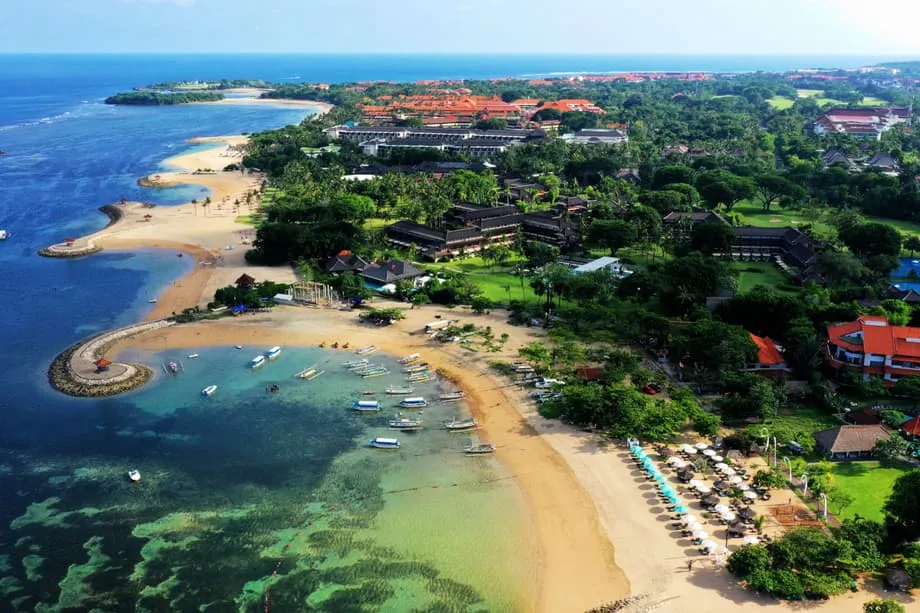
The Sakala Resort Bali has permission to use 2,600 square meters of Tanjung Benoa Beach under a lease worth 1.3 billion rupiah over five years. Badung Regency officials say that permission comes with a firm condition: the public must still be able to use the beach, and the resort cannot put permanent buildings on the sand.
Contents
- A resort lease does not make the beach private
- What Sakala can do at Tanjung Benoa
- How public beach leases work
- Why building limits protect more than the view
- Warnings extend across Badung beaches
- Bingin demolitions bring livelihoods and access into focus
- What responsible resort operations look like
- Kuta manages commercial activity and crowding
- What visitors can do when a route is blocked
- Floods and landslides reinforce the need for open space
- Oversight will continue alongside tourism services
- Key Points
The clarification follows concern among residents and visitors about whether the resort had taken control of part of the shoreline for private use. As of October 20, 2025, the message from local authorities is that beaches in Indonesia are public. People can walk, sit and swim along the coast, including where a tourism business has permission to provide guest amenities.
Hotels, resorts and beach clubs may operate on defined areas through limited leases managed by local government. Those arrangements allow businesses to provide services on public land. They do not transfer ownership of the beach or give an operator the right to exclude everyone else.
The issue reaches beyond one resort. Badung authorities have identified construction violations at several beaches, while demolitions at Bingin have affected more than 40 businesses and prompted concern about livelihoods, coastal culture and access down the cliffs. Bali is trying to keep visitor services available while protecting public passage, religious activities and the natural coastline.
For travelers, the practical difference is between a service and a place. A resort can supply daybeds, umbrellas and other amenities for its guests. The sand and shoreline remain available to the public, and guest furniture must not become a barrier to people passing through.
What Sakala can do at Tanjung Benoa
The Regional Asset Management agency granted The Sakala Resort Bali its lease over the defined section of Tanjung Benoa Beach. The agreement permits guest amenities, including daybeds and umbrella chairs, while requiring public access to remain open and unblocked across the leased area.
The resort has also planted coconut trees to support the local environment. Its responsibilities include helping maintain the natural beauty of the beachfront through tree planting and routine cleaning. Permanent construction on the sand is prohibited.
The five years and 2,600 square meters matter because the permission has both a time limit and a physical boundary. The resort is allowed to use a measured area under conditions set by the government, rather than claim an unrestricted stretch of coast.
All lease payments are made electronically into the regional treasury. Authorities say this makes the money easier to track and supports transparency. Public asset use is also audited, so the arrangement involves oversight of both the payment and how the land is used.
Officials describe the aim as avoiding conflict with community interests while supporting visitor services in a popular area for water sports and family stays. Sakala can serve its guests within that arrangement, but it must leave the same beachfront open to residents and other visitors.
How public beach leases work
Local government treats a beach lease as permission to use a state asset. The operator receives a defined area for a limited period and takes on obligations to keep it clean and safe. Official digital payment channels carry the revenue into the public treasury.
Operators must also respect cultural practices, maintain pathways and avoid changing natural features. Authorities say leases are reviewed and evaluated to balance tourism activity with community needs and environmental protection.
A lease therefore covers more than the placement of furniture. Its conditions govern how a business shares the beach with everyone else. An open pathway, a clear route for emergency access and room for a ceremony are part of that shared use.
Beach operators cannot take the following steps:
- Close or fence public access paths on the beach.
- Build permanent bars, decks or walls on the sand.
- Place gates or security checkpoints on the shoreline.
- Damage dunes or vegetation, or discharge waste.
- Block emergency corridors or space needed for ceremonies.
Officials say businesses with permission to operate still need to respect these limits. A lease supports commercial use under public rules; the right of residents and visitors to reach and enjoy the shoreline continues alongside it.
Why building limits protect more than the view
Indonesian law treats the coastal area as public space and the shore as a shared resource. Local governments can approve measured use by tourism businesses, but the beach remains public property.
Bali also applies setback rules that restrict construction near the high water mark. A setback is the distance that buildings must stay away from a boundary, in this case the shoreline reached by high water. In many areas, permanent structures are barred within a defined distance, often 100 meters from that line.
Local agencies investigate businesses that build inside these restricted areas or take over public rights of way. A right of way is a route people are entitled to use, such as a path that gives access to the beach.
Tjok Bagus Pemayun, head of the Bali Provincial Tourism Office, explained the principle guiding enforcement:
Beaches belong to the Balinese people and are public property. Although businesses may have permits to operate, they cannot claim exclusive use or prevent public access.
The rules protect dunes and vegetation, reduce danger during storms and high tides, and preserve space for Balinese Hindu rituals such as Melasti, which require access to the sea. They also keep room for residents and visitors to move safely along the coast.
Public passage and building restrictions serve related purposes. An open beach allows people to reach the water, while space free of permanent construction helps protect the coastline and leaves routes available when ceremonies or emergencies require them.
Warnings extend across Badung beaches
The Badung Public Works and Public Housing Agency has identified at least 21 businesses along Balangan Beach that were built on public land or public rights of way. Investigations have also flagged setback violations at Melasti Beach, Ungasan Beach and South Kuta Beach.
Officials have issued repeated warnings as part of a staged process before demolition orders. Several prominent beach clubs have been cited. Some operators say they hold leases or agreements with local authorities or traditional villages.
Authorities maintain that commercial activities on public land require formal permits and proper siting. Operators must account for where their buildings stand as well as the agreements under which they do business.
The enforcement cases concern physical structures and access routes, while the Sakala clarification concerns permitted temporary amenities. Across these situations, authorities are applying the same public interest: businesses must operate within the allowed space and leave the coast accessible.
Bingin demolitions bring livelihoods and access into focus
More than 40 businesses at Bingin Beach are being demolished after authorities determined that many structures breached spatial planning rules and encroached on state land. Spatial planning rules govern where development can take place and how land may be used.
The demolition work has disrupted travel plans and created concern about access to the beach. Bingin can be reached only by steep stairways that pass through buildings on the cliffs, making the fate of those routes a practical issue for visitors as well as businesses.
Business owners have engaged lawyers and say they tried to negotiate changes. Officials say notices were posted and the process followed the law. No date was given for completion of the demolitions or for a settled arrangement for beach access.
Kelly Slater, the surfer who has won 11 world championships, expressed concern on Instagram about the loss of longstanding local businesses and the cultural effect of new development:
Awful to hear and see that the beachfront at Bingin in Bali has been bought up and all the local eateries and other businesses will be demolished to make room for some kind of beach club and not sure what else?
Slater's comments bring attention to the local eateries and other businesses affected. Authorities have based their action on planning violations and occupation of state land. For people using Bingin, the immediate consequences include disrupted stays, the removal of businesses and uncertainty over the routes down to the sand.
What responsible resort operations look like
Most resorts on Bali's beachfront place loungers and umbrellas on the sand while keeping the shoreline open. Staff assist guests without stopping people who are passing through, and public corridors near the wet sand line allow walkers to continue along the beach.
Portable equipment can be put away during storms or ceremonies. This gives businesses a way to provide shade and seating without leaving fixed obstacles where space may be needed for safety or religious activities.
Nusa Dua has a continuous beach path running for several kilometers, connecting multiple resorts and public entry points. In Kuta, some hotels stand across a road carrying traffic in one direction from the sand. The beach remains public, with people free to come and go.
Shade, seats, towels and service are part of what a resort offers its guests. Public passage depends on how those services are arranged: signs, furniture placement and staff conduct should make it possible for other beach users to move through without obstruction.
Responsible operators can put that approach into practice through a few concrete measures:
- Keep public corridors to the water clear at all times.
- Use portable furniture on the sand.
- Mark public access points with signs.
- Protect vegetation and avoid reshaping dunes.
- Train staff to assist guests while allowing public passage.
- Coordinate safety zones with lifeguards and village security.
Resorts and beach clubs that follow these practices can continue serving guests while reducing conflict over shared space. The same beach can accommodate paying customers, residents, walkers and people heading to the water.
Kuta manages commercial activity and crowding
Kuta Beach now requires photographers working commercially to register with the beach management agency and follow specific protocols. Photographers who work without registering can face sanctions.
The system aims to reduce crowding around surf breaks and popular sunset spots, improve safety and cut litter. It also seeks to preserve opportunities for local people to earn a living from visitors.
Visitors disturbed by aggressive selling or unsafe behavior can report the problem to the beach management office or to pecalang, the village security personnel. These local channels provide a way to raise concerns about conduct on the beach.
Similar debates have emerged in Australia, where lifeguards and tourism advocates have raised concerns about large numbers of personal cabanas. The shelters can crowd busy areas and obstruct rescue teams.
The shared issue is the amount and position of equipment on public sand. Comfort for one group needs to leave room for others to pass, for people to reach the water and for rescuers to move quickly when needed.
What visitors can do when a route is blocked
Visitors who encounter a barrier should stay calm and polite and ask staff to identify the public access path to the sand. Bali's public beach rule allows people to continue along the shore even where a business provides guest amenities.
If someone prevents passage, record the location, time and what was said, then report the incident to pecalang or the beach management office. Emergencies or criminal matters should be directed to police or the local tourist police unit.
Religious ceremonies can bring temporary restrictions. Visitors should respect signs and instructions for events such as Melasti, when communities need access to the sea for worship.
Resort guests also have a role in keeping the beach usable. Personal equipment should stay out of public corridors, and visitors should take their rubbish away. Clear routes depend on the behavior of beach users as well as the layout chosen by businesses.
Floods and landslides reinforce the need for open space
Recent floods and landslides in Bali exposed how excessive development and strained waste systems can make storms more destructive. Paved surfaces and dense construction reduce natural drainage, while debris can clog canals and culverts.
Authorities say they are reviewing buildings along rivers, acting against illegal construction on hillsides and strengthening zoning enforcement. Zoning sets out the types of development allowed in particular areas.
Beach setbacks and the protection of open sand are part of that safety effort. Keeping the coast in a natural condition helps absorb wave energy and storm surge, while preserving space for drainage and emergency access.
Officials are also pushing improvements in waste collection and disposal. Researchers warn that heavier rain is more likely in a warming climate. Cleaner waterways, stronger planning and unobstructed routes support community safety and help coastal tourism withstand damaging weather.
For a beachfront business, keeping access clear and protecting vegetation are therefore practical responsibilities as well as lease conditions. They help retain space that residents, visitors and emergency workers may need when normal beach activity is interrupted.
Oversight will continue alongside tourism services
Badung Regency leaders say the use of beach assets will be evaluated routinely. Electronic payments into the regional treasury are intended to improve oversight, while audits provide another check on how public assets are managed.
Operators that comply with the rules can continue providing services to guests. Businesses that build inside restricted coastal areas or block public rights of way face penalties, including demolition orders after warnings.
A new provincial policy framework aims to stop beach privatization and hold businesses accountable when they obstruct public access. Clearer signs, better marked public entry points and closer coordination between resorts, village authorities and lifeguards can reduce friction during busy periods.
Bali's position allows tourism amenities to continue within set limits while keeping beaches open. The central requirement is concrete: temporary services must leave room for public passage, cultural activities, environmental protection and safe access to the sea.
Key Points
- Indonesia's beaches are public. Resort leases allow limited commercial use while preserving access for residents and visitors.
- The Sakala Resort Bali leases 2,600 square meters at Tanjung Benoa for five years, worth 1.3 billion rupiah. Permanent buildings are prohibited and access must remain open.
- Lease payments go electronically to the regional treasury, and public asset use is audited.
- Bali's coastal setbacks often restrict permanent construction within 100 meters of the high water line in many areas.
- At least 21 businesses at Balangan have been identified as occupying public land or rights of way. Violations have also been flagged at Melasti, Ungasan and South Kuta.
- Demolitions affecting more than 40 Bingin businesses have disrupted travel and raised concerns about livelihoods and access through the cliffs.
- Commercial photographers at Kuta must register and follow beach management protocols.
- Visitors can report blocked passage to village security or beach management, while respecting temporary restrictions for religious ceremonies.
- Badung plans routine evaluations, while a provincial framework aims to prevent beach privatization and enforce public access.