A global gathering connects China's past with its present
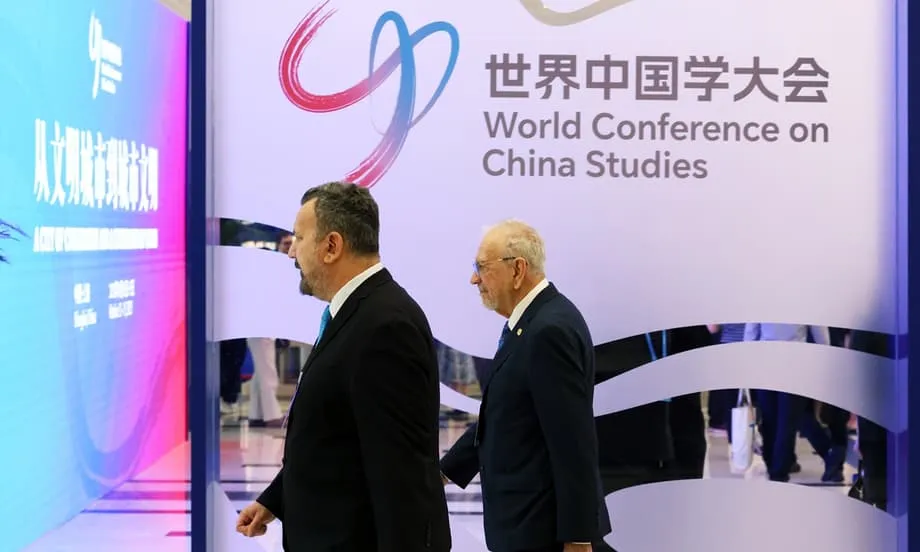
About 500 scholars, policy figures and cultural experts from more than 60 countries gathered in Shanghai in mid October 2025 for the second World Conference on China Studies. Hosted by the State Council Information Office and the Shanghai municipal government, the meeting brought debates about China's history, modernization and international relationships into the same conversation.
Contents
- A global gathering connects China's past with its present
- What organizers want China studies to explain
- Gao Xiang and Prodi call for comparison and cooperation
- Historical context, fieldwork and China's international message
- Why the shift from sinology draws debate
- From poverty reduction to digital research tools
- Shanghai becomes part of the research agenda
- What participants from the Global South want to learn
- What the Shanghai initiative promises
- Research breadth will shape the conference's legacy
- Key Points
The theme, Historical and Contemporary China: A Global Perspective, reflected the organizers' ambition to connect a long civilization with a changing modern economy and major power. The gathering also exposed a tension running through international research on China: how to expand access and cooperation while protecting the freedom to ask difficult questions.
The program stretched across three days, combining a main forum, parallel subforums, guided visits and an exhibition on urban civilization. Its main subjects included continuity and innovation in Chinese civilization, the theory and practice of modernization, research tools for the digital age and the future of China studies.
Participants included academics working in history, sociology, economics, politics and culture, alongside former heads of government, think tank researchers and young scholars. Panels brought different disciplines together, connecting close readings of classical texts with field research in cities and villages.
The scale and international reach of the gathering reflected growing interest in how China works as global power becomes more dispersed and the idea of a single model for development faces closer scrutiny. Organizers presented China as both an old civilization and a contemporary society that can be examined through evidence, comparison and direct observation.
The opening also produced a Shanghai initiative for global mutual learning and the advancement of China studies, intended to sustain exchanges beyond the conference.
What organizers want China studies to explain
Conference organizers described China studies as a bridge between past and present. Their argument was that the roots of Chinese culture, government and social life can help researchers understand current policy choices, economic growth and public attitudes.
The agenda gave that argument a practical direction. Panels examined Chinese style modernization, local governance, social policy and technology ecosystems, connecting developments inside China with international debates about how countries develop.
Modernization, in these discussions, covered more than economic expansion. Participants considered infrastructure, education, industry, public services and the relationship between older cultural ideas and present expectations of government.
- Continuity and innovation in Chinese civilization across different eras.
- Modernization with Chinese characteristics and its outcomes.
- Research methods combining history, social science and policy studies.
- China studies in the digital age, including data access and translation.
- Training, international networks and the future development of the field.
The program sought to move discussion toward comparisons that researchers could investigate. These included how regions sequence investment in infrastructure, education and industry; why some places lead in green industries or social service reform; and how historical culture shapes what citizens expect from public institutions.
Such questions connect the conference's historical and contemporary strands. A classical idea about good government, for example, becomes relevant to current research when scholars examine whether it still shapes political language or public expectations.
Gao Xiang and Prodi call for comparison and cooperation
Gao Xiang, president of the Chinese Academy of Social Sciences, urged researchers to look beyond a single country when studying modernization. He presented it as a shared human project and called for work that connects China's development with questions facing other societies.
Gao said comparative research could help explain the wider meaning of China's experience:
"Comparative studies could reveal the global significance of China's development, offering insights into answering the profound question of 'Where is humanity headed?' posed by the world, the times, and history," he said.
Romano Prodi, former prime minister of Italy and former president of the European Commission, focused on relations between Europe and China. He argued that sustained cooperation should anchor the relationship, alongside practical engagement and efforts to build confidence.
Prodi described the balance he considered necessary for managing disagreements:
Strategic cooperation remains the cornerstone of China Europe relations," Prodi said. "A dynamic balance between pragmatism and strategic trust is essential for overcoming differences and building a stable and prosperous future.
Jan Oberg, founder of a peace research foundation in Sweden, treated the gathering as an opportunity to build trust through direct conversation and dialogue across borders. His emphasis on personal exchange complemented the conference's broader interest in international research networks.
Historical context, fieldwork and China's international message
Li Shulei, head of the Publicity Department of the Communist Party of China, delivered a keynote promoting mutual learning among civilizations. He encouraged scholars to deepen research into China's modernization path and to tell China's story well.
Li's remarks placed cultural confidence and communication with international audiences alongside the academic agenda. Speakers also connected the discussions with the Global Civilization Initiative (GCI), Beijing's call for equal dialogue among cultures.
Martin Jacques stressed that understanding China requires attention to its own history and circumstances, rather than reliance on imported templates. His argument addressed a central methodological issue at the gathering: which ideas and categories best explain Chinese experience.
Thomas Gold, professor emeritus of sociology at the University of California, Berkeley, called for more field research in China and greater engagement with people from different walks of life. His examples ranged from factory managers to delivery workers.
Gold's proposal brought the discussion down to the people who experience economic and social change directly. Interviews and observation can connect broad claims about modernization with daily working conditions, local institutions and individual choices.
Why the shift from sinology draws debate
Sinology and China studies represent overlapping but different academic traditions. Sinology developed around philology, history, intensive language study and close reading of classical texts. Philology examines language and written works to understand their meaning and historical setting.
China studies is a wider umbrella that includes contemporary politics, economics, sociology and cultural analysis. Both traditions have value. The current push inside China favors the broader frame because it connects the past with the present and speaks more directly to international policy debates.
Critics worry about message control and political pressure within that approach. They argue that an emphasis on telling a national story can reduce space for subjects that are difficult to discuss publicly, including censorship, minority rights and research access.
Foreign scholars may also face pressure to exchange critical distance for access, critics argue, particularly when funding or visibility depends on supportive accounts of China. Some outside observers see the conference as part of a wider effort to shape foreign perceptions and encourage alignment with official narratives.
The phrase telling China's story well is central to those concerns. Critics view its use as evidence that image building can take priority over independent inquiry. They also worry that public funding could narrow the field by favoring research that supports official positions.
Many academics who engage with China argue for maintaining high research standards while continuing exchanges. They call for open archives, transparent data, careful comparison, clear references and room for genuine debate. Participants who defend engagement say that being present helps them conduct fieldwork, read sources and compare findings with colleagues in China.
The practical tension is between access and autonomy: researchers want opportunities to study China directly while retaining control over their questions and conclusions.
From poverty reduction to digital research tools
Subforums examined rural governance, poverty reduction, digital platforms and cultural heritage protection. Several approached Chinese style modernization through specific areas of policy, including advanced manufacturing, social safety nets and the role of universities in regional development.
Researchers also considered the transition from extensive growth to high quality growth. In simple terms, that discussion concerned a shift from expanding the scale of economic activity toward improving its quality and results.
Other sessions explored how older ideas of statecraft and virtue continue to shape political language and public expectations. These discussions linked the study of classical thought with contemporary questions about governing and public life.
Digital methods formed another recurring theme. Machine translation, large collections of language material and digital archives are making it easier to examine texts from different periods and test claims against data. Such tools can help researchers work across languages and compare larger bodies of evidence.
Sessions on digital intelligence in China studies addressed standards for collecting data, protecting privacy and making research reproducible. Reproducibility means explaining methods well enough for other researchers to check how a conclusion was reached.
Organizers also released a recommended bibliography for students and general readers. It was presented as a way to help newcomers build a foundation in the field and improve access to original Chinese texts and selected reference works.
Shanghai becomes part of the research agenda
Shanghai served as a case study as well as a conference venue. Foreign guests visited neighborhoods, industrial parks, museums and heritage sites to examine how the city manages traffic, waste, public space and culture.
Many visitors commented on the speed of change over the previous decade. Some pointed to more green space, cleaner streets and renewed riverfront areas. Participants returning after several years away described a city that appeared more livable.
A visiting professor from Greece praised the humanistic spirit he saw in community programs and pointed to stronger environmental protection efforts. His observations connected the conference's discussion of development with the quality of everyday urban life.
The program also showcased intelligent manufacturing through humanoid robots and factory automation. These demonstrations illustrated efforts by local industry to move into production that requires more advanced technology and creates greater value.
An exhibition on urban civilization presented examples from Shanghai neighborhoods and cities in other provinces. Its focus reinforced the place of urban life in China studies, bringing historical development, public administration and cultural preservation into a shared setting.
Exhibits also included new editions of classical works, modern social science books about China and digital gateways to archives and statistical resources. Together with the bibliography, these displays connected the conference's policy debates with the materials researchers use.
What participants from the Global South want to learn
Scholars from Africa, Latin America, South Asia and the Middle East arrived with questions about how China financed infrastructure at scale, how local governments experimented and learned, and how poverty relief programs were organized.
Other participants focused on cultural policy and the balance between tradition and modernization. A recurring argument was that countries can follow different routes to development, rather than reproduce one model.
Guests from countries with young populations showed interest in skills training, special economic zones and the integration of small firms into large supply chains. Their questions concerned how people gain useful skills and how smaller businesses can participate in wider production networks.
Technology and public services were another draw. Researchers examined digital payments, e commerce logistics, data systems used by cities and community health services, asking which elements might work across borders.
Common prosperity, a Chinese concept that is still evolving, appeared in discussions about whether social policy goals can keep pace with growth in private business. The issue connected economic development with the distribution of its benefits.
For many attendees, Shanghai provided a place to examine those questions directly and compare national experiences. The visits complemented the formal sessions by allowing participants to consider concrete examples alongside broader accounts of China's development.
What the Shanghai initiative promises
The opening ceremony introduced the Shanghai initiative for global mutual learning and the advancement of China studies. The mayor of Shanghai announced the city led effort as a commitment to continue international exchanges.
The initiative was framed as a platform connecting universities, think tanks, publishers and city institutions. Its stated aims included expanding scholar exchanges, supporting joint translation projects, improving access to archives and datasets, and backing research that connects classical knowledge with contemporary issues.
City leaders said it would welcome partners from many countries and give priority to young researchers. Alongside the recommended bibliography, the initiative was intended to make it easier for a new generation to enter the field.
The sequence described around the gathering was:
- In mid October 2025, the second World Conference on China Studies opened in Shanghai with about 500 participants from more than 60 countries.
- During the three day program, participants attended forums, visits and exhibitions, while the opening introduced the Shanghai initiative and organizers presented research resources.
- After the conference, partner institutions were expected to carry forward research, exchanges and publications.
No specific dates were given for those follow up activities. Attention after the meeting therefore turns to what institutions put into practice: access to data, arrangements for visiting scholars, sustained joint projects and translation of classical and contemporary texts.
Easier visas for visiting researchers and broader access to archives would be practical signs of progress. The bibliography offers a more immediate entry point for students, while the wider initiative depends on cooperation among the institutions it seeks to connect.
Research breadth will shape the conference's legacy
The range of subjects supported after Shanghai will matter to both participants and critics. Work covering labor policy, environmental enforcement and minority cultures would support the case for a broad research community. Panels and publications confined to subjects considered safe would strengthen concerns about narrowing inquiry.
Participants who favor continued engagement argue that access, dialogue and rigorous methods can work together. Critics remain concerned about whether scholars can maintain independence when the host government's international communication goals are closely connected to the event.
Prodi's call for cooperation reflected another strand of the meeting: the view that Europe and China can work together on practical matters while managing differences. Across the conference, that same question appeared in academic form, as researchers considered how to sustain exchange without giving up critical judgment.
The gathering's concrete outputs were an international network of participants, a new Shanghai initiative, a recommended bibliography and a program connecting scholarship with urban and industrial visits. Their lasting value will depend on the research, access and debate that follow.
Key Points
- About 500 participants from more than 60 countries attended the second World Conference on China Studies in Shanghai in mid October 2025.
- The State Council Information Office and Shanghai municipal government hosted the three day event under the theme Historical and Contemporary China: A Global Perspective.
- Gao Xiang urged comparative research on modernization, while Romano Prodi called for strategic cooperation between Europe and China.
- Discussions covered civilization, governance, poverty reduction, manufacturing, digital research methods and the future of China studies.
- Shanghai launched an initiative for international exchange, translation, research cooperation and better access to scholarly resources.
- City visits and exhibitions examined urban governance, environmental improvements, cultural heritage and factory automation, including humanoid robots.
- Participants defended the value of engagement, while critics warned about political influence, restricted topics and pressure on academic independence.