A soldier crosses the central border and asks to stay
A North Korean soldier crossed the Military Demarcation Line in the central sector of the Demilitarized Zone on Sunday and surrendered to South Korean troops, telling them he wanted to resettle in the South. South Korea's Joint Chiefs of Staff said surveillance teams detected him inside the buffer area, tracked his movements and secured custody after he reached the southern side.
Contents
- A soldier crosses the central border and asks to stay
- How South Korean troops handled the approach
- Why the DMZ is so difficult to cross
- Earlier crossings show the danger and the restraint
- Most people reach South Korea through China
- What investigators will ask the soldier
- What information a military defector can bring
- Resettlement begins after security screening
- A sensitive moment for relations between the Koreas
- Key Points
The crossing was the first reported land border defection by a North Korean soldier since August 2024. It was also the first by a soldier since President Lee Jae Myung took office in June. Two North Korean civilians crossed the DMZ in July, bringing the number of people who have reached the South through the zone during Lee's presidency to three.
South Korean authorities are questioning the soldier about his identity, military unit, route and reasons for leaving. The Joint Chiefs of Staff said an investigation was underway and the relevant agencies would handle the case according to established procedures. Officials have not detected unusual activity by North Korean border units since the crossing.
The escape brings together two immediate concerns for Seoul: protecting a person asking to remain in South Korea and keeping an encounter between heavily armed forces from becoming a confrontation. The soldier could also provide information about conditions inside North Korean units stationed near the dividing line.
For the soldier, reaching South Korean troops begins another process. Medical checks and security screening come before resettlement support. For the military, the initial task was to watch his approach, establish control of the encounter and bring him into custody without an exchange of fire.
How South Korean troops handled the approach
South Korean military officials said the soldier was first spotted in the central portion of the buffer zone near the line dividing the peninsula. Surveillance personnel followed his movement before troops near the border carried out what officials described as a standard guiding operation.
The operation is a procedure for bringing someone approaching or crossing the border safely under military control while maintaining security around the encounter. In this case, the soldier crossed south of the Military Demarcation Line and was taken into custody without incident.
South Korean patrols and surveillance equipment often detect people before they reach the dividing line. Early detection can give troops time to prepare an escort, rather than respond with a pursuit. Soldiers must still account for mines, nearby North Korean positions and the possibility that sudden movement could draw an armed response.
The Military Demarcation Line is the boundary within the wider DMZ. Crossing it places a person on the southern side of the military divide, but reaching it means passing through a buffer area watched by forces on both sides.
Why the DMZ is so difficult to cross
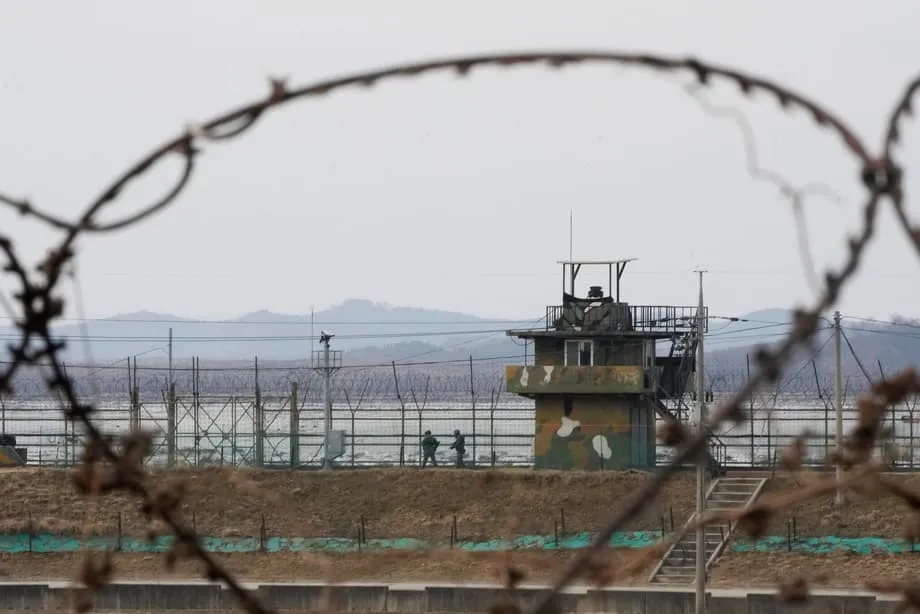
The DMZ is a buffer stretching 248 kilometers along the peninsula and measuring 4 kilometers across. It was created following the armistice that ended fighting in the 1950 to 1953 Korean War. Land mines, tank traps, dense fencing, barbed wire, watchtowers and armed guards make it a dangerous route out of North Korea.
Both militaries use thermal cameras, radar and tripwire sensors to detect movement. Troops are trained to react quickly around the dividing line. Thick vegetation and rugged terrain complicate surveillance, while heavy rain, fog and darkness can reduce visibility.
People who live or serve near the frontier may know local footpaths and seasonal water levels. A soldier familiar with patrol cycles, guard rotations and blind spots can have an advantage over a civilian trying to cross unfamiliar ground. Flooding, erosion and vegetation growth can also change conditions around defenses.
Hong Min, a senior analyst at the Korea Institute for National Unification, said soldiers can navigate dangerous stretches because they know the terrain. He also said Pyongyang would see the defection as a security setback because the soldier could share information about troop movements. Analysts in Seoul considered familiarity with local terrain and defenses a likely factor in the latest escape.
Knowledge of the border can buy time, but the physical dangers remain severe. Rain and freezing temperatures can shift mines. Streams that appear shallow may conceal obstacles. Civilians attempting the route sometimes remain motionless under cover during daylight and move only at night, yet thermal cameras and ground sensors can still detect them.
North Korean forces have fired on fleeing soldiers before. A well known escape in 2017 showed how quickly an attempt to reach the South can turn into a medical emergency.
Earlier crossings show the danger and the restraint
In 2017, a North Korean soldier drove toward the border, abandoned his vehicle after it became stuck in a ditch and fled on foot. His comrades fired about 40 rounds, hitting him multiple times before he collapsed across the line. South Korean troops pulled him to safety, and doctors saved his life through emergency surgery.
An August 2024 crossing ended differently. A North Korean staff sergeant slipped through the eastern section of the border and surrendered to South Korean forces. That was the previous reported case of a soldier reaching the South across the land border.
A civilian crossing in July illustrated how slowly an operation can unfold when troops are trying to avoid gunfire. South Korean forces tracked the man's movements with surveillance systems and waited for darkness to reduce the risk of detection from the northern side before escorting him across the line. The operation lasted about 20 hours.
South Korea's Joint Chiefs of Staff later described an exchange during that July encounter. Startled by nearby troops, the North Korean civilian spoke first:
Who are you?
The South Korean soldiers identified themselves and told the man they would take him to safety:
We are the South Korean military. We will guide you to safety.
The July operation offers a concrete example of the patience involved in managing a crossing. Surveillance continued over many hours, and the timing of the escort was chosen with the nearby North Korean forces in mind.
The main events leading to the latest crossing span several years:
- 2017: A North Korean soldier survived multiple gunshot wounds after fleeing across the border.
- August 2024: A North Korean staff sergeant crossed the eastern section and surrendered.
- June 2025: President Lee Jae Myung took office in South Korea.
- July 2025: Two North Korean civilians reached the South across the DMZ. One operation lasted about 20 hours.
- Sunday, before the October 24, 2025 publication: A North Korean soldier crossed the central sector and asked to resettle in the South.
Most people reach South Korea through China
About 34,000 North Koreans have resettled in South Korea since the Korean War armistice. Most traveled through China and another country, rather than attempt the heavily guarded boundary between the two Koreas.
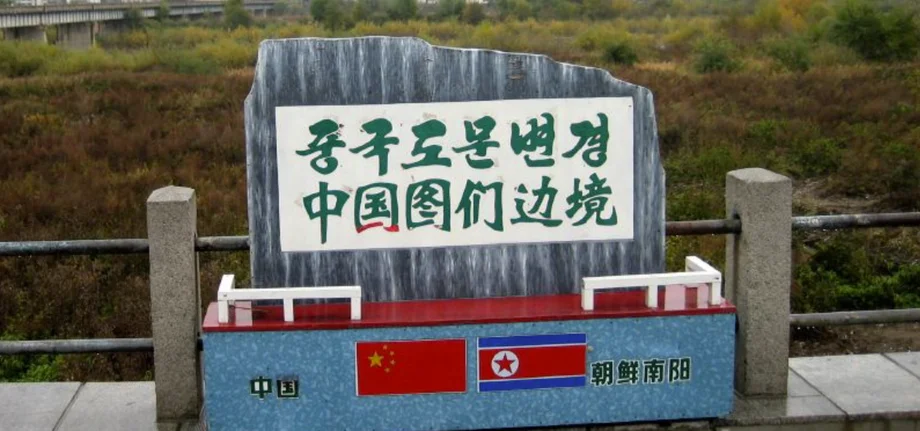
Those routes commonly begin at the Yalu River in the west or the Tumen River in the east. After entering China, people travel through a third country before reaching South Korea. The journey can be long and dangerous. Chinese authorities often detain North Koreans and send them back.
People making the journey frequently depend on brokers and church networks. They tend to travel in small groups to reduce the chance of detection. The risks differ from those inside the DMZ, but the possibility of arrest and return remains central to the journey.
In 2024, 236 North Koreans reached South Korea. Women accounted for about 88 percent of those arrivals, continuing a pattern seen in many recent years. Women often find seasonal work in China and are more likely to be able to move without their absence being immediately noticed.
Officials said only three people crossed the border between the Koreas in 2024. Compared with the total of 236 arrivals that year, that was about 1.3 percent. The figures show how small a part direct crossings play in the wider movement of North Koreans to the South.
Arrivals remain below the levels seen before the pandemic, when hundreds of North Koreans reached South Korea each year through China. Strict border controls during the pandemic and renewed Chinese crackdowns reduced movement, and the numbers have not fully recovered.
What investigators will ask the soldier
New arrivals undergo an initial medical check and security screening before interviews by military and intelligence personnel. Investigators seek to establish identity, reconstruct the route of escape and check whether someone has entered as an agent.
Soldiers can face longer questioning because they may know sensitive information about military units, communications and standing orders. In this case, questions will include the soldier's unit location, command structure and logistics, as well as his personal reasons for leaving.
The soldier served near the central section of the border, making his knowledge potentially useful to South Korean military planners. Details about patrol routes, equipment and morale could help them assess the units facing their own positions.
His identity, precise route and motives remain under investigation. The Joint Chiefs of Staff has said the appropriate agencies will handle the case under established procedures.
What information a military defector can bring
A soldier stationed near the border may know the condition of fences and trenches, which types of equipment for seeing at night are available at a post, and how frequently patrols move. Such details can help South Korea refine defense plans and decide where additional surveillance is needed.
Investigators may also ask whether food or fuel shortages have reduced training hours, how often radios fail and whether commanders have moved units following recent incidents. Those subjects connect daily conditions inside a unit with its ability to carry out orders.
South Korean planners must make rapid decisions in the narrow space around the DMZ. A shortage of spare parts in a North Korean unit, or the assignment of new recruits to a particular stretch, can affect decisions about patrol allocation, camera placement and warning drills.
Information about morale is harder to measure than equipment or patrol schedules, but it can still be valuable. The soldier's account could also help South Korea assess propaganda themes directed at North Korean troops across the border.
His questioning therefore serves both an immediate security purpose and a longer military purpose. Authorities are checking who he is while seeking information about the conditions in which he served.
Resettlement begins after security screening
South Korea treats people from the North as citizens under its constitution, while requiring arrivals to pass through a legal and security process. Screening seeks to prevent espionage and identify people who have experienced trafficking.
People who want to travel elsewhere can ask for help reaching a third country. Most North Koreans who choose to remain enter a government resettlement program after security checks are complete.
Hanawon, a resettlement center, provides education on everyday life in South Korea. Classes cover banking, housing, health care and digital skills. These practical subjects help arrivals manage institutions and technology that may be unfamiliar to them.
After leaving the center, people move into local communities and can receive help finding work. Support includes housing assistance, a basic stipend for a period, and access to education and health care. Former North Korean soldiers may also receive counseling suited to the stress of leaving a rigid military command environment.
Resettlement can remain difficult after those first steps. Many arrivals carry trauma associated with surveillance and shortages. Others encounter stigma or struggle with the speed of technological change and the working culture in the South.
The government has expanded counseling and job training in response. Civil society groups help families divided by the border and assist with employment. Churches, alumni networks and employers also provide mentoring and apprenticeships intended to help people build confidence and stability.
A sensitive moment for relations between the Koreas
President Lee Jae Myung took office in June promising dialogue and humanitarian engagement with North Korea. Pyongyang has not responded to his outreach, and relations remain frozen. Propaganda balloons, artillery drills near the border and periodic missile launches have shaped public perceptions while official communication channels have remained silent.
A soldier's decision to seek a new life in the South carries political weight alongside its immediate military importance. Seoul can point to such an escape when arguing that conditions in North Korea are harsh and loyalty to its leadership is fragile.
Pyongyang usually responds to defections with denunciations, including allegations that escapes were staged or coerced. North Korean state media often describe defectors as criminals or liars. Such rhetoric can be followed by displays of military readiness along the frontier.
South Korean officers said they had seen no unusual North Korean movements after this latest crossing. That quiet reduces the immediate risk of confrontation while authorities carry out medical checks and questioning.
The three DMZ arrivals since Lee took office remain a small number within the broader history of resettlement. The latest case is unusual because it involves a serving soldier taking a direct route through one of the peninsula's most dangerous areas.
Key Points
- A North Korean soldier crossed the central sector of the DMZ on Sunday and told South Korean troops he wanted to resettle.
- South Korea's Joint Chiefs of Staff said troops tracked his approach and took him into custody without incident.
- It was the first reported land border defection by a North Korean soldier since August 2024.
- Three people have reached the South through the DMZ since President Lee Jae Myung took office in June: two civilians in July and the latest soldier.
- Authorities are investigating the soldier's identity, unit, route and motives.
- About 34,000 North Koreans have resettled in the South since the armistice, most through China and another country.
- In 2024, 236 North Koreans arrived in South Korea, about 88 percent of them women. Only three crossed the border between the Koreas.
- South Korean officials reported no unusual North Korean military activity following the latest crossing.