4,062 visitors put a small island under pressure
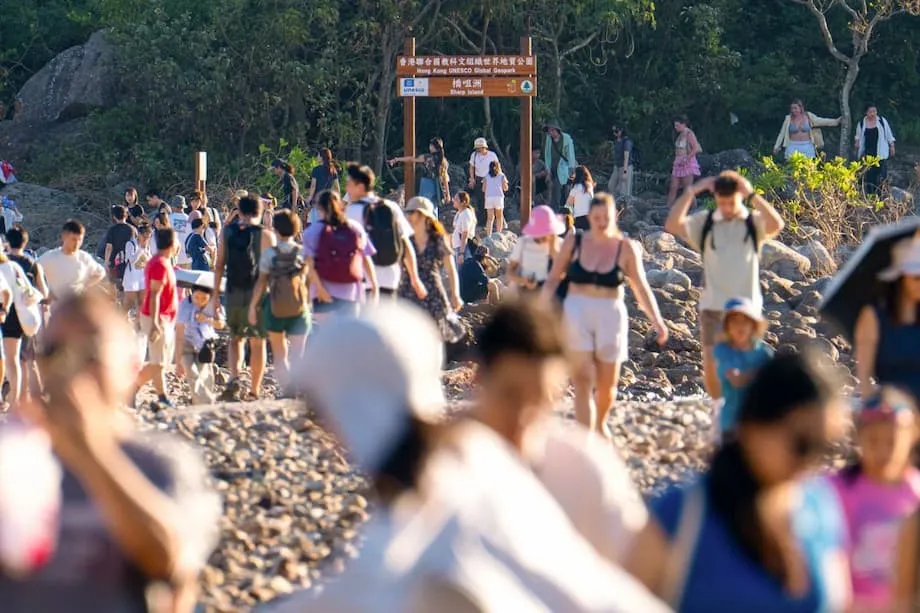
Greenpeace counted 4,062 visitors on Sharp Island on October 1, during the National Day Golden Week holiday, as crowds gathered at one of Sai Kung's most accessible nature destinations. The rush brought renewed concern about coral trampling, boat anchors, litter and the collection of marine life at an island within the Hong Kong UNESCO Global Geopark.
Contents
- 4,062 visitors put a small island under pressure
- What officials will check underwater
- A holiday rush followed by a management review
- What volunteers and local representatives reported
- Why the reefs matter to Sai Kung
- How feet, fins and anchors damage coral
- Setting limits while keeping access open
- Protecting coral where people enter the water
- Education before arrival, enforcement at busy spots
- Measuring whether management is working
- What visitors can do now
- Key Points
Secretary for Environment and Ecology Tse Chin-wan said early indications did not show widespread harm to coral off the island. The Agriculture, Fisheries and Conservation Department (AFCD) promised underwater inspections and a review of controls at busy nature destinations. Officials said the main coral zone is some distance from the busiest beach, reducing the likelihood of people stepping on it during an ordinary beach visit.
Green groups and local representatives described pressure extending beyond the beach. Volunteers recorded snorkellers standing on living coral, boats anchoring inside protected coral zones, people digging up coastal organisms and visitors feeding fish. Reports also included littering and illegal fires for cooking.
Sharp Island, also known as Kiu Tsui Chau, offers an affordable day trip that brings enjoyment to visitors and business to the surrounding area. Its volcanic scenery and famous tombolo, the natural crossing that people wade across, draw crowds close to sensitive coastal habitats. Images of those crowds, snorkellers on shallow reef flats and boats near coral circulated widely on social media.
The debate centres on how to keep that access open while protecting an ecosystem vulnerable to repeated careless behaviour. Conservationists say a crowd exceeding 4,000 in a single day pushed beyond what many of them consider safe for such a small island. A formal study of how many visitors its sensitive areas can support is among their demands.
What officials will check underwater
Tse said the government was treating the reports urgently. Enforcement would be strengthened at popular coastal locations during holidays, while AFCD teams would increase monitoring of important reef sites near Sharp Island.
Inspectors planned underwater surveys to look for recent coral breakage, abrasion, disturbed sediment and bleaching. Abrasion means damage caused by rubbing or scraping. Bleaching is another sign of coral stress. AFCD said it routinely photographs the reef so that unusual changes following increases in visitor numbers can be tracked.
Patrick Lai Chuen-chi, AFCD's deputy director, outlined the inspection plan and the department's initial assessment of the risk to coral.
We will arrange for our officers to go underwater and monitor the coral zone as soon as possible to assess the situation.
Lai also explained why officials expected the main coral area to have experienced limited effects from the beach crowds.
There is quite a bit of distance between the coral zone and the beach on Sharp Island, so the impact on the coral zone is unlikely to be significant.
AFCD was open to visitor management measures, including limits in sensitive areas, if evidence showed they were needed to protect the reef while maintaining public access. As of October 11, 2025, no date had been given for the underwater inspection or its findings.
A holiday rush followed by a management review
Authorities also signalled a review of visitor management at geopark gateways and ferry points. Measures under discussion included clearer capacity alerts, temporary barriers protecting reef flats at low tide, and joint patrols by marine police and AFCD on peak days.
The sequence of events places the promised inspections after the holiday pressure:
- October 1: Greenpeace counted 4,062 visitors on Sharp Island during the National Day Golden Week holiday.
- During the holiday rush: Images of crowded coastal areas, snorkellers on shallow reefs and boats near coral circulated on social media.
- By October 11, 2025: Officials had promised underwater monitoring, stronger holiday enforcement and a review of visitor controls.
The inspection would examine the coral itself, while the management review would consider how visitors reach and use the island. Both matter because the pressure includes people on beaches, swimmers in shallow water and boats approaching reef areas.
What volunteers and local representatives reported
Greenpeace volunteers documented boats anchoring inside protected coral zones and visitors digging up coastal organisms, including starfish and sea urchins. They also recorded snorkellers standing on living coral to adjust masks or feed fish, and using coral heads as handholds while getting upright for selfies.
A coral head is a living colony with a hard skeleton. Concentrating a person's weight on its delicate growth tips can cause fractures and abrasions. Volunteers warned that these injuries can take years to repair because coral grows slowly. On a crowded day, the same pattern of contact can be repeated thousands of times within a small area.
Fish feeding adds another pressure. It draws visitors and fish together in shallow water, can increase disease transfer between fish and encourages snorkellers to gather where they can stand. That concentration increases the chance of trampling.
Christine Fong Kwok-shan, a local district councillor, urged education at the pier and along ferry routes to Sharp Island. She said additional signboards within the geopark could clutter the scenery and might fail to change behaviour at the crucial moment, before visitors step onto the beach or enter the water.
Greenpeace called for a formal ecotourism policy for Sai Kung, beginning with a carrying capacity study. Carrying capacity means assessing how much use a place can support while protecting its habitats and keeping visits manageable. The group wants limits in sensitive zones and tools that allow officers to prevent overcrowding on the busiest days.
Ha Shun-kuen, a Greenpeace project manager, said visitor numbers would grow as Hong Kong upgraded nature tourism facilities, making a wider policy necessary.
Only with comprehensive policy measures can we truly conserve the ecologically valuable geopark.
Greenpeace argued that stronger enforcement at a few locations would be insufficient during holiday peaks, when several bays and islands receive heavy traffic at the same time.
Why the reefs matter to Sai Kung
Sharp Island lies within one of Hong Kong's richest coral regions. Surveys show extensive areas of stony coral around the island, including shallow reef flats and more complex coral gardens farther offshore.
Those habitats shelter juvenile fish, crabs, sea urchins, sea cucumbers and many other animals without backbones. Together, these organisms form a food web, with different species depending on one another for food and shelter. Healthy reefs also help soften the force of waves and reduce erosion along nearby shores.
The island's position close to the city makes its living reefs a valuable part of an accessible day trip. Visitors can encounter volcanic scenery and marine habitats without travelling far, while the surrounding community benefits from tourism.
The UNESCO Global Geopark designation promotes conservation, education and sustainable development. Its purpose is to guide access so that geological features and ecosystems are protected while learning opportunities and local livelihoods continue.
How feet, fins and anchors damage coral
Coral is alive rather than simply a piece of rock. Tiny animals called coral polyps build its hard skeleton slowly, millimetre by millimetre. A single footstep can crush decades of growth.
Visitors standing on a coral head to take a photograph or adjust a mask can snap fragile branches and tear living tissue. Broken tips provide openings for disease. Fins can also stir up sand, which settles on nearby coral, smothers it and blocks light.
Repeated trampling during holiday peaks can leave lasting scars because recovery is slow. Warmer seas and bleaching events also stress Hong Kong's corals in some years. Physical contact with an already stressed colony can push it beyond the point at which it survives.
Boat anchors create a different kind of damage. A small vessel dropping an anchor onto a reef can shatter coral. As the boat moves with wind and tide, the anchor and chain can scrape across the seabed. Clear mooring options are needed even for careful operators in places with dense coral.
Other pressures accumulate alongside that physical damage. Sunscreen and soap enter shallow water, while discarded litter can entangle fish and sea turtles. Fires and poor waste handling pollute beaches and nearby waters.
- Walking or standing on coral breaks and crushes living structures.
- Anchors and chains scrape reef tops and seagrass.
- Collecting starfish, sea urchins, shells and coral disrupts food webs and breeding cycles.
- Feeding fish changes their behaviour, increases disease risks and draws crowds into shallow reef areas.
- Litter and plastic harm water quality and injure marine life.
- Fires and badly handled waste add pollution to beaches and coastal water.
Setting limits while keeping access open
Hong Kong wants people to enjoy the geopark while keeping its living reefs healthier five years from now. Practical management would increase protection during holiday peaks and allow lighter controls during quieter periods.
A carrying capacity study could set thresholds for beaches, tombolo crossings and snorkelling areas. Once those thresholds were established, the city could test quotas for particular busy holidays, timed ferry slots and capacity updates at the pier and online.
Permits could reserve short visiting periods for school groups and guided reef tours. Spreading arrivals throughout the day would reduce crowding in shallow water and help organise access to places where visitors are most likely to come into contact with coral.
These measures are proposals for managing pressure. Officials have said they are willing to consider limits where evidence supports them, while conservationists want a formal framework covering the wider Sai Kung coastline.
Protecting coral where people enter the water
Clear restrictions on anchoring around coral heads, backed by enforcement, would address one of the risks recorded by volunteers. Fixed mooring buoys near popular snorkelling locations could give boat operators an alternative to dropping anchors onto the seabed.
Roped swimming lines and simple reef boundary markers could direct visitors towards sandy areas rather than coral. Marked routes through shallow entry points could help people reach deeper water without crossing fragile reef flats.
Tour operators could explain how to snorkel without touching coral before guests enter the sea. Flotation aids could help visitors keep their feet off the bottom, including when they need to pause or adjust equipment.
Diving research in Hong Kong and elsewhere in Asia shows that inexperienced or untrained visitors make the most contact with coral, particularly at shallow, popular sites. Education and the presence of guides reduce those contacts. Training and compliance programmes for snorkelling and diving operators have also reduced contact at heavily used sites in parts of Southeast Asia.
Sunscreen suitable for use near reefs, better mooring arrangements and clear rules against touching coral are further ways to reduce harm. Consistent, visible protection can improve reef health and the visitor experience together.
Education before arrival, enforcement at busy spots
Sai Kung Pier and ferry queues provide opportunities to reach visitors before they arrive. Leaflets, short videos and a code of conduct on booking pages could explain the rules before passengers reach the beach.
Fong's call for education along the journey fits this approach. On the island, fewer but clearer signs at key entry points could reinforce the same message without filling the scenery with notices.
Patrols could focus on peak hours and locations where damaging behaviour is most likely. Visible officers, along with a small number of widely publicised warnings and fines for littering, fires, collecting organisms and anchoring in coral zones, could help change behaviour quickly.
Community cleanups and citizen science surveys are other proposed tools. Volunteers could help record conditions along set routes, known as transects, while frequent visitors become more involved in caring for the places they use.
Many of these approaches are already used at other reef destinations and could be adapted to Sai Kung. Their value depends on combining education with practical access arrangements and enforcement during the periods of greatest pressure.
Measuring whether management is working
Research on island tourism finds that residents, visitors, business owners and officials want nature tourism to succeed while worrying about pollution, habitat loss and pressure on wildlife. They also see benefits when tourism helps fund conservation and improves public awareness.
Those studies recommend participation by all these groups, regular monitoring of actual conditions and management that changes as conditions change. For Sharp Island, that would mean matching the inspection schedule to visitor pressure and setting clear limits where the reef is most vulnerable.
Useful indicators include coral cover in snorkelling areas, the number of scars left by anchors and the rate of contact incidents seen by patrols and guides. Coral cover describes how much of a surveyed area is occupied by living coral, allowing changes to be followed over time.
Photographs taken along set survey routes, cameras kept at fixed locations and records of mooring buoy use are inexpensive ways to track progress across seasons. AFCD's routine reef photographs already provide a way to watch for unusual changes after surges in attendance.
For people using the island, this would connect management decisions to conditions they can understand: how crowded the shallows become, how often boats anchor near coral and whether living reef areas are recovering or accumulating damage.
What visitors can do now
Visitors can reduce pressure on Sharp Island immediately by keeping their bodies and equipment away from living coral, leaving marine organisms in place and taking rubbish home. Boat operators have a role in avoiding anchor damage near reef areas.
The practical steps apply to ordinary beach trips as well as organised snorkelling visits:
- Do not step on coral or stand on rocks covered in living organisms.
- Keep fins and feet off the bottom. Float at the surface when resting.
- Do not touch or collect marine life, including starfish, sea urchins, shells and coral.
- Do not feed fish, which changes their behaviour and increases disease risks.
- Use a boat mooring rather than an anchor near coral zones.
- Take all rubbish away and leave beaches and trails cleaner than you found them.
- Avoid fires and beach cooking. Use designated facilities only.
- Use sunscreen suitable for reefs or wear a rash guard with long sleeves to reduce chemicals entering the water.
- Follow AFCD signs and instructions from wardens and lifeguards.
- Give a friendly reminder when you see behaviour that risks damaging the environment.
These actions address the activities recorded during the holiday rush. They also allow visitors to enjoy the island without adding avoidable contact, litter or disturbance to habitats that recover slowly.
Key Points
- Greenpeace counted 4,062 visitors on Sharp Island on October 1 during National Day Golden Week.
- Tse Chin-wan said early indications did not show widespread coral damage. AFCD promised underwater surveys and stronger holiday enforcement.
- Officials said the main coral zone is some distance from the busiest beach, reducing the expected effect of ordinary beach use.
- Volunteers reported coral trampling, fish feeding, collection of coastal organisms and boats anchoring in protected coral zones. Other reports included littering and illegal cooking fires.
- Greenpeace wants a formal ecotourism policy, a carrying capacity study and limits in sensitive areas across Sai Kung.
- Proposed protections include holiday quotas, timed ferry access, mooring buoys, reef markers and education before arrival.
- Regular reef monitoring and participation by residents, visitors, businesses and officials could help management respond to changing conditions.
- Visitors can help by avoiding coral contact, leaving marine life alone, not feeding fish, taking rubbish away and following official instructions.