A historic breakthrough meets a struggle for power
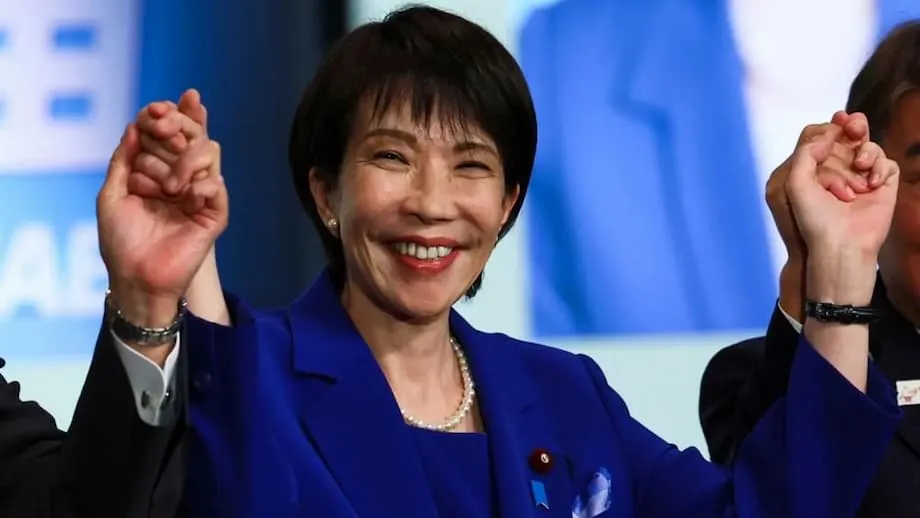
Sanae Takaichi, 64, has won the leadership of Japan's governing Liberal Democratic Party (LDP), putting her in position to become the country's first female prime minister. As of October 11, 2025, however, she still needs parliament to choose her. Her party holds 196 of the lower house's 465 seats, and its coalition partner of 26 years, Komeito, has walked away.
Contents
- A historic breakthrough meets a struggle for power
- How the leadership win becomes a parliamentary test
- From Nara to the top of the LDP
- Inflation puts her economic promises under pressure
- What households and businesses could gain or lose
- Abe's security agenda returns to the foreground
- Washington presents an early diplomatic test
- Why Komeito left and why party unity matters
- A female leader with conservative social policies
- Key Points
Takaichi inherits a party weakened by election defeats and political funding scandals, alongside an economy where rising prices are outpacing wage growth. Her immediate tasks are to help households, rebuild confidence in the LDP and assemble enough parliamentary support to govern. A trade agreement with Washington, including a baseline tariff of 15 percent on Japanese exports, adds another difficult negotiation to her agenda.
Prime Minister Shigeru Ishiba's resignation after just over a year in office opened the leadership contest. Repeated election setbacks cost the LDP and its allies control of both chambers of parliament. A handover that would once have been relatively straightforward has become a contest over whether the party can retain power.
Takaichi is a hardline conservative and a protege of the late Shinzo Abe. She promises to revive his approach to growth through government spending and inexpensive borrowing, while pursuing stronger defenses and traditional social policies. LDP members are betting that her clear political identity can bring back core supporters, even as it may make winning wider support harder.
Her victory ends a decades long pattern of male leadership in a party that has governed Japan for most of the postwar era. The historical significance is substantial, but her ability to turn that breakthrough into a lasting government will depend on votes outside her own party.
How the leadership win becomes a parliamentary test
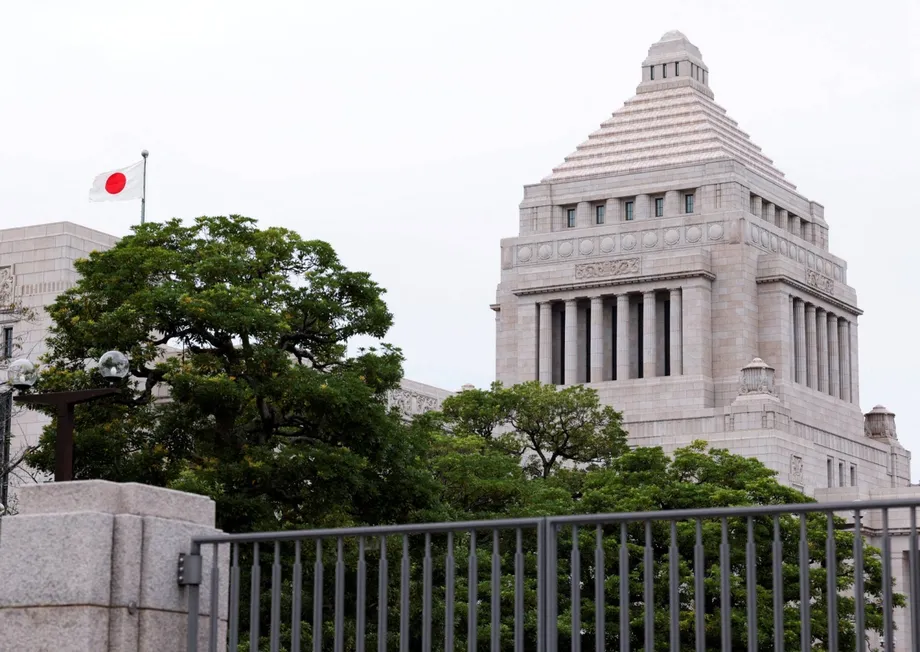
Takaichi defeated Agriculture Minister Shinjiro Koizumi in the runoff of a leadership election conducted in two rounds. The contest involved 295 LDP lawmakers and roughly one million members who pay party dues. Winning that election made her party leader; choosing the prime minister is a separate decision for the Diet, Japan's parliament.
The lower house has the decisive say. A candidate needs a majority of votes cast on the first ballot. If nobody achieves that, the two leading candidates advance to a runoff. An extraordinary parliamentary session is expected in mid October, although an exact date for the vote has not been given.
The LDP's 196 seats leave it 37 short of the 233 needed for a majority of the full chamber. Opposition parties hold 175 seats, while several groups are discussing how to approach the prime ministerial vote. Some have considered uniting behind Yuichiro Tamaki as an alternative to Takaichi.
Komeito's withdrawal has removed the LDP's most familiar route to a governing partnership. Takaichi must now seek new partners, persuade Komeito to return or gather support for particular decisions. Even winning the vote for prime minister would leave her with the separate challenge of passing legislation.
The sequence leading to this moment shows how quickly political authority has become uncertain:
- March 2024: The Bank of Japan ended its era of negative interest rates.
- After just over a year in office: Ishiba resigned following repeated election defeats that cost the governing parties control of both parliamentary chambers.
- By October 11, 2025: Takaichi had defeated Koizumi for the LDP leadership, and Komeito had withdrawn from the coalition.
- Mid October: An extraordinary Diet session is expected, with the choice of prime minister still pending.
- Late October: A first meeting with US President Donald Trump could take place if schedules align around regional summits.
From Nara to the top of the LDP
Takaichi's career differs from those of many Japanese politicians who come from political dynasties. Raised in Nara, she interned for a Democratic congresswoman in the United States and worked as a television commentator before building her parliamentary career.
First elected in 1993 at age 32, she has been returned to parliament nine times. Her senior government positions have included responsibility for economic security, internal affairs and gender equality. Those roles give her experience across the economic, administrative and social questions now confronting the LDP.
Takaichi's public image combines strict discipline with less conventional interests. She rode a motorcycle as a young lawmaker and played drums in a heavy metal band. She still drums to manage stress, keeps an electric drum set at home and has joked about playing late at night.
Longtime associates describe her as intensely focused on work. Celebrating her leadership victory, she urged LDP lawmakers to put in relentless hours. Takaichi, speaking to the party caucus, rejected a familiar phrase about balancing employment and personal life:
I will abandon the word work life balance. I will work, work, work and work.
The remark quickly trended online. Supporters welcomed its message of determination, while working parents were unsettled by language that appeared distant from their need for supportive workplace policies. That tension runs through her public image: a woman reaching the top of a male dominated party while holding conservative positions on several questions of equality.
Inflation puts her economic promises under pressure
Japanese households are facing some of the sharpest price pressures in years, with wages failing to keep pace. A weak yen has made imported food and energy more expensive. Rice prices, a particularly sensitive issue for families, have recorded their fastest increase in more than half a century.
The Bank of Japan ended negative interest rates in March 2024 and now has its policy rate at 0.5 percent. Negative rates were part of an effort to encourage borrowing and spending. Takaichi has criticized rapid rate increases and favors caution about making credit more expensive while the economy needs support.
Her proposed approach draws on Abenomics, Abe's strategy built around three arrows: aggressive monetary easing, government spending and structural changes intended to raise productivity. Monetary easing makes borrowing easier; public spending puts government money into the economy; productivity reforms seek to help businesses produce more efficiently.
Takaichi clearly favors the first two parts. Her structural reform plans are less defined, although she has discussed strategic investment and deregulation in selected industries. She has even floated the name Sanaenomics for her program, linking her own name to the Abe era.
Hajime Kidera, a professor at Meiji University, warned that the combination of more spending and caution on interest rates would be watched closely by investors and households:
That kind of talk can weaken the yen further and raise concerns about Japan's debt levels. For ordinary people already struggling with rising prices, it is also a serious worry.
The yen initially slipped after her party victory as markets anticipated more stimulus. It strengthened when uncertainty over the coalition raised doubts about how quickly new spending could proceed. Business groups want to know the size of any package, when it would begin and how the government would pay for it.
For Takaichi, immediate relief and confidence in public finances are closely connected. Spending could help families cope with higher bills, while a weaker currency could make imported essentials more costly. Her cabinet's choices would determine how those competing pressures reach household budgets.
What households and businesses could gain or lose
Takaichi has suggested targeted help with living costs, including tax breaks for babysitting and incentives for companies to provide childcare at work. Such measures would address particular expenses facing parents, while the wider effect of her economic program would depend on its funding and timing.
Consumer businesses and defense companies could benefit from a large spending package and faster security procurement. Firms sensitive to exports could gain if the yen weakens again. Banks and real estate could face pressure if central bank policy keeps yields low and confidence in fiscal discipline slips.
The exchange rate creates different effects for different groups. A weaker yen can help exporters, but it raises the domestic cost of imported energy and food. A stronger yen could ease those bills while squeezing exporting businesses. Families and companies therefore have different reasons to watch the same currency movements.
Takaichi's growth priorities include cybersecurity, semiconductors, shipbuilding and pharmaceuticals. She wants to strengthen domestic capacity in these industries, which also feature in the $550 billion investment plan connected to relations with the United States. She has mentioned nuclear fusion research as another area of interest.
These priorities reflect an effort to reduce weaknesses in supply chains exposed by geopolitical shocks. A supply chain is the network of businesses and countries needed to make and deliver a product. Building more capacity at home is intended to make Japan less vulnerable when that network is disrupted.
Immigration and tourism are another part of her agenda. Takaichi has called for stricter enforcement and tighter rules. During the leadership campaign, she cited accounts of unruly foreign visitors in Nara, then said her remarks reflected anxieties voiced by many residents.
Industry groups will watch whether new controls make recruitment harder in elder care, construction and hospitality, where workers are already in short supply. Business leaders are also concerned that prolonged political maneuvering could delay decisions on prices, immigration and energy policy.
Abe's security agenda returns to the foreground
Takaichi wants Japan to strengthen its military, invest in cybersecurity and reconsider legal limits on the use of force. A central goal is revising Article 9 of the postwar constitution, which renounces war. Her agenda would bring security questions into a parliament where she must negotiate for support.
Her approach could please allies in Washington that have long urged Japan to take on more of the security burden. It also risks friction with Beijing and Seoul. Takaichi is viewed as friendly to Taiwan and takes a hard stance toward China.
Her regular visits to the Yasukuni shrine are another source of regional tension. The shrine honors Japan's war dead, including convicted war criminals. Visits by senior politicians are therefore bound up with disputes over the memory of war, as well as domestic expressions of remembrance.
Komeito, a party backed by Buddhists with a pacifist outlook, has already objected to aspects of her rhetoric. Although its coalition withdrawal was publicly tied to political funding, disagreements over security add to the difficulty of restoring cooperation.
Takaichi's proposals for higher defense spending and constitutional revision will have to contend with coalition politics and public opinion. She may adjust her approach, including avoiding a prominent Yasukuni visit during sensitive periods, to keep possible governing partnerships open.
Washington presents an early diplomatic test
Japan's recent agreement with the United States includes a baseline tariff of 15 percent on Japanese exports, a pledge to direct $550 billion in investment into the US economy and purchases of $8 billion a year in American agricultural products. A tariff is a tax on imports, making the terms especially important for businesses selling into the American market.
Takaichi has at times discussed revisiting parts of the agreement, then said she would work to honor existing commitments. Any attempt to renegotiate would be sensitive, particularly for automobiles and semiconductors. Japanese businesses need clarity about both trade costs and the investment obligations attached to the deal.
A first meeting with Trump could happen as early as late October if their schedules align around regional summits. Takaichi is expected to follow Abe's diplomatic approach, which combined a close relationship with Trump with efforts to advance Japan's security interests.
Takaichi, outlining her diplomatic priorities in public remarks after her leadership victory, said:
I will strengthen the Japan US alliance and expand partnerships with South Korea, Australia, and the Philippines.
Maintaining those relationships would require balancing her security ambitions with the concerns of neighboring countries. Her trade commitments, defense plans and choices over sensitive historical issues would all influence the reception of a new government.
Why Komeito left and why party unity matters
Komeito announced that it would not join a government under Takaichi, citing unresolved concerns about a political funding scandal. Its departure ended a partnership that had provided the LDP with a familiar governing ally for 26 years.
Tetsuo Saito, Komeito's leader, described the break as a failure to restore trust over political money:
The 26 year partnership ended because the party failed to address a political funding scandal.
The LDP must now negotiate while opposition parties consider their own candidates and possible cooperation behind Tamaki. If the first parliamentary ballot produces no majority, the runoff would make the choices of other parties especially important. Takaichi needs support beyond the lawmakers who elected her party leader.
Her difficulties also extend inside the LDP. Centrist and hardline groups disagree over social policy, foreign relations and government finances. Early accounts of plans to reward faction allies, including lawmakers affected by scandals, drew sharp criticism from opposition leaders.
Jeff Kingston, a professor of Asian studies at a Tokyo university, argued that her appeal to conservative voters could come at the cost of a broader coalition:
She is in a good position to regain right wing voters, but at the expense of wider popular appeal. She is not much of a healer.
Personnel choices will offer an early indication of whether Takaichi intends to broaden support or reward her strongest backers. A cabinet could be short lived if she fails to secure a workable base in the Diet.
A female leader with conservative social policies
Women make up about 15 percent of Japan's more powerful lower house, and only two of the country's 47 prefectural governors are women. Japan also performs poorly in global measures of gender equality. Against that backdrop, Takaichi's rise breaks a major barrier within the LDP.
Her social positions remain conservative. She opposes legal changes allowing married couples to keep separate surnames, does not support same sex marriage and backs succession to the imperial throne being restricted to men. She admires Margaret Thatcher and presents herself as a defender of traditional values.
Takaichi has also promised to appoint more women to senior positions and expand support for women's health and fertility treatment. She has discussed her own experience of menopausal symptoms and called for men to receive education about women's health at school and work.
Those comments could help bring subjects often kept private into ordinary workplace discussion. Her supporters also point to decades of persistence in a political system that rarely promotes women to its highest offices, and to her pledge to place more women in positions of authority.
Critics argue that appointments alone will leave established practices in place without legal changes on surnames, better access to childcare and flexible working arrangements. Her statement about abandoning work life balance sharpened that disagreement between celebrating personal determination and meeting the practical needs of working parents.
Kingston and other analysts argue that her deference to influential male figures within the LDP will shape the extent of gender reform. Whether women view her as an advocate for progress will depend on what she does with power, including the balance between conservative legal positions and promised support for health and employment.
Key Points
- As of October 11, 2025, Sanae Takaichi had won the LDP leadership but still needed a Diet vote to become Japan's first female prime minister.
- The LDP holds 196 of 465 lower house seats, 37 short of the 233 needed for a majority of the full chamber.
- Komeito ended its coalition partnership after 26 years, citing unresolved concerns over a political funding scandal.
- An extraordinary parliamentary session is expected in mid October. Opposition parties are considering cooperation, potentially behind Yuichiro Tamaki.
- Takaichi favors government spending and caution on interest rate increases as households face rising prices and weak wage growth.
- Her security agenda includes revising Article 9, stronger defenses and investment in cybersecurity.
- The US trade agreement includes a baseline tariff of 15 percent, a $550 billion investment pledge and $8 billion in annual agricultural purchases.
- She promises more women in senior roles and support for women's health while opposing separate married surnames and same sex marriage.
- A possible meeting with Trump in late October would be an early diplomatic test, while coalition support would determine her ability to pass legislation.