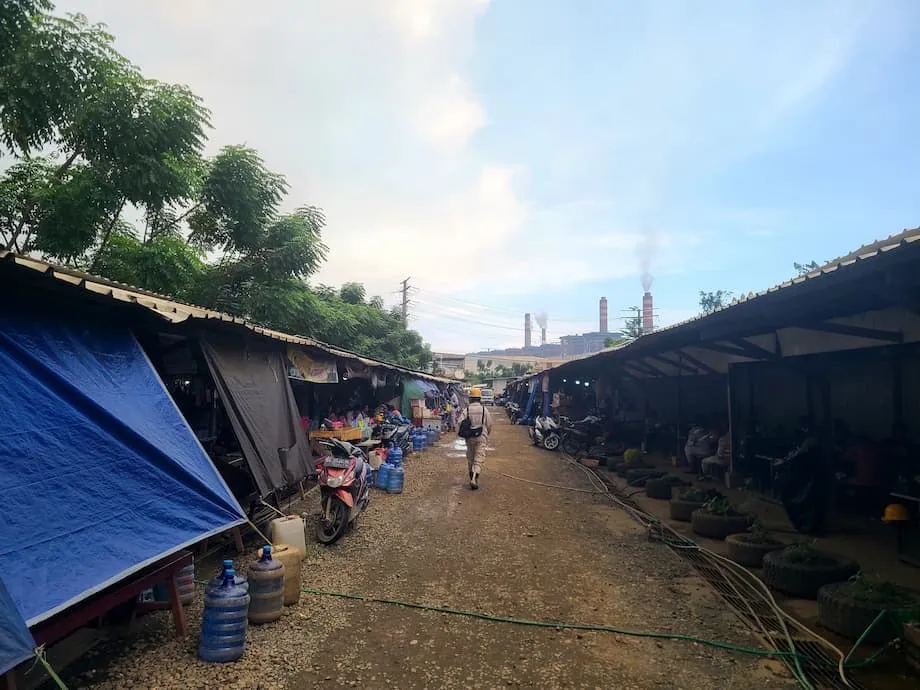
A dominant nickel producer faces the costs of rapid growth
Indonesia produces about 60 percent of the world's nickel, holds more than 40 percent of its identified nickel resources and has more than 40 operating nickel smelters. Across remote islands in the east of the country, Chinese investment and tens of thousands of Chinese migrant workers have helped build an industrial network supplying stainless steel factories, electric vehicles and renewable energy systems.
Contents
- A dominant nickel producer faces the costs of rapid growth
- How export restrictions brought factories to Indonesia
- What the furnaces and refineries produce
- Why workers leave China for the industrial parks
- Passports, movement and the ability to speak up
- Deadly accidents expose weaknesses on the factory floor
- Pollution reaches villages, rivers and fishing grounds
- New businesses grow beside new pressures
- Pay gaps and job hierarchies feed tension
- Regulators and buyers face pressure to act
- What improvements would mean on the ground
- Key Points
Indonesia Morowali Industrial Park in Central Sulawesi and Indonesia Weda Bay Industrial Park in North Maluku are central to that transformation. Their furnaces, refineries, private ports and power stations run around the clock. Hundreds of thousands of Indonesians work across the expanding nickel industry alongside Chinese employees, who remain a minority at individual sites but hold many technical and management positions.
Higher wages have brought opportunities for workers and nearby businesses. Chinese recruits can earn two or three times what they would at home, with many reporting more than triple their likely take home pay. Indonesian workers moving from farming or fishing can also see substantial income gains.
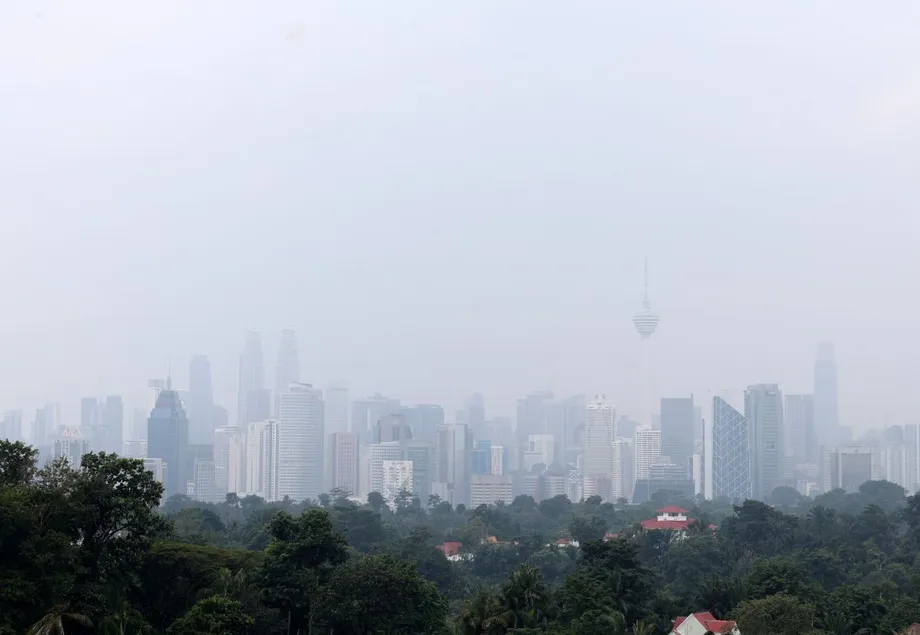
The costs have become harder to overlook. A furnace explosion inside the Morowali park killed 21 workers in late 2023. Civil society groups have counted more than 100 deaths and over 200 injuries at Chinese backed nickel facilities in Indonesia since 2015, with nearly half the deaths at Morowali. Neighboring communities describe polluted air, declining catches and waterways changed by industrial construction.
As of October 11, 2025, Indonesia's nickel gamble combines a stronger position in global manufacturing with continuing tests of workplace safety, environmental protection and the treatment of migrant workers. Companies and officials have promised improvements, while workers and residents continue to describe problems in daily life.
How export restrictions brought factories to Indonesia
Indonesia once shipped most of its mined nickel ore directly to China. Policymakers changed that model by requiring companies to process more of the mineral domestically, seeking to keep more manufacturing activity and income inside the country.
An export ban on unprocessed ore in 2014, tightened in 2020, helped draw Chinese companies led by Tsingshan Holding Group into Indonesian smelting and refining. Generous industrial permits and political support accompanied the restrictions. Chinese companies and ventures with Indonesian partners committed tens of billions of dollars, according to industry estimates.
Morowali, established in 2013, grew into one of the world's largest nickel and stainless steel complexes. Weda Bay followed, transforming a forested coastline into workshops, furnaces and conveyor belts. Both parks developed dedicated infrastructure, including ports and coal fired power stations, rather than relying entirely on surrounding public services.
The main developments span more than a decade:
- 2013: Indonesia Morowali Industrial Park was established in Central Sulawesi.
- 2014: Indonesia banned exports of unprocessed ore to encourage domestic processing.
- 2015 onward: Civil society groups began the period covered by their tally of deaths and injuries at Chinese backed nickel facilities.
- 2020: Tighter export restrictions accelerated the shift toward processing inside Indonesia.
- Late 2023: A furnace explosion at Morowali killed 21 workers and injured dozens.
- October 2024 and early 2025: Further fatal industrial accidents were recorded.
Indonesia's resulting share of global output gives Jakarta considerable influence over supply chains. The concentration of production also means that failures inside these industrial parks affect a large part of the industry supplying nickel to manufacturers abroad.
What the furnaces and refineries produce
Nickel leaves the parks in several forms, depending on its intended use. Nickel pig iron goes into stainless steel. Nickel matte and mixed hydroxide precipitate move toward the production of cathode materials, ingredients used in electric vehicle batteries.
High pressure acid leach processing, known as HPAL, extracts nickel from lower grade laterite ore. The process produces acidic waste that requires careful handling. Its waste facilities have become a particular concern for people living near tailings ponds, where residents worry about seepage into soil and wells.
Coal fired power stations keep the industrial parks supplied with steady, relatively cheap electricity. That arrangement supports continuous production, but it also adds air pollution and climate emissions to the environmental costs of mining and refining. The parks' dependence on their own power plants links the battery supply chain to coal consumption.
Nickel matters to many lithium ion batteries because it helps store more energy in the same space. Engineers call that higher energy density. It is useful for vehicles designed to travel farther between charges, including premium and long distance models.
Some carmakers have shifted part of their production to lithium iron phosphate batteries, which use neither nickel nor cobalt. Those batteries reduce costs and dependence on scarce metals. Nickel demand nevertheless remains strong for other vehicle batteries, stainless steel and industrial alloys.
Why workers leave China for the industrial parks
Chinese workers travel from provinces across northern and central China, taking flights and ferries to reach Indonesia's factory towns. Many previously held steady jobs in steel or construction before those sectors slowed. The prospect of higher pay draws them far from their families.
Remittances can pay for home renovations, healthcare for parents, children's education and household debts. Those goals help explain why workers accept long separations and a daily routine largely confined to dormitories and workshops inside guarded compounds.
Furnace crews describe shifts lasting 12 hours, frequent night duty and common overtime. Workers report an average working week of roughly 56 hours. Extreme heat, burns and respiratory problems are recurring hazards around blast furnaces and kilns operating at high temperatures.
Protective equipment is issued, but workers complain about shortages, uneven training and pressure to maintain production when maintenance is delayed. Local employees, many entering heavy industry for the first time, learn on the job while facing the same pressure to keep equipment running.
Chinese technicians and supervisors usually receive higher wages than Indonesian employees. Many local contractor jobs are less secure and carry fewer benefits. Higher income can therefore coexist with sharp differences in job stability, responsibility and protection within the same industrial complex.
Passports, movement and the ability to speak up
Chinese employees have described managers holding their passports and limiting travel outside the parks. Indonesian authorities have recently prohibited passport confiscation, and companies say they are complying. Workers nevertheless continue to report practical restrictions, including company rules limiting visits to nearby towns.
Security policies have also kept Chinese staff inside compounds after unrest. For employees already living far from home, control over documents and movement affects their ability to manage daily life or leave a difficult job.
Labor groups and investigative researchers have documented recurring complaints across several areas:
- Confiscated passports and delays in returning documents.
- Withheld wages or payments arriving late.
- Restrictions on movement inside and outside work sites.
- Insufficient safety training and protective equipment.
- Gaps in work permits and contracts that workers find unclear.
- Physical intimidation when workers challenge rules.
When present, these practices match common indicators of forced labor defined by international conventions. They also weaken trust between employees and managers and make it harder for workers to raise concerns before dangerous equipment or working conditions cause an accident.
Workers describe fears of retaliation for joining unions and pressure to avoid reporting incidents. Surveys also point to daily near misses. Families seeking safer workplaces have called for systematic inspections, independent audits and stronger worker representation.
Deadly accidents expose weaknesses on the factory floor
The late 2023 furnace explosion at a plant inside Morowali killed 21 workers and injured dozens more. Further fatal accidents followed in October 2024 and early 2025, with production lines resuming quickly after emergency responses.
Civil society groups tracking Chinese backed nickel facilities across Indonesia counted more than 100 deaths and over 200 injuries from 2015 onward. Nearly half of those deaths occurred at Morowali, placing the large industrial park at the center of concerns about the sector's safety record.
Workers and unions describe several recurring problems: limited protective gear, too few emergency drills, inadequate training and communication failures between Indonesian and Chinese teams. Language barriers can slow an emergency response and make the transfer of information between shifts more difficult.
Crews also complain that taking sick days can bring penalties and that damaged equipment sometimes stays in operation until a complete shutdown becomes unavoidable. Subcontracted workers say their position is especially difficult because they lack stable contracts and are last in line for compensation after injuries.
After the 2023 disaster, senior Chinese executives met labor representatives and local officials and pledged improvements. Some parks introduced additional safety initiatives and committees. A spokesperson for the Morowali complex defended its compliance record and described accident prevention as a priority:
The park complies with all Indonesian laws and has made efforts to reduce accidents.
Workers' accounts of near misses and reporting pressure continue alongside those assurances. For families, the practical test is whether protective equipment, maintenance, training and the freedom to report danger improve during ordinary shifts.
Pollution reaches villages, rivers and fishing grounds
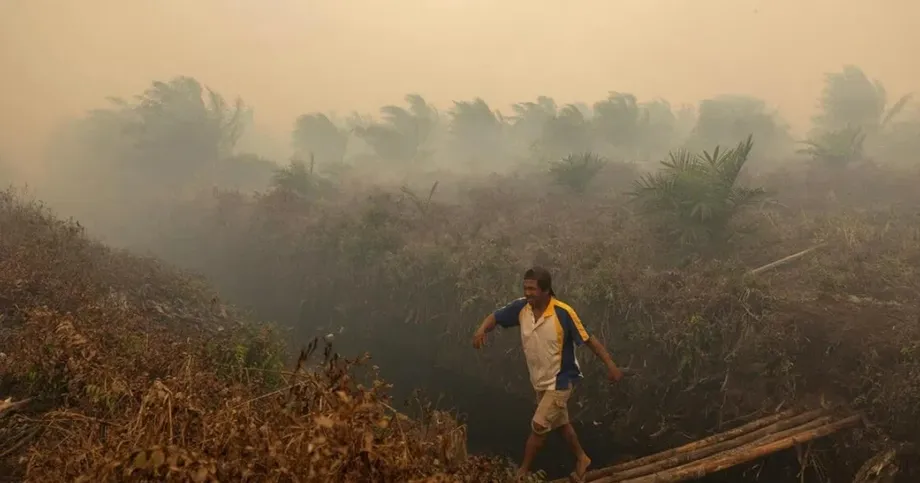
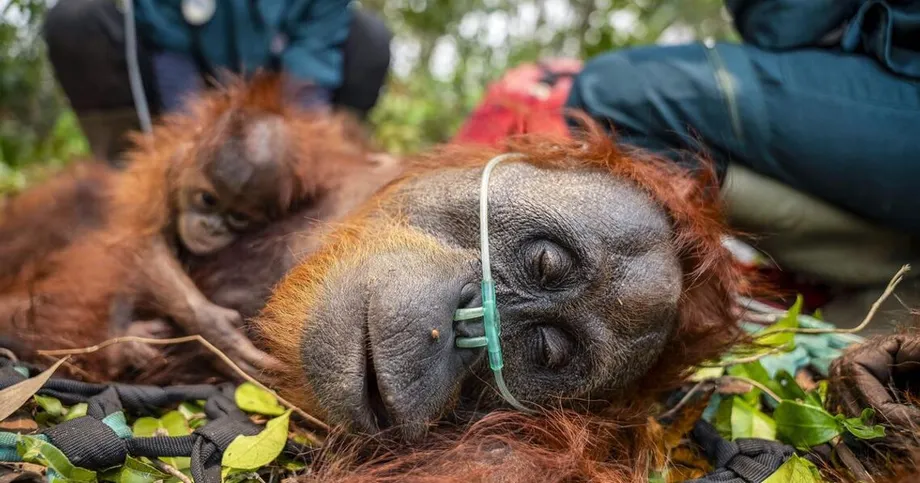
Environmental damage can begin at the mine, before ore reaches a furnace. Open pit mining removes vegetation from hillsides, allowing rain to wash sediment into rivers. Near nickel operations, deforestation rates have been measured at nearly twice those in similar areas, reducing wildlife habitat and increasing flood risks.
Barges carry ore through narrow channels toward industrial ports. Their movement churns shallow coastal waters that previously supported productive fishing grounds. Fishermen say catches have fallen as water becomes murkier near unloading points and smelter outfalls.
Villages downwind face dust from ore stockpiles, heavy truck traffic and emissions from smelter stacks, coke ovens and coal fired power units. Residents describe burning eyes, skin irritation and chronic coughs. Clinics report more coughs and asthma, while health workers say respiratory problems are rising.
Malnutrition persists in villages where pollution has reduced access to clean water and fish. Some farmers also struggle to drain rice paddies because factory walls and roads have changed the natural flow of water. These problems place pressure on food production as well as household health.
Government inspections have found serious environmental breaches at some sites. Investigations into pollution and construction without permits are ongoing. Residents near HPAL waste facilities remain concerned about what seepage could mean for their wells and soil.
New businesses grow beside new pressures
Communities around the parks have gained construction jobs, customers and new businesses. Small shops sell food and supplies to employees. Migrants have opened restaurants with Mandarin menus, while local cooks have expanded their kitchens to serve the growing workforce.
Shops and food stalls outside factory gates bring Mandarin and Bahasa Indonesia together over noodles and grilled seafood. For owners whose income depends on workers, continued industrial activity supports their livelihoods. Many fear that renewed unrest would drive customers away.
Rapid growth has also brought higher rents, noise and dust. Some families keep masks by the front door and cough syrup in their cabinets as routine household supplies. Even residents who earn more from the industrial economy live with the effects of heavy industry nearby.
A longtime Sulawesi resident who took construction work near a smelter described that balance between improved income and deteriorating air:
The air is not good, but we have better living standards.
Experiences vary between communities and households. A shop gaining customers, a farmer struggling with drainage and a fisherman returning with a smaller catch can live close to the same industrial park. The benefits and costs reach people through different parts of daily life.
Pay gaps and job hierarchies feed tension
Workers and residents describe a visible hierarchy inside the parks. Bright yellow hard hats commonly identify entry level workers, most of them Indonesian. Blue or white hats often mark senior technicians and supervisors, many of them Chinese.
Chinese specialists frequently hold these roles because they have experience with furnaces and machinery installed by Chinese suppliers. Indonesian workers increasingly move into technical positions as the parks mature, but differences in wages and responsibility remain a source of resentment.
Companies have responded with training programs and more places in technical schools. Local workers still express frustration when better paid jobs appear beyond reach. Language differences add friction to relationships already shaped by unequal pay and authority.
During 2023, protests and a race riot in part of Sulawesi led companies to restrict movement for Chinese staff and brought security forces into the area. Fatal incidents that year added to tensions surrounding industrial work. Elsewhere, everyday trade and shared workplaces continue, with local businesses depending on customers from both communities.
Regulators and buyers face pressure to act
Indonesian ministries have investigated environmental violations and reminded companies to follow work permit rules. Officials say enforcing the prohibition on passport confiscation is a priority. Labor groups describe uneven progress and weak enforcement.
Some parks have installed new waste processing units alongside additional safety committees. Oversight has also faced pressure from funding cuts affecting some international programs that support inspections and worker training.
Jakarta and Washington have discussed a critical minerals arrangement that could allow more Indonesian nickel to qualify for electric vehicle subsidies. Lawmakers have raised concerns about labor protections, environmental damage and the dominant position of Chinese firms in Indonesia's nickel industry. No date for an agreement was given.
Automakers face scrutiny from investors and consumers seeking proof that battery nickel is responsibly sourced. Buyers are pressing suppliers for audits and plans to address problems. Transparent traceability means being able to follow the material from its mine through processing to the cathode used in a battery.
Prices complicate the effort. Expanding production helped push nickel prices down by roughly a fifth in 2024, squeezing weaker producers. Lower margins increase pressure to reduce spending, making enforcement by regulators and purchasing requirements from buyers important to maintaining safety and environmental controls.
What improvements would mean on the ground
Cleaner electricity, tighter waste controls and stronger labor protections are central to reducing the industry's footprint. Some parks are adding waste handling systems for HPAL facilities and testing more efficient equipment. Discussions about connecting parts of the grid to renewable energy projects are continuing.
Coal plants still provide most electricity at the parks because they supply steady power and require less new infrastructure. Reducing that dependence involves a different set of investments from changes that can be made immediately on factory floors.
Practical safety measures include more translators on each shift, mandatory accident reporting, independent audits with public summaries and clear schedules for issuing and replacing protective equipment. Worker committees able to stop an unsafe production line without retaliation would give employees a direct role in preventing accidents.
Stronger waste management would address concerns around acidic processing residues, soil and water. Buyers can support those changes by requiring traceability, insisting on corrective action and rewarding suppliers that meet stronger standards. Indonesia's continued industrial growth will be felt in concrete terms: safer shifts, cleaner water, more reliable livelihoods and better protection for communities living beside the plants.
Key Points
- Indonesia produces about 60 percent of global nickel, holds more than 40 percent of identified resources and operates more than 40 nickel smelters.
- Export restrictions introduced in 2014 and tightened in 2020 helped attract major Chinese investment in domestic processing.
- Tens of thousands of Chinese workers help run the industry alongside hundreds of thousands of Indonesians, with higher wages drawing migrants into demanding jobs.
- A late 2023 Morowali furnace explosion killed 21 workers. Civil society groups counted more than 100 deaths and over 200 injuries across Chinese backed facilities since 2015.
- Authorities have prohibited passport confiscation, but workers continue to describe movement restrictions, wage problems and gaps in workplace protection.
- Mining, industrial emissions and coal power affect nearby forests, air, waterways, farms and fishing grounds.
- Companies have pledged improvements, while regulators and global buyers face pressure to secure stronger safety, labor and environmental standards.