Shorter weeks still leave Japan far above its peers
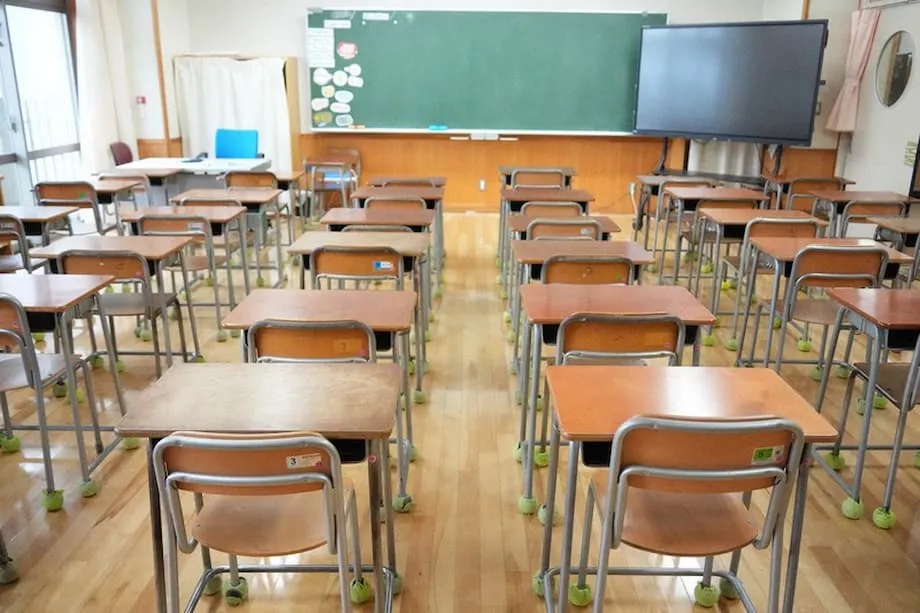
Japan's elementary school teachers worked an average of 52.1 hours a week and junior high teachers 55.1 hours in the 2024 Teaching and Learning International Survey (TALIS), the longest working weeks among participating countries. Both averages were about four hours lower than in 2018, yet teachers still faced workloads well above international norms.
Contents
- Shorter weeks still leave Japan far above its peers
- What the survey measures
- Why the job extends beyond lessons
- Where working time has fallen
- How Japan compares with other countries
- Teacher shortages put schools under more pressure
- Clubs remain a major demand on teachers
- Paperwork and the uneven use of technology
- Student care fills time outside formal teaching
- Long hours carry health risks
- Reforms now face a fiscal 2029 target
- At a Glance
The survey, led by the Organisation for Economic Co operation and Development (OECD), puts the OECD averages at 40.4 hours for elementary teachers and about 41 hours for junior high teachers. Japan's figures for teachers working full time were therefore 11.7 hours higher at elementary level and about 14.1 hours higher at junior high level.
Classroom instruction accounts for only part of that working week. Japanese junior high teachers reported 17.8 hours of teaching, below the international average of 22.7 hours. Elementary teachers reported about 23.2 hours. Preparation, paperwork, student guidance and extracurricular clubs fill much of the remaining time.
Teachers also count work completed at home in the evenings and on weekends. The figures therefore capture responsibilities that continue after the school day ends, including planning lessons and managing activities that take place outside ordinary classroom hours.
Japan's results show progress alongside continuing pressure. Time devoted to several duties has fallen since 2018, but schools still rely on teachers for a wide range of educational, administrative and supervisory work. Shortages of staff add another burden: 40.7 percent of elementary principals and 35.6 percent of junior high principals said insufficient teachers were hindering high quality education.
The central challenge is to reduce that workload while preserving the student support and activities that Japanese schools provide. Government measures include closer monitoring of hours, support staff and moving club supervision to community organizations. A newer target calls for average teacher overtime to fall to 30 hours a month by fiscal 2029.
What the survey measures
TALIS surveys teachers and principals every five to six years. Its 2024 cycle covered 55 countries and regions at junior high level and 16 at elementary level, giving a broad picture of working conditions across participating education systems.
About 200 elementary schools and 200 middle schools were sampled per participating system. In Japan, 6,914 teachers and 402 principals responded across 403 schools. The latest round was delayed by a year because of the pandemic, making it the first update since the 2018 survey.
Teachers report their own working hours, including time spent working at home, in the evening and at weekends. That matters in Japan because school events and club activities often extend beyond regular hours and take place on holidays.
A teacher's total therefore includes much more than standing in front of a class. It covers preparation and other duties that support the school community, even when those tasks happen away from school or without students present.
The main dates behind the findings and reforms are:
- 2018: The previous TALIS survey provided the comparison for the latest changes in working hours.
- 2019: Japan's education ministry introduced overtime guidelines and urged schools to monitor hours closely.
- 2024: The latest TALIS cycle collected the figures showing shorter, but still exceptionally long, working weeks in Japan.
- Fiscal 2029: The government aims to reduce average teacher overtime to 30 hours a month.
Why the job extends beyond lessons
Japanese teachers carry responsibilities that reach well beyond subject instruction. Many are homeroom leaders, looking after student guidance, daily pastoral care and close communication with families. Pastoral care means helping with students' everyday welfare and personal concerns alongside their academic work.
Teachers plan school events, administer tests, write reports and coordinate with colleagues and local authorities. They also manage health and safety procedures. Each responsibility takes time, and many compete with lesson preparation within an already crowded day.
Junior high teachers reported about 5.6 hours a week on extracurricular activities and 5.2 hours on administrative duties. Elementary teachers spent around 4.5 hours on administration. Lesson preparation in Japan averaged 8.2 hours, compared with a global average of 7.4 hours.
Communication with parents averaged about 1.4 hours a week at both school levels, below the international average. Japan's longer working weeks therefore reflect a broad combination of tasks, with especially heavy commitments to clubs, preparation, paperwork and student guidance.
Teachers supervising clubs organize practices, prepare students for competitions and travel with them. School ceremonies, shared events and routine coordination create further work. The breadth of these duties helps explain why total hours remain high even though classroom teaching time is relatively modest.
Where working time has fallen
Japanese teachers reported working about four fewer hours a week than in 2018. Several categories of work also declined, supporting government claims that changes to working practices are having an effect.
Time spent on extracurricular clubs fell by about 2.5 hours a week. Lesson preparation declined by 0.7 hours, while administrative work fell by 0.9 hours. Those reductions show that some of the duties adding to the long working week have become less demanding in terms of time.
Junior high teachers nevertheless still spent 5.6 hours a week on clubs and 5.2 hours on administration. Elementary teachers continued to devote around 4.5 hours to administrative work. The reductions have brought relief without bringing Japanese workloads close to international averages.
The remaining gap is substantial at both levels: elementary teachers worked 52.1 hours against an OECD average of 40.4, and junior high teachers worked 55.1 hours against about 41. A shorter week can still leave teachers with considerable evening and weekend work.
How Japan compares with other countries
Japan's elementary teachers had the highest average working time among participating countries, followed by New Zealand at 50.6 hours and Australia at 46.3 hours. New Zealand was relatively close to Japan, while Australia's average was several hours lower.
At junior high level, Japanese teachers worked about 9.8 hours more per week than their counterparts in the United States, roughly 12 hours more than those in South Korea and about 16.4 hours more than teachers in France. These comparisons show how far Japan's working week extends beyond those in other education systems.
Singapore also reported a relatively long teacher working week, at 47.3 hours, above the OECD average. Teachers there devoted considerable time to planning, counseling, activities alongside the curriculum and communication with parents.
Japan and Singapore illustrate how responsibilities supporting student development outside direct instruction can contribute to high totals. In Japan, the combination of those duties and fewer classroom teaching hours makes the gap between time teaching and time working especially visible.
Teacher shortages put schools under more pressure
Japanese principals increasingly identified staffing shortages as a barrier to high quality education. In elementary schools, 40.7 percent cited that problem, compared with an international average of 28.7 percent. At junior high level, the figures were 35.6 percent in Japan and 23.1 percent internationally.
Both Japanese shares had risen sharply since 2018. A shortage of teachers leaves those already in school with more classes to cover, less time for preparation and feedback, and additional administrative responsibilities.
Heavy workloads can also discourage people from entering teaching, prolong vacancies and make recruitment harder. Schools can then face a repeating problem: too few staff increase the burden on existing teachers, while demanding working conditions make it more difficult to attract replacements.
For students, those pressures affect the time teachers can devote to planning lessons, responding to their work and providing support. For teachers, a vacant position can mean more duties spread across a staff already working long weeks.
Clubs remain a major demand on teachers
Club activities, known as bukatsu, are a familiar part of Japanese school life. Sports and cultural clubs run after classes and on weekends, with teachers supervising practices, preparing students for tournaments and traveling to competitions.
Junior high teachers spent about 5.6 hours a week on these activities, more than three times the international average of 1.7 hours. Even after the decline of about 2.5 hours since 2018, club supervision remained a major commitment outside classroom instruction.
Japan's approach to education brings knowledge, character and physical development together. Clubs form part of that broader view of what schools should provide, giving teachers responsibilities that continue when regular lessons have finished.
Policymakers have been moving club oversight to community programs and local sports associations. The aim is to preserve opportunities for students while reducing teachers' obligations after school and at weekends.
Many schools still depend on teachers, particularly in places with few outside organizations able to take over. Local capacity therefore matters: reducing teacher supervision also requires community arrangements that can keep sports and cultural activities available to students.
Paperwork and the uneven use of technology
Administrative duties took about 5.2 hours a week for Japanese junior high teachers, compared with an international average of three hours. Elementary teachers reported around 4.5 hours. Attendance records, health records, internal reports and test administration all contribute to that workload.
Teachers also keep student guidance records and coordinate ceremonies and school events. Small tasks accumulate, taking time that must be fitted around lessons, preparation and other student responsibilities.
Digital tools can help with this work, although adoption varies. Only about 12 percent of Japanese principals said information and communication technology education was lacking, a share below the global average. Classroom use of artificial intelligence was much less widespread than in many other participating systems.
About 16 percent of elementary teachers and 17.4 percent of junior high teachers in Japan said they had used AI in the past year, compared with more than 36 percent globally. Japan was near the bottom on that measure. In the United Arab Emirates and Singapore, roughly three quarters of teachers reported using AI in classes.
Many Japanese educators cited concerns about bias and data privacy when deciding whether to use the technology. Bias refers to unfair or slanted responses, while data privacy concerns involve protecting information about students and others. Those concerns are part of the decisions teachers face as digital tools become available.
Student care fills time outside formal teaching
Japanese elementary teachers reported about 23.2 hours of classroom teaching each week. Junior high teachers reported 17.8 hours, compared with an international average of 22.7 hours. Much of their other work also involves students, through activities and routines beyond subject lessons.
Homeroom activities, moral education, integrated studies projects and shared school events are part of the regular day. Teachers guide students through these experiences as part of the school's wider educational responsibilities.
Students also clean classrooms and corridors, a longstanding practice supervised by teachers. Lunchtime carries educational goals related to nutrition and social behavior, with teachers helping guide those daily routines.
Japanese schools value these activities for developing students in a broad range of ways. They occupy teacher time alongside formal instruction, while lesson preparation, administration and clubs add further duties to the working week.
The result is a job in which classroom hours capture only one part of contact with students. Caring for students, supervising shared routines and organizing activities continue throughout the school day and, in some cases, beyond it.
Long hours carry health risks
A nationwide study of public junior high teachers found that about 59.6 percent worked 11 hours or more a day. Longer hours were associated with stronger stress responses among teachers with tenure and teachers employed for a fixed term.
Vice principals showed a different pattern. They reported very long hours, but the study did not find the same increase in stress indicators. Researchers linked that finding to factors specific to their roles, possible workaholism or other influences.
Japanese labor law sets a general cap of 720 hours of overtime a year for many workers. At the time of the study, that threshold did not apply to public school teachers. Researchers warned that some educators exceeded levels associated with death from overwork.
The risks described include burnout, declining retention and safety concerns for staff and students. Losing exhausted teachers can also add to staffing pressure, making working conditions and recruitment closely connected problems for schools.
Reforms now face a fiscal 2029 target
Japan's education ministry introduced overtime guidelines in 2019, established limits in principle and urged schools to track working hours closely. Authorities also encouraged schools to use support staff for some duties outside teaching and to transfer club activities to community organizations.
The fall of about four hours in the average working week since 2018 suggests those efforts are making a difference. Teachers still work far longer than international averages, and shortages continue to place pressure on schools trying to reduce workloads.
The government now aims to bring average teacher overtime down to 30 hours a month by fiscal 2029. That target concerns overtime, the additional hours worked beyond regular working time, while the TALIS figures describe the full working week.
Reaching the target will likely require sustained hiring, simpler administrative processes, clear boundaries for communication with parents and thoughtful use of digital tools. Support staff and changes to the allocation of duties can also help reduce the tasks that teachers must fit around instruction.
Budgets, the ability of local communities to host clubs and changes to staff roles will shape how quickly schools can reduce pressure while maintaining student support. Japan's progress since 2018 shows that hours can fall, but the latest figures leave a substantial gap between current workloads and the government's goal.
At a Glance
- Japanese elementary teachers worked 52.1 hours a week and junior high teachers 55.1 hours in TALIS 2024, the longest averages among participating countries.
- Working weeks fell by about four hours since 2018 but remained 11.7 hours above the OECD elementary average and about 14.1 hours above the junior high average.
- Classroom teaching averaged 23.2 hours in elementary schools and 17.8 hours in junior high schools.
- Junior high teachers spent 5.6 hours a week on clubs and 5.2 hours on administration; elementary teachers spent around 4.5 hours on administration.
- Teacher shortages were hindering high quality education according to 40.7 percent of elementary principals and 35.6 percent of junior high principals.
- AI use was reported by about 16 percent of elementary teachers and 17.4 percent of junior high teachers, compared with more than 36 percent globally.
- A nationwide study found that about 59.6 percent of public junior high teachers worked at least 11 hours a day.
- Government reforms include monitoring hours, using support staff and transferring clubs to community organizations, with average overtime targeted at 30 hours a month by fiscal 2029.