Four tribal languages gain a digital bridge
India's Adi Vaani platform entered beta testing on September 1, 2025, offering translation between Hindi or English and four tribal languages: Santali, Mundari, Bhili and Gondi. Support for Kui and Garo is being developed. The government led project is India's first artificial intelligence translator designed specifically for tribal languages, with ambitions that stretch from classroom lessons to the preservation of oral histories.
Contents
- Four tribal languages gain a digital bridge
- What people can use today
- Why teaching AI these languages takes time
- The people behind the training data
- Accuracy and regional differences remain difficult
- What changes in classrooms, clinics and village offices
- Recording stories before they disappear
- How the project fits India's language policy
- Community control matters alongside the technology
- The next phase needs greater reach and depth
- Key Points
For a Gondi teacher at a primary school in central India, the problem it addresses is familiar. He has spent years turning long, complex Hindi sentences into simple Gondi explanations, drawing on memory, consulting elders and searching for local words to explain new ideas. A missed nuance can change the meaning. A missing word can push students back toward a dominant language.
Adi Vaani aims to make that work faster and more reliable. Its immediate purpose is to help people understand school materials, health advice and government benefits in the languages they use at home. Its cultural purpose is to help communities record stories, songs and other knowledge in a lasting digital form, while carrying their voices to a wider audience.
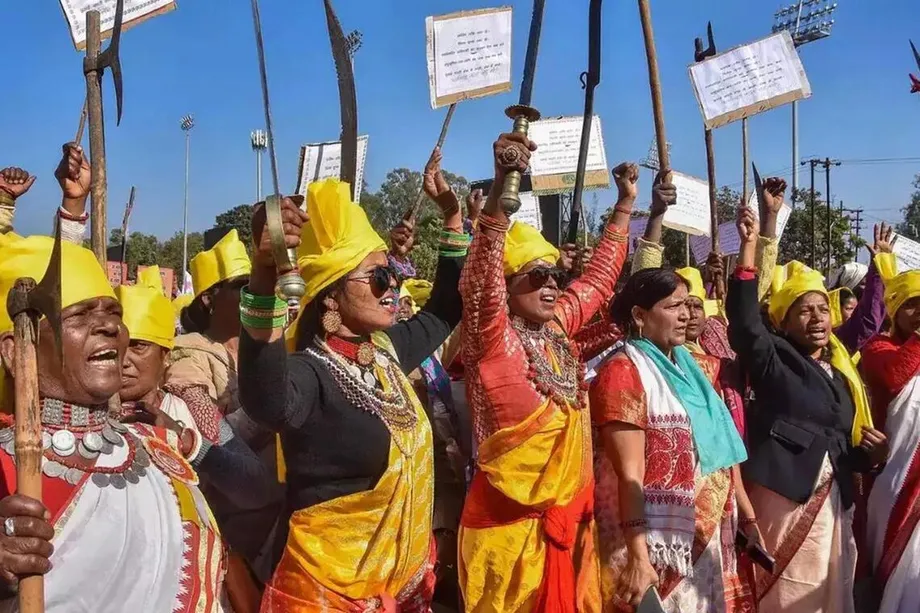
Government records list thousands of mother tongues and dialects across India. Many belong to small communities, and many have faded away in recent decades. Jobs, migration to cities and media draw speakers toward larger languages. Without regular use in education and public services, smaller languages lose ground.
As of October 10, 2025, Adi Vaani remains a beta platform whose accuracy varies. Its promise depends on both the technology and the teachers, native speakers and research institutes helping it learn how people actually speak.
What people can use today
Adi Vaani is available through a mobile app and an official web portal. The app is live on Android. The first release concentrates on four languages with large communities of speakers but limited digital tools.
Santali, Mundari, Bhili and Gondi were selected for the initial release, while engineering teams prepare Kui and Garo. Decisions about expansion take account of speaker population, the availability of language data and local partners who can check translations.
The platform brings several functions together. It translates text in real time, reads written words aloud through text to speech, and turns recordings into written words through speech to text. It can also produce spoken translations. Optical character recognition, usually called OCR, extracts text from photographs or scanned pages so that it can be translated.
Bilingual dictionaries, primers for early learning and curated material sit alongside those tools. Public service advisories and translations of speeches provide content connected with everyday life. The aim is to give people useful material in their own language, as well as a tool for translating something new.
The project's early timetable has two dated milestones and an expansion programme without a stated launch date:
- September 1, 2025: Adi Vaani launched in beta with Santali, Mundari, Bhili and Gondi.
- October 10, 2025: The platform is available through Android and the government portal, with accuracy improvements continuing.
- Next phase: Kui and Garo are in development, alongside work on scripts and regional language forms. No release date has been given.
Why teaching AI these languages takes time
Most tribal languages have far fewer digital resources than languages with extensive publishing and internet use. Researchers describe these as low resource languages: there may be few reliable digital texts, recordings or examples showing how the same sentence is expressed in another language.
Those paired examples matter because translation models learn from them. Adi Vaani uses neural models based on a technology called transformers, which learn patterns by examining many examples of ideas expressed in two languages. Modern translation and speech systems can require millions of aligned sentence pairs or thousands of hours of audio to reach high accuracy.
Santali illustrates the scale of the work. Researchers and community translators prepared around 100,000 Hindi sentences aligned with Santali, alongside a collection of text running into millions of words. Those materials became training data. The models are then reviewed, corrected and trained again in repeated cycles.
Speech tools require another kind of collection effort. Linguists and local contributors record words, phrases and longer passages. The system learns how sounds correspond to letters and how words flow in natural speech. Each language has its own sounds, stress patterns and rhythm, so a system must learn more than written vocabulary.
Pronunciation matters to whether native speakers accept the result. Human reviewers therefore remain central to the process, checking both the words chosen and the way they sound. Building a useful system means repeatedly returning to people who know the language.
The people behind the training data
Adi Vaani is a consortium project, with major engineering institutes leading technical development and partners contributing from across India's research network. Tribal Research Institutes in Jharkhand, Odisha, Madhya Pradesh, Chhattisgarh and Meghalaya provide language expertise and connect technical teams with native speakers.
Teachers, community leaders and young translators help prepare dictionaries, training sentences, folklore and lessons. More than 200 contributors have taken part in collecting and checking language material for the first group of languages.
Their work includes identifying vocabulary used in particular regions, resolving differences in usage and finding clear ways to express modern concepts that have no direct local equivalent. A technically plausible translation can still sound unnatural to the people expected to use it. Community review helps keep the models connected to everyday speech as well as formal or academic language.
Leadership and training campaigns in tribal districts are promoting the project among schools, health workers and local officials. These efforts connect the creation of language tools with the people who could use them in daily work.
Accuracy and regional differences remain difficult
Early users have reported problems with Gondi translations, particularly when sentences are long or ideas are abstract. Teams are adjusting the models using fresh data and user feedback. More material is expected to improve quality, while official documents and communication involving serious consequences still need careful human review.
Regional variation presents another challenge. Santali differs across Jharkhand, Odisha and West Bengal. Gondi is spoken across several states, with distinct forms of usage. The current release generally supports one standard form of each language.
Serving more regional forms will require additional recordings, written examples and reviewers. Some languages also use different scripts in different places. That affects practical details such as keyboards and fonts, as well as whether OCR can recognise printed words and whether text to speech can pronounce them correctly.
Automated evaluation scores can give developers a quick indication of translation quality. Cultural nuance is harder to measure. Teachers, elders and younger speakers can identify awkward phrasing, judge whether a term fits a local situation and protect the style and rhythm that make a language distinctive.
For users, these limitations make feedback a central part of the beta period. The task is to produce translations that people understand and trust, across the vocabulary and speech patterns they encounter in their own communities.
What changes in classrooms, clinics and village offices
Mother tongue education is a major reason for building Adi Vaani. Children understand new ideas more easily when they are explained in a language already familiar from home. A teacher could translate chalkboard notes into Santali or Bhili, have a science paragraph read aloud, or prepare worksheets in two languages.
Such materials could help pupils learn a subject while retaining familiarity with their mother tongue. They could also support the gradual move to additional languages without sacrificing understanding in the early stages of education. For teachers like the Gondi educator in central India, the practical gain would be less time spent searching for an explanation of every unfamiliar term.
Health workers face a similar communication problem when explaining symptoms, prescriptions and advisories. Language barriers can combine with limited literacy, making a written notice difficult to use. Speech tools could turn a printed advisory into a voice clip in a tribal language, while OCR could make older posters and pamphlets searchable and available for translation.
During emergencies, simple and accurate messages in a language people trust can save lives. The need for accuracy is especially pressing when words concern treatment or instructions that someone must follow.
Government services bring another set of everyday tasks: checking eligibility, gathering documents and meeting deadlines. Translated forms, notices and announcements could reduce confusion and help people claim benefits without depending on someone else to interpret every line.
Village meetings could use the app for subtitles or quick summaries of speeches. Farmers could use translated weather information, market prices and soil health advisories. Across these settings, the intended change is concrete: information becomes easier to understand at the point when someone needs to act on it.
Recording stories before they disappear
Tribal languages carry songs, rituals, stories and knowledge of local environments. Much of this heritage survives in memory and performance rather than printed collections. When a language loses speakers and everyday uses, access to that knowledge can shrink with it.
Adi Vaani's tools could support a preservation process in which a storyteller is recorded, the recording is transcribed, and the text is translated and stored with descriptive information. That information, known as metadata, helps identify and organise an item in an archive.
OCR offers a related route for written material. Manuscripts, village chronicles and folk theatre scripts that survive only as scanned images could be turned into searchable text. An important encyclopedic work about the Munda community, for example, exists mainly as scanned pages. Making such a collection searchable would help teachers, students and researchers find and use its contents.
The portal's dictionaries, early learning primers, health awareness material and translations of national speeches also place tribal languages in modern settings. For young people who spend much of their time on phones, these resources provide a digital point of contact with their language.
Preservation and everyday use support different needs. Recording a song protects a performance for later access. Making a school lesson or public notice available in the same language gives people another reason to keep using it now.
How the project fits India's language policy
Adi Vaani builds on a broader effort to create digital infrastructure for Indian languages with little online presence. National programmes in recent years have funded data collection and model training, alongside work to standardise transliteration and release tools for education, health and public services. Transliteration means representing words from one script in another.
The platform also fits initiatives intended to bring government schemes to people who are hardest to reach and to promote unity through respect for different languages. Its practical and cultural aims meet in the same question: can someone take part in public life without first having to leave their mother tongue behind?
The expected benefits include students staying in school, patients following treatment instructions with fewer errors, and citizens completing forms and claiming benefits without repeated visits. Adi Vaani is intended to reduce the language difficulties that stand between people and those outcomes.
Digital access is part of that ambition. Languages spoken by millions at home often have few online resources. Giving them translation tools, searchable text and spoken content creates a route into the digital economy while supporting continued use of the mother tongue.
Community control matters alongside the technology
Language loss extends far beyond India. Thousands of languages are spoken worldwide, and many risk disappearing during this century. International bodies have called for urgent action to protect indigenous languages and support their use in education and public life.
AI can contribute, but its usefulness depends on community consent, local governance and cultural accuracy. A tool that misses idioms or introduces vocabulary people find unfamiliar can lose their trust. Involving community reviewers and making corrections easy can help build confidence while improving the system.
Indigenous media and research groups in New Zealand offer examples of community ownership of datasets and careful licensing. Their experience places the handling of language data alongside the design of the model as a central concern. Licensing sets the terms under which collected material may be used.
Adi Vaani relies on native speakers and state research institutes to curate data and check results. That approach connects technological development with community knowledge. Continuing to involve speakers is especially relevant when recordings contain stories or other cultural material, rather than routine sentences prepared for translation training.
The next phase needs greater reach and depth
Kui and Garo are the next planned language additions. Work is also directed toward stronger support for scripts and regional forms within languages already included. Improvements to accessibility and the user experience are expected as adoption grows.
Connectivity remains a practical constraint in remote districts. Better offline support and smaller models that require less computing power would make the platform easier to use where internet access is limited. These are needs for wider use as development continues.
More detailed vocabulary for education, agriculture and health would deepen the platform's usefulness. Glossaries explaining technical terms through simple examples could help students and frontline workers. Community contests inviting young people to record and translate folktales could add training material while keeping ownership with speakers.
Partnerships with teacher training colleges and nursing schools offer another way to introduce the tools into daily work. These possibilities link expansion to specific users and tasks, beyond simply increasing the number of languages listed in the app.
Project leaders have also described Adi Vaani as a foundation for future large language models focused on tribal languages. Those systems would require much larger, cleaner collections of text and speech, together with clear arrangements for consent, privacy and sharing benefits. Bringing those elements together could give other multilingual countries an Indian example to adapt.
Key Points
- Adi Vaani launched in beta on September 1, 2025, with Santali, Mundari, Bhili and Gondi. Kui and Garo are in development.
- The Android app and government portal combine text and speech tools, OCR, dictionaries, primers and curated content.
- More than 200 contributors have helped collect and check language material. Santali work included around 100,000 aligned Hindi sentences and text running into millions of words.
- Accuracy varies, with early concerns about Gondi translations. Regional language forms, scripts and limited training data remain challenges.
- Education, health, government services and cultural preservation are central uses, with human review essential for sensitive communication.
- Further development depends on better data, community participation, connectivity and clear arrangements for consent, privacy and benefits.