A new route for foreign talent meets anxiety at home
China launched its K visa for young science and technology professionals on October 1, 2025, as domestic graduates faced an official youth unemployment rate of 18.9 percent in August and a record class of about 12.2 million new college graduates entered the job market. The collision between an invitation to foreign talent and a difficult search for work at home triggered a fierce online backlash.
Contents
- A new route for foreign talent meets anxiety at home
- Who the K visa is intended to attract
- Why graduates reacted so strongly
- The numbers behind the competition debate
- How the American visa changes shape the timing
- What officials and commentators have said
- Where employers and universities could benefit
- Selection and safeguards will shape confidence
- Language, research conditions and public acceptance
- Key Points
Hashtags about the visa drew hundreds of millions of views within days. Critics questioned why China was opening another route for foreign graduates when many Chinese applicants were struggling to find suitable jobs. Supporters argued that carefully chosen international recruits could help develop semiconductors, artificial intelligence and biotechnology as American export controls push China to build more of its own technological capabilities.
The timing gave the debate an international dimension. The United States had moved to raise the cost of new H-1B applications to $100,000, while China was introducing a category that does not require applicants to secure an employer or an inviting organization before applying. Beijing was offering a different message to young scientists, engineers and entrepreneurs considering where to build their careers.
By October 2, basic application details were still incomplete. Diplomatic missions had not published full procedures by midweek, and the launch coincided with an eight day national holiday. State media sought to calm public anger, saying the K visa was not a shortcut to immigration. Applicants, employers and Chinese jobseekers were still waiting for a clearer account of eligibility and permitted activities.
Who the K visa is intended to attract
Official descriptions identify the intended applicants as young people in science, technology, engineering and mathematics, commonly called STEM. They include people with at least a bachelor's degree in these subjects from well known universities or research institutions in China or abroad, as well as people teaching or conducting research at such institutions.
Applicants do not need a job offer or an inviting organization in China. Holders are expected to receive greater flexibility over entries, visa validity and the length of each stay for activities connected with education, research, culture, entrepreneurship and business. That could make the category useful to someone exploring a research collaboration or developing a company before securing a permanent position.
China's existing R visa focuses on senior experts urgently needed by the state. The K visa instead signals interest in people earlier in their careers, including foreign students already studying in China who want a route to remain after graduation.
State media have said the new category is not a simple work permit. Permission to enter and stay, and permission to take paid employment, are separate practical questions for applicants. As of October 2, embassies and consulates were expected to clarify eligibility, rights and procedures in the coming days, but no precise publication date had been given.
The outstanding details covered whether holders could take paid jobs or internships, the duration of visas and individual stays, recognized institutions and qualifications, age or experience thresholds, sector restrictions, and any quotas or targets for particular cities. Describing the category as China's H-1B helped spread awareness of the policy while also feeding expectations about employment rights before those conditions were clear.
Why graduates reacted so strongly
China's 18.9 percent youth unemployment rate in August was the highest since the statistic returned in late 2023 following a pause to adjust its methodology. The record cohort of about 12.2 million new college graduates added pressure to competition for a limited supply of professional jobs.
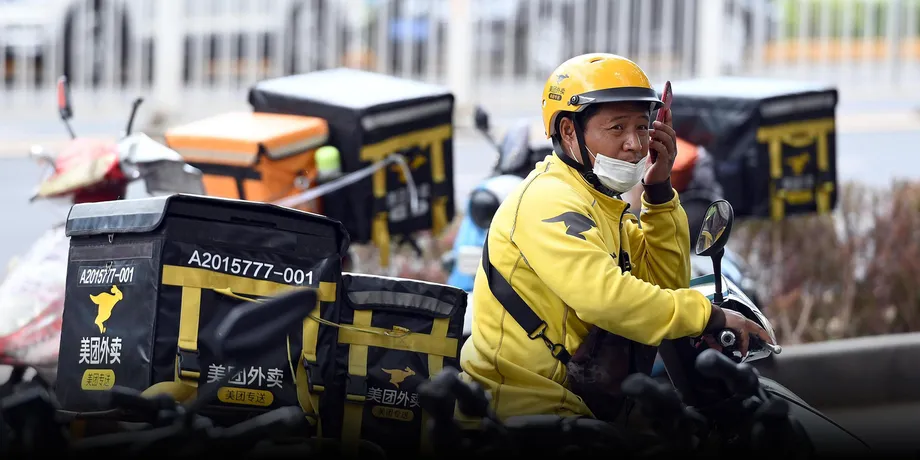
Roughly half of graduates over the past decade studied STEM subjects, creating a domestic pool of around 24 million people. Job creation in advanced industries has not kept pace with that growth in qualifications. Some graduates have taken delivery, sales or temporary work while continuing to seek positions that match their training.
Civil service examinations have attracted intense interest as graduates search for stable employment. Manufacturing has gone through periods of weak demand, private investment has been cautious, and broader urban unemployment has remained elevated. Research laboratories and technology parks may be expanding, but employers are still selective about whom they hire.
Against that background, some Chinese jobseekers fear foreign degree holders could receive preference for scarce research posts or compete for positions intended for people starting their careers. Others see a bachelor's degree as too low a threshold for a policy presented as a way to attract talent. Those concerns are part of a wider mismatch between the number of qualified applicants and the jobs available to them.
A minority of online posts expressed xenophobia, with particular hostility toward potential applicants from India. The debate has consequently reached beyond recruitment rules into questions of national identity and openness. Such hostility can discourage qualified candidates and make career building harder for foreign residents already in China.
The numbers behind the competition debate
China had about 845,000 foreign residents in 2020, less than one percent of its population. The foreign resident population remains below one million. That is a small base beside a domestic STEM graduate pool of around 24 million accumulated over a decade and a single new college graduating class of about 12.2 million in 2025.
Those figures explain why any near term K visa intake is expected to be modest compared with the domestic supply of graduates. Analysts expect a targeted program, focused on fields where local supply is thin and candidates with proven potential. An official intake total had not been announced.
Mandarin is another practical filter. Many scientific and technical jobs require strong Chinese language skills in laboratories and offices, especially when staff work with suppliers, regulators and customers. Top research institutions recruit internationally, but most foreign academics who have moved successfully in recent years have been ethnic Chinese or people with advanced language skills.
A small number of foreign recruits can still matter to an applicant competing for a particular laboratory position. At the same time, recruiting a specialist in a narrow field serves a different need from creating enough suitable jobs for millions of graduates. The policy's likely scale and the intensity of individual job searches help explain why the same announcement has drawn such different reactions.
How the American visa changes shape the timing
The US H-1B program requires employer sponsorship and faces an annual cap of 85,000 visas. The proposed $100,000 fee for new cases would make sponsorship much more expensive. China's K visa removes the requirement to have an employer or inviting organization lined up before applying, making access to the country less dependent on securing that initial commitment.
US agencies also added a $30 fee for EVUS, the system under which certain Chinese nationals must update their travel information before entering the United States. Together, the measures reinforced a message of tighter American entry controls as China was presenting opportunities in its laboratories, startups and joint university campuses.
The key developments unfolded across several periods:
- Late 2023: China's youth unemployment statistic returned after a pause to adjust its methodology.
- August 2025: Official youth unemployment reached 18.9 percent.
- October 1, 2025: China launched the K visa for young STEM talent.
- October 2, 2025: Public debate continued while detailed application procedures and conditions remained pending.
American export restrictions on advanced chips, equipment and technical knowledge have increased pressure on China to develop domestic capabilities. Beijing wants stronger capacity in semiconductors, artificial intelligence, clean energy and advanced manufacturing. The K visa joins longer visa free stays for some travelers and recruitment programs aimed at scientists as part of China's effort to attract international expertise.
Movement between the Chinese and American research systems is becoming harder at a time when both seek skilled people. China's invitation gives students and researchers another potential destination, although their choices will also depend on the work available, language requirements and the practical conditions attached to the visa.
What officials and commentators have said
Chinese officials have presented the policy as part of a strategic effort to recruit skilled people, with a limited scope rather than an unrestricted opening. A spokesperson for China's Foreign Ministry welcomed international talent and encouraged professionals to build careers in the country:
China welcomes talents from various sectors and fields across the world to come and find their footing in China for the progress of humanity and career success.
The People's Daily, the official newspaper of the Communist Party, urged readers not to equate the visa with immigration. Its editorial criticized false claims and the tone of the online discussion:
Some people have misinterpreted and misunderstood the policy, spreading bizarre theories that mislead the public and create unnecessary anxiety.
Hu Xijin, a prominent commentator and former editor of the Global Times, argued that careful selection was necessary and that weak domestic demand for talent lay at the center of the dispute. He wrote:
The real issue at the heart of the K-visa controversy is that it reflects the tension in the domestic job market and the anxiety young people face in finding employment.
Hu's argument connects the controversy to the experience of graduates who have qualifications but cannot find suitable work. Officials are discussing the skills China wants to attract, while many young people are judging the announcement against the vacancies, salaries and career prospects they can find today.
Where employers and universities could benefit
Semiconductor companies need engineers and specialists in chip design, manufacturing and production tools. Clean energy businesses need battery chemists, power electronics engineers and grid planners. Artificial intelligence and software companies seek applied researchers and specialists in computing at large scale, while biotechnology businesses require laboratory scientists and people familiar with regulatory requirements.
These are areas where particular expertise can be scarce even when many graduates are seeking work. If the K visa makes it easier for suitable candidates to enter China, employers could fill narrow gaps faster. The potential benefit depends on matching recruits to actual needs, rather than simply increasing the number of degree holders available.
Universities and national laboratories could use the category to attract researchers with doctorates and research assistants, including staff working with international partners. Joint university programs and campuses with global partnerships could be early users. Foreign students graduating in China have often struggled to find legal routes to remain after finishing their degrees.
The K visa could provide a bridge toward research assistantships, internships or the early stages of starting a business, subject to the final activity rules. Keeping more graduates could also reduce repeated staff departures and give research teams greater continuity.
Free trade zones and science parks, where local governments seek investment and recruit teams, could become important locations for such activity. Local authorities may develop complementary incentives. With millions of STEM graduates already emerging from China's own institutions, the expected contribution is specialized capability: helping projects become more productive and helping local teams acquire skills.
Selection and safeguards will shape confidence
Critics have focused on whether a bachelor's degree provides a strong enough screen. Some favor a master's degree or an established research record as the minimum. Publishing the qualifying institutions, recognized fields and any age or experience requirements would help applicants and domestic jobseekers understand how selection will work.
Patents, publications and competition awards could provide additional evidence of achievement, but authorities would need to explain how they would assess them. Recognized degree programs and credible proof of qualifications will matter particularly because applicants can apply without an employer's backing.
Employer petitions in other visa systems can help verify a job offer, salary and genuine vacancy. Without that initial check, document verification, education checks and interviews may carry greater weight. Cooperation between ministries and universities, clear conditions on use of the visa and penalties for fraud could help protect the program from abuse.
Publishing issuance totals, approval rates and fields of study would give the public a clearer picture of who is being admitted. Transparent criteria and measured issuance could also reduce speculation about whether the category is serving specific research needs or creating a much broader pool of competitors.
Applicants, universities and companies need practical guidance on contracts, social insurance and academic credit where relevant. Wage and labor standards would help ensure that foreign recruitment does not undercut compensation for local graduates. Clear responsibilities also matter for intermediaries, including penalties for those attempting to manipulate applications.
Language, research conditions and public acceptance
Foreign researchers face challenges beyond obtaining a visa. Mandarin can be difficult in both daily life and technical workplaces. Collaboration styles, workplace expectations and approaches to publishing can also differ from those in North America or Europe.
China's political environment shapes research agendas and public discussion. Scientists accustomed to academic freedom and open debate will weigh those conditions alongside laboratory resources and career opportunities. A simpler entry process is only one part of their decision about where to work.
Programs elsewhere combine visas with language support, mentoring and guidance on legal obligations. Similar support could help newcomers and Chinese employers set clear expectations. Workplace orientation and coordination between universities and science parks could make the transition into research or business activity more manageable.
Public acceptance is equally practical. Officials and universities can explain the specific gaps the policy is intended to address, apply selection rules consistently and make clear that discrimination has no place in hiring or campus life. Online hostility can affect both prospective applicants and people already contributing to Chinese institutions.
For young Chinese jobseekers, confidence will depend on visible progress in creating good jobs at home as well as clear communication about foreign recruitment. A steady rollout, transparent numbers and targeted selection would make the program easier to assess. China's challenge is to attract expertise useful to its scientific ambitions while responding to graduates who need a credible route from education into work.
Key Points
- China launched the K visa on October 1, 2025, for young STEM graduates, teachers and researchers without requiring an employer or inviting organization.
- The launch drew an online backlash amid youth unemployment of 18.9 percent in August and a record class of about 12.2 million new college graduates.
- Roughly half of graduates over the past decade studied STEM, producing a domestic pool of around 24 million people.
- Detailed application procedures, permitted work activities, lengths of stay and selection conditions remained pending on October 2.
- State media said the category was not a shortcut to immigration or a simple work permit.
- The US H-1B program requires employer sponsorship, has an annual cap of 85,000 visas and faced a proposed $100,000 fee for new cases.
- Semiconductors, artificial intelligence, clean energy, biotechnology, universities and research laboratories could benefit from targeted recruitment.
- Analysts expect modest, selective issuance. Qualification checks, transparent figures, language support and progress on domestic employment will shape public confidence.