Four frozen desserts bring a familiar name back to Tokyo
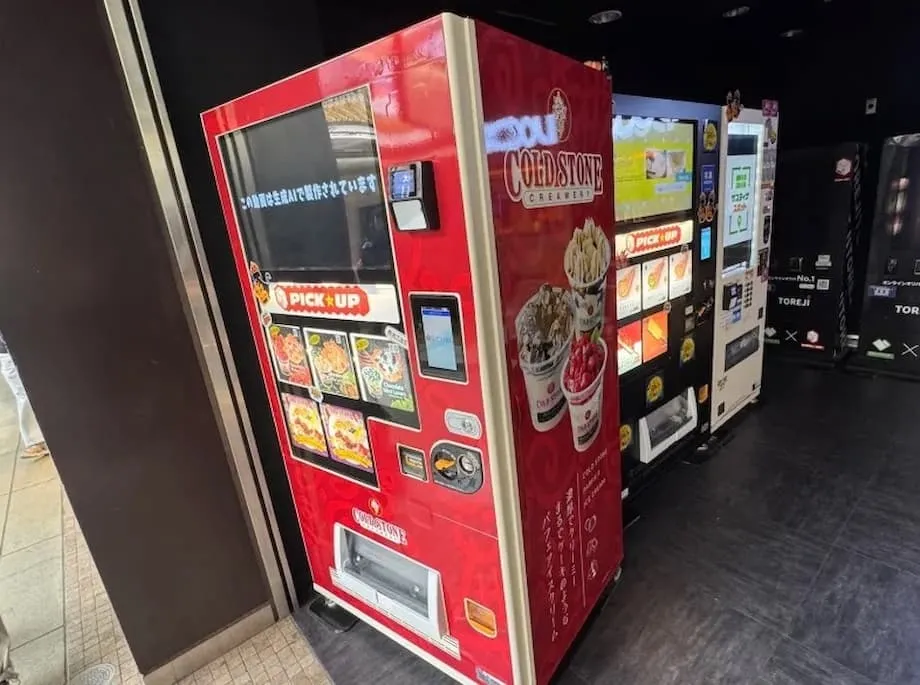
Cold Stone Creamery has returned to Tokyo in a smaller, quieter form: a vending machine selling four frozen desserts for 500 to 600 yen at Meidaimae Station. The machine stands inside the ticket gates on the Keio Inokashira Line platform, around 10 minutes by train from Shibuya.
Contents
- Four frozen desserts bring a familiar name back to Tokyo
- A platform stop between Shibuya and Kichijoji
- What the four cups contain
- Strawberry cake offers a lighter texture
- What disappears when the counter becomes a machine
- From a 2005 opening to one remaining store
- Why the original shop format faced difficulties
- Vending offers a flexible way to stay visible
- Bring a spoon and check the stock
- Another route in a city full of frozen sweets
- The Bottom Line
As of October 2, 2025, the machine gives Tokyo customers a way to buy the American brand's desserts after its final shop in the capital closed on April 28. That outlet, in Harajuku, had been part of an attempt to rebuild a business that once had more than two dozen locations across Japan.
The Tochigi outlet closed in May, leaving a single surviving branch at Mitsui Outlet Park Jazz Dream Nagashima in Kuwana, Mie Prefecture. A trip there is hardly a practical everyday option for someone looking for ice cream in Tokyo.
Meidaimae's machine fills part of that gap. Customers can buy a prepared cup while traveling, without visiting a shop or waiting for staff to mix ice cream and toppings. The menu includes strawberry cake, warabimochi, chocolate mint and a fruit bowl, all in fixed combinations.
The return comes with changes that regular customers will notice. There is no waffle cone, no mixing on a granite slab and no singing staff. Portions are smaller than a typical serving in a store, and the packaging contains no spoon. Availability also varies: a favorite flavor may be sold out when a customer arrives.
For commuters, the attraction is a quick dessert with familiar Cold Stone names. For longtime fans, it is a modest return of a brand whose lively shops have disappeared from the capital.
A platform stop between Shibuya and Kichijoji
Meidaimae Station places the machine along the Inokashira Line route connecting Shibuya and Kichijoji, two areas known for cafes and shopping. The station is also a transfer point, bringing together passengers who may have a few minutes between trains.
The machine is on the platform within the paid area, rather than in a public station concourse. Customers need a valid ticket or commuter pass to reach it. For someone already using the line, buying a cup can be a small detour on the journey home or before a transfer.
Cold Stone's branding makes the machine easy to identify, and its selection screens are straightforward. The setup is designed around people passing through the station, rather than customers settling into a cafe.
The location also gives the brand access to a flow of potential customers without operating a conventional shop. A busy transfer platform can bring more people past a machine each day than a small shop on a side street. Whether those passengers buy depends on their appetite, time and the stock available.
What the four cups contain
The vending machine offers four prepared, frozen items. Their combinations echo Cold Stone's familiar use of cake, fruit, cream, chocolate and other additions, but customers choose a finished dessert rather than having ingredients mixed to order.
- Strawberry Pinky Cake combines a strawberry and sponge cake theme inspired by shortcake.
- Warabimochi Wa La Mode is a Japanese inspired dessert featuring warabimochi, a jelly like confection made from bracken starch and often served with kinako or syrup.
- Chocolate Mint Lovers pairs a cooling mint flavor with chocolate and cocoa pieces.
- Asai Bowl Ice, the wording used on the machine, is a fruit focused bowl with a lighter, refreshing character.
Prices range from 500 to 600 yen. The four choices form a fixed menu, so the main uncertainty for a visitor is which items remain in stock at the time of purchase.
Visits described before October 2 showed how that availability can change. On one occasion, only the fruit bowl remained. On a return visit, the strawberry cup was back. Popular selections can sell out during busy periods, giving the stop a small element of searching for a particular treat.
Strawberry cake offers a lighter texture
Strawberry Pinky Cake gives a useful picture of how the vending desserts differ from Cold Stone's familiar shop servings. Frozen strawberry slices sit on top, soft sponge cake forms the base, and whipped cream and strawberry ice cream fill the space between them.
The cup's texture is light and airy, closer to mousse than a dense scoop of ice cream. The fruit, cake and cream form a tidy stack that holds together as the dessert warms slightly in the customer's hand.
Sweetness remains part of the experience, but the strawberry and cream keep the flavor balanced. The sponge cake supplies a gentle structure without turning the cup into the richer, heavily mixed dessert that many customers remember from the stores.
That lighter texture may suit people who find a large, rich dairy dessert difficult to finish while traveling. The cups are compact enough for a short break, although customers still need to bring a spoon before they can eat one.
Allowing the frozen cup to soften slightly tends to make its texture more pleasant. The result is a layered dessert with familiar flavor ideas, adapted to a station purchase rather than the full Cold Stone shop experience.
What disappears when the counter becomes a machine
Cold Stone built its identity around staff blending additions into ice cream on a granite slab. Cake, candy, cookies, nuts and fruit became part of a freshly mixed serving, often presented in a waffle cone while employees sang.
A machine changes that encounter from a small performance into a simple purchase. Customers select a cup, pay and collect it. There is no sound of ingredients being mixed on the stone, no fresh waffle cone and no opportunity to watch the dessert take shape.
The smaller portions also change the occasion. A store serving could be a substantial treat in its own right. The vending cups are closer to compact desserts for a quick pause during a journey, with ingredients already arranged before purchase.
Fans seeking the full ritual still have the remaining Mie store as an option. For someone in Tokyo on a weekday evening, however, the machine offers familiar Cold Stone flavors without a trip outside the capital.
From a 2005 opening to one remaining store
Cold Stone's first Japanese branch opened in Tokyo in 2005. Customers queued for rich ice cream and the cheerful spectacle of employees singing while blending toppings. At its peak, the chain operated more than two dozen locations nationwide.
The pandemic period put pressure on that network. By early 2023, only a couple of shops remained. Hotland, the brand's operator in Japan, tried to rebuild the business with new locations in Machida and Harajuku.
The effort also included flavors suited to local tastes, such as matcha and roasted sweet potato. The recovery did not last, and the closure of Harajuku followed by Tochigi left the outlet in Mie as the sole remaining store.
- 2005: Cold Stone opened its first Japanese branch in Tokyo.
- At its peak: The chain had more than two dozen locations across Japan.
- Early 2023: Only a couple of shops remained after the pandemic period strained the business.
- April 28, 2025: The Harajuku shop, the final Tokyo outlet, closed.
- May 2025: The Tochigi outlet closed, leaving the Kuwana store in Mie.
- October 2, 2025: Tokyo customers could buy four Cold Stone desserts from the Meidaimae Station machine.
The change from more than two dozen shops to one illustrates the scale of the retreat. The vending machine restores a place to buy the brand in Tokyo, while keeping a much smaller presence than its former store network.
Why the original shop format faced difficulties
Cold Stone's rich ice cream and generous additions made it distinctive, but they also shaped how often customers might want it. Many Japanese sweets favor subtler flavors, moderate portions and a clean finish. A serving packed with candy, cookies, nuts or fruit can feel like two desserts together, making it an occasional indulgence rather than a weekly purchase.
The Japanese shops also tended toward takeout, with small interiors and limited seating. That format offered less space for customers to sit and enjoy a large dessert. By comparison, Japan's fondness for parfaits and elaborate sundaes is often served by comfortable cafes where people can talk and take their time.
A dense ice cream eaten while standing or walking has a different appeal from a dessert enjoyed at a table. Making Cold Stone's product simpler would risk losing the combinations at the center of its identity. Moving from compact shops to full cafes would require a major change in how the business operated.
The station machine takes a smaller step. It keeps the brand's layered dessert idea while reducing the size of the serving and the time needed to buy it. The format matches a brief stop more closely than a large freshly mixed scoop does.
Vending offers a flexible way to stay visible
Japan's vending machines already occupy residential streets and station corridors, selling hot and cold drinks as well as an expanding variety of foods. Some handle fresh products, while others give established brands another place to sell specialty items.
Customers are accustomed to machines that are tidy, easy to use and dependable. Cold Stone's unit fits that setting with a compact frozen dessert that needs neither counter staff nor seating. Passengers waiting for a train provide a potential audience with a little time available.
Operating a machine also involves much lower overhead than running a shop. Overhead means the continuing costs of keeping a business open, including premises and staffing. A machine gives the brand a way to remain visible without recreating an entire store.
Meidaimae could also serve as a test of whether Tokyo customers still want Cold Stone desserts. Expansion to other stations is a possibility if sales support it, while a machine can be moved with relatively little disruption if demand weakens. No expansion timetable was given.
That flexibility helps explain why brands are trying vending machines for niche products. The Meidaimae location connects Cold Stone to everyday travel, while allowing it to operate on a much smaller scale than before.
Bring a spoon and check the stock
A visit requires little planning, but a few practical details matter. The machine is beyond the ticket gates on the Inokashira Line platform, so someone visiting specifically for dessert needs to account for access to the paid station area.
Weekday evenings and weekend afternoons can be busy. Customers hoping for a particular flavor may find it useful to visit outside peak commuting periods, though stock varies throughout the day and a quieter time does not guarantee a full selection.
Payment options vary between machines. Most station vending machines accept coins and bills, and many also accept contactless transit cards such as Suica and Pasmo. Coins or small bills are a useful backup when the accepted methods are uncertain.
- Bring a reusable spoon or obtain disposable cutlery from a convenience store in the station before buying.
- Check the display for sold out notices before choosing a flavor.
- Have coins or small bills available as a payment backup.
- Move away from the main flow of passengers before opening the cup.
- Allow the dessert to soften slightly for a more comfortable eating texture.
The journey from Shibuya takes around 10 minutes, making Meidaimae a manageable stop on many trips through western Tokyo. With a spoon ready, the time between collecting the cup and taking the first bite is usually under a minute.
Another route in a city full of frozen sweets
Tokyo customers still have many alternatives when choosing a frozen dessert. Soft cream, the local term for soft serve, is widely available at parks, tourist destinations and convenience stores.
Baskin Robbins, known as Thirty one in Japan, remains the most familiar scoop shop, with changing flavors and seasonal collaborations that keep customers returning. Convenience stores also sell premium cups and ice cream bars from national brands, a category that has grown as people seek quality treats at home or on their way home.
Cold Stone has already explored sales beyond its counters. It has offered bundled takeout boxes containing several popular flavors for eating at home, and it has collaborated on packaged desserts sold through retail channels.
The Meidaimae machine carries that approach onto a railway platform. Customers can fit a purchase into an existing journey rather than making a shop visit the center of the occasion. It gives former fans another way to buy the brand, even though the singing, fresh mixing and waffle cone remain part of a different experience.
The Bottom Line
- A Cold Stone vending machine sells four frozen desserts at Meidaimae Station on the Keio Inokashira Line.
- The machine is inside the ticket gates, around 10 minutes from Shibuya, and requires a valid ticket or commuter pass to reach.
- The menu includes Strawberry Pinky Cake, Warabimochi Wa La Mode, Chocolate Mint Lovers and Asai Bowl Ice.
- Prices range from 500 to 600 yen. Cups are smaller than typical store servings and contain no spoon.
- Stock changes, and popular items can sell out during busy periods.
- The final Tokyo shop closed in Harajuku on April 28, 2025. The Tochigi outlet followed in May.
- The only remaining store is at Mitsui Outlet Park Jazz Dream Nagashima in Kuwana, Mie Prefecture.
- The vending format keeps Cold Stone available in Tokyo with lower operating costs and a purchase suited to a short commuter stop.