A 350 billion won market in a country drinking less
South Korea's hangover remedy market reached about 350 billion won in 2024, roughly 10 percent more than the previous year, even as alcohol consumption declined. New rules that took effect in January 2025 now require human trials to support claims that products reduce hangover symptoms or speed alcohol clearance. As of September 28, companies without sufficient evidence face a deadline later this year to stop making those claims.
Contents
- A 350 billion won market in a country drinking less
- From morning soup to convenience store shelves
- What the ingredients are intended to do
- How old is the hovenia remedy, and how strong is the evidence?
- Other remedies have their own limits
- Human trials become the test for advertising claims
- Bottles give way to sticks, films and dual kits
- Growth forecasts and the dates behind the boom
- Korean brands take the routine abroad
- Why shoppers return despite uncertain results
- Key Points
The business has grown around an apparent contradiction. Alcohol consumption per person has trended downward since 2015, and shipments of beer and spirits remain below their levels before the pandemic. Corporate drinking culture is changing, and younger adults are choosing moderation. Yet shoppers continue to buy products promising an easier morning.
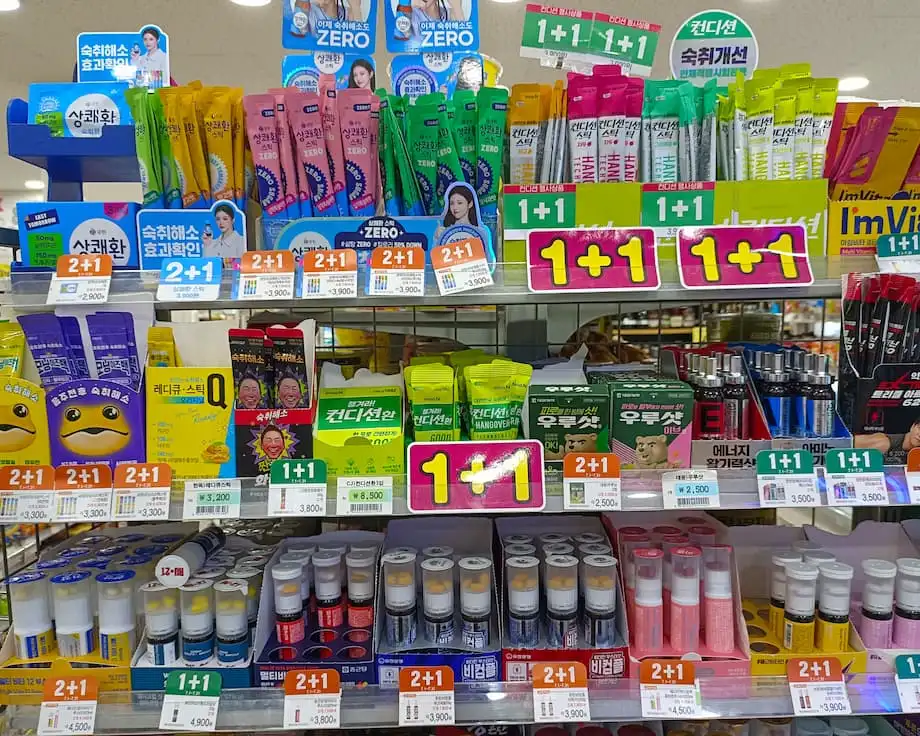
Seoul's store shelves reflect that demand, with entire sections devoted to small brown bottles, bright jelly sticks and packs of pills. South Korea's dense network of convenience stores, many open at all hours, makes remedies easy to buy before an evening out or during the commute afterward.
Drinking customs also help explain the market's resilience. Consumers often buy several products to share with friends, making the purchase a small gesture of care during a social occasion. The market therefore depends on more than how much alcohol the country consumes. Convenience, price, product variety and the habit of buying for a group all influence demand.
Manufacturers are responding with new formats and overseas expansion. Their next challenge is to support familiar promises with measurable results in people, while retaining the taste, portability and affordability that keep customers returning.
From morning soup to convenience store shelves
Haejangguk, a soup traditionally eaten for hangover relief, remains part of South Korea's morning routine. Recipes may include napa cabbage, dried pollack or congealed oxblood, and restaurants that open early still attract customers seeking a comforting meal after drinking.
Seoul's Yangnyeongsi Market, the country's largest traditional herb market, offers another connection between older remedies and modern products. Dried clusters of Hovenia dulcis, known locally as heotgae or oriental raisin tree, are piled high there. Extracts from the same plant now appear in packaged remedies sold nationwide.
Retailers have made these ingredients easier to fit into daily life. Bottles, tablets and sticks can be carried to a gathering or bought alongside food and alcohol. Stores place remedies near beer, soju and ready to eat food, reaching both people planning ahead and customers making a purchase late at night.
About four out of every five hangover cure sales in South Korea took place offline in 2022, through convenience stores, pharmacies and supermarkets. Online shopping is gaining share as buying habits change, but physical shops remain the main sales channel.
Age and price influence what shoppers choose. Consumers in their 20s and 30s increasingly buy gummies, jellies, sticks and tablets, while older customers tend to prefer drinks. A bottle may cost about 3,000 to 4,000 won. Sticks and pills often cost roughly half as much, making it easier to buy enough for friends.
Timing matters too. Survey estimates suggest slightly more than half of products are consumed before drinking, with the rest taken the following morning. Buying before the first round turns prevention into part of the evening's routine, while buying afterward serves the familiar search for relief.
What the ingredients are intended to do
Hovenia dulcis fruit extract is one of the most common ingredients on product labels. It often appears alongside red ginseng, milk thistle, taurine and vitamin B complexes. Newer formulas may include dihydromyricetin, L cysteine, prickly pear and electrolytes.
Manufacturers' claims generally follow three ideas: support the liver as it processes alcohol, reduce acetaldehyde, a toxic substance produced during that process, and replace fluids or nutrients after drinking. Understanding those claims starts with what happens inside the body.
The liver breaks down alcohol in two main stages. First, it converts ethanol, the alcohol in drinks, into acetaldehyde. It then converts acetaldehyde into acetate, which is less toxic and can be used for energy. Alcohol dehydrogenase and aldehyde dehydrogenase are the main enzymes involved. Enzymes help chemical reactions take place in the body.
Enzyme activity varies from person to person. When acetaldehyde builds up, headaches, flushing and nausea can become worse. Ingredients promoted for hangover relief aim to increase enzyme activity, remove reactive molecules or support liver function. Hydration, sleep and time remain the main drivers of recovery.
Hovenia dulcis has attracted particular attention because animal studies have suggested several possible effects. Extracts reduced blood alcohol levels in rats, while fermented fruit vinegar lowered both alcohol and acetaldehyde. Some experiments reported greater activity of alcohol dehydrogenase, and others suggested possible protection of liver cells from damage associated with alcohol.
Researchers have used different parts of the plant, including fruit, stalk and seeds, as well as different extraction methods and doses. Those variations make results difficult to compare and help explain why a familiar ingredient can still require closer testing in people.
How old is the hovenia remedy, and how strong is the evidence?
Hovenia dulcis is often presented as an ancient Korean hangover remedy. Historians and medical researchers say that description can overstate the history of its current use. The plant appears in classical Chinese texts that influenced Korean medicine, but its role in the modern hangover product business developed much more recently.
Dr Choi Goya, a researcher at the Korea Institute of Oriental Medicine who has studied the history and science of hovenia products, described when that commercial and research interest began:
"Interest in hovenia dulcis for hangover relief only began in the early 1990s, starting with Japanese patents and followed by Korean research," she said.
Few well controlled human trials exist. A systematic review by researchers in London found statistically significant benefits from hovenia fruit extract in some small human studies, but rated the quality of the evidence as very low. A systematic review brings together studies to assess their findings and the strength of their methods.
The research picture combines promising laboratory results with inconsistent findings in people. Small trials and differences in methods leave a need for more rigorous studies, particularly when companies want to make claims about a finished product rather than an ingredient alone.
Other remedies have their own limits
Red ginseng has shown signs of reducing fatigue in small studies and is included in many Korean formulas. Milk thistle is associated with liver support, although evidence for outcomes specific to hangovers is mixed. Taurine and B vitamins are commonly added for energy and metabolism, but strong evidence that they relieve hangovers is limited.
Dihydromyricetin, also called DHM, has attracted attention in the United States, while human findings remain inconclusive. Korean pear juice may slightly lower blood alcohol when consumed before drinking and could modestly reduce symptoms. It offers little help once a hangover has begun.
Ginger can ease nausea without directly targeting alcohol metabolism. Its possible value concerns a symptom rather than the liver's processing of alcohol, an important difference for someone comparing products with several ingredients and broad claims.
IV drips and vitamin patches are also marketed as quick fixes. Unless someone is severely dehydrated, an IV is seldom better than fluids, food and rest. Patches intended to deliver vitamins through the skin lack solid evidence. The range of products is wide, but the strength and purpose of the evidence vary across them.
Human trials become the test for advertising claims
January 2025 brought a change to South Korea's rules for hangover products. Companies had previously been able to imply benefits without presenting robust proof. Products now need human trial evidence to claim that they reduce hangover symptoms or speed alcohol clearance.
Firms must demonstrate measurable improvements rather than rely on a list of popular ingredients. Qualifying evidence can come from randomized studies in people, which assign participants to different study groups. Researchers can track symptom scores, cognitive test results, and changes in blood alcohol and acetaldehyde over time.
Transparent methods, consistent doses and improvements meaningful to consumers are central to validation. Literature reviews alone will be insufficient unless they bring together human trials of high quality. The change places more weight on what happens when people take a product under defined conditions.
Companies that have not presented sufficient evidence face a cutoff for hangover claims later in 2025. The exact date is not given. Authorities have warned that unsupported claims could lead to penalties, including temporary business suspensions.
Larger manufacturers moved early, conducting human trials for established brands and submitting advertising claims for review. Smaller businesses may find trial costs harder to meet. Some could remove hangover wording from packaging and marketing, while others may withdraw products, reducing the choice on shelves.
Clinical testing could also increase development costs and put upward pressure on prices. Competition and production at scale may help keep widely sold products affordable. For consumers, the change concerns both the claims they see and the products that remain available.
Bottles give way to sticks, films and dual kits
Bottled drinks helped establish the category in the 1990s, and pioneering brands still occupy much of the cooler space. Portable products are taking a larger role, however. Leading brands' jelly sticks have recorded rapid growth, while new drinks with zero calories target customers concerned about sugar.
Chewable candies and gummies appeal to younger shoppers because they are discreet, easy to share and pleasant to consume. Tablets and sticks also fit the practice of bringing several remedies to a gathering without carrying multiple bottles.
Pharmaceutical companies are entering convenience stores with combinations of formats. One recent dual kit pairs a small liquid shot with tablets held in the cap. Its design aims to combine quick absorption from the drink with a vitamin rich follow up in pill form, putting several steps into one portable package.
Ingredients in that kit include hovenia extract, milk thistle, taurine and B vitamins, reflecting the familiar mix used across the category. The commercial idea is to make the routine simpler rather than ask customers to buy separate products.
Oral dissolving films are another new option. These thin strips melt on the tongue without water and deliver active ingredients through the oral mucosa, the lining inside the mouth. South Korean contract manufacturers have invested in technology intended to provide faster uptake and mask unpleasant tastes.
Films cost more than standard gummies or pills because their production requires specialized equipment and volumes are smaller. Their convenience appeals to busy consumers and people who dislike swallowing tablets.
Growth forecasts and the dates behind the boom
Market estimates place South Korea's sales above 300 billion won in 2022 and at roughly 350 billion won in 2024. Another analysis valued the Korean market at about $288 million in 2022 and forecast more than $1 billion by 2030, representing compound annual growth in double digits. Compound growth means each year's increase builds on the previous year's larger total.
The dollar forecast would put the 2030 market at more than three times its estimated 2022 size. It is a projection rather than a recorded result. Drinks and solutions accounted for almost half of sales in 2022, with solid formats gaining share since then through lower unit prices and portability.
Online sales are increasing as electronic commerce becomes a routine way to buy supplements and functional foods. Offline outlets still account for a clear majority. Purchases before drinking, estimated at just over half of consumption, also support repeat buying when friends distribute products before an outing and restock for the next gathering.
The principal dates show how the commercial story and the new evidence requirements developed:
- Early 1990s: Interest in hovenia for hangover relief grew through Japanese patents and subsequent Korean research.
- 1992: A flagship Korean hangover remedy brand launched.
- Since 2015: South Korea's alcohol consumption per person has trended downward.
- 2022: Domestic hangover remedy sales exceeded 300 billion won, and about four in five purchases took place offline.
- 2024: Estimated sales reached about 350 billion won, up roughly 10 percent from the previous year.
- January 2025: Rules requiring human trial evidence for hangover claims took effect.
- Later in 2025: Companies without sufficient evidence face a cutoff for making those claims.
Worldwide, the market was worth about $2 billion in 2023 and is expected to more than triple by the early 2030s. Asia Pacific holds a majority share, supported by dense urban nightlife, retail access and strong awareness of hangover remedies. North America and Europe are gaining ground as consumers interested in wellness seek preventive products promising easier mornings.
Korean brands take the routine abroad
Hangover remedies have become part of the export business surrounding Korean goods and culture. The flagship brand launched in 1992 now sells in around 15 countries, with particularly strong positions in China, Vietnam and Mongolia.
Companies are hiring celebrity ambassadors, introducing jelly sticks and new flavors, and pursuing growth in the United States, Japan and Europe. Formulas must meet ingredient standards in each destination. Manufacturers also adjust doses, sweeteners and packaging to local rules and tastes.
Korean founders in the United States have introduced products using Korean formats such as jelly sticks, combined with ingredients familiar to American customers, including DHM and B vitamins. Chinese tourists have long taken Korean hangover jellies home, helping exports. Japan remains a prominent market where convenience store hangover drinks already form part of an established routine.
Taeyoung Hwang, an analyst who follows global product launches, described South Korea and Japan as markets where the category is widely accepted rather than a niche:
"They have mature and widely adopted hangover recovery product industries deeply tied to their respective drinking cultures," said Taeyoung Hwang.
Why shoppers return despite uncertain results
Young professionals often plan their purchases ahead of drinking and treat remedies as gifts for the group. Their appeal can include practicality, social connection and the wish to feel better the next day, alongside expectations about ingredients.
Prof Joo Young ha, a cultural anthropologist at the Academy of Korean Studies who studies food and shared habits, described how younger drinkers incorporate the products into social occasions:
"They often buy multiple products in advance to share as gifts during drinking sessions, turning hangover prevention into part of the evening's etiquette," he said.
Lee So young, a Seoul office worker aged 26, began buying hangover products at university and still keeps some available. She described a choice based on affordability and her own experience:
I do not know if they really work," she said. "They are cheap, and sometimes I do actually feel better. That is good enough for me.
Price, taste and routine continue to influence purchases while regulators seek clearer evidence. Small human studies and widely varying research methods leave scientific uncertainty. The new requirements may improve the quality of products that retain hangover claims, while leaving customers with fewer options.
Key Points
- South Korea's hangover remedy sales reached about 350 billion won in 2024, roughly 10 percent higher than in 2023, despite declining alcohol consumption.
- Convenience stores, pharmacies and supermarkets accounted for about four in five sales in 2022.
- Bottles remain popular, while sticks, gummies, tablets, films and combined liquid and tablet kits broaden the choice.
- Hovenia dulcis is a signature ingredient, but high quality human evidence remains limited.
- Rules effective from January 2025 require human trial evidence for hangover relief claims, with a cutoff later in 2025 for companies lacking sufficient support.
- Trial costs may affect smaller manufacturers, product availability and prices.
- A market forecast projects Korean sales above $1 billion by 2030, compared with an estimated $288 million in 2022.
- Korean brands are expanding overseas, adapting ingredients, doses, flavors and packaging to local markets.
- Sharing remedies before drinking remains part of their appeal, alongside price, taste and convenience.