Strong national results leave many vulnerable patients short of target
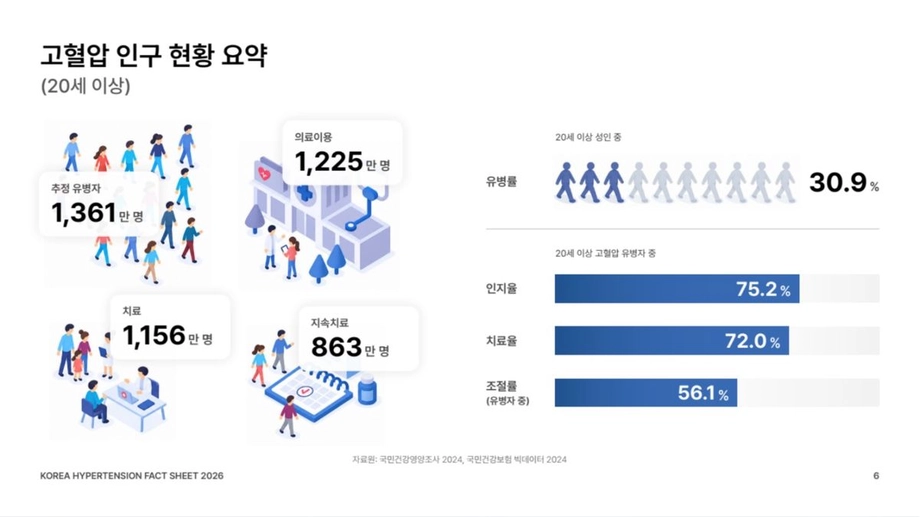
South Korea had an estimated 13.61 million adults with hypertension in 2024, yet only 26.6% of people with hypertension or prehypertension who were classified as being at high cardiovascular risk had blood pressure below 130/80 mmHg. The findings reveal a gap between the country's broad success in treating high blood pressure and the more demanding care needed by people most vulnerable to heart, brain and kidney damage.
Contents
- Strong national results leave many vulnerable patients short of target
- What the blood pressure numbers mean
- Who is reaching the stricter target?
- Millions receive prescriptions, but continuity is a separate measure
- Combination treatment is already common
- What the 2026 guidelines change
- Older adults, pregnancy and younger patients need different attention
- A much larger care system than in 2002
- What patients and clinicians are being asked to do
- Key Points
The Korean Society of Hypertension released its Korea Hypertension Fact Sheet 2026 on November 5, 2026. Its epidemiology research working group analysed the Korea National Health and Nutrition Examination Survey from 1998 through 2024 and National Health Insurance data from 2002 through 2024.
The society estimated that 30.9% of adults aged 20 or older had hypertension. Among people with the condition, 75.2% had received a diagnosis, 72.0% met the survey's treatment definition and 56.1% had blood pressure below 140/90 mmHg. Among those receiving treatment, the society put the control rate at 77%.
Those results sit alongside a tougher challenge: achieving lower blood pressure in people whose existing illnesses or combination of risk factors make cardiovascular complications more likely. The fact sheet added an examination of these groups this year.
What the blood pressure numbers mean
A blood pressure reading has two numbers. Systolic pressure, the upper number, measures pressure when the heart contracts. Diastolic pressure, the lower number, measures pressure between beats. The unit mmHg means millimetres of mercury, the standard unit used to express blood pressure.
The fact sheet counted an adult as having hypertension if systolic pressure was at least 140 mmHg, diastolic pressure was at least 90 mmHg, or the person was taking hypertension medication. Someone whose medication brings their pressure down therefore remains part of the hypertension population.
For the main national control measure, both readings had to be below 140/90 mmHg. The analysis of vulnerable groups used a stricter standard: systolic pressure below 130 mmHg and diastolic pressure below 80 mmHg. A reading of 135/85 would meet the first threshold while remaining above the second.
Who is reaching the stricter target?
Among adults with cardiovascular or cerebrovascular disease, meaning disease affecting the heart or blood vessels in the brain, 49.3% had blood pressure below 130/80 mmHg. The corresponding proportions were 51.9% among people with diabetes and 50.4% among people with chronic kidney disease.
Each of those three percentages covers everyone aged 20 or older with the named condition, including people without hypertension. The 26.6% figure concerns a narrower population: people with hypertension or prehypertension who also qualified as being at high cardiovascular risk.
The high risk category included people with cardiovascular or cerebrovascular disease, diabetes or chronic kidney disease, as well as people with hypertension or prehypertension who had at least three cardiovascular risk factors. Those factors included age, family history, smoking, obesity and abnormal blood fats.
Within that narrower group, 28.2% had systolic pressure of at least 140 mmHg or diastolic pressure of at least 90 mmHg. Taken together with the 26.6% below 130/80, the figures leave 45.2% between the two thresholds. This middle group helps explain the clinical task: many vulnerable people need further reductions even when their pressure is below the threshold used in the main national control measure.
The high risk analysis covered 2022 through 2024. Information on previous cardiovascular and cerebrovascular disease was unavailable for 2022 and 2023, so the blood pressure findings for people with those diseases used 2024 data.
Millions receive prescriptions, but continuity is a separate measure
National Health Insurance records counted 12.25 million people who used medical services for hypertension at least once in 2024. About 11.56 million received a prescription for a hypertension drug at least once, while 8.63 million received prescriptions covering at least 290 days, the fact sheet's definition of continuous treatment.
On those figures, about 74.7% of people prescribed hypertension medicine met the continuous treatment threshold. The difference between the two counts was 2.93 million people. Prescription coverage gives health services a practical way to track how consistently treatment is supplied across the year.
The national survey used another definition for its 72.0% treatment rate: taking hypertension medication on at least 20 days in a month. The survey measures reported medicine use alongside health examination findings, while insurance records count consultations and prescriptions. Each captures a different part of care.
The 75.2% awareness rate means nearly one quarter of adults with hypertension had not received a diagnosis. The 56.1% control rate means 43.9% of all adults with hypertension were above at least one of the two readings required for control. Diagnosis, regular treatment and reaching the intended pressure are therefore separate tasks.
Combination treatment is already common
Six in 10 people treated for hypertension used at least two blood pressure medicines. The detailed breakdown was 40.0% using one drug, 43.8% using two and 16.2% using three or more. Different medicines can lower pressure through different mechanisms, such as changing blood vessel tension or helping the body remove salt and water.
Other conditions were also a major part of treatment. About 72.4% of hypertension patients receiving treatment were being treated for abnormal blood fats, diabetes or both. That included 42.6% treated for hypertension and abnormal blood fats, 4.4% for hypertension and diabetes, and 25.4% for all three.
These overlapping illnesses make coordinated care especially relevant. A patient may need blood pressure medicines alongside treatment for blood sugar and cholesterol, with clinicians reviewing how the full regimen fits the patient's health and daily routine.
Kim Kwang-il, chair of the Korean Society of Hypertension and a professor at Seoul National University College of Medicine, called for more intensive medication treatment, including combination pills, alongside sustained blood pressure management by patients. A combination pill puts more than one medicine into a single tablet, simplifying the number of tablets someone needs to take.
Kim said in translated remarks that people with hypertension and conditions such as cardiovascular disease, diabetes or chronic kidney disease needed more active blood pressure control:
For patients with hypertension at high risk who also have cardiovascular and cerebrovascular disease, diabetes or chronic kidney disease, more intensive blood pressure control, with systolic pressure below 130 mmHg and diastolic pressure below 80 mmHg, is needed.
What the 2026 guidelines change
The Korean Society of Hypertension's 2026 guideline highlights, available through Ajou University's academic repository, describe a shift toward treatment based more closely on each patient's cardiovascular risk. They include more intensive blood pressure targets and medication initiation for selected people with prehypertension, guided by risk.
Prehypertension describes blood pressure above the normal range but below the hypertension threshold used in the fact sheet. The updated approach brings a person's wider health into treatment decisions, including existing disease and the likelihood of future cardiovascular complications.
The guidelines also expand screening for primary aldosteronism. This condition involves excessive production of aldosterone, a hormone that helps regulate salt and fluid balance. Too much can raise blood pressure, making identification of the underlying cause an important part of care.
Other additions include isolated diastolic hypertension, in which the lower blood pressure number is raised without a corresponding rise in the upper number, and the first integration of devices that measure pressure without a cuff into clinical practice.
The guideline highlights incorporate newer therapies with blood pressure lowering effects, including angiotensin receptor-neprilysin inhibitors, SGLT2 inhibitors, non-steroidal mineralocorticoid receptor antagonists and aldosterone synthase inhibitors. They also introduce a classification of combination pills according to dose, intended to support consistent medicine use.
Older adults, pregnancy and younger patients need different attention
Adults aged 65 or older accounted for an estimated 6.07 million of the 13.61 million people with hypertension, or about 44.6%. The national total also included approximately 7.31 million men and 6.30 million women.
The 2026 guidelines individualise targets for older adults according to frailty and cardiovascular risk. Frailty describes reduced physical reserve that can make illness and treatment harder to tolerate. The guidelines recommend a target of 130/80 mmHg for selected older people at high risk, with the decision shaped by their health rather than age alone.
Pregnancy guidance calls for active control below 140/90 mmHg and blood pressure measurement outside the clinic to improve diagnosis. The guidelines also give greater attention to hypertension in young adults, obesity, emergencies caused by severe hypertension and care organised around individual patients.
Kim Kwang-il has separately warned that awareness and treatment rates among adults aged 20 to 39 were below 50%. His concern points to another weakness alongside the stricter targets for vulnerable patients: younger adults may live with raised pressure before receiving a diagnosis or starting treatment.
Hypertension often causes no obvious symptoms. In his discussion of the country's progress, Kim advised repeated measurements at home after a high reading, with monitoring over 24 hours when needed. He also urged patients to keep taking prescribed medicines rather than stopping when their readings improve.
A much larger care system than in 2002
The number of people using medical services for hypertension rose from about 3.04 million in 2002 to 12.25 million in 2024. That is roughly a fourfold increase, or 9.21 million additional people receiving care during a year.
Kim Hyun-chang, head of the society's epidemiology research working group and a professor at Yonsei University College of Medicine, described South Korea's hypertension management as among the best in the world and an example attracting international attention. He said continuing national monitoring was central to identifying new problems.
In translated remarks, Kim explained why the society continues to produce the fact sheet:
Continuously monitoring the state of management and identifying new problems through national data such as the fact sheet is an important starting point for successful hypertension management.
Kim Kwang-il has pointed to national health screening, access to continuing care through health insurance, and cooperation among clinicians, government and the society as contributors to progress. He also cited a decline of more than 50% in South Korea's stroke death rate over the past 20 years.
The main dates behind the latest findings are:
- 2002: Insurance records counted about 3.04 million people using hypertension medical services.
- 2022 through 2024: Survey data formed the period used for the new analysis of groups at high cardiovascular risk.
- 2024: The latest national estimates put adult hypertension prevalence at 30.9%, or 13.61 million people.
- November 5, 2026: The Korean Society of Hypertension released the 2026 fact sheet.
What patients and clinicians are being asked to do
The society's central message is to match care to risk while keeping treatment consistent. For people with heart or brain vascular disease, diabetes or chronic kidney disease, that means discussing whether their current blood pressure meets the more demanding target and whether medication needs adjustment.
The updated guidelines broaden lifestyle recommendations to include stopping electronic cigarette use and practices involving the mind and body. Kim Kwang-il has also advised reducing salty food and excessive alcohol, exercising regularly and managing weight alongside prescribed treatment.
The fact sheet was listed for publication in Clinical Hypertension, with no publication date given. Its findings put two priorities side by side: reaching adults who remain undiagnosed or inconsistently treated, and improving pressure control among patients whose health requires a lower target.
Key Points
- An estimated 13.61 million South Korean adults had hypertension in 2024, representing 30.9% of people aged 20 or older.
- Among people with hypertension, awareness was 75.2%, treatment was 72.0% and control below 140/90 mmHg was 56.1%.
- Only 26.6% of people with hypertension or prehypertension classified as being at high cardiovascular risk were below 130/80 mmHg.
- About half of adults with cardiovascular or cerebrovascular disease, diabetes or chronic kidney disease met the stricter blood pressure threshold.
- Insurance records counted 11.56 million people prescribed hypertension medicine and 8.63 million with prescriptions covering at least 290 days.
- The 2026 guidelines support treatment based on individual risk, updated therapies and tailored targets for older adults and pregnancy.