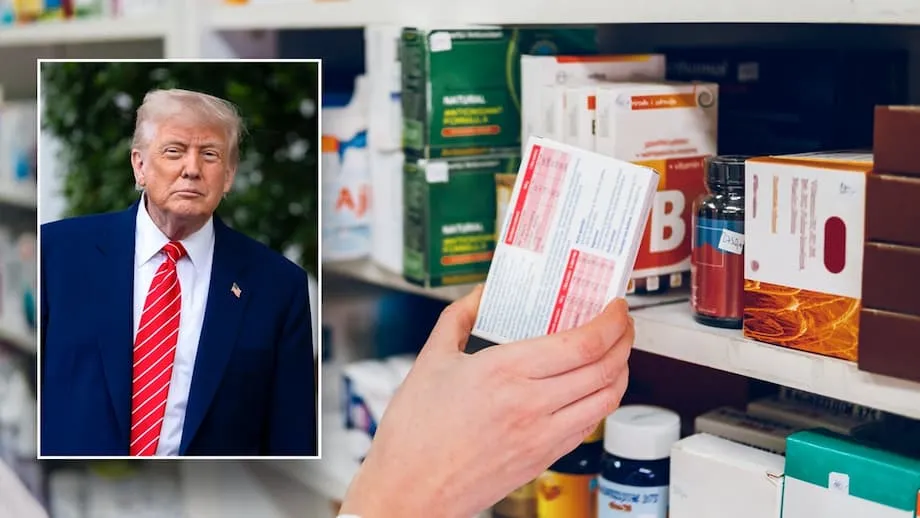
October 1 deadline puts drugmakers under pressure
President Donald Trump has announced a 100 percent tariff on imported branded and patented medicines starting October 1, 2025, with an exemption for companies building manufacturing capacity in the United States. Generic medicines are excluded from this round, protecting the cheaper products that account for most American prescriptions from the immediate levy.
Contents
- October 1 deadline puts drugmakers under pressure
- Which medicines face the new tariff?
- How the construction exemption would work
- A national security review follows a longer timetable
- India's generic exports provide a cushion
- Trade tensions complicate India's response
- Europe and Japan have negotiated tariff ceilings
- Investors weigh which companies are exposed
- Patients face a chain of pricing decisions
- New factories require more than investment announcements
- The immediate task is to map products and projects
- Key Points
As of September 27, the central condition for avoiding the tariff is construction: a qualifying American project must have broken ground or be under construction. Companies would not have to finish their factories before October to receive relief. Officials have indicated that the exemption would apply to individual products, making the location and construction status of manufacturing projects important to each medicine's treatment.
The announcement comes alongside tariffs of 50 percent on kitchen cabinets and bathroom vanities, 30 percent on upholstered furniture, and 25 percent on heavy duty trucks. The White House presents the package as a national security measure intended to protect domestic industry and move critical manufacturing into the United States.
Pharmaceutical products accounted for about 5.6 percent of all US imports in 2023. Ireland, Switzerland, Germany and India are among the leading suppliers, spanning expensive patented treatments and large volumes of finished generic medicines.
A 100 percent tariff adds a charge equal to a covered product's import value, effectively doubling its landed cost. The effect at the pharmacy counter depends on how manufacturers, wholesalers, insurers and pharmacy benefit managers divide that expense. Some companies may absorb costs, seek waivers or change prices. Others could accelerate American investment or pause US sales if a product becomes unprofitable.
Which medicines face the new tariff?
The announced tariff covers imported branded or patented pharmaceutical products. That includes innovative medicines still protected by patents and brand name medicines that remain on sale after their patents expire. A patent gives its holder protection against competing versions for a limited period; a brand name can remain in use after that protection ends.
Generic medicines are currently outside the measure. Their exclusion matters because they supply most US prescriptions, often at low prices, and India is a major producer of these medicines in large volumes. For Indian manufacturers concentrating on ordinary generics, the immediate exposure may therefore be limited.
Branded generics occupy an uncertain position. These medicines are no longer protected by patents but are sold under brand names, often at higher prices than unbranded versions. If American authorities classify them as branded products for tariff purposes, some Indian shipments could face the 100 percent rate despite being off patent.
The coverage of these products depends on formal definitions that had yet to be clarified. Ajay Srivastava, a former Indian trade official and founder of the Global Trade Research Initiative, described the need for legal detail:
Clarity will only come once US legal documents are released.
How the construction exemption would work
Companies seeking relief must show that they are constructing US manufacturing capacity for the medicine concerned. Projects already underway, including those begun before the current administration, are eligible. The exemption is intended to allow imports to continue without the new tariff while American facilities are built and validated.
President Donald Trump defined the construction threshold in a post announcing the policy:
IS BUILDING will be defined as 'breaking ground' and or 'under construction'. There will, therefore, be no Tariff on these Pharmaceutical Products if construction has started.
Officials have indicated that relief is specific to a product. A company building American capacity for one medicine could receive an exemption for imports of that medicine while its other products remain exposed. Having a US business or an unrelated factory project would leave companies needing to establish which imports qualify.
Drugmakers are seeking guidance on the documentation needed to demonstrate eligibility, how long construction relief would last before commercial production must begin, and which manufacturing activities qualify. The treatment of filling and finishing, repackaging, labeling and other partial production steps is also unresolved. Those details will determine whether companies can use existing investments or must undertake more extensive manufacturing projects.
A national security review follows a longer timetable
Washington has examined medicine supply chains for several years after the pandemic exposed bottlenecks affecting both drug ingredients and finished products. The administration argues that domestic manufacturing would make the United States less vulnerable to disruptions abroad.
A national security investigation under Section 232 of US trade law is already examining finished medicines, active pharmaceutical ingredients, key starting materials and medical countermeasures. Active pharmaceutical ingredients, often called APIs, are the substances that give medicines their therapeutic effect. Key starting materials are inputs used earlier in production.
The investigation's report is due by December 27, 2025, with a presidential decision expected by March 2026. The announced branded drug tariff comes before those recommendations, while a broader framework for ingredients and generic medicines is still being considered.
The main dates run from the immediate import deadline to decisions expected next year:
- September 27, 2025: Drugmakers are assessing the announced tariff and seeking details about coverage and exemptions.
- October 1, 2025: The announced 100 percent tariff on branded and patented pharmaceutical imports is scheduled to begin.
- December 27, 2025: The Section 232 investigation report is due.
- March 2026: A presidential decision following that review is expected.
Trade hawks also view tariffs as a way to gain bargaining power with allies and rivals. Economists describe them as taxes on imports: they can encourage companies to change where they build factories, while raising costs unless domestic production expands quickly enough. Some importers have likely accumulated stock before October to cushion the initial disruption, although those inventories will decline as medicines are sold.
India's generic exports provide a cushion
India is a major supplier of finished generic medicines and produces a large share of pharmaceutical ingredients. The United States is its largest pharmaceutical export destination, making American trade policy especially important to Indian manufacturers.
Indian pharmaceutical exports to the US were roughly $8.7 billion in calendar 2024 and about $10.5 billion in fiscal 2025. Those figures cover different reporting periods. In several recent years, the United States has taken between one third and two fifths of India's total pharmaceutical exports, illustrating how much business depends on access to the American market.
Most Indian shipments to the US are generics that are no longer protected by patents. Many large Indian companies also have American manufacturing or repackaging operations and are exploring acquisitions that could add local capacity. That combination offers some protection while the tariff definitions and the Section 232 process develop.
Namit Joshi, chairman of the Pharmaceuticals Export Promotion Council of India, said the industry's product mix and existing American operations should limit the immediate effect:
The proposed tariff is unlikely to have an immediate impact on Indian exports, as the bulk of our contribution lies in simple generics and most large Indian companies already operate US manufacturing or repackaging units and are exploring further acquisitions.
Indian companies selling specialty branded medicines face a different calculation from those relying mainly on ordinary generics. Their exposure depends on the products they ship, where those products are made, and whether qualifying American construction is underway. Existing manufacturing and packaging operations, new projects built from scratch, and acquisitions could all influence corporate responses, subject to the final exemption rules.
Trade tensions complicate India's response
Indian exporters already face a 50 percent tariff on a wide range of goods entering the United States, along with an additional 25 percent penalty that Washington linked to India's purchases of Russian oil. The pharmaceutical announcement adds pressure to sensitive trade discussions between Washington and New Delhi.
India's Ministry of External Affairs and other departments are assessing the policy. Industry groups are pressing for definitions that protect branded generics whose patents have expired and for recognition of existing American investments that already provide US jobs.
Recent pharmaceutical export data show uneven performance, including declines in some months despite zero duty treatment for many generic products. The uncertainty surrounding trade policy can itself discourage shipments, even where the tariff treatment of a particular medicine has not changed.
Indian manufacturers are considering whether to shift more of their business toward exempt generics, speed up acquisitions in the United States, or pursue partnerships that move production there. Companies must balance those choices against the possibility that the national security review could later address generic medicines, ingredients and other parts of the supply chain.
Europe and Japan have negotiated tariff ceilings
The European Union and Japan negotiated tariff caps on broad groups of goods earlier this year. EU pharmaceutical exports to the United States are covered by a 15 percent ceiling, and Japan's agreement includes similar terms. The White House has signaled that it will honor those limits, preventing the 100 percent rate from applying to qualifying exports.
A European Commission spokesperson described the protection the EU ceiling provides:
This clear all inclusive 15% tariff ceiling for EU exports represents an insurance policy that no higher tariffs will emerge for European economic operators.
The geographical differences matter because Ireland, Switzerland and Germany are among the largest suppliers of valuable branded medicines to the US. Ireland and Germany are EU members; Switzerland is outside the bloc. The European agreement therefore has a direct bearing on major production locations within the EU, while the treatment of other suppliers depends on their own arrangements and exemptions.
European pharmaceutical companies have also been expanding American manufacturing to reduce trade exposure and qualify for federal incentives. Their projects include facilities for biologic medicines, sterile injectable treatments and advanced therapies. Building and validating such factories takes years, so the construction exemption could matter well before those facilities begin commercial production.
Investors weigh which companies are exposed
Pharmaceutical shares fell in Europe and Asia after the announcement, although the scale of the reaction varied. Australian and Japanese drugmakers also declined as investors assessed which construction projects might qualify and how long transitional relief would last.
India's Nifty Pharma index fell more than 2 percent on the day. Sun Pharma, which earns a sizeable share of revenue from specialty branded medicines in the United States, also dropped. The BSE healthcare index and several large Indian companies fell as investors separated businesses exposed to specialty brands from those focused on generic products.
Jared Holz, an analyst at Mizuho, told clients that Trump's language was direct but that the practical effect on large pharmaceutical groups could be limited. Most already have an American presence and have announced plans to expand it. David Risinger at Leerink Partners also pointed to construction already underway as a reason many major companies could face less immediate exposure.
Smaller manufacturers, or individual product lines without a near term route to American production, may face greater pressure. Even for a large company, eligibility will depend on how the administration applies its rules to particular medicines and projects.
Alex Schriver, a senior vice president at the Pharmaceutical Research and Manufacturers of America, warned that tariff payments could consume money intended for research and domestic investment:
Tariffs risk those plans because every dollar spent on tariffs is a dollar that cannot be invested in American manufacturing or the development of future treatments and cures.
Patients face a chain of pricing decisions
Patients buying covered branded medicines could feel the effects through decisions made throughout the supply chain. Manufacturers, wholesalers, insurers and pharmacy benefit managers, which help manage prescription benefits, all influence what health plans and patients pay.
Companies may absorb part of the tariff to protect sales, negotiate higher prices, seek waivers or reduce supplies of products that become unprofitable. Insurers could favor comparable treatments associated with American production plans, changing formularies, the lists of medicines covered by health plans.
Generic medicines' current exclusion reduces the immediate risk to the most commonly used treatments. Industry estimates put the savings delivered by generics to the American healthcare system at more than $200 billion in 2022, one reason policymakers have avoided new taxes on generic imports to date.
Inventories accumulated in anticipation of tariff action could soften the first effects, but they will eventually run down. If the Section 232 process later brings generic medicines or active ingredients within a tariff framework, thin profit margins and limited options for moving production could put pressure on both prices and supply.
Patient advocates and hospital groups are expected to watch for disruption, particularly in injectable medicines and specialty treatments with few substitutes. Health plans are evaluating alternatives that could limit added costs, while importers manage stocks to bridge the transition.
New factories require more than investment announcements
Eli Lilly recently announced a $6.5 billion manufacturing complex in Houston after unveiling a $5 billion facility near Richmond, Virginia. Several European pharmaceutical companies have also announced new American factories or expansions, while Indian firms with substantial US sales are examining acquisitions and partnerships.
Moving medicine production can take three to five years or longer. Companies must build and validate facilities, approve suppliers and transfer manufacturing processes without compromising the quality of the product. Biologic medicines and sterile injectables require specialized equipment and considerable technical expertise.
Contract development and manufacturing organizations, known as CDMOs, could help companies add American capacity without owning every new factory. These businesses develop or manufacture medicines for other companies, offering another route to domestic production.
For production lines involving less risk, manufacturers may expand American packaging, labeling, or filling and finishing while preparing more extensive manufacturing capacity. Whether those activities satisfy the tariff exemption will depend on the rules still being sought by industry.
Executives warn that tariffs above 10 percent can make products sold in large volumes at low margins financially unviable. Tariff ceilings for EU and Japanese exporters also affect the calculation: companies supplying the US from countries without such caps face stronger pressure to build there. Those choices could reshape supply routes for conventional tablets as well as complex biologic treatments.
The immediate task is to map products and projects
Drugmakers are identifying which imports fall within the announced tariff, which medicines can qualify through American construction, and where investment can be accelerated. Companies may also seek phased implementation or special licensing where access to treatment is at risk.
The broader Section 232 investigation could bring ingredients, key starting materials and additional categories of finished medicines into later policy decisions. Its December report deadline and the expected presidential decision in March 2026 give companies another timetable to consider alongside the October tariff start.
The administration's objective is to bring critical production into the United States. For manufacturers, health plans and patients, the practical outcome will depend on the cost of maintaining supplies during construction and the precise coverage of the exemptions. American factories take years to deliver medicines, while importers and insurers must make purchasing decisions now.
Key Points
- A 100 percent tariff on imported branded and patented medicines is scheduled to begin October 1, 2025.
- Generic medicines are excluded from this round; the classification of branded generics needs clarification.
- Companies building qualifying US manufacturing capacity can receive relief, including for projects already underway.
- Officials have indicated that exemptions apply to individual products, with construction defined as breaking ground or being under construction.
- EU pharmaceutical exports have a 15 percent tariff ceiling, and Japan has similar terms that the White House has signaled it will honor.
- India's reliance on generic exports limits immediate exposure, while specialty branded medicines face greater risk.
- Pharmaceutical shares declined across several markets as investors assessed construction exemptions and product exposure.
- Manufacturers are expanding US capacity, but transferring production can take three to five years or longer.
- The Section 232 report is due December 27, 2025, with a presidential decision expected by March 2026.
- Patient costs will depend on how companies and health plans handle tariffs, inventories and treatment alternatives.