A crushed skull changes the proposed timeline
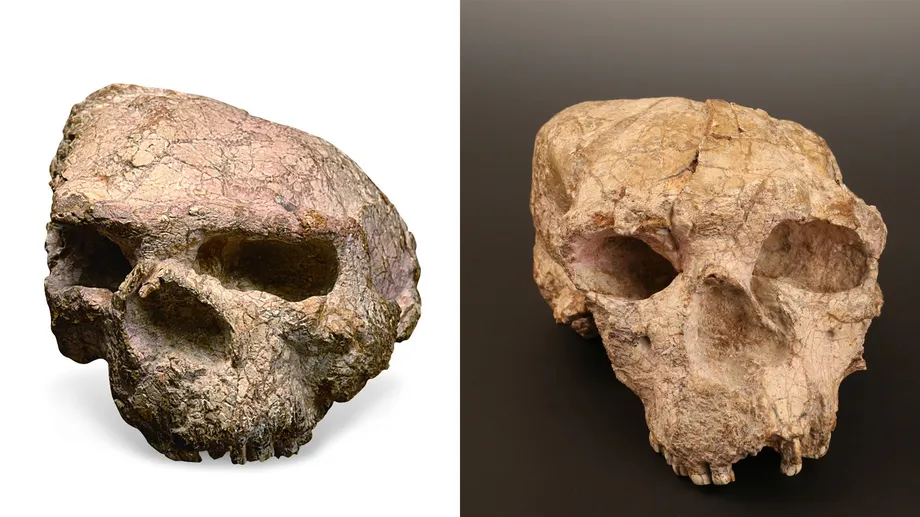
A human skull discovered in 1990 near the Hanjiang River in central China's Hubei province is challenging ideas about when the major branches of the human family separated. A virtual reconstruction of Yunxian 2, a cranium dated to between 940,000 and 1.1 million years ago, places it near the beginning of an Asian lineage that includes Homo longi, sometimes called Dragon Man, and likely the Denisovans.
Contents
- A crushed skull changes the proposed timeline
- What the restored skull reveals
- How researchers reversed the crushing
- A family tree with much older branches
- Where Denisovans fit into the Asian fossils
- Why the dates face a genetic challenge
- What the findings mean for human origins
- Movement and mixing complicate the tree
- Which evidence could test the proposal
- Key Points
An international team compared the restored skull with more than 100 human fossils. Its analysis estimates that the Neanderthal lineage branched off about 1.38 million years ago, followed by a split between the lineages leading to Homo sapiens and the Homo longi group about 1.32 million years ago. Those dates push the proposed separation of these human groups much deeper into the past than many genetic studies have suggested.
Yunxian 2 combines a long, low skull and a heavy brow with a relatively flat face and a braincase exceeding 1,100 milliliters. That capacity is the largest known for a human of this age and falls within the lower range for modern humans. The mixture places the skull between familiar categories: some features resemble Homo erectus, a widespread early human, while others resemble later humans with larger brains from Asia.
The findings address a confusing period of human evolution, roughly one million to 300,000 years ago, often called the muddle in the middle. Fossils from Africa, Europe and Asia have been difficult to fit into a single family tree. The new analysis offers a different arrangement, with Yunxian 2 close to the root of a major Asian branch.
The proposed dates and relationships remain debated. Researchers welcome the reconstruction while calling for more fossils and molecular evidence to test the broader family tree.
What the restored skull reveals
Yunxian 2 was found at Xuetangliangzi, on a river terrace near the Hanjiang River. Burial had flattened and warped the skull, making its original shape difficult to identify. The virtual restoration allowed researchers to assess its dimensions and compare anatomical features that had been obscured by crushing.
The restored cranium is long and low, with a stout brow, a broad and flat braincase, and a large but relatively flat face. Its forehead recedes, while the cheekbones are low and shallow. A wide nasal opening, a broad palate and an expanded back of the skull add to its distinctive combination of features.
The thick skull roof and low vault resemble Homo erectus. The larger braincase and flatter cheekbones, however, set Yunxian 2 apart from classic examples of that species. Details around the ear also resemble those in other fossils assigned to the proposed longi group.
Researchers describe this mixture as a mosaic of older and more recently evolved traits. In simple terms, the skull retains some features seen in earlier humans while carrying others associated with later groups. That combination helps explain why it has been difficult to classify.
The team places Yunxian 2 between 940,000 and 1.1 million years old using evidence from its sedimentary layer and associated animal fossils, supported by magnetostratigraphy and radiometric methods. Magnetostratigraphy uses the record of Earth's magnetic field preserved in sediments to help establish their age. Radiometric methods use changes in radioactive materials to estimate time.
That age makes Yunxian 2 one of Asia's oldest large crania with a braincase within the modern human size range. Its importance lies in the combination of its age, anatomy and proposed position in the family tree, rather than in any single feature.
How researchers reversed the crushing
The weight of sediment and movement in the ground had bent and twisted Yunxian 2 over many thousands of years. Such damage can hide important features or make them appear more pronounced, complicating comparisons with other skulls.
The team used computed tomography to look through the surrounding rock and structured light scanning to record surface details. Digital retrodeformation, a process that attempts to reverse changes in shape, then helped restore the skull's form.
Researchers separated bone from stone in the digital images, mirrored intact areas to replace missing sections, and used anatomical constraints to bring the parts back into alignment. The work amounted to digital surgery: rebuilding a damaged object while using its surviving structure to guide the reconstruction.
Professor Xijun Ni of Fudan University and the Institute of Vertebrate Paleontology and Paleoanthropology in Beijing jointly led the research. He described the team's reaction when the reconstruction and family tree analysis first came together:
From the very beginning, when we got the result, we thought it was unbelievable. We tested it again and again, using all the models and methods, and now we are confident about the result. We are actually very excited.
The restoration gives researchers a clearer view of a fossil that had long been difficult to interpret. Its placement among other humans depends on the next step: comparing the reconstructed anatomy with measurements and traits from skulls and jaws across the human fossil record.
A family tree with much older branches
The researchers used measurements and anatomical traits from more than 100 skulls and jaws to build a phylogenetic tree. This is a branching diagram that estimates relationships between groups. A clade is a branch containing an ancestor and its descendants.
In the proposed tree, Neanderthals separate first, around 1.38 million years ago. The lineages leading to Homo sapiens and the longi clade separate around 1.32 million years ago. That arrangement places Denisovans and their longi relatives closer to modern humans than to Neanderthals.
Yunxian 2 sits near the base of the Asian clade and close to this proposed early separation. Its position helps explain why it combines features associated with older humans and others seen in later Asian fossils. If the placement holds, the ancestral populations leading to modern humans, Neanderthals and Denisovans had already become distinct groups by around one million years ago.
Chris Stringer, research leader in human evolution at the Natural History Museum in London and a coauthor of the study, described how much that timeline would change existing thinking:
This changes a lot of thinking because it suggests that by one million years ago our ancestors had already split into distinct groups, pointing to a much earlier and more complex human evolutionary split than previously believed.
Where Denisovans fit into the Asian fossils
Denisovans were first identified in 2010 through ancient DNA from fragmentary remains in Denisova Cave in Siberia. They are known mostly from genetic material extracted from a small number of bones and teeth, leaving their physical appearance harder to reconstruct than that of humans represented by more complete skulls.
The new analysis argues that Denisovans belong within the Homo longi clade. That group is represented by Asian fossils including the Harbin skull, associated with the name Dragon Man. Yunxian 2 shares traits with Harbin and Jinniushan, while Dali and other Asian specimens also support the proposed grouping.
Several of these fossils have long been difficult to place because they resemble neither classic Homo erectus nor early modern humans. Grouping them within a separate Asian lineage offers an explanation for those anatomical mismatches and a way to reorganize parts of the Middle Pleistocene fossil record.
Genetic traces of Denisovan ancestry survive in many people across Asia, with high levels among some populations in Melanesia and the Philippines. If the proposed link with Homo longi is correct, Denisovans and their relatives were widespread across Asia for hundreds of thousands of years, interacted with other humans and contributed DNA to modern populations.
The evidence also connects discoveries made at different times. A short timeline shows how the fossil and genetic records have developed:
- 1990: Yunxian 2 was discovered at Xuetangliangzi near the Hanjiang River in Hubei province.
- 2010: Denisovans were first identified through ancient DNA from remains found in Denisova Cave in Siberia.
- 2022: A third Yunxian skull was discovered. It is under preparation and could provide another test of the proposed reconstruction and fossil grouping.
Why the dates face a genetic challenge
Many genetic studies have estimated that modern humans, Neanderthals and Denisovans separated from a shared ancestor between 700,000 and 500,000 years ago. The new anatomical analysis instead proposes major splits around 1.38 million and 1.32 million years ago, alongside a different relationship between the branches.
Genetic estimates rely on models of mutation rates and population histories. Mutations are changes in DNA that accumulate over generations; estimating how quickly they accumulate helps researchers calculate when populations separated. Those calculations have limited resolution when looking far back in time.
Trees built from skull traits face other difficulties. Similar features can evolve independently in groups that are not closely related. The traits researchers select, and the weight they give those traits, can also affect the resulting tree.
Frido Welker, an associate professor in human evolution at the University of Copenhagen, welcomed the digital reconstruction while pointing to the value of molecular tests:
It is exciting to have a digital reconstruction of this important cranium available. If confirmed by additional fossils and genetic evidence, the divergence dating would be surprising. Alternatively, molecular data from the specimen itself could provide insights that confirm or challenge the morphological hypothesis.
Ryan McRae, a paleoanthropologist at the Smithsonian National Museum of Natural History who was not involved in the research, praised the restoration but questioned the reach of the broader analysis:
The reconstruction looks strong and the fit with the longi and Denisovan line is reasonable. The phylogenetic tree tries to answer many hard questions at once with limited data. The proposed timing is older than expected, and that will need to be cross checked against more fossils and genetic evidence.
The disagreement concerns both the dates of separation and the relationships between the groups. A clearer skull offers valuable anatomical evidence, while testing the proposed tree requires comparisons across fossils and, where possible, surviving molecular traces.
What the findings mean for human origins
The oldest fossils widely accepted as early Homo sapiens remain in Africa at about 300,000 years old. The Yunxian analysis concerns a much earlier stage: the separation of the ancestral population that eventually led to our species from other human branches.
That difference matters when discussing the proposed dates. A lineage can separate from another group long before its descendants develop the full combination of features used to identify a later species. The study places that deeper separation beyond one million years ago.
Some interpretations suggest that a common ancestor near western Asia could have produced the branches leading to Homo sapiens, Neanderthals and Denisovans. That proposal remains debated. The location of the early separation, whether in Africa, western Asia or across a wider region, is not yet settled.
Africa is the earliest home of the human line and holds the oldest accepted Homo sapiens fossils. Homo erectus, however, had spread into Eurasia almost two million years ago, and Asia contains many Middle Pleistocene sites. A separation around 1.3 million years ago could therefore have involved populations distributed across both continents.
An older split would also extend the period during which different human groups could coexist. It would give them more time to meet, interact and sometimes interbreed, while directing attention toward older sites in Asia and Africa that might test the proposed timeline.
Movement and mixing complicate the tree
Ancient humans were mobile, lived in small groups and sometimes interbred when populations met. Neanderthals and Denisovans both share a history of gene flow with modern humans. Gene flow means that DNA passes between populations when people from those populations have children together.
Denisovan ancestry in living people points to a broad Asian presence for that population. In the new interpretation, this distribution fits the proposed longi lineage and its spread across Asia.
The resulting picture is a branching family tree with occasional connections between branches. Different groups could develop separately for long periods and still exchange genes when they met. A million years would provide a lengthy period for such encounters.
Yunxian 2 captures a proposed early stage of a major Asian lineage with a large brain and a flatter face. The study places that lineage's separation from the one leading to modern humans more than a million years ago. Determining where those populations lived and how they moved will require further securely dated fossils.
Which evidence could test the proposal
The third Yunxian skull, discovered in 2022 and still under preparation, offers another opportunity to examine the site's humans. Once analyzed, it could test both the restoration of Yunxian 2 and the proposed grouping of these fossils within the longi clade.
Genetic material is rare in fossils a million years old. Ancient proteins, however, have sometimes survived that long. Such molecular traces could provide another way to investigate relationships when DNA is unavailable.
More complete skulls and jaws from Africa, Asia and Europe would also broaden the comparisons. Fossils that can be securely dated and reconstructed are especially valuable because they help connect anatomical features with a particular time and place.
The study's authors have said they plan to expand their analysis with additional fossils and data. Together with work on the third Yunxian skull, those comparisons could refine the proposed relationships and dates. Each new well preserved or reliably reconstructed specimen has the potential to change the picture.
Key Points
- Yunxian 2 was discovered in 1990 in Hubei province and is dated to between 940,000 and 1.1 million years ago.
- Its restored braincase exceeds 1,100 milliliters, the largest known for a human of this age and within the lower modern human range.
- An analysis of more than 100 fossils places it near the base of the Homo longi clade, which likely includes Denisovans.
- The proposed tree dates the Neanderthal split to about 1.38 million years ago and the separation of the sapiens and longi lineages to about 1.32 million years ago.
- The analysis places Denisovans closer to modern humans than Neanderthals, challenging common genetic models.
- Harbin, Dali and Jinniushan help support the proposed Asian grouping.
- The oldest widely accepted early Homo sapiens fossils remain in Africa at about 300,000 years old.
- Further fossils, genetic or protein evidence, and the third Yunxian skull discovered in 2022 could test the proposed family tree.