More visitors help Beijing and Shanghai gain ground
Beijing has risen to sixth place and Shanghai to eighth in the 2025 International Exchange Centres Index, as China expands visa free entry and its leading cities attract more international visitors. London, Paris and New York remain the top three, while Hong Kong has slipped from fourth to seventh following a change in the way the index counts tourism and amid pressures on global trade.
Contents
- More visitors help Beijing and Shanghai gain ground
- What the city rankings measure
- Why Hong Kong's position changed
- Visa free arrivals grow faster than foreign border traffic
- Southeast Asia and Russia drive new demand
- Airports and airlines respond to rising traffic
- Hainan adapts to Russian visitors
- Chengdu, Jinan and Xiamen gain attention
- How easier entry changes competition between cities
- Practical services will shape the visitor experience
- Key Points
The index, produced by Tsinghua University's China Institute for Development Planning with Deloitte China, connects the gains in Beijing and Shanghai with rising arrivals, stronger transport links and easier digital services for travelers. Scientific research and technology also contribute to their standing as places where businesses, universities and visitors meet.
Shanghai recorded 2.6 million overseas visits in the first half of 2025, up 44.8 percent from a year earlier. About 1.4 million travelers entered under visa free arrangements. Shanghai Pudong International Airport handled 2.37 million entries from overseas during the same period, the highest figure among airports in China.
Beijing welcomed 1.49 million overseas entries in the first six months, twice the level recorded a year earlier. More than 840,000 used visa free entry. For both cities, easier entry is helping rebuild the movement of people that supports tourism, business meetings, academic exchanges and international events.
The changes extend beyond the two cities. National immigration figures show rapid growth in visa free arrivals, while airlines, hotels and attractions are adjusting routes and services. Cities including Chengdu and Jinan are also drawing visitors as easier access opens more choices for travel within China.
What the city rankings measure
The International Exchange Centres Index examines international influence, exchange activity, connectivity and openness. Its focus reaches beyond the number of tourists: it considers the connections that allow a city to bring together people, companies and ideas from different countries.
Beijing and Shanghai benefit from a combination of research, commerce and transport. Beijing's concentration of scientific activity supports conferences and academic partnerships across borders. Shanghai's finance and technology sectors help attract investment discussions, product launches and people with specialist skills.
Shanghai ranked second worldwide, behind Beijing, for scientific and technological publications over the past decade. Among the cities sampled, Shanghai also ranked fifth for unicorn companies, a term for privately held businesses valued at $1 billion or more. Research output and entrepreneurship are relevant to international exchange because they are associated with conferences, investment across borders and travel by highly skilled people.
London, Paris and New York kept their positions at the top. Their continued lead reflects the broad mix of finance, culture and talent that supports the highest ranking global cities. Beijing and Shanghai are gaining ground within that wider competition, with tourism recovery adding to their established business and research strengths.
Why Hong Kong's position changed
Hong Kong's move from fourth to seventh reflects both a statistical adjustment and economic pressures. In the latest edition, the authors excluded inbound tourist data from mainland China, changing how travel across the boundary contributed to the city's score.
Global trade disruptions also weighed on Hong Kong. Weaker trade can reduce cargo traffic and business travel, both of which feed into the connections measured by an exchange index. Shipping and manufacturing pressures can therefore affect a city's standing alongside changes in passenger arrivals.
The revised counting method matters when comparing this year's positions with earlier results. Hong Kong's score now uses a different treatment of mainland tourism, while Beijing and Shanghai have benefited from growing international arrivals and improvements in connectivity. Practical travel conditions and the authors' measurement choices both shape the final table.
Visa free arrivals grow faster than foreign border traffic
The National Immigration Administration recorded 15.89 million visa free entries by foreign nationals from January through August 2025, an increase of 52.1 percent from the same period a year earlier. Those arrivals accounted for about 62 percent of all foreign entries.
Border inspection agencies processed 51.27 million entries and exits by foreigners over those eight months, up 27.8 percent. Visa free entries therefore grew faster than the combined movement of foreign travelers into and out of the country. The two figures count different things: the first measures arrivals under visa free arrangements, while the second includes both arrivals and departures.
Across all travelers, China recorded 460 million inbound and outbound movements from January through August, up 14.9 percent from a year earlier. Each border crossing is a movement, so these totals describe travel activity rather than a count of different people.
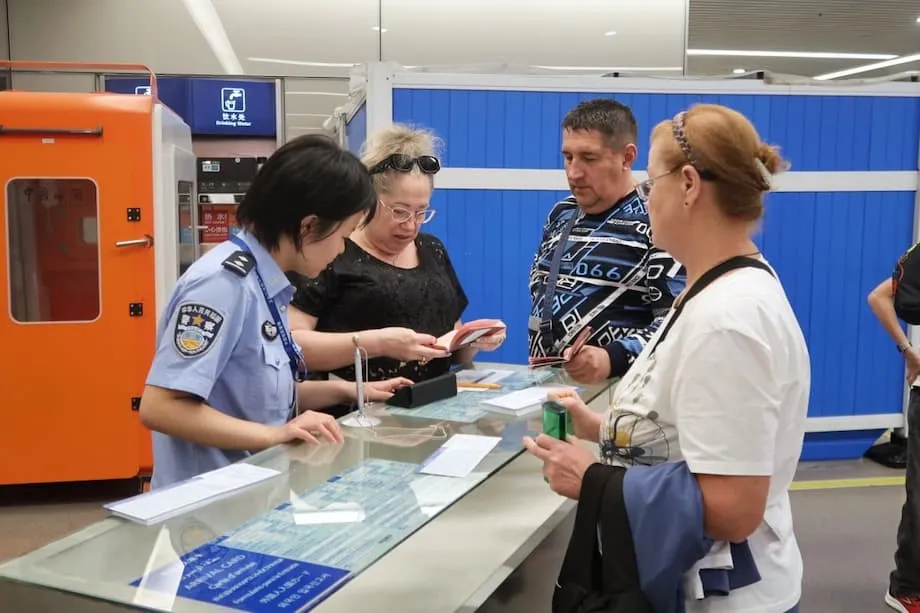
Immigration authorities say they have simplified procedures, added inspection staff during busy periods and opened more passport control channels to keep clearance times efficient. These measures become more pressing as airports and other entry points handle rising traffic.
Visa free access also changes the planning involved in a trip. Business visitors can more easily arrange meetings, attend trade fairs or inspect potential suppliers. Tourists have fewer entry arrangements to complete before choosing China, while longer permitted stays can make visits to several cities more practical.
Southeast Asia and Russia drive new demand
Travelers from ASEAN countries made more than 9 million visa free trips to China in the first eight months of 2025, accounting for a large share of the expansion. Southeast Asian demand has benefited from agreements that allow citizens of participating countries to travel more easily in both directions.
A reciprocal visa free agreement with Malaysia took effect on July 17. Malaysian passport holders made 180,000 trips to China shortly afterward, about 150,000 of them without visas. Reciprocal agreements give travelers on both sides easier access, while China's unilateral measures extend visa free entry to eligible visitors without requiring an equivalent arrangement.
Russia has become another strong source of demand. China began a trial allowing Russian citizens holding ordinary passports to stay for up to 30 days without a visa for tourism, business, family visits, cultural travel and transit.
Flight search interest from Moscow to Chinese cities jumped immediately after the announcement. During the summer, bookings from Russia to China grew sharply, with Beijing, Shanghai, Sanya, Guangzhou and Harbin among the leading destinations.
Several dates and reporting periods help explain how the changes unfolded:
- First half of 2025: Beijing and Shanghai recorded strong growth in overseas arrivals, while Chengdu reported 287,000 visa free entries.
- July 17, 2025: The reciprocal visa free agreement between China and Malaysia took effect.
- January through August 2025: China recorded 15.89 million visa free entries by foreign nationals, including more than 9 million trips by ASEAN nationals.
- By September 24, 2025: China's trial for Russian ordinary passport holders allowed eligible stays of up to 30 days.
A stay of up to 30 days gives visitors time to combine business with leisure, meet customers outside the largest cities or add another destination. Easier payments and better transport coordination help turn that extra time into a more manageable itinerary.
Airports and airlines respond to rising traffic
Shanghai Pudong's 2.37 million overseas entries in the first half reflect the restoration of international routes and Shanghai's appeal as a center for finance, culture and technology. Airlines serving China are adding capacity to major gateways and holiday destinations such as Hainan.
Singapore Airlines describes the Chinese mainland as a top strategic priority. The carrier is increasing capacity on routes with sustained demand and working more closely with Chinese partners to give travelers more options.
Dai Haoyu, the airline's senior vice president for marketing planning, described its ambition for expanding service in China:
Over the next 10 to 20 years, we aim to continuously expand our route network in China by adding more destinations.
Singapore Airlines has code sharing arrangements with Chinese partners and plans aircraft upgrades on parts of its fleet. Code sharing allows airlines to sell journeys that include flights operated by a partner, helping passengers reach more destinations through connected services.
More routes and seats make visa free access easier to use. A traveler still needs a workable flight even when a visa is unnecessary. Connecting international services with domestic routes also helps distribute visitors beyond the airport where they first enter China.
Hainan adapts to Russian visitors
Hainan already allows citizens of 59 countries to enter without a visa for stays of 30 days. The province recorded 663,000 foreign entries and exits in the first half of 2025, with 89 percent under its visa free scheme.
Sanya has expanded Russian language signs at airports, major attractions and shopping districts. Hotels have reported sharp growth in Russian bookings and responded by adding staff who speak Russian, adjusting dining choices and creating family packages.
Wuzhizhou Island has increased information in multiple languages and plans more interactive experiences suited to visitor preferences. These changes make it easier for people visiting for the first time to understand activities, find their way around and choose where to spend their time.
Payment services are changing too. Foreign bank cards can be linked to widely used mobile payment apps for small purchases. More merchants accept international cards or provide straightforward cash exchange, helping visitors use services that residents often access through their phones.
Hainan's established visa free policy has made the province a testing ground for visitor services. Easier entry brings people in, while language support, payment options and suitable activities help hotels, transport operators, attractions and retailers capture more of their spending.
Chengdu, Jinan and Xiamen gain attention
Chengdu recorded 287,000 visa free entries in the first half of 2025, an increase of 120 percent from a year earlier. Its food culture and giant panda research base are attracting travelers alongside new and restored international flights and wider eligibility for visa free entry.
Visitors arriving in Chengdu can also travel onward through western China. Better international access gives the city a role as both a destination and a starting point for a wider journey, extending the benefits beyond the largest coastal gateways.
Jinan, in Shandong province, has become a popular stop under the 240 hour transit visa free policy and the broader expansion of visa free arrangements. The transit period is equivalent to 10 days, allowing eligible travelers to spend time in China during an onward journey.
Most foreign visitors to Jinan currently come from Japan and South Korea for sightseeing or business. The city expects further growth as more travelers choose itineraries that begin in secondary hubs instead of entering through the traditional major gateways.
Xiamen offers another sign of cities building international connections. It ranked 83rd in the Globalization and World Cities 2024 list, entering the top 100 for the first time after a dozen years of steady progress.
That ranking examines cities through an economic and services lens, while the International Exchange Centres Index focuses on exchange and connectivity. Together, the results show several Chinese cities strengthening their connections with global networks of production, services and travel.
How easier entry changes competition between cities
Businesses often group Chinese cities into tiers when deciding where to invest. Beijing and Shanghai are considered Tier 1 cities because of their size, wealth and extensive connections. Tier 2 and Tier 3 cities generally offer lower costs, faster growth in many consumer sectors and more room for new services and events.
Visa free access reduces the preparation needed for international teams to hold roadshows, attend trade fairs or visit suppliers outside the largest markets. Adding a secondary city to a business itinerary becomes easier when entry arrangements and onward transport are simpler.
Beijing and Shanghai still attract a large share of inbound travel because they have dense networks of hotels, meeting venues and international schools, alongside deep pools of skilled workers. Those resources make them convenient bases for repeated business travel and longer professional assignments.
Smaller cities can benefit when visitors add another stop. A trip that begins with meetings in Shanghai or Beijing may extend to a supplier, attraction or event elsewhere. Wider visa free access and transit options support that spread of tourism and business spending, helping growing cities compete in national and specialized global rankings.
Practical services will shape the visitor experience
International card acceptance remains uneven among smaller merchants, even as connections to mobile wallets improve. Mobile data access and SIM card setup can also be confusing on arrival, especially for older travelers.
Language support has improved at major transport hubs and attractions but remains limited in some smaller venues. A visitor may move smoothly through an airport and still face difficulties buying something, setting up a phone or understanding information at a local attraction.
Officials are adding inspection staff at peak times and keeping more passport control channels open to shorten queues. Local businesses are addressing other parts of the journey through translated signs, staff with language skills and payment options that work for foreign guests.
Beijing's and Shanghai's ranking gains bring these everyday details into focus. Easier entry supports more encounters between visitors, companies and universities; practical services help those visits work once people arrive. Research strength, entrepreneurship, flight connections and convenient travel together explain why the two cities have gained ground while London, Paris and New York remain ahead.
Key Points
- Beijing rose to sixth and Shanghai to eighth in the 2025 International Exchange Centres Index; London, Paris and New York remained the top three.
- Hong Kong fell from fourth to seventh after mainland tourist data was excluded and amid global trade pressures.
- China recorded 15.89 million visa free entries by foreign nationals from January through August 2025, up 52.1 percent and representing about 62 percent of foreign arrivals.
- Shanghai recorded 2.6 million overseas visits in the first half, including about 1.4 million under visa free arrangements. Beijing recorded 1.49 million overseas entries, with more than 840,000 visa free.
- ASEAN nationals made more than 9 million visa free trips in the first eight months. China's reciprocal agreement with Malaysia took effect on July 17.
- Russian ordinary passport holders became eligible for trial stays of up to 30 days. Hainan recorded 663,000 foreign entries and exits in the first half, with 89 percent under its visa free scheme.
- Chengdu's visa free entries rose 120 percent to 287,000 in the first half, while Jinan attracted visitors through expanded entry and transit arrangements.
- Shanghai ranked second behind Beijing for scientific and technological publications over the past decade and fifth among sampled cities for unicorn companies.
- Airline expansion, language services and easier payments are helping cities turn increased arrivals into tourism, business and academic activity.