First trial reaches Kota Bharu in just under four hours
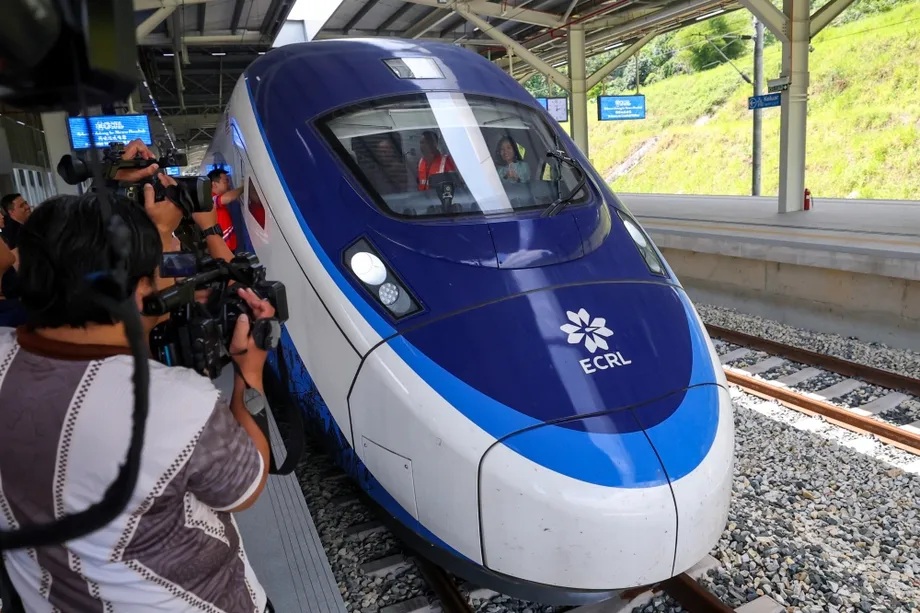
Malaysia's East Coast Rail Link began its final passenger operations trials on November 7, 2026, with 170 passengers aboard the first train and a commercial launch planned for December 12. The train left Gombak at 7am and reached Kota Bharu at 10.58am, recording a journey of three hours and 58 minutes, including stops.
Contents
- First trial reaches Kota Bharu in just under four hours
- What happened on the first journey?
- Who is running the final checks?
- From technical testing to passenger operations
- What will tickets cost?
- Express and Transit serve different journeys
- Internet coverage is undergoing its own tests
- Tunnels and viaducts carry the line across the peninsula
- Port Klang connection comes in the next phase
- Key Points
The milestone came as contractor China Communications Construction (ECRL) Sdn Bhd handed the completed 523km first phase to project owner Malaysia Rail Link Sdn Bhd (MRL). The route connects Gombak in Selangor with Kota Bharu in Kelantan, passing through Pahang and Terengganu.
MRL gives the first phase's length as 523km; the communications ministry briefing on internet coverage testing described it as 519km. Both descriptions identify 16 stations between Gombak and Kota Bharu.
Trials continue until December 2, covering Express and Transit services in both directions. The programme tests how the railway works as a passenger service, from station management and boarding to the timetable and experience inside the train.
The first journey offers an early indication of the connection planned between the Klang Valley and the East Coast. For passengers, however, the next practical milestone is the expected announcement of ticket sales and service details in mid-November.
What happened on the first journey?
The November 7 train reached KotaSAS station in Kuantan at 8.28am, completing the opening leg from Gombak in 88 minutes. It carried 170 passengers and reached speeds of up to 160km/h.
The train remained at KotaSAS until 9.33am. MRL's published account then records arrival at Kuala Terengganu at 9.53am, departure five minutes later and arrival at Kota Bharu at 10.58am.
The full elapsed journey therefore included a stop of 65 minutes at KotaSAS. Passengers planning future trips will need the published commercial timetable to compare individual departures and stopping patterns.
Trial trains are following the planned passenger timetable, with boarding passes issued and cabin crew providing services. Those arrangements allow the operator to assess the steps passengers will encounter, alongside the movement of the trains themselves.
Who is running the final checks?
ECRL Operation Sdn Bhd (EOSB) is conducting the trial programme. The company is a joint venture owned equally by MRL and China Communications Construction (ECRL) Sdn Bhd, and is responsible for operating and maintaining the railway.
MRL owns the project, while the construction company has been responsible for engineering, procurement, construction and commissioning. The November 7 handover brings the completed first phase into the final preparations for passenger operations.
MRL chief executive officer Datuk Seri Darwis Abdul Razak said the trials would examine operational arrangements and the passenger experience before the service opens to the public.
"As we begin Trial Operations, our focus is to make sure the service is ready to offer a safe and reliable journey. Each journey gives us the opportunity to assess the passenger experience and operational arrangements ahead of opening to the public," he stated.
The assessments cover operational readiness, service efficiency and station management under actual operating conditions. Running journeys in both directions also gives staff repeated opportunities to practise the planned service before paying passengers begin travelling.
From technical testing to passenger operations
The trial programme follows earlier testing and commissioning work, including the System Integration Test and a Fault-Free Run completed on October 29. Integration testing checks whether parts of the railway, such as trains, signalling and power supply, work together.
Construction of the first phase stood at 98.47% in October, before the November 7 completion and handover announcement. The remaining preparation period now centres on testing, certification and readiness for the planned opening.
The main dates show how the project is moving from construction into service:
- October 16, 2026: Cabinet approved the fare formula.
- October 19: MRL announced passenger fares.
- October 29: The Fault-Free Run was completed.
- November 7: Phase 1 was handed over and trial operations began.
- Mid-November: Ticket sales and passenger service details are expected.
- December 2: The trial programme is scheduled to end.
- December 12: Commercial passenger services are planned to begin.
The timetable leaves 10 days between the scheduled end of trials and the intended launch. Passenger operations remain subject to safety requirements and regulatory approvals.
What will tickets cost?
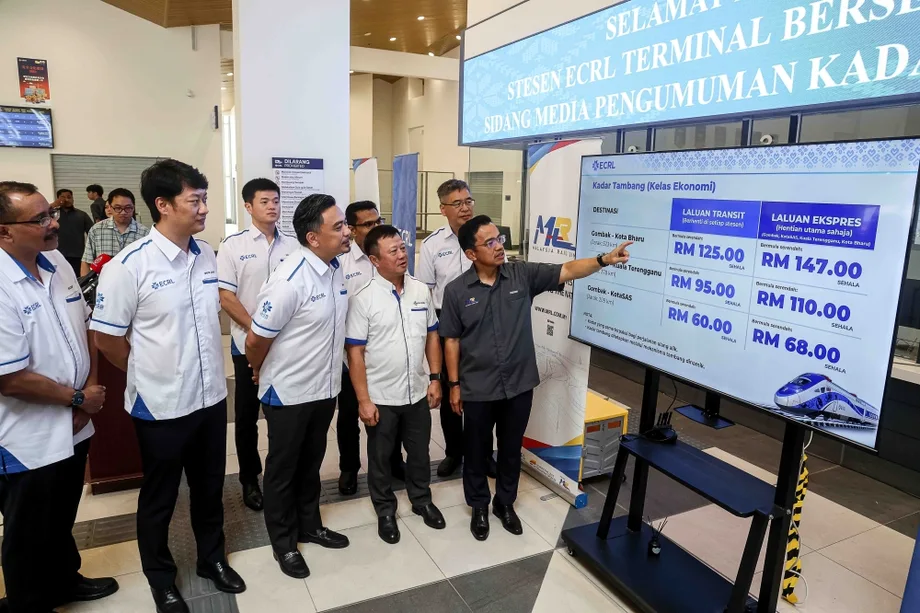
Economy Class fares for the Gombak to Kota Bharu Transit service start at RM125 one way. Cabinet has approved dynamic pricing, meaning the amount charged can change with demand, travel time and the number of seats available.
The October fare announcement also set starting Express fares at RM147 for the same route. That puts the starting Express price RM22 above Transit, or about 18% more, in exchange for fewer stops and a shorter expected journey.
Other announced starting fares from Gombak are RM60 for Transit and RM68 for Express to KotaSAS, and RM95 for Transit and RM110 for Express to Kuala Terengganu. The starting fares apply in both directions.
Darwis previously put the middle price level for Gombak to Kota Bharu Transit at RM156. That is RM31, or about 25%, above the RM125 starting price. Prices can rise further during periods of strong demand.
MRL has said an intervention mechanism would keep fares within a reasonable range if prices rose too high. A numerical ceiling and the point that would trigger intervention have not been announced. Travellers will therefore need to check the price for their chosen departure when bookings open.
Express and Transit serve different journeys
Express services are planned to call at four main stations: Gombak, KotaSAS, Kuala Terengganu and Kota Bharu. Transit trains will stop at every scheduled station, giving passengers in other towns access to the route.
The expected Express journey between Gombak and Kota Bharu is about four hours, compared with roughly seven to eight hours by road. Using those estimates, the train could save around three to four hours on the journey between the two terminals.
Transit journeys may take up to five hours because of the additional stops. The choice between the two services will depend on where a passenger needs to board or leave, the departure time and the ticket price.
The planned passenger fleet comprises 11 electric multiple unit train sets, each capable of carrying up to 425 passengers and reaching 160km/h. An electric multiple unit is a train powered by electricity, with driving equipment distributed through the train rather than relying on a separate locomotive.
Darwis identified family visits, work and education among the everyday journeys the railway is intended to serve. Its usefulness for those trips will depend on the combination of fares, stopping patterns and the final timetable.
Internet coverage is undergoing its own tests
The Malaysian Communications and Multimedia Commission (MCMC) is testing mobile internet along the route, at all 16 stations and inside tunnels. Its Nexus system is being used to identify places with no coverage and places where an existing signal needs improvement.
Deputy Communications Minister Teo Nie Ching described the two kinds of location during a visit to Kuala Terengganu ECRL Station. She said the testing would guide action on coverage gaps.
"Through these tests, we can identify areas that remain 'greenfield', meaning no coverage at all, as well as 'brownfield' locations that have coverage but not yet sufficient, including inside tunnels, so that follow-up action can be taken," she said.
MRL appointed Maxis as the provider of 4G mobile network infrastructure along the railway. Teo said the company had presented plans for telecommunications infrastructure and network equipment upgrades, with work scheduled to begin after a site handover that had been planned for November 6. MRL subsequently announced the railway handover on November 7.
Teo joined a test journey from Gombak to Kuala Terengganu that took about three hours and received a presentation on internet speed results aboard the train. She said expanding coverage would take time, with MCMC, service providers and MRL continuing work on locations experiencing problems.
Tunnels and viaducts carry the line across the peninsula
The first phase includes 41 tunnels and 218 viaducts, with the viaducts together spanning 154km. Those elevated sections account for about 29% of the 523km alignment, showing how much of the route crosses the landscape above ground level.
The 16.39km Genting Tunnel runs between Gombak in Selangor and Bukit Tinggi in Pahang. Its twin bores are among the project's largest engineering works, carrying the railway through the hills between the Klang Valley and the East Coast.
MRL said the tunnel holds Malaysia Book of Records recognition as the country's longest railway tunnel and the railway tunnel with the highest overburden. Overburden means the depth of earth and rock above a tunnel.
The 16 stations include dedicated passenger stations and terminals designed for both passengers and freight. The trials bring the trains, stations, signalling, electricity supply and operating arrangements together in a working service, while the mobile coverage tests examine another part of the passenger experience along that same infrastructure.
Port Klang connection comes in the next phase
The December passenger launch concerns the first phase between Gombak and Kota Bharu. The full ECRL network is planned to extend 665km, with Phase 2 continuing from Gombak to Port Klang in Selangor.
Following the first phase handover, MRL said the construction contractor was concentrating resources on the remaining extension. Engineering and systems work for Phase 2 was described as on track, but no opening date for that section was given in the trial announcement.
The extension would add 142km to the 523km first phase. Once complete, the railway is intended to connect Kuantan Port on the east coast with Port Klang on the west, providing a route across Peninsular Malaysia for freight as well as passengers.
MRL expects the line to support tourism, investment, employment and the development of logistics hubs and industrial parks in the East Coast states. The immediate task is more specific: complete the trials, prepare stations and staff, and publish the information passengers need before the planned December 12 opening.
Key Points
- ECRL trial operations run from November 7 to December 2, 2026, ahead of a planned December 12 passenger launch.
- The completed first phase covers 523km between Gombak and Kota Bharu and includes 16 stations.
- The first trial carried 170 passengers and reached Kota Bharu three hours and 58 minutes after leaving Gombak, including stops.
- Economy Transit fares start at RM125 to Kota Bharu, while Express fares start at RM147 under dynamic pricing.
- Ticket sales and passenger service details are expected in mid-November.
- MCMC is testing mobile coverage along the route, including stations and tunnels.
- Phase 2 will extend the railway to Port Klang, bringing the planned full network to 665km.