A larger sea, with a new restoration target
Kazakhstan says the North Aral Sea has expanded by 870 square kilometres and its salinity has fallen by nearly half following the first phase of a restoration project supported by the World Bank. The next ambition is to rebuild the Kokaral Dam, modernise irrigation systems and increase the sea's water volume to 34 billion cubic metres.
Contents
- A larger sea, with a new restoration target
- What the Kokaral Dam changed
- How much water has returned?
- Less salt and better circulation
- Why oxygen beneath the surface matters
- The next phase links the dam to irrigation
- Planting the exposed seabed
- Fishing and river agreements shape the recovery
- From the 2005 dam to the next investment period
- Key Points
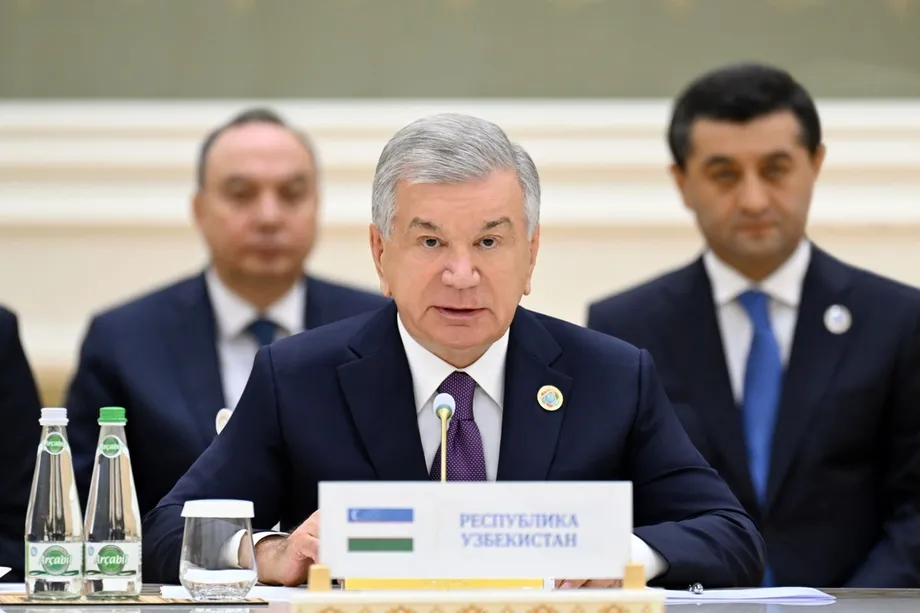
At COP31 in Antalya, Türkiye, Vice Minister of Water Resources and Irrigation Arsen Zhakhanbayev presented the results of the Syr Darya River Control and Northern Aral Sea Preservation project. He also outlined a new programme, North Aral Sea and Irrigation Systems Modernisation, whose first phase is planned for 2027–2030 and is expected to use a World Bank loan.
The recovery reaches beyond the shoreline. A scientific study published in August 2025 found that water mixing now keeps most of the northern sea supplied with oxygen throughout the year. That circulation helps sustain the conditions needed by fish and other aquatic life.
Kazakhstan's plans connect three tasks: keeping more river water in the sea, using irrigation water more efficiently and reducing the spread of salt and dust from the exposed seabed. Each addresses a different part of the same environmental crisis.
The scale of that crisis remains vast. About 90 percent of the former Aral Sea dried up after water from its two main rivers was diverted for irrigation. The northern basin, fed by the Syr Darya, is the focus of the recovery described by Kazakhstan's officials and the researchers studying its changing conditions.
What the Kokaral Dam changed
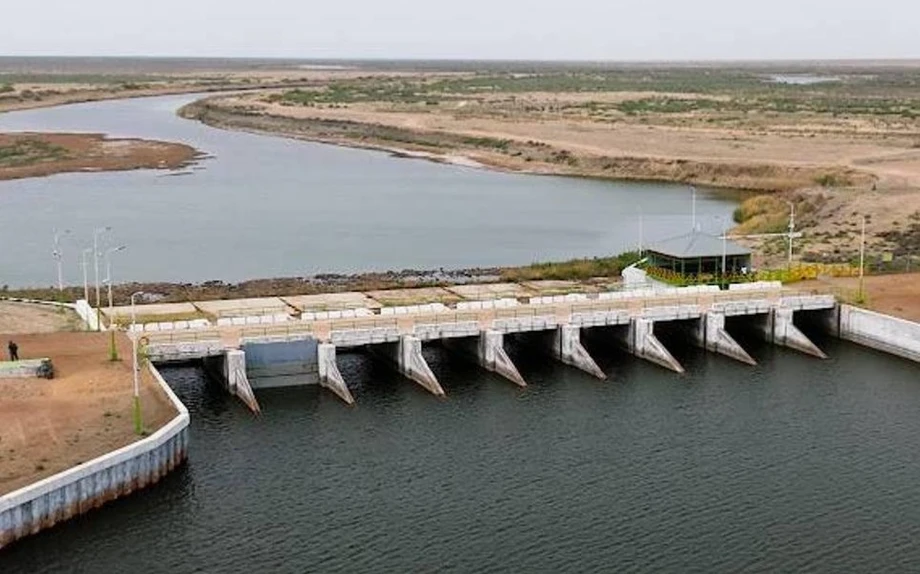
The Kokaral Dam, completed in 2005 with World Bank financial support, separates the North Aral Sea from the rest of the former lake basin. It retains water arriving from the Syr Darya, allowing the northern basin to hold more water instead of losing it towards the drying south.
Researchers Georgiy B. Kirillin, Tom Shatwell and Alexander S. Izhitskiy describe the results in their 2025 restoration study, published in Hydrology and Earth System Sciences on 7 August. They describe a dam measuring 12 kilometres and a lake volume stabilised at 27.5 cubic kilometres, equivalent to 27.5 billion cubic metres.
The study records an increase in surface area from 2,800 square kilometres in 2006 to 3,400 square kilometres in 2020. That is a gain of 600 square kilometres, or about 21 percent, over that measurement period. Kazakhstan's presentation gives a broader project gain of 870 square kilometres.
Those changes matter because lake recovery involves both the amount of water stored and the area it covers. Water volume describes how much the basin contains; surface area describes how far it spreads across the land. Both influence depth, shoreline conditions and the way water moves inside the lake.
How much water has returned?
Kazakhstan's Ministry of Water Resources and Irrigation gives a recent recovery from 18.9 billion cubic metres at the end of 2022 to 23 billion cubic metres at the end of 2025. That is an increase of 4.1 billion cubic metres, or about 22 percent. The ministry also says more than 6 billion cubic metres entered the North Aral over the three years.
Water entering a lake and the increase in its stored volume are different measurements. Some incoming water replaces losses, including evaporation, so the amount arriving can be larger than the net increase retained.
A figure of 27 billion cubic metres, described as a 42 percent increase, has also been reported for 2025, compared with the ministry's figure of 23 billion at the end of that year. The academic study describes a stabilised volume of 27.5 billion cubic metres using research associated with earlier field observations. A common measurement date and method would help readers track future changes against a consistent starting point.
Less salt and better circulation
Salinity measures how much salt is dissolved in water. As the Aral Sea shrank, water evaporated while salt remained, making the remaining water increasingly salty. Restoring river inflows and retaining more water in the northern basin helped reverse that process.
The academic study records salinity falling from 18 grams of salt per kilogram of water in August 2002 to 11 grams in October 2014. Its abstract gives a broader endpoint of 10 grams per kilogram, also used in the Leibniz Institute of Freshwater Ecology and Inland Fisheries' October 2025 explanation of the research. Those results put salinity close to conditions before the sea began drying.
Zhakhanbayev's COP31 presentation described a reduction of nearly half, while a fourfold decline has also been reported without matching measurement dates. The dated scientific observations provide a specific comparison: 18 grams per kilogram before the dam and roughly 10–11 grams afterwards.
Dr Georgiy Kirillin, the IGB researcher who led the study, described the physical recovery in the institute's October research statement:
Our study documents the process of restoring the northern Aral Sea on a physical level.
Kirillin's team used expedition measurements from 2016–2019 and a full year of continuous temperature and oxygen monitoring from an autonomous station. Their work helps explain what happens beneath the expanding surface.
Why oxygen beneath the surface matters
The researchers found that weak summer layering by temperature affected about 7 percent of the lake's volume. Layering happens when warmer surface water sits above colder, denser water, limiting exchange between them.
Internal waves, which move within the lake rather than simply across its surface, had periods of about 4.5 days and helped mix water near the bottom. That movement carries oxygen downwards and moves nutrients between deeper water, bottom sediment and the upper layers where aquatic food webs begin.
Most of the water column remained well supplied with oxygen throughout the year, although low oxygen could develop in the deepest area during midsummer. Fish and many other organisms depend on dissolved oxygen, making its distribution a practical measure of habitat conditions.
The southern Aral illustrates the consequences of losing that circulation. The IGB statement describes areas where strong differences in salinity keep deep water separated from the surface. Those deep areas lack oxygen, support very little biological diversity and produce methane and hydrogen sulphide.
The northern sea's improved circulation is sensitive to further change. The researchers' modelling found that even small shifts in water level or transparency could alter how long the lake remains layered. Changes in nutrient input and algal growth can affect transparency, connecting activity across the river basin with conditions deep inside the sea.
The next phase links the dam to irrigation
Kazakhstan's planned second phase would reconstruct the Kokaral Dam and raise the North Aral's water level to 44 metres under the Baltic height reference system. This is a reference used to measure elevation. The targets are a surface area of 3,913 square kilometres and a water volume of 34 billion cubic metres.
Compared with the ministry's figure of 23 billion cubic metres at the end of 2025, the volume target requires another 11 billion cubic metres, an increase of about 48 percent. Delivering that gain will require sustained river inflows as well as construction work.
The Ministry of Water Resources and Irrigation is preparing more than 160 design and cost documents for irrigation modernisation and automation in Turkestan and Kyzylorda provinces. Bekmurat Kalimardan, a ministry department head, said the work would support more efficient water use and create opportunities to direct saved water towards the North Aral.
Agriculture is one of the main water users in the Syr Darya basin. Irrigation modernisation is therefore central to the recovery plan: the same river supplies farms and feeds the sea. Zhakhanbayev's presentation stressed that engineering works produce lasting results when combined with careful water use.
The schedule has changed across the announcements. Plans described in March 2026 placed the second phase in 2026–2029, while the COP31 presentation placed the first phase of the broader modernisation programme in 2027–2030. How those schedules fit together, and the amount and approval status of the proposed World Bank loan, have not been specified.
Planting the exposed seabed
Kazakhstan is also working on the land left behind by the retreating sea. Between 2021 and 2025, afforestation activities covered more than 1.1 million hectares of exposed seabed. That is more than 11,000 square kilometres, showing the geographic scale of the work beyond the water's edge.
Saxaul, a shrub or small tree suited to dry environments, helps stabilise sandy ground and reduce the movement of salt and dust. More than 56 million saxaul seedlings were reported planted over six years. The planting programme addresses exposed land while the dam and irrigation projects focus on retaining and delivering water.
At a COP31 panel held in Kazakhstan's national pavilion on 10 November 2026, Mansur Oshurbayev, Vice Minister of Ecology and Natural Resources, presented the ecosystem restoration work. His contribution covered water recovery, planting and climate adaptation, while Zhakhanbayev's presentation focused on water infrastructure and future investment.
Oshurbayev explained why water security carries such weight for Central Asia:
"For Central Asia, climate change adaptation is primarily a matter of water security. The history of the Aral Sea demonstrates this more clearly than any other example: when a water ecosystem is lost, the stability of the land, climate, public health and the economy of an entire region is also undermined," Oshurbayev said.
Fishing and river agreements shape the recovery
Fishing is one of the most direct connections between the North Aral's environmental condition and household income. Annual catches have reached about 8,000 tonnes during the recovery, but a decline from 7,800 to 3,900 tonnes was reported for 2025. That decrease amounts to half the earlier catch and shows why fishing communities need dependable water conditions alongside an expanding lake.
Kazakhstan also depends on cooperation beyond its borders. The Syr Darya's water supply is shaped by upstream use and reservoir operations, including in Kyrgyzstan. Melting glaciers that feed the river add another source of pressure on future supplies.
Water Resources and Irrigation Minister Nurzhan Nurzhigitov linked recent inflows to coordinated reservoir operations and compliance with agreements between countries. In March 2026, he also highlighted an agreement signed by Kazakhstan and Uzbekistan in 2025 on the joint management and careful use of water facilities crossing their border.
Kazakhstan proposed three areas of international cooperation at COP31: sharing practical experience, securing sustained financing for water ecosystem restoration and carrying out joint projects with measurable results. Oshurbayev also called for climate finance and joint scientific monitoring.
Scientific monitoring gives those commitments concrete measures: water volume, salinity, oxygen, temperature and the timing of seasonal mixing. Together with river flows, irrigation use and fish catches, they can show whether gains in the lake are continuing and whether conditions for local livelihoods are improving.
From the 2005 dam to the next investment period
The recovery has unfolded over two decades, with construction, planting, river agreements and scientific research advancing on different schedules. The main dates show how the next programme builds on earlier work:
- 2005: The Kokaral Dam was completed with World Bank financial support.
- 2006–2020: The lake's surface grew from 2,800 to 3,400 square kilometres in the academic study's comparison.
- 2016–2019: Scientific expeditions gathered observations later used to examine mixing, temperature and oxygen.
- 2021–2025: Afforestation activities covered more than 1.1 million hectares of exposed seabed.
- End of 2022 to end of 2025: The water ministry records an increase in stored water from 18.9 billion to 23 billion cubic metres.
- 7 August 2025: Kirillin, Shatwell and Izhitskiy published their study of the restored lake's physical conditions.
- March 2026: Second phase plans described dam reconstruction and an implementation period of 2026–2029.
- November 2026: Kazakhstan presented restoration results at COP31 in Antalya, including a broader modernisation programme with a first phase planned for 2027–2030.
The next investment period brings the projects together around a practical goal: retain more water while reducing avoidable demand along the river that supplies it. The scientific findings add a further management task, keeping track of how greater depth and changing water quality affect the circulation that supports aquatic life.
Key Points
- Kazakhstan says the first restoration phase expanded the North Aral Sea by 870 square kilometres and nearly halved its salinity.
- The water ministry records growth from 18.9 billion cubic metres at the end of 2022 to 23 billion at the end of 2025.
- A 2025 scientific study found that mixing keeps most of the northern sea well supplied with oxygen, while conditions remain sensitive to changes in water level and transparency.
- Future plans target 34 billion cubic metres of water, a surface area of 3,913 square kilometres and reconstruction of the Kokaral Dam.
- Irrigation modernisation in Turkestan and Kyzylorda is intended to improve water use and help supply the sea.
- Planting on the exposed seabed covered more than 1.1 million hectares during 2021–2025.
- The modernisation programme presented at COP31 has a first phase planned for 2027–2030, with a World Bank loan expected to provide financing.