500,000 homes by 2030, then one million by 2035
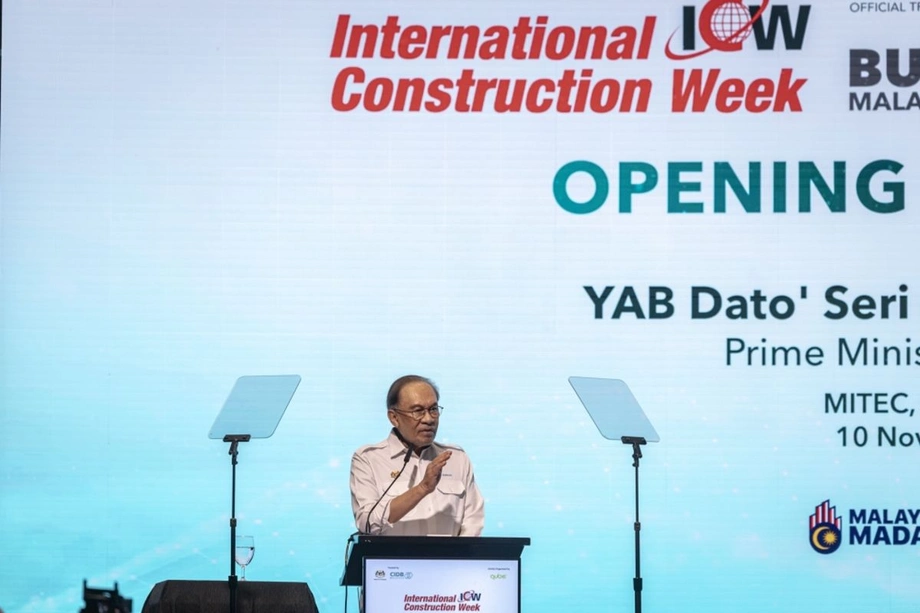
Malaysia aims to deliver 500,000 affordable homes by 2030 under the 13th Malaysia Plan, as part of a broader ambition to provide one million homes between 2026 and 2035, Prime Minister Datuk Seri Anwar Ibrahim said on November 10, 2026. Advanced modular construction is central to the effort, alongside measures to improve financing, protect buyers and strengthen the local building industry.
Contents
- 500,000 homes by 2030, then one million by 2035
- How the housing programme took shape
- What modular construction would change
- Faster building must still produce liveable homes
- Why the existing housing figures need careful counting
- Helping households pay for a home
- Buyer protection and unfinished projects
- Homes near transport and accessible to more residents
- Local firms, workers and public spending
- Key Points
Speaking at the opening of International Construction Week and BuildXPO Malaysia 2026 at the Malaysia International Trade and Exhibition Centre in Kuala Lumpur, Anwar said construction technology should deliver practical benefits for households. Faster building must go together with affordable prices, safe homes and neighbourhoods where people can live comfortably.
Anwar described the housing targets as part of the government's national development programme:
"For example, the 13th Malaysia Plan, we set up a target of delivering 500,000 affordable homes by 2030, as part of the wider national aspiration of one million homes between 2026–2035," he said.
The two figures describe stages of the same ambition: 500,000 homes by 2030 and a total of one million by 2035. Spread evenly across the decade from 2026 through 2035, the larger target would require an average of 100,000 homes a year. Actual annual delivery could vary as projects move through planning, construction and completion.
For families, the challenge extends beyond how many homes builders produce. Anwar has acknowledged that housing supply does not always match demand and that prices remain out of step with incomes. The government's response combines construction changes with financing schemes, proposed legal reforms and greater attention to location and accessibility.
How the housing programme took shape
Anwar's November remarks build on commitments announced when he tabled the 13th Malaysia Plan in the Dewan Rakyat on July 31, 2025. The programme calls for cooperation between the Federal Government, state governments and private developers to provide one million affordable homes over the following decade.
Housing and Local Government Minister Datuk Seri Nga Kor Ming subsequently launched the National Housing Policy 2026–2035 on August 10, 2026. With six focus areas, 17 strategies and 59 action plans, the policy addresses housing costs, mismatches between supply and demand, and abandoned developments.
The main announcements form a sequence:
- July 31, 2025: Anwar tables the 13th Malaysia Plan and announces the ambition to develop one million affordable homes between 2026 and 2035.
- August 10, 2026: Nga launches the National Housing Policy 2026–2035, linking the housing target to financing, legal reforms and more inclusive development.
- November 10, 2026: Anwar highlights the target of 500,000 homes by 2030 and calls for advanced construction technology to support delivery.
The November speech places the construction industry's capabilities alongside the wider housing reforms. Government agencies and developers are being asked to improve both the process of producing homes and the conditions under which people can obtain and occupy them.
What modular construction would change
The Construction Industry Development Board, known as CIDB, is working with private companies to advance modular construction. Anwar welcomed that cooperation and the exploration of three-dimensional concrete printing.
Modular construction generally involves producing building sections in a controlled setting before transporting and assembling them at the construction site. Moving some work away from the site can make production more predictable and reduce repeated tasks. The savings depend on factors such as project design, production volume, transport and installation.
Three-dimensional concrete printing uses machinery to place concrete in successive layers according to a digital design. Anwar described it as a technology being explored; he gave no deployment timetable or target for the number of affordable homes it would produce.
Anwar had also identified the Industrialised Building System, or IBS, when presenting the 13th Malaysia Plan. IBS involves using manufactured building components, connecting the earlier housing announcement with the latest emphasis on modular methods.
The government wants these approaches to accelerate construction and reduce costs, including in public housing. Anwar also referred during the plan's presentation to digital building management technology. Digital tools can help construction teams coordinate designs and work before problems become expensive to fix on site.
Faster building must still produce liveable homes
Anwar told the construction gathering that speed should be measured alongside safety, quality, liveability and cost. His message puts the experience of residents at the centre of the technology programme.
The prime minister set out the standards he expected:
"Now, technology must help us deliver homes more efficiently, without compromising safety, quality and liveability and I would add, cost (too)," he said.
A lower construction bill is one part of affordability. Families also need prices or payments they can manage, homes suited to their needs, and access to everyday services. The government's acknowledgement of mismatches between supply and demand makes those considerations central to the programme.
Anwar warned that development focused on large projects, while neglecting social needs, environmental quality and public welfare, could generate community resentment. He said the industry's transformation should be judged by the quality of homes and infrastructure delivered to Malaysians, as well as the projects completed and technologies introduced.
The government also plans to replicate the Kota Madani initiative in Putrajaya, developed with Putrajaya Holdings, as a model for affordable housing. In presenting the plan, Anwar connected the initiative with a city that combines physical development with social values and residents' wellbeing.
Why the existing housing figures need careful counting
Anwar said when tabling the 13th Malaysia Plan in July 2025 that 180,000 housing units had been completed and another 235,000 were under government construction. Together, those categories represented 415,000 homes, with more still being built than finished.
Nga has separately cited 511,544 affordable homes provided as of September 30 under the 12th Malaysia Plan, exceeding that plan's target of 500,000. His figure included completed homes, homes under construction and homes that had received planning approval. The year of that September reporting date was not specified in the account of his remarks.
Planning approval allows a development to proceed through the relevant process; construction means building work is under way; completion means the building work has finished. The ministry's total therefore tracks several stages of the housing pipeline, while the 180,000 figure counts completed units.
The difference matters to households waiting to move. A growing pipeline can support future supply, while finished homes are needed to meet immediate demand. Progress towards the new targets will be easier to understand when each stage is identified.
Nga attributed the earlier programme's progress to cooperation between federal and state governments and private developers. He identified the Klang Valley, Selangor and Johor among the areas with the largest amounts of affordable housing built.
Helping households pay for a home
The government plans to expand the Housing Credit Guarantee Scheme and Rent-to-Own arrangements, particularly for households with low and middle incomes. The National Housing Policy also includes Shared Ownership among its routes towards ownership.
A credit guarantee can support access to financing by providing a lender with an additional guarantee. Rent-to-Own arrangements connect a period of renting with a route towards buying. Shared Ownership generally allows a household to acquire a share of a property instead of funding the entire purchase at once. Eligibility, payments and obligations depend on each scheme's terms.
Anwar named several housing programmes when presenting the 13th Malaysia Plan: Residensi Madani, the Public Servants Housing Programme, the New Home Construction Assistance Programme, the Affordable Housing Programme and Rumah Bakat Madani.
The combination recognises two practical needs. Malaysia must produce homes at prices people can afford, and eligible households need workable ways to finance them. A cheaper construction method helps with production costs; financing programmes address how a household pays.
Buyer protection and unfinished projects
The National Housing Policy sets out a proposed Residential Tenancy Act, amendments to the Strata Management Act 2013 and a phased introduction of the Build-Then-Sell system. These measures address different parts of the housing experience, from renting to managing shared buildings and purchasing a home.
Strata management concerns properties such as apartment developments where owners share facilities and common areas. Build-Then-Sell shifts the sequence towards completing homes before selling them, rather than relying on buyers to commit while construction is still under way.
The policy also introduces Option to Purchase and Sunset Clause mechanisms to strengthen buyer protection. In general, an option sets out an opportunity to buy under agreed conditions, while a sunset clause sets a time limit on an agreement or obligation. Their precise effect depends on the final legal and contractual terms.
Nga said the Housing and Local Government Ministry had rescued 1,333 troubled or abandoned projects involving nearly 160,000 homes over three years. Those figures show the scale of the work required alongside new construction: projects that stall also need intervention so that buyers can receive their homes.
The policy announcements set a direction for reform, but the implementation dates and detailed terms of the proposed legal changes were not given. Households will need those details to understand how new protections apply to their purchases or tenancies.
Homes near transport and accessible to more residents
The National Housing Policy prioritises development around public transport and housing suited to senior citizens and people with disabilities. The approach connects housing decisions with Malaysia's existing investment in transport infrastructure.
Building near public transport can give residents more options for reaching work, education and services without relying entirely on private vehicles. Accessibility also depends on the journey between the home and the station, as well as the design of the home itself.
Nga, speaking at the policy launch at the KLGCC Convention Centre, called for housing development to make better use of transport networks:
"It is time for housing development to optimise the use of public transport systems, especially for people with disabilities," he said.
The policy links this approach to Malaysia's ambition to become a carbon neutral economy by 2050. For residents, its immediate relevance is practical: an affordable home needs to work as a place from which people can travel and manage daily life.
Local firms, workers and public spending
Anwar wants Malaysia to develop the ability to produce, commercialise and eventually export construction technologies. The aim extends beyond buying equipment from abroad to building local knowledge and industrial capacity.
Local contractors, particularly small and medium enterprises, should have access to training, technology and business opportunities, he said. He identified digital design, automation, advanced manufacturing and robotics among the skills the future construction workforce would need.
Government, industry and technology partners are expected to turn cooperation into technology transfer and practical skills development. For smaller contractors, participation will depend on access to the tools and knowledge used in increasingly industrialised construction.
Anwar also called for competitive tendering and transparent governance to reduce unnecessary expenditure. His argument links procurement directly to housing delivery: money saved through better purchasing and oversight can support more development and public assistance. The programme's central test is whether technology, financing and governance together produce homes that Malaysians can afford and comfortably occupy.
Key Points
- Malaysia targets 500,000 affordable homes by 2030 and one million between 2026 and 2035.
- CIDB and private companies are advancing modular construction and exploring three-dimensional concrete printing.
- The National Housing Policy combines new supply with financing schemes, buyer protection and proposed legal reforms.
- The earlier total of 511,544 homes includes completed units, construction and planning approvals.
- Public transport access, accessible housing, local contractor participation and transparent tendering are priorities.