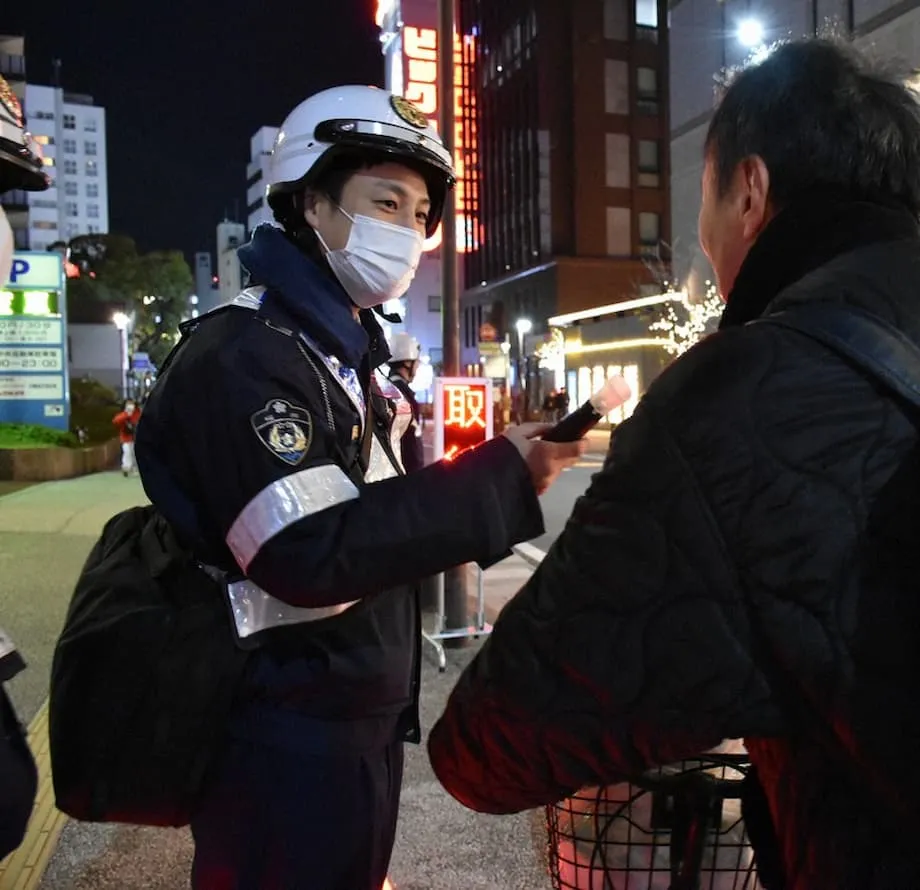
New penalties reach beyond the person riding
Japan recorded 4,542 cases of cycling under the influence from November 2024 through June 2025 after tightening its Road Traffic Act. Fukuoka Prefectural Police accounted for 949 cases, the highest prefectural total, followed by Saitama with 331 and the Tokyo Metropolitan Police Department with 326.
Contents
- New penalties reach beyond the person riding
- Why Japan tightened the rules
- What changed in November 2024
- How the alcohol threshold works
- Phone use brings a separate set of penalties
- Fukuoka leads a broader enforcement push
- What blue tickets will mean from April 2026
- When lending a bicycle or serving alcohol becomes an offense
- The everyday rules for residents and visitors
- Education expands while street design draws concern
- What to Know
The change introduced a measurable alcohol threshold for cyclists: a breath alcohol concentration of 0.15 milligrams per liter or more. Riders at or above that level can face up to three years in prison or a fine of 500,000 yen, about $3,300. The threshold matches the one used for motor vehicle drivers.
Japan also increased penalties for using a mobile phone while cycling. Calls, texts and looking at a screen while riding can bring up to six months in prison or a fine of 100,000 yen, about $670. If phone use causes an accident, the maximum rises to one year in prison or 300,000 yen, about $2,000.
The revised law reaches people who help a drinking cyclist get on the road. Providing a bicycle to someone who may ride under the influence, or offering alcohol to someone who may subsequently cycle, can now lead to punishment.
As of September 24, 2025, another change is approaching. From April 2026, administrative fines known as blue tickets will cover minor cycling violations. Serious offenses, including drunk cycling and obstructive riding, will remain subject to criminal proceedings. Together, the changes affect daily commuters, students, tourists, rental businesses and establishments serving alcohol.
Why Japan tightened the rules
Japan recorded more than 72,000 bicycle accidents nationwide in 2023. They accounted for over one fifth of all traffic accidents, making bicycle safety a substantial part of the country's road safety challenge.
Police figures show accidents linked to phone use while cycling increased from 295 cases between 2013 and 2017 to 454 in the following five years. That is 159 additional cases, an increase of about 54 percent. In the first half of 2024 alone, police counted 17 serious injuries and one death associated with cycling while using a phone.
Young riders are overrepresented in cases involving smartphones. Officials also point to the popularity of electric assist bicycles and the large number of cyclists in dense cities as factors that raise the stakes when a rider loses concentration or control.
Alcohol has its own deadly history. Between 2015 and 2024, police recorded 417 fatal accidents involving drunk cyclists. In Fukuoka, a collision caused by a drunk motorist in 2006 killed three children and strengthened community resolve against intoxicated driving. That resolve has extended to cycling.
Lawmakers and police argue that a clear alcohol standard, backed by active enforcement, gives riders and businesses fewer excuses to allow drinking and riding to mix. Officials describe prevention as a shared responsibility for communities, restaurants and families.
What changed in November 2024
Japanese law classifies bicycles as light vehicles. Cyclists must therefore follow traffic rules similar to those governing cars and motorcycles, rather than treating a bicycle as outside the rules that apply to other road users.
Before November 2024, police generally had to show that a cyclist was drunk to the point of being unable to operate the bicycle safely to pursue criminal charges. The revised Road Traffic Act added an objective threshold, allowing police to act when a rider tests at 0.15 milligrams of alcohol per liter of breath or more, even without obvious severe impairment.
The more serious offense remains in place. A person so drunk that safe cycling is difficult can face up to five years in prison or a fine of 1 million yen. The law therefore provides different maximum penalties for riding above the measured threshold and for riding in a state of severe intoxication.
The main dates show how the changes are unfolding:
- November 2024: The revised alcohol and mobile phone penalties took effect.
- November 2024 through June 2025: Police recorded 4,542 cases of cycling under the influence nationwide.
- April 2026: Administrative blue ticket fines are scheduled to begin for minor cycling violations.
How the alcohol threshold works
The 0.15 milligram threshold measures alcohol in breath, not blood. Police take the reading with a portable device, using the same measurement applied to motor vehicle drivers. The rule covers all bicycles, including electric assist models and cargo bikes.
A particular number of drinks will not produce the same reading in everyone. Body mass, sex, food intake and the time since the last drink all affect alcohol levels. For many people, a single strong drink or two standard drinks consumed over a short period may push the reading into the punishable range.
Alcohol levels can continue rising for a time after the final drink. Someone who feels fine may still test above the threshold. Drinking late at night can also leave enough alcohol in the body to produce a positive reading the next morning.
Police look for signs that justify testing, including the smell of alcohol, slurred speech, unsteady behavior while stopped, or traffic violations such as running a red light. Refusing a test does not end an investigation. Officers can use other evidence and may take the case further.
A rider who is plainly too drunk to cycle safely can face the more serious offense even without a specific breath reading. Its maximum penalty remains five years in prison or a fine of 1 million yen.
For someone who has been drinking, the safest choice is to leave the saddle empty. Options include walking the bicycle, taking a taxi or public transport, or leaving it in a parking area and collecting it later. After drinking the night before, allowing extra time or avoiding an early ride also reduces the risk of cycling with alcohol still in the body.
Phone use brings a separate set of penalties
Using a phone while moving exposes a cyclist to punishment whether the activity involves making a call, texting or looking at the screen. The maximum is six months in prison or a fine of 100,000 yen. If the cyclist causes an accident while using the phone, the ceiling increases to one year in prison or a fine of 300,000 yen.
The practical change for someone checking directions or messages is straightforward: stop and step off the bicycle before using the device. Keeping the bicycle moving while checking the screen is the behavior the revised rules target.
Police are watching for riding with one hand while operating a phone, alongside other signs of unsafe behavior. The increase from 295 phone related accidents in one period of five years to 454 in the next helps explain why distraction has become a central enforcement priority.
From April 2026, the planned blue ticket schedule also lists a 12,000 yen fine for cycling while using a smartphone or device. That system is intended to handle minor violations more consistently, while the revised law already provides criminal penalties for distracted cycling.
Fukuoka leads a broader enforcement push
Fukuoka's 949 cases from November 2024 through June 2025 represented about 21 percent of the nationwide total of 4,542. Its tally was nearly three times Saitama's 331 and the Tokyo Metropolitan Police Department's 326.
Fukuoka officials attribute the high number to a zero tolerance approach and active patrols intended to deter riders before they injure themselves or others. The prefecture's response draws on the lasting community reaction to the 2006 crash that killed three children.
Osaka police began using the new powers immediately. They reported issuing a red ticket to a cyclist under the influence on the first day the law took effect and said they were investigating additional cases. A red ticket is a criminal citation that can lead to prosecution in court.
Police still use warnings and guidance in many situations. Drunk cycling, obstructive riding and other serious offenses, however, draw criminal treatment. Across cycling violations more broadly, police identified 51,564 cases in 2024, a 17 percent increase from the previous year.
Patrols concentrate on busy intersections, school routes, nightlife districts and corridors with heavy pedestrian traffic. The Tokyo Metropolitan Police surveyed locations across the country and identified intersections with high rates of riders using phones, including one in Akihabara that stood out.
The evening commute and late night hours receive particular attention because drinking and distraction are more common then. Officers look for weaving, ignored traffic lights, bicycles without lights and phone use while riding.
What blue tickets will mean from April 2026
Japan's planned blue ticket system introduces administrative fines ranging from 3,000 to 12,000 yen for minor bicycle violations. These are on the spot fines that do not carry criminal penalties if paid. The aim is to make the response to lesser offenses more consistent.
Under rules set by the National Police Agency, the amounts depend on the behavior involved:
- 12,000 yen for cycling while using a smartphone or device.
- 6,000 yen for riding against the flow of traffic or cycling where sidewalk riding is prohibited.
- 6,000 yen for ignoring a red light.
- 7,000 yen for entering a blocked railroad crossing.
- 5,000 yen for cycling without lights at night or with defective brakes.
- 3,000 yen for riding side by side where prohibited or riding double.
Drunk cycling and obstructive riding will remain red ticket offenses that can lead to criminal prosecution. For riders, the central difference is the legal process: paying an administrative fine resolves a blue ticket without criminal punishment, while a red ticket can take a case into court.
April 2026 is the scheduled start date. As of September 24, 2025, cyclists already face the alcohol and phone penalties introduced in November 2024, while the administrative fine system is still ahead.
When lending a bicycle or serving alcohol becomes an offense
Providing a bicycle to someone who may ride under the influence can bring up to three years in prison or a fine of 500,000 yen. Offering alcohol to someone who may subsequently ride a bicycle can lead to up to two years in prison or a fine of 300,000 yen.
The person's knowledge matters. A bartender, host or friend who knows or reasonably suspects that someone plans to cycle after drinking could face punishment. The provisions are designed to prevent a potential rider from being equipped or encouraged to make a dangerous choice.
Many establishments already encourage customers to walk or take taxis. Some provide discounts or telephone numbers for rides. Families and friends can help by storing a bicycle overnight or suggesting another way home instead of handing over a bicycle key or pouring another drink.
Events and festivals are another focus. Organizers are urged to put reminders at bicycle parking areas and ask volunteers to discourage riding after drinking. Stopping the journey before it begins is a direct way to prevent a crash.
Police have also asked shops, restaurants and community groups to display notices and remind customers that cycling after drinking is a crime. Restaurant groups share guidance on handling patrons who arrive by bicycle, extending prevention beyond roadside checks.
The everyday rules for residents and visitors
Residents and tourists are expected to keep left, obey signals and give pedestrians priority wherever sidewalk cycling is permitted. Rental customers should ask the shop for a briefing on local rules and check that the bicycle's lights and brakes work before leaving.
Helmet use is expected for all riders under a national duty of effort. That means riders are expected to make the effort to wear one. Many local governments support helmet use through campaigns and subsidies.
Police require a working front light and a rear reflector or light at night. They also encourage using a bell to alert pedestrians when appropriate. Other daily requirements and safety practices include:
- Ride in the direction of traffic and keep to the left side of the lane.
- Obey traffic lights and stop signs, making a complete stop where required.
- Stop and step off the bicycle before checking a smartphone.
- Use lights at night and keep the brakes in working order.
- Do not hold an umbrella or another object while riding.
- Avoid earphones that block surrounding sounds, because hearing traffic is part of safe riding.
- Make right turns in two stages where marked or directed by police, or dismount and walk across at crosswalks.
- Ride slowly on permitted sidewalks and give pedestrians absolute priority. Many sidewalks are for children, seniors and people with disabilities.
- Carry children only in approved child seats and have them wear helmets.
- Register the bicycle at purchase to help police recover it if stolen.
Police can require a bicycle safety class for people found guilty of dangerous cycling more than twice within three years. Riders who disregard guidance and continue risky behavior can expect closer attention as well as the higher penalties now in place.
Education expands while street design draws concern
Universities and high schools are running safety sessions for young riders. Schools, community centers and employers are also expanding education about cycling rules and risks. Officials say enforcement concentrates on the most dangerous behaviors, with public awareness working alongside patrols.
Many cyclists support stronger punishment for plainly dangerous conduct such as drunk riding and phone use. Others argue that safer streets also require protected bicycle lanes that separate cyclists from cars and pedestrians.
Some cities have dedicated lanes with physical separation that have reduced conflicts and encouraged more predictable riding. In many neighborhoods, however, painted lanes are intermittent. Parked vehicles can push cyclists into the roadway or onto sidewalks, creating conflicts with pedestrians.
The practical challenge is to make following the rules easier as well as to punish violations. Clearer laws, active enforcement and education can support safer habits, while city planners and local governments continue to face calls for consistent, protected cycling routes.
For commuters, students and visitors, the immediate changes are concrete: alcohol and phone use carry stronger penalties, people who enable drunk cycling face liability, and another system of fines is scheduled for April 2026. Street design and education remain part of the debate over how to reduce the crashes behind those changes.
What to Know
- Since November 2024, cycling with breath alcohol of 0.15 milligrams per liter or more can bring up to three years in prison or a 500,000 yen fine.
- Severe drunkenness that makes safe cycling difficult can bring up to five years in prison or a 1 million yen fine.
- Phone use while riding can bring up to six months in prison or a 100,000 yen fine, rising to one year or 300,000 yen if an accident occurs.
- Police recorded 4,542 drunk cycling cases from November 2024 through June 2025. Fukuoka had the highest prefectural total, with 949.
- People who provide a bicycle or alcohol to someone who may ride under the influence can also face punishment.
- Blue ticket fines of 3,000 to 12,000 yen are scheduled to begin in April 2026. Serious offenses will remain subject to criminal proceedings.
- Riders should keep left, obey signals, use working lights and brakes, stop before checking phones and avoid cycling after drinking.