More than 500 children fall ill in the largest outbreak
Health groups are pressing Indonesia to temporarily suspend its free school meals program after an outbreak sickened 569 students from five schools in Garut, West Java. The largest mass poisoning recorded since the program began has intensified concern about how quickly kitchens are expanding and whether their safety checks can keep pace.
Contents
- More than 500 children fall ill in the largest outbreak
- A rapid expansion across thousands of islands
- Why the illness counts differ
- Garut and other communities confront outbreaks
- Bengkulu suspends a recently opened kitchen
- Health groups seek audits and clear restart rules
- Nutrition concerns extend beyond food poisoning
- Why cooking and delivery need equal attention
- Targeted measures could protect meals and recipients
- The government keeps the program moving
- Key Points
As of September 23, 2025, civil society monitors counted at least 6,452 children affected across several provinces since the January launch. The National Nutrition Agency, known as BGN, gave a figure of 4,711 suspected poisoning cases from roughly one billion portions served and said investigations were under way. Children have reported nausea, vomiting and diarrhea after eating the meals.
The program, one of President Prabowo Subianto's most prominent promises, already reaches more than 20 million schoolchildren and mothers. The government aims to reach 83 million recipients by the end of 2025. Its budget this year is 171 trillion rupiah, about $10 billion, and government planners expect to double that in 2026.
Six organizations, including the Center for Indonesia Strategic Development Initiatives and the Movement for Mother and Child Health, took their concerns to a parliamentary committee responsible for health policy. They called for stronger inspections, public findings and a formal process to suspend kitchens linked to outbreaks until the problems are corrected.
Parliamentary committee deputy chair Charles Honoris said he would pass the proposals to BGN, while stressing that the government would continue the program because it considers it a strategic priority. BGN head Dadan Hindayana expressed regret over the outbreaks and promised to review kitchen standards. The immediate dispute is over how to protect children while a major welfare program continues to expand.
A rapid expansion across thousands of islands
Prabowo's meals plan was presented as a way to improve child nutrition, increase school attendance and reduce stunting. Stunting means impaired growth, and it affects about one in five Indonesian children younger than five. The program's intended benefits depend on children receiving food that is both nourishing and safe.
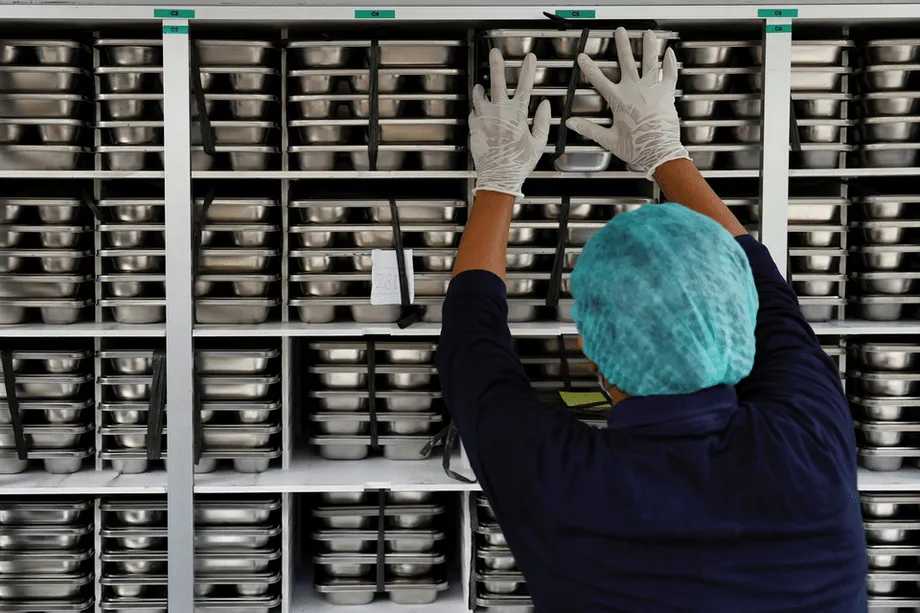
Indonesia's geography makes the task demanding. The country spans thousands of islands, and transporting ingredients and prepared meals can be difficult. Local governments and contracted caterers have opened central kitchens at speed to supply tens of millions of daily portions. Some facilities only recently began operating, putting pressure on staff training, sanitation and delivery routines.
The target of 83 million recipients is more than four times the 20 million benchmark the program has already passed. Reaching that target requires a substantial expansion before the end of the year, while the planned budget increase in 2026 would support further growth.
The volume of meals also changes the consequences of mistakes. When roughly one billion portions have been served, even an error affecting a small share can expose many children. Thousands of suspected illnesses create an urgent safety problem for a program intended to improve health.
Why the illness counts differ
Civil society monitors collect reports of sick children from local activists and schools. BGN's figure uses cases logged and verified by health offices and the agency. Different definitions and reporting periods likely explain the gap between the monitors' count of at least 6,452 affected children and BGN's 4,711 suspected cases.
Parents need a consistent national reporting system that connects complaints, medical assessments and laboratory findings. Rapid laboratory confirmation can help identify the cause of an outbreak, while clear public explanations can tell families which kitchens were involved and what corrective action followed.
BGN said investigations were continuing. A unified account of incidents would also help authorities recognize clusters quickly, especially when one kitchen supplies several schools. Without that connection, reports from different classrooms can take longer to trace back to a shared meal provider.
Garut and other communities confront outbreaks
Garut's outbreak affected 569 students from five schools after they ate a chicken and rice menu prepared by one kitchen. About 30 children initially needed hospital care, and ten remained in hospital two days later, officials said. Local leaders said the program would continue while surveillance of the kitchen increased.
Officials temporarily simplified the Garut menu to bread, milk, boiled eggs and fruit to lower the immediate risk. The response combined continued meal provision with closer monitoring, while other affected areas stopped distribution during investigations.
During the same week, 277 students fell ill in the Banggai Islands of Central Sulawesi. BGN suspended meal distribution in the affected area while health teams investigated.
In Sragen, Central Java, 365 people became sick in the largest incident recorded there. Authorities halted distribution from the implicated kitchen and sent food samples for laboratory testing. The suspected meal included turmeric rice, scrambled eggs, fried tempeh, a cucumber and lettuce salad, sliced apple and milk.
Sigit Pamungkas, a local government leader in Sragen, urged patience while laboratory results were pending and called for stricter hygiene across the program.
We cannot draw any specific conclusions right away. The free meals program needs to be more stringent and more hygienic.
Earlier cases in West Java produced laboratory findings of Salmonella and E coli contamination. Both bacteria are commonly associated with problems in cooking, cooling or food handling.
Bengkulu suspends a recently opened kitchen
In Bengkulu province on Sumatra, about 400 children were taken for treatment after falling ill. The kitchen under review had recently begun operating, and authorities said that would be examined as part of the inquiry.
Bengkulu Vice Governor Mian said the priority was to stop service from the kitchen while investigators identified the cause and traced weaknesses in its operation.
We will temporarily suspend operations at this kitchen while we investigate where the weaknesses lie.
Dadan Hindayana, the head of BGN, visited students in hospital during a separate cluster. He said the agency would tighten supervision and improve procedures.
We must improve quality.
The outbreaks have unfolded during a rapid national rollout. The main milestones and recent developments are:
- January 2025: Indonesia launched the free meals program.
- Earlier in the rollout: Laboratory tests in West Java identified Salmonella and E coli in connection with poisoning cases.
- By September 23, 2025: The program had reached more than 20 million schoolchildren and mothers, with outbreaks recorded in Garut, the Banggai Islands, Sragen and Bengkulu.
- By the end of 2025: The government aims to reach 83 million recipients.
- 2026: Government planners expect to double the program's 2025 budget of 171 trillion rupiah.
Health groups seek audits and clear restart rules
The six organizations that approached parliament want a formal mechanism to audit any kitchen reporting an outbreak, publish the results and suspend service there until the cause is fixed. Their demands focus on what happens after children become ill, including who checks a kitchen and who decides it can reopen.
The Center for Indonesia Strategic Development Initiatives told lawmakers that there was no clear mechanism to evaluate kitchens with cases, retrain staff or decide when service should restart. Health groups have called for a short nationwide pause to reset standards or, at a minimum, targeted suspensions at kitchens associated with outbreaks.
The Network for Education Watch, known as JPPI, described the repeated incidents as a failure across the system and urged the government to stop service until strict oversight was in place. The concern extends beyond individual meals to the arrangements for supervising many new kitchens at once.
NGOs also want tighter procurement rules, independent audits and a public dashboard showing kitchen scores and incident reports. They have requested clear deadlines for corrective action, mandatory food safety training and written operating procedures, including instructions for handling complaints from parents and teachers.
Public evaluations could list cleanliness, temperature records, water testing, pest control, staff training and delivery times. Posting those scores online and at school gates, alongside incident reports and corrective actions, would allow parents to see what changed before a kitchen resumed service.
Nutrition concerns extend beyond food poisoning
Health advocates say many local menus rely on ultra processed products that may undermine the program's nutrition goals. These products are often cheap, easy to store and quick to divide into portions, making them attractive to kitchens trying to serve large numbers of children.
Dr Tan Shot Yen of the Mother and Child Movement argued that convenience products were weakening the program's purpose and could contribute to diseases that do not spread from person to person, such as diabetes and hypertension.
The distribution of ultra processed food has changed the main goal of providing nutritious food and it could trigger non communicable diseases.
Doctors warn that repeated reliance on processed meats, sugary drinks and salty snacks can increase the risk of those diseases later in life. Instant noodles, sweetened drinks, ultra processed sausages and flavored snacks can help kitchens meet portion targets while leaving children's nutritional needs inadequately served.
School feeding can support attendance and learning when meals are safe and rich in nutrients. Children need sufficient protein, iron, calcium, vitamins and fiber, with limits on saturated fat, sugar and salt. Counting portions alone does not address whether the meals provide that balance.
Health advocates favor familiar staples such as rice or tubers, paired with eggs, tofu or tempeh, seasonal vegetables, fruit and milk. They also recommend legumes and fish. These foods can be relatively affordable and acceptable to children, but kitchens still need varied menus, appropriate portions and safe water for washing and cooking.
The program's size makes it attractive to packaged food suppliers, whose products are easier to store and transport. Clear standards, careful purchasing and staff training could help kitchens provide safe, nourishing food while depending less heavily on processed items.
Why cooking and delivery need equal attention
Indonesia's hot, humid conditions can allow bacteria to multiply quickly when cooked food is left at unsafe temperatures. Food safety specialists call the range in which microbes grow fastest the danger zone. A meal can leave the stove properly cooked and become unsafe before reaching a classroom if storage or delivery takes too long.
Rice and chicken, common ingredients in school meals, can carry contamination. Improper cooling and handling can allow bacteria such as Bacillus cereus or Salmonella to become a problem. Raw vegetables can carry pathogens when washed with unsafe water, while milk requires cold storage during transport.
Large batches also increase the opportunity for contamination to pass between raw and cooked food. Separate work surfaces, knives and storage bins help prevent that transfer. An overloaded refrigerator or a delivery vehicle delayed for hours can create problems even when other parts of a kitchen's routine are working.
Hazard analysis and critical control points, known as HACCP, is a method for checking risks at each stage of food preparation. It examines receiving supplies, storage temperatures, thorough cooking, rapid cooling, hygienic packing and timely delivery. Each critical stage requires trained workers, clean water, working thermometers and a response when something goes wrong.
Reliable refrigeration throughout storage and transport, often called the cold chain, is especially important for foods that must remain chilled. Hot meals also need suitable holding conditions. Controlling both time and temperature is central to keeping large quantities of food safe across a sprawling delivery network.
Targeted measures could protect meals and recipients
Targeted suspensions offer a way to address dangerous kitchens while allowing other facilities to continue feeding children. A proposed response would stop a kitchen associated with an outbreak within hours and send provincial teams authorized to inspect, collect samples, retrain staff and approve reopening after checking the corrective measures.
Alternative suppliers could provide a buffer while an affected kitchen is closed. Schools could also keep a small reserve of nutritious foods that can be stored without refrigeration for use when deliveries are delayed.
Strict limits on the time food spends waiting after cooking would address another risk. Insulated containers and ice packs for cold items, thermometers for every delivery, and random checks with sanctions for violations would support those limits. Cooked rice and meat need suitable hot holding or rapid cooling rather than prolonged storage at unsafe temperatures.
Safer purchasing and menu design would complement inspections. A core set of standardized recipes could avoid combinations with greater risks during hot months. Kitchens could prioritize fresh proteins and produce from vetted local suppliers, with contracts judged on safety and nutrition as well as cost.
Proposed menu rules include ending the routine use of sugary drinks and ultra processed meats. Safe preparation remains necessary for fresh ingredients too, so menu changes need to be accompanied by clean water, appropriate storage and careful handling.
Cooks, packers and drivers would need regular training in hygiene, preventing contamination between foods and controlling allergens. Independent auditors could check HACCP plans. A hotline and a simple digital form would give parents and teachers ways to report problems, with responses tracked on public dashboards.
Daily records of cooking temperatures, cooling times and handwashing could help investigators reconstruct what happened. Keeping samples from each batch for 48 hours would provide material for laboratory testing. A unified database connecting kitchens to the schools they serve could make clusters easier to identify and trace.
The government keeps the program moving
Charles Honoris, the parliamentary committee's deputy chair, said the health groups' proposals would be delivered to BGN. He also made clear that the meals program would continue because of its role in child welfare and social support.
The program is strategic and will be executed.
Officials have apologized for recent outbreaks and promised investigations, tighter supervision and a review of kitchen standards. The government's commitment to expansion places those changes alongside its target of reaching 83 million recipients by the end of 2025.
The financial stakes are substantial. Fiscal trade offs associated with the program, including cuts in several ministries, have contributed to public debate and campus protests this year. The planned doubling of the 171 trillion rupiah budget in 2026 would further increase the resources committed to meals.
Allegations of payment irregularities have also surfaced. Police opened an investigation in Jakarta after a meal provider reported nonpayment and suspected embezzlement. Indonesia's anti graft officials warned earlier this year that large assistance programs carry a real risk of fraud when controls are weak.
Protecting children and accounting for public money are now connected tests of the program's management. Families need safe meals and prompt information when an outbreak occurs. Kitchens need clear rules, trained staff and a defined process for correcting failures. The government's promised reviews will have to operate while the program continues serving millions of recipients.
Key Points
- Health groups are calling for a temporary pause or targeted kitchen suspensions after repeated poisoning outbreaks.
- Civil society monitors count at least 6,452 affected children; BGN records 4,711 suspected cases from roughly one billion portions.
- Garut's outbreak sickened 569 students from five schools, the largest mass poisoning recorded during the rollout.
- Other outbreaks affected 277 students in the Banggai Islands, 365 people in Sragen and about 400 children in Bengkulu.
- The program reaches more than 20 million schoolchildren and mothers and aims for 83 million recipients by the end of 2025.
- The 2025 budget is 171 trillion rupiah, about $10 billion, with planners expecting it to double in 2026.
- NGOs want public audits, clear reopening rules, stronger food safety training and fewer ultra processed menu items.
- BGN has promised tighter supervision and a review of standards, while parliamentary leaders say the program will continue.