A mobile missile battery brings new reach to Iwakuni
The United States has brought its Typhon missile system to Marine Corps Air Station Iwakuni in southwest Honshu for the first time, placing a mobile launcher capable of striking China's eastern seaboard in Japan ahead of the Resolute Dragon exercise. The deployment is temporary, but its location gives Washington and Tokyo a visible demonstration of how quickly American weapons with long reach can enter the Japanese archipelago.
Contents
- A mobile missile battery brings new reach to Iwakuni
- What Typhon carries and how it moves
- Two missiles with different jobs
- How the deployment fits a longer sequence
- Why the island chains matter
- Beijing demands withdrawal as Japan tracks ships and aircraft
- Russia warns of a security response
- What Chinese countermeasures could involve
- The struggle to find a moving target
- Japan builds its own reach and defenses
- A temporary stay with lasting operational lessons
- Key Points
The two week exercise involves about 20,000 troops, alongside warships, air defense units and coastal strike batteries. Typhon will participate in training without firing live rounds. As of September 20, 2025, US officers say the battery will leave Japan after the exercise, although they have declined to identify its next destination or say whether it will return.
China has demanded its withdrawal, while Russia has warned of a military response to deployments of the system. Chinese ships and aircraft have also operated near the Ryukyu Islands as the drills got under way, prompting Japanese monitoring and fighter deployments.
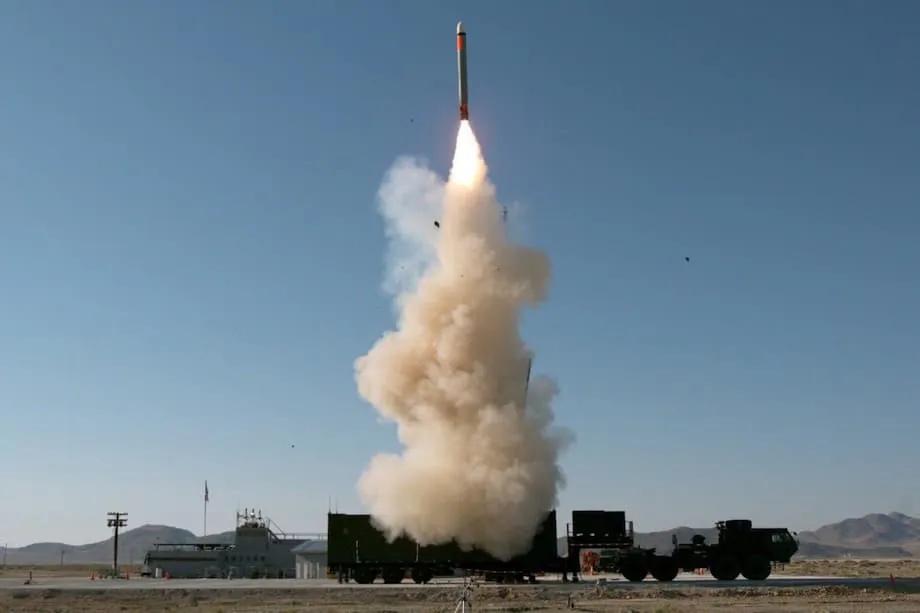
Typhon, also called the Midrange Capability, can launch Tomahawk cruise missiles and Standard Missile 6 weapons, usually shortened to SM 6. Together, those missiles give forces on land options against ships, aircraft and targets ashore. The deployment connects Japan to a wider pattern of American missile movements through the Philippines, Australia and Okinawa.
For Japan, the immediate change is practical: allied forces can rehearse receiving and operating a powerful strike battery without establishing a permanent base for it. For Chinese military planners, the challenge is a launcher that can arrive quickly, move along roads and threaten ports, airfields and command centers from different locations.
What Typhon carries and how it moves
A Typhon battery has four launcher vehicles, each carrying four missiles. That gives the launchers a combined capacity of 16 missiles. A command post that is towed, generators and support trucks complete the unit. The launchers are mounted on trailers and can move by road.
The US Army built Typhon around missiles already in mass production, shortening the time needed to field the system and reducing the burden of supplying and maintaining it. Its mobility extends beyond roads: C 17 transport aircraft can carry the battery to airfields with limited facilities, where it can unload and move to hiding places chosen in advance.
Colonel Wade Germann, who leads the US Army task force operating Typhon, described the combination of different weapons and rapid movement as a way to complicate an opponent's campaign planning.
Employing multiple systems and different types of munitions creates dilemmas for the enemy," Germann said. "The system can be deployed quickly when needed.
Those dilemmas involve both reach and uncertainty. An opponent must consider which missiles a battery carries, what targets it could attack and whether it has moved since it was last detected. The undisclosed destination after the Japan exercise adds to the deployment's message that Typhon can appear in forward locations on short notice.
Two missiles with different jobs
Tomahawk gives Typhon a land attack range of roughly 1,000 miles. From western Japan, that puts targets on China's eastern seaboard within reach. Some versions can also attack ships, allowing the same launcher system to threaten both coastal facilities and vessels at sea.
Tomahawk flies below the speed of sound and follows terrain at low altitude to make detection harder. Its intended targets include fixed installations and facilities that move infrequently, such as hangars, warehouses, fuel depots and air defense sites. Japan has ordered Tomahawks for its own forces, reflecting Tokyo's decision to acquire conventional weapons with greater reach.
SM 6 began as an air defense missile. It can engage aircraft or ships at ranges beyond 200 kilometers and can also attack land targets. In a surface attack role, part of its fast flight resembles the path of a ballistic missile. That gives defenders less time to react and makes interception more difficult.
The two weapons let a battery threaten groups of surface warships, important radar installations and air defenses while remaining mobile. A July 2025 firing in Australia demonstrated the maritime role: an Army Typhon launcher fired an SM 6 at a ship target during Talisman Sabre, the system's first live use outside the continental United States.
How the deployment fits a longer sequence
Typhon's arrival in Japan follows changes in arms control and several deployments across the Pacific. The 1987 Intermediate Range Nuclear Forces Treaty barred ground based missiles with ranges between 500 and 5,500 kilometers. Washington's withdrawal in 2019 removed that restriction on US development and deployment.
The Army subsequently concentrated on a group of programs called Long Range Precision Fires. These include Typhon, the future Dark Eagle hypersonic missile and the shorter range Precision Strike Missile. Their shared purpose is to give joint forces weapons on land that can help control seas and strike targets far inside an opponent's territory.
- 1987: The Intermediate Range Nuclear Forces Treaty established the ban on ground based missiles with ranges between 500 and 5,500 kilometers.
- 2019: Washington left the treaty, removing the restriction on those US ground based systems.
- April 2024: Typhon deployed to the northern Philippines during joint exercises, the first regional deployment of land based missiles in that range category since the treaty.
- Spring 2025: The Marine Corps sent its NMESIS coastal missile system to the Philippines, before a later move to Okinawa.
- July 2025: Typhon fired an SM 6 at a maritime target during Talisman Sabre in Australia.
- September 2025: Typhon arrived at Iwakuni for Resolute Dragon, with departure planned after the exercise.
The sequence shows successive steps in operating these weapons abroad: moving equipment, keeping it available for training, conducting a live firing and integrating it into another ally's exercise. The Japan rotation is focused on training and signaling rather than live fire, but it still tests the ability to bring the system into a new location.
Why the island chains matter
The first island chain runs from Japan through Taiwan and the Philippines to Borneo. Mobile coastal launchers positioned along that arc can threaten ships and targets ashore inside the South and East China seas. Geography gives weapons on those islands access to routes and facilities important to Chinese operations.
Washington wants multiple launchers spread across allied territory so that an opponent cannot easily destroy them all in an opening missile attack. Dispersion means separating weapons and their support equipment rather than concentrating them at a few large bases. Mobility adds the ability to change those positions.
The Philippines was the first Asian country to host Typhon. Its presence there placed Chinese bases in southern provinces within reach of American Tomahawks even without a live firing during the 2024 deployment. Philippine officials asked for a launcher to remain after the exercise as tensions increased around reefs in the South China Sea.
The Marine Corps' NMESIS system, a related coastal battery designed to attack ships, has also operated with regional allies, including its recent rotation to Okinawa. Across these deployments, the US aim is to place affordable weapons against ships in many locations, exposing attempts to dominate sea lanes to fire from several directions.
Beijing demands withdrawal as Japan tracks ships and aircraft
Chinese Foreign Ministry spokesperson Lin Jian condemned Typhon's appearance in Japan and called for its removal. He presented the deployment as a challenge to other countries' security and to regional stability.
The US and Japan need to earnestly respect other countries security concerns and play a positive role for regional peace and stability with concrete actions, not the other way around," Lin said. "Withdraw the system as soon as possible.
Lin also invoked Japan's twentieth century record, using wartime history to press Tokyo over its current military decisions. He said neighboring countries were watching Japan's security activities.
"Japans military and security moves always draw close attention from its Asian neighbors and the international community," Lin said.
People's Liberation Army units appeared near the Ryukyu Islands as Resolute Dragon began. Japanese forces tracked two Chinese guided missile destroyers moving through the Miyako Strait into the Pacific. A frigate and a resupply ship followed a day later.
A suspected Chinese drone flew between Yonaguni and Taiwan, while a Chinese Y 9 patrol aircraft passed between Okinawa and Miyako. Japan's Joint Staff sent a destroyer and a P 3C patrol aircraft to monitor the ships, and Japanese fighter jets scrambled in response to the flights. These movements placed naval and air surveillance alongside the diplomatic dispute.
Russia warns of a security response
Russian Foreign Ministry spokesperson Maria Zakharova also objected to the American missile battery, describing it as a threat to her country's security. She warned that Russia would respond if the deployments proceeded.
"The Typhon poses a direct strategic threat," she said, adding that Russia would take "appropriate military technical measures" if deployments proceed.
The Russian warning broadens the political pressure surrounding a deployment that Washington and Tokyo describe through its exercise role. Russia's stated concern is the reach of an American missile system operating from land in the region.
Closer Chinese and Russian military activity near Japan is also among the possible responses discussed in connection with Typhon. Joint bomber and naval patrols would add another demand on Japanese surveillance and defense resources while reinforcing both countries' objections.
What Chinese countermeasures could involve
China's possible responses span missiles, sensors, ships, aircraft and information operations. One weapon it has highlighted is the DF 100, a supersonic cruise missile first revealed in 2019 and shown again in footage marking the People's Liberation Army's 98th anniversary.
Chinese claims put the DF 100's speed at around Mach 4, about four times the speed of sound, and its range at up to 3,000 to 4,000 kilometers. Those claims also describe accuracy sufficient to strike targets that must be attacked quickly. In road mobile form or launched from an H 6N bomber, it could reach US and allied bases from Okinawa to Guam.
Chinese planners also value attacks that mix ballistic missiles, cruise missiles, decoys and drones. A salvo is a group of weapons launched together or in close succession. Combining different flight paths and speeds can overwhelm defenses, use up interceptor missiles and leave commanders less time to decide which threats to engage.
In such a scenario, fast ballistic missiles could target a Typhon launcher while slower cruise missiles and drones pursue support trucks and places used for reloading. The battery's ability to keep operating would depend on protecting the equipment and supplies around it as well as the launcher itself.
Other possible measures include more Rocket Force patrols near coastal launch areas and additional relocation drills for mobile units; more navy and air patrols through the Miyako Strait and Bashi Channel to collect information on allied positions; and more missiles against ships and land targets at coastal brigades and bases facing Japan and Taiwan.
Electronic warfare, GPS spoofing and cyber operations could target command posts, communications and logistics. GPS spoofing involves sending false navigation signals to mislead equipment about its location. Diplomatic pressure and trade measures could raise costs for Japan and the Philippines, while deeper training with Russia could bring more joint patrols near Japan.
The struggle to find a moving target
Long range missile attacks depend on finding a target and keeping its location current. China has built a large network of satellites for intelligence, surveillance and reconnaissance, reportedly numbering in the hundreds. Those functions involve collecting information, watching activity and identifying targets.
Satellites have predictable orbits and limited protection. Jamming, cyber operations or physical attacks could disrupt their work, reducing the accuracy and volume of later missile salvos. The United States and its allies are investing in ways to blind and confuse this targeting network.
The US Multi Domain Task Force at the center of Typhon operations seeks to connect sensors in space, air, sea and on land, then direct weapons toward targets within minutes. Typhon fits that approach through proven missiles, a simple launcher and drills focused on rapid deployment.
Quantity matters alongside the capability of each weapon. More launchers and missiles of sufficient quality, spread across different locations, can influence a campaign's opening days. The competition is therefore about how many weapons can survive, obtain useful targeting information and fire when needed.
Japan builds its own reach and defenses
Tokyo is expanding both its ability to strike at distance and its capacity to withstand attacks. Alongside its commitment to buy Tomahawks, Japan is extending the range of its Type 12 surface to ship missile. Government plans call for defense spending to reach 2 percent of gross domestic product by 2027.
A record budget request for 2026 includes funding for new littoral defense systems labeled SHIELD, additional F 35 fighters, KC 46A tankers and precision weapons with long reach. Littoral defense means protecting coastal areas and nearby waters. Tankers support aircraft by refueling them in flight.
The request also includes an integrated air and missile defense network and a small satellite constellation for tracking and targeting. Integration means connecting detection systems and defensive weapons so they can share information and respond together.
Maritime law enforcement is growing too. The Japan Coast Guard is adding larger patrol vessels with helicopter decks. The United States Coast Guard is buying more Sentinel class cutters for operations from Guam and other Pacific posts.
Those vessels help manage gray zone pressure around the Senkaku Islands in the East China Sea. Gray zone activity involves coercive actions below the level of open warfare, where law enforcement ships can be central to the response. Their role complements military capabilities.
Japan's changes mark a shift in its longstanding policy centered exclusively on defense. Leaders now describe a counterstrike capability intended to deter and defeat missile attacks. Tokyo continues to avoid permanent basing of foreign strike systems with long reach while increasingly hosting temporary training deployments that build familiarity with allied equipment and tactics.
A temporary stay with lasting operational lessons
Typhon is due to leave Japan when Resolute Dragon ends. Its temporary presence nevertheless shows that, when allies agree, a battery can arrive rapidly, disperse along roads and bring land attack and maritime strike options into a region shaped by great distances.
That ability complicates Chinese planning for operations near Taiwan and the Ryukyu Islands. In a crisis, Chinese forces would seek to locate and strike the mobile battery early. Japan and the United States consequently have reasons to invest in camouflage, decoys, hardened shelters and tactics that involve firing and then moving quickly.
Dispersed supplies and frequent relocation would aim to keep launchers operating long enough to influence a battle at sea or disrupt air operations. Support vehicles, reload locations and communications would need protection alongside the missiles themselves.
Typhon fires conventional missiles, reducing uncertainty about nuclear use compared with many ballistic missile systems. Even so, modern weapons can leave leaders little time to make decisions. Clear signaling, continuing military communication channels and predictable training events can help limit escalation during tense periods.
Iwakuni's deployment combines a restrained exercise plan, with no live rounds, and a demonstration of considerable reach. Its central message is that a permanent base is not required for allied forces to bring a mobile strike battery forward, while China's objections show the political costs accompanying that option.
Key Points
- Typhon arrived at Iwakuni for Resolute Dragon, a two week exercise involving about 20,000 troops, without plans to fire live rounds.
- US officers say the battery will leave after the exercise but have not disclosed its next destination or whether it will return.
- Four launchers carrying four missiles each can use Tomahawks and SM 6 weapons against targets on land, at sea and in the air.
- China demanded withdrawal, while Japan monitored Chinese ships and aircraft near the Ryukyu Islands. Russia warned of military technical measures.
- Possible Chinese responses include missile deployments, mixed salvos, more patrols, electronic and cyber operations, economic pressure and closer training with Russia.
- Deployments in the Philippines, Australia and Japan, alongside NMESIS activity in Okinawa, support a wider network of mobile coastal weapons.
- Japan plans defense spending of 2 percent of GDP by 2027 and is pursuing Tomahawks, longer range Type 12 missiles, stronger defenses and satellite tracking.
- Mobility, targeting information, protected supplies and communication between militaries will shape the operational value and escalation risks of these deployments.