Nearly one in three residents lives in the capital region
Tokyo was the only Japanese prefecture to record population growth in the latest annual estimates, rising about 0.34 percent from a year earlier. Across much of the rest of Japan, communities are losing residents and facing a difficult task: keeping schools, hospitals, businesses, and local traditions going with fewer people and less tax revenue.
Contents
- Nearly one in three residents lives in the capital region
- How decades of development strengthened Tokyo
- Fewer births change the demands on every community
- Why young people move and families face difficult choices
- Tokyo's productivity complicates the debate
- Regional leadership and the megacity paradox
- Why past regional policies have had mixed results
- Sayo chooses to shrink and enrich
- Fukuoka builds reasons to stay and arrive
- Jobs, connections, and services for a smaller Japan
- Making daily life the measure of progress
- Highlights
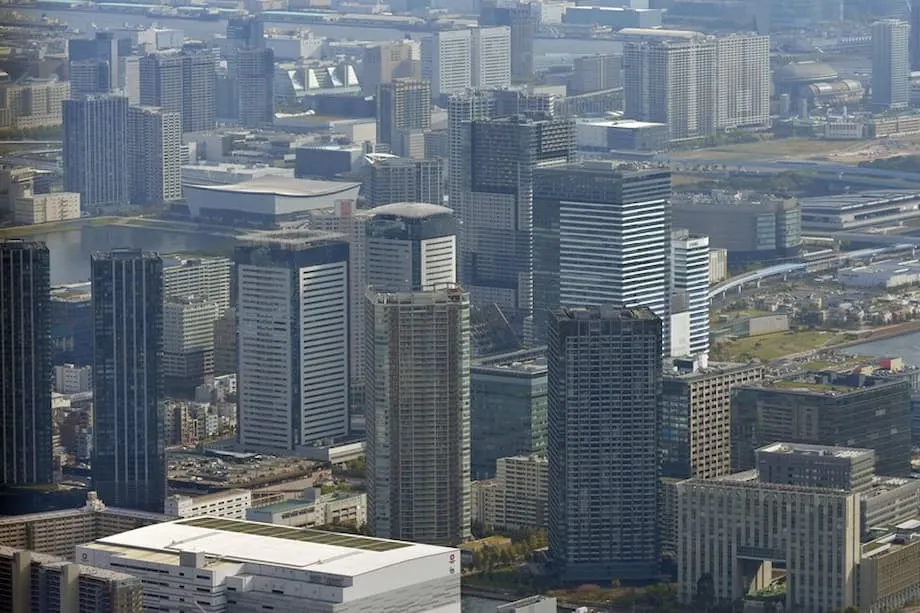
The Tokyo metropolitan area, comprising Tokyo, Kanagawa, Saitama, and Chiba, now has close to 38 million residents, roughly 30 percent of Japan's population. Its share was about 13 percent at the end of World War II and 23 percent in 1970. The capital region has continued to gain weight within the country even as Japan's population has begun to fall.
Japan peaked at around 128 million people in 2008 and had about 125 million by 2022. Demographic projections put the population below 100 million around the mid-2050s and at about 87 million by 2070. The question for communities outside the capital is increasingly how to offer a good life while becoming smaller.
Tokyo's attraction rests on jobs, universities, business connections, and money. Its economy generates more than one fifth of Japan's nominal gross domestic product, or GDP, a measure of economic output at current prices. More than half of listed company headquarters are in the capital. Those concentrations help explain why young people continue to move there despite high housing, education, and living costs.
The national debate now brings together two pressures: regions need opportunities that can keep residents close to home, while Japan also depends on the productivity of its largest urban economy. Weakening Tokyo without strengthening other places would leave both problems unresolved.
How decades of development strengthened Tokyo
Japan's postwar growth model was anchored along the Pacific Belt. Roads, railways, ports, and industrial parks helped modernize the country, while Tokyo and its neighboring prefectures became increasingly attractive locations for corporate headquarters, leading universities, and jobs offering higher pay.
The government introduced five rounds of comprehensive national development plans intended to strengthen regional economies and help people remain where they lived. Better transport and industrial infrastructure improved connections, but those investments could not match the pull of employers, institutions, and business networks clustered around Tokyo.
Companies benefited from being near clients, investors, and skilled workers. Workers gained access to more employers. As people and businesses arrived, the capital gained further services and opportunities, encouraging the next wave of arrivals. This cycle has proved difficult to reverse.
Uniform planning also carried costs for regional identity. Localities were encouraged to follow a common development template rather than build around their particular strengths. Later decentralization gave municipalities more responsibilities and discretion, but many lacked the staff and financial resources needed to use those powers fully.
Several milestones show how concentration and population decline have developed together:
- At the end of World War II, the Tokyo metropolitan area held about 13 percent of Japan's population.
- By 1970, its share had reached 23 percent.
- Japan's population peaked at around 128 million in 2008.
- Regional revitalization grants began in 2014, alongside efforts to encourage businesses to move jobs outside the capital region.
- In 2022, Japan's population was about 125 million and births fell below 800,000.
- In July, Sayo in Hyogo Prefecture adopted an approach focused on living well as its population shrinks.
Fewer births change the demands on every community
Japan's population is projected to shrink by about 30 percent between 2020 and 2070. The change involves more than a falling total: the balance between younger people, adults of working age, and older residents is shifting.
People aged 65 and older accounted for about 29 percent of the population in 2022. Their share could approach 39 percent by 2070. Meanwhile, the working age share has fallen from roughly 68 percent in 2000 to below 60 percent and is projected to decline further.
These shifts put pressure on healthcare, pensions, education, and local services. Communities need workers to provide care, run transport, maintain facilities, and support businesses. They also need enough revenue to pay for services. Rural places face particular difficulties because residents may live far apart and local budgets are already limited.
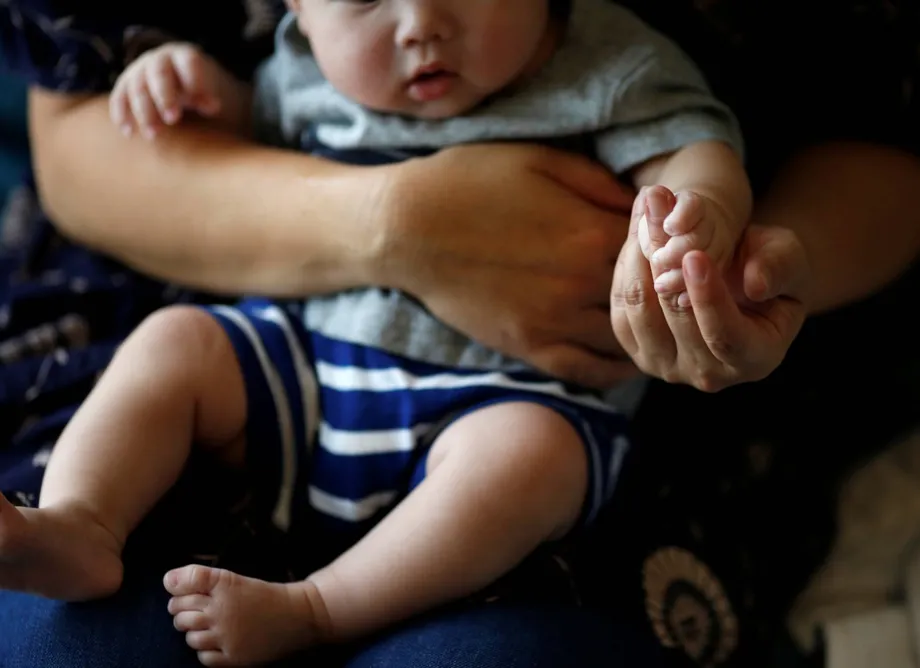
Births fell below 800,000 in 2022 and are expected to decline further over the coming decades. Japan's fertility rate remains well below the level needed to keep the population stable. The fertility rate describes the average number of children a woman would have if current patterns of childbearing continued.
Foreign residents have increased in recent years and may account for a larger share of Japan's population by 2070. Their presence could help fill some gaps in the workforce, although the projections still point to a nationwide population decline.
Policymakers are discussing more flexible immigration pathways, greater productivity, and higher participation in employment among women and older adults. Productivity means producing more value with the available labor and resources. For a country with fewer workers, it becomes increasingly important to sustaining incomes and services.
Why young people move and families face difficult choices
Tokyo's universities and employment market continue to attract people leaving high school and college. Dense networks of employers, clients, and investors give newcomers access to careers and connections that can be harder to find elsewhere.
Families face a different set of calculations. Raising children is expensive, particularly for households with lower incomes. The growth of nonregular employment has widened income gaps and made it harder for some people to establish the financial footing they want before forming a family.
Marriage rates have fallen as lifestyles and expectations change. Housing costs, access to childcare, and workplace practices also affect whether young people decide to have children and where they choose to live. Tokyo's property prices have soared, yet many young adults still regard the capital region as their strongest route to opportunity.
A record flow of international visitors in 2024 and an increase in foreign residents have also concentrated activity in and around Tokyo. More activity can support more jobs, services, and tax revenue, reinforcing the capital's appeal.
For towns and smaller cities, the loss of young residents affects far more than population totals. Schools lose potential pupils, employers lose potential recruits, and community organizations have fewer people to carry on their work. Labor shortages and a shrinking tax base make essential services harder to maintain.
The government has expanded child allowances and support for childbirth and early education. It is also exploring workplace reforms to reduce the burden of parenting. These measures require substantial spending, with funding difficult to secure at scale in a country carrying high public debt.
Even stronger family support leaves communities facing years of fewer births because of demographic momentum. When fewer people reach the ages at which families usually have children, births can remain low for years. Towns therefore need to adjust services and the way they use space while efforts to support families continue.
Tokyo's productivity complicates the debate
Takeshi So, a professor of urban planning at Reitaku University, argues that the capital region's strength lies in productivity as well as population. Its concentration of economic activity makes it an important engine of national growth and tax revenue.
So describes preserving that economic strength as a central challenge when considering population redistribution:
This demonstrates the area's exceptional productivity. To redistribute the population to rural areas, it is crucial to maintain current productivity levels. However, the means to achieve this remain uncertain.
Moving people away from Tokyo requires credible alternatives: competitive employment, accessible services, suitable housing, and places where families can build their lives. Population redistribution alone leaves the question of where people will earn a living unanswered.
Some researchers propose shifting attention from a contest between Tokyo and rural Japan toward life satisfaction in each region. Jobs, housing, childcare, mobility, and community connections all influence whether a place works well for its residents, regardless of its size.
Governors warn that the continuing departure of young people will speed decline in regions already experiencing fewer births and rapid aging. Some Tokyo officials, meanwhile, worry that the capital is too readily blamed despite its contribution to the national economy. The policy task is to strengthen regional choices while keeping Tokyo productive and affordable.
Regional leadership and the megacity paradox
Prime Minister Shigeru Ishiba has put regional well being on his administration's agenda and announced new mechanisms intended to build local economies and improve living environments.
In a campaign speech in Fukushima Prefecture, Ishiba presented ordinary residents and regional leadership as the forces capable of changing the country:
It is never the elites in the capital who change the country. It is the people in the local regions, the everyday citizens.
Research on shrinking cities in East Asia describes a loop in which national population decline and growth in one dominant urban region reinforce each other. In Japan, this is the concentration of people and activity in Tokyo.
Smaller and remote cities can lose enough residents to move outside the usual cycle of urban growth and renewal. The dominant metropolis, meanwhile, faces mounting pressure on housing, transport, and affordability. Scholars describe this as a megacity paradox: greater size brings economic advantages but also new costs and risks for sustainability.
Tokyo's own urban thinkers also see large cities as places where practical solutions can develop. As population decline becomes part of urban planning, fragmented property ownership can make small changes led by individual owners more workable than sweeping redevelopment.
Converting vacant buildings for community uses and connecting small green spaces are examples of that approach. For Tokyo and regional cities alike, changes at the scale of a street or neighborhood can help communities adapt, with technology and civic participation helping to close gaps in services.
Why past regional policies have had mixed results
Regional revitalization grants introduced in 2014 gave local governments room to develop projects around their own needs. Some prefectures and cities used them effectively, but the national population trend continued downward.
Tax incentives have also sought to encourage companies to move jobs outside the Tokyo region. Results have been mixed because the capital still offers powerful combinations of workers, customers, finance, and institutions.
Municipal mergers changed the scale of local administration. Japan had about 10,000 municipalities after the war and has roughly 1,700 today. Mergers brought efficiencies, yet they also left many residents farther from services.
A single municipality may no longer be able to maintain a full range of public facilities on its own. Neighboring local governments increasingly need to share hospitals, cultural centers, and specialized schools through joint management and connected service networks.
The challenge is to preserve access while organizing services for fewer people. Shared facilities need fair arrangements for costs and practical ways for residents to reach them. The same need to balance access and resources runs through plans for education, care, transport, and community life.
Sayo chooses to shrink and enrich
Sayo, a town in Hyogo Prefecture, has begun organizing its future around the idea that a smaller population can still have a fulfilling life. In July, it declared itself a shukuju town, an approach translated as shrink and enrich.
The decision followed two years of community discussion. Sayo's population is now near 14,000, down about 8,000 from the 2005 merger that created the present municipality. Those figures put its population at roughly 22,000 at the merger, meaning it has lost about 36 percent of that total.
Residents are reassessing events and services to fit a smaller community. Festivals offer a concrete example: adjusting their scale and involving more young people can help traditions survive without asking too much of the volunteers who organize them.
A town official involved in the initiative said the negative associations of shrinking made wider understanding and participation central to the work:
We are just getting started. We want to broaden understanding and participation.
Sayo's approach puts residents at the center of deciding what makes local life worthwhile. Its immediate focus is adapting community activities and services to the people who will use and sustain them.
Fukuoka builds reasons to stay and arrive
Fukuoka Prefecture is pursuing opportunities in semiconductors, biotechnology, and startup businesses. Investment in these fields aims to give people career options outside the capital region, alongside an appealing place to live.
Training programs are preparing thousands of engineers. New hubs connect entrepreneurs with funding and mentors, while multilingual assistance brings support for foreign residents together in one place.
Fukuoka illustrates how a regional economy can combine employment pathways with help for newcomers. Keeping talent and attracting residents requires both work opportunities and the practical support needed to settle into daily life.
Community economists propose a Japan with several strong regional centers rather than one dominant pole. They call for better circulation of people, goods, and money within regions, closer connections between production and everyday life, and stronger mutual aid.
This approach also asks communities to value environmental efficiency and human skills when considering what productive activity means. Local traditions and culture form part of the economic picture because they can help keep young people rooted and encourage former residents to return.
Residents who stay or come back support small businesses and the services that make everyday life possible. Regional identity therefore matters alongside investment and training, rather than being treated as a separate cultural concern.
Jobs, connections, and services for a smaller Japan
Japan's regional choices combine efforts to retain people with efforts to serve a population that is already declining. No single policy can reverse demographic change or end Tokyo's dominance. The practical goal is to make smaller communities workable and attractive while protecting the capital's strengths.
The employment and infrastructure measures under discussion seek to make careers and education less dependent on a move to Tokyo:
- Make remote work a lasting part of national employment, supported by satellite offices, shared workspaces, and digital classrooms with reliable equipment and connections.
- Tie corporate tax breaks to measurable regional job creation. Reward companies that move core teams rather than only registered addresses, and help small and medium enterprises expand into regional markets.
- Provide fast, reliable internet in every town and village to support healthcare, education, and entrepreneurship.
- Use shuttles that drive themselves, drone deliveries, and telemedicine to reach older and remote residents. Trials can begin on fixed routes and expand as safety standards and regulations develop.
- Share hospitals, specialized schools, and cultural facilities across neighboring municipalities through service networks and fair arrangements for costs.
Telemedicine allows some healthcare consultations to take place at a distance. Together with better digital access and transport, it offers a way to connect residents with services that may be difficult to maintain in every settlement.
Remote work and regional corporate investment address a related problem: people need real career prospects, not simply an invitation to relocate. Moving substantial teams and building local business connections would give regional employment policies something concrete to measure.
Making daily life the measure of progress
Housing, childcare, transport, and social connections shape whether a regional move becomes a lasting choice. Planning proposals therefore extend beyond attracting employers to changing the places where people live:
- Organize housing and everyday services around public transport and walking. Bring them together in accessible centers and convert excess infrastructure where populations have thinned.
- Turn vacant homes and shops into childcare centers, spaces for older residents during the day, and units combining living and working space. Use straightforward renovation grants and permit assistance available in one place.
- Make family support predictable through more childcare places, flexible working hours, remote work options, and housing assistance for young families in regional cities.
- Welcome foreign students, nurses, engineers, and entrepreneurs with language support, recognition of qualifications, and clear routes to lasting residency.
- Track happiness, commute times, childcare access, and social connections. Publish understandable dashboards so residents can assess progress and hold leaders accountable.
- Encourage visitors to travel beyond the capital through regional food, nature, and culture. Manage excessive tourism in crowded places and use transport passes to encourage trips to less familiar destinations.
Some measures require new spending; many depend on cooperation among ministries, prefectures, and municipalities. Services close to residents, credible jobs, and a workable family life can help regions retain young people and attract returnees.
Tokyo could also benefit from less pressure on housing and transport while retaining its role as a global business center. A Japan with several stronger urban and regional centers would differ from the rapid growth model of the postwar decades, with prosperity judged more closely by quality of life than by population alone.
The projections point to a smaller country, but local decisions still shape how that change is experienced. Sayo's adjustments to community life and Fukuoka's investment in careers represent different responses to the same national challenge: sustaining opportunity, services, and belonging with fewer residents.
Highlights
- The Tokyo metropolitan area holds close to 38 million people, roughly 30 percent of Japan's population, compared with 13 percent at the end of World War II and 23 percent in 1970.
- Tokyo was the only prefecture to grow in the latest annual estimates, increasing about 0.34 percent.
- Japan's population could fall below 100 million around the mid-2050s and reach about 87 million by 2070.
- The share of residents aged 65 and older could rise from about 29 percent in 2022 to nearly 39 percent in 2070.
- Tokyo produces more than one fifth of national nominal GDP and hosts more than half of listed company headquarters.
- Ishiba has made regional well being and local economic development priorities.
- Sayo is adapting to population loss through its shrink and enrich approach, while Fukuoka is building careers in advanced industries and supporting newcomers.
- Regional proposals combine employment, family support, shared services, better connections, and measures of quality of life.