A tiger found in a car exposes the stakes for Malaysia
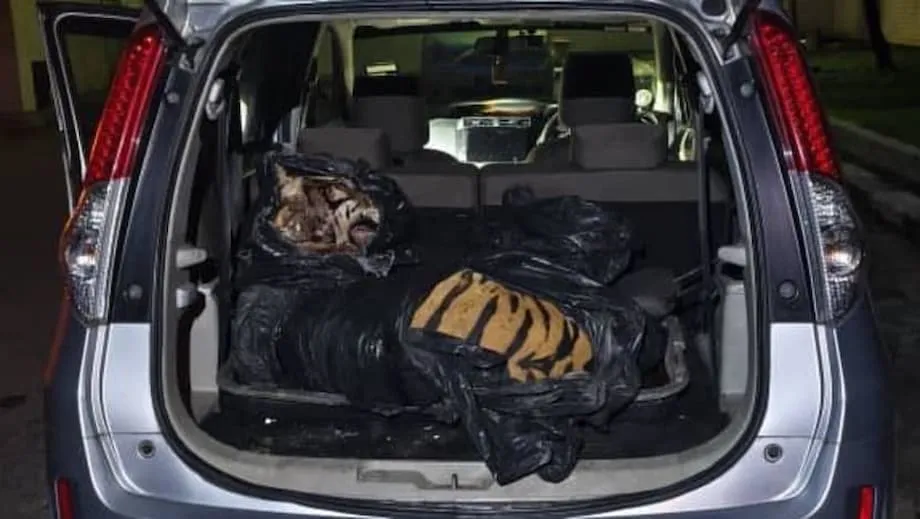
A Malayan tiger with severe snare injuries and six gunshot wounds to its head was found dead in the boot of a Perodua Alza in Felda Tenggaroh, Mersing, in the southern Malaysian state of Johor. Three men aged between 28 and 49 were arrested after failing to produce permits required to possess protected wildlife.
Contents
- A tiger found in a car exposes the stakes for Malaysia
- Why the killing has struck a national nerve
- What the operation and wildlife law put in motion
- Tracing the people behind the carcass
- How snares turn forest trails into traps
- Fishing boats, couriers and workers trapped by debt
- Smaller forests and less prey compound the danger
- What stronger enforcement would target
- Why buyers remain part of the problem
- How the public can help protect surviving tigers
- Key Points
Officers from the Federal Reserve Unit and Johor's Department of Wildlife and National Parks acted on a public tip during a joint enforcement operation. They seized the vehicle and four mobile phones. The combined value of the confiscated items was estimated at about RM294,000, and the suspects were taken to Mersing district police headquarters for processing and interviews.
The discovery prompted anger across Malaysia and renewed concern for a critically endangered species believed to number fewer than 150 in the wild in Peninsular Malaysia. An estimated 3,000 lived there in the 1950s. Conservationists fear the animal could disappear from Malaysian forests within a generation.
Initial examinations identified the snare injuries and gunshot wounds. The tiger's sex had not been confirmed at the time of the arrests. Conservationists stressed that losing even one adult can disrupt breeding efforts and the balance of territories in forests already divided into smaller patches.
Investigators are examining possible offenses involving possession of protected wildlife, poaching and trafficking. Malaysia's amended Wildlife Conservation Act provides fines of up to RM1 million and prison terms of up to 15 years for the most severe offenses, including killing a Malayan tiger. The investigation also reaches beyond the three arrested men: wildlife officials believe the carcass was intended for an illegal market in which a tiger sold in parts can fetch RM250,000 to RM300,000.
Why the killing has struck a national nerve
The Malayan tiger, known locally as harimau Malaya, appears on Malaysia's coat of arms and sports crests. Its place in the country's identity connects national pride with the tropical forests that sustain it. Each killing damages conservation work carried out over decades by government agencies, Indigenous communities and civil society groups.
Federal Reserve Unit commander SAC Rosli Md Yusof, the senior officer who led the team, described the tiger as part of an inheritance that cannot be replaced. He condemned the greed behind its loss:
The tiger is a priceless national treasure. Its loss due to human greed is a betrayal of our heritage.
WWF-Malaysia senior conservation director Dr Henry Chan also condemned the killing. He called for full enforcement of the strengthened penalties, arguing that poaching and trafficking must bring the harshest legal response:
To have one snared and gunned down when so few remain is tragic and shameful. It is a crime against our ecosystem and the spirit of our nation. Those responsible must face the full weight of the law.
The population figures show the scale of the decline. Fewer than 150 tigers today, compared with an estimated 3,000 in the 1950s, means the remaining wild population is less than 5 percent of that earlier estimate. Protecting individual animals therefore matters to the survival of the population as a whole.
Malaysia still has breeding tigers, unlike some neighboring countries that have lost their wild populations. Keeping those animals alive requires enough connected forest for them to find food and mates, alongside protection from hunters. The Johor killing puts pressure on both the enforcement effort and the wider work needed to give surviving animals a chance to reproduce.
What the operation and wildlife law put in motion
The inspection in Felda Tenggaroh formed part of an ongoing campaign against poaching in areas considered at high risk. Information from the public allowed police and wildlife officers to respond quickly. After finding the carcass, the team moved the suspects and seized items to district headquarters for investigation.
Johor's state leadership commended the joint team and promised a sustained response. Officials pledged closer monitoring of known poaching hotspots, stronger intelligence gathering and continued cooperation with the public so that information reaches enforcement teams quickly.
Possessing a tiger without a permit is an offense. Investigators are also examining other possible violations connected to the animal's killing and movement. Prosecutors can pursue heavier penalties where evidence supports charges involving deliberate targeting, killing or processing for sale.
The amended Wildlife Conservation Act also provides serious penalties for possession of tiger parts, handling snares and trafficking linked to syndicates. Enforcement agencies argue that strong sentences are necessary because high prices for tiger products make the trade profitable for organized groups.
The Johor case could test those strengthened penalties, particularly if investigators establish a connection to a trafficking syndicate. Seizures, interviews and examination of the suspected network are part of the effort to determine which offenses can be pursued.
Tracing the people behind the carcass
Senior wildlife officials in Johor said the tiger was likely destined for the black market. Their estimate of RM250,000 to RM300,000 for an animal sold in parts helps explain why enforcement agencies are looking beyond the people transporting the carcass.
Perhilitan director general Abdul Kadir Abu Hashim said investigators were tracing the network behind the suspects. Perhilitan is Malaysia's Department of Wildlife and National Parks. He described the commercial incentive driving the trade:
Each part of a tiger is treated as a commodity in the black market. We believe this case is linked to a trafficking syndicate, and we are tracing the network behind it.
The wildlife department is working with police to identify the handlers who move animal products from forests to buyers, often across national borders. Research and enforcement interviews describe a trade organized through small, connected groups that can cooperate and adjust when patrols increase.
A typical chain includes recruiters, teams that set snares and process carcasses, people who store and move parts, and transport coordinators who arrange handovers to couriers. Those directing the operations are seldom caught. Arresting people inside forests can interrupt a hunting trip while leaving the organizers able to recruit another team.
For investigators, the task is therefore larger than identifying where a tiger was killed. It also involves following the arrangements that brought hunters, storage sites, transport and buyers together. The market's ability to replace workers and change routes helps it recover when enforcement pressure rises.
How snares turn forest trails into traps
Snares are described as the most common and destructive tool used in poaching. A heavy cable loop is placed along a narrow wildlife trail. When a tiger steps into it, the loop tightens around the animal.
A trapped tiger's efforts to pull free make the injuries worse. The cable can hold it for hours or days, leaving it unable to escape before poachers return with firearms. The severe snare injuries and six head wounds identified in the Johor carcass reflect that pattern of trapping followed by shooting.
The method is cheap and crude, and the danger extends beyond tigers. Sun bears, tapirs, leopards and pangolins can also be caught and killed. A trap left on a trail continues to threaten animals using that route.
After a tiger is killed, traffickers harvest bones, skin, whiskers, teeth and claws. Bones are boiled into a brown glue sold for traditional remedies, despite the absence of proven medical benefits. Skins and skulls are sought as status objects, while teeth and claws are made into trinkets and amulets.
Those uses create buyers for different parts of the same animal. The trade connects the person who sets a wire in a forest with consumers seeking medicine, decoration or a sign of wealth. Handlers who never enter the forest can earn quick profits by arranging the transactions and transport.
Fishing boats, couriers and workers trapped by debt
Couriers sometimes drive tiger parts to coastal hubs, where fishing boats meet at sea. Fishing fleets have been used to carry larger loads more cheaply and with fewer checks than land routes. Other consignments move through airports or across land borders, sometimes concealed in hidden compartments.
Maritime surveillance has increased, raising the risk of interception. The trade nevertheless draws on several routes and groups that cooperate to avoid detection. Pressure inside a forest can therefore leave the transport and buying networks operating elsewhere.
Interviews with people involved in trafficking also describe how hardship and exploitative working conditions draw some migrants into poaching. Some arrive with debts, lose control of their passports and become trapped in illegal work. Recruiters seek people with forest skills and promise payment after several trips.
Field teams must cover food, fuel and equipment costs. When an operation fails, they may earn nothing. Criminal managers can replace those teams quickly, limiting the lasting effect of enforcement focused only on people caught hunting.
Following the organizers, money and transport arrangements offers a way to reach the people who profit repeatedly. The exploitation of workers and the illegal sale of wildlife are connected through recruitment: promises of earnings bring people into forests, while debt and withheld documents can restrict their ability to leave.
Smaller forests and less prey compound the danger
Poaching is the sharpest threat to Malayan tigers, but the surviving population also faces shrinking and divided habitat. Roads, logging and plantations have broken up forests that once stretched across the peninsula. Narrower corridors leave animals in increasingly isolated areas.
Small, separated forest patches cannot support a healthy breeding population for long. Tigers need to move to find mates and prey. Malaysia's Central Forest Spine initiative seeks to reconnect habitats through protected corridors and wildlife crossings, helping animals travel safely and reducing deaths on roads.
Conservationists support the initiative while warning that uneven management and continued forest clearing in some states weaken its progress. A corridor can serve its purpose only when the habitat it connects remains suitable for wildlife.
Food shortages add another pressure. Wild boar numbers have fallen in recent years following disease outbreaks, including African swine fever, leaving tigers with fewer natural prey animals. Canine distemper virus has also affected big cats in some places.
Hungry tigers facing disturbance and reduced prey can move closer to people. Rare encounters have caused a rise in human fatalities in some areas, straining public tolerance and increasing pressure for relocation or lethal control.
Responses described by conservationists include early warnings in villages, better protection for livestock and teams able to respond quickly, capture problem animals and move them to suitable habitat. Protecting deer and wild boar, together with controls on hunting, can help rebuild the food supply and reduce the need for tigers to approach settlements.
Closing poaching routes, restoring prey and keeping forest corridors open are therefore connected tasks. A tiger protected from a hunter still needs enough food and space to survive. Continued losses to snares and the transporters who help move carcasses push an already small population closer to a point where recovery becomes impossible.
What stronger enforcement would target
Johor officials have promised no compromise with people who profit from tiger killing. Their planned response includes more patrols in areas at high risk, stronger intelligence work and closer surveillance of key roads and forest edges.
National agencies have raised penalties and expanded operations involving police, wildlife officers and rangers. Maritime authorities in the region have also tightened checks to make movement of contraband by sea more difficult. Public tips remain important: information from villagers and plantation workers can help officers break cases faster than routine patrols alone.
Authorities are also seeking to treat wildlife trafficking as organized crime. That means using financial investigations, phone analysis and informant networks to identify managers behind hunting teams. Following payments and delivery arrangements can reach people whose involvement is less visible than that of a hunter carrying equipment into a forest.
Regional projects address several stages of the trade together. A long running program connecting Malaysia and Vietnam seeks to disrupt recruitment of field teams, increase pressure in tiger habitats and intercept smuggling at sea. Enforcement partners share lessons so that effective tactics can be used elsewhere.
The aim is to raise the cost of operating at every stage, from recruitment and hunting to delivery and sale. Seizing a carcass interrupts one transaction. Identifying the people who repeatedly organize those transactions addresses the structure that makes further hunting trips possible.
Ranger teams combining local knowledge with modern equipment offer another part of the response. Indigenous patrols in some protected areas use GPS units, cameras and applications for sharing data alongside forest skills passed down over centuries. Their presence can deter the setting of snares and guide enforcement teams to the routes poachers use.
Why buyers remain part of the problem
Enforcement professionals argue that poaching will continue to pay while demand remains strong. Beliefs about status and medicinal value support high prices for tiger products. In some consumer markets, penalties for buyers are weaker than those faced by poachers in countries where tigers live.
That imbalance leaves an incentive to keep ordering and supplying animal parts. Patrols need support from action in the markets where products are consumed, with pressure reaching managers and buyers as well as field teams.
Financial intelligence units can flag suspicious transfers linked to wildlife crime. Customs and fisheries regulators can address gaps that allow fishing fleets to carry contraband. Public health and medical bodies can explain the lack of proven benefits behind claims for tiger bone products.
Community campaigns can also challenge recruitment promises. Prospective recruits can be warned about stronger patrols, tighter maritime checks, shrinking profit margins and long prison terms. A record of arrests and failed trips offers a different picture from promises of easy money.
Reducing demand and making recruitment harder support the work being done in forests. Buyers sustain the price of tiger parts, organizers arrange their supply, and field teams bear the immediate risks of entering protected habitats. Action across those stages gives enforcement a wider reach than arrests at a single point in the chain.
How the public can help protect surviving tigers
People living near forest edges can report gunshots, snares, suspicious driving at night and attempts to sell wildlife parts to wildlife authorities or local police. The public tip that led officers to the car in Felda Tenggaroh illustrates the practical value of passing information to enforcement teams quickly.
Anyone finding a snare should leave it untouched, mark the location and alert authorities. Exact locations of tiger sightings should not be shared on social media, where the information could be misused.
Support for reputable conservation groups can help fund patrols and community programs. Refusing to buy products claiming to contain tiger parts or other protected species, including products labeled as traditional medicine, removes money from the market that drives the killing.
For communities near tiger habitat, safer coexistence also depends on early warnings, protected livestock and a prompt response when animals approach settlements. Restoring prey and supporting rangers can reduce conflict while helping the remaining tigers survive in the wild.
The Johor investigation brings those tasks together: protecting animals in forests, tracing the people who organize illegal sales and reducing the demand that rewards them. With fewer than 150 Malayan tigers believed to remain in the wild, each loss further narrows the population available for recovery.
Key Points
- Officers found a dead Malayan tiger in a Perodua Alza at Felda Tenggaroh, Mersing, Johor, after a public tip.
- Three men aged 28 to 49 were arrested after failing to produce permits for protected wildlife.
- Initial examinations found severe snare injuries and six gunshot wounds to the head.
- A vehicle and four phones were seized, with confiscated items valued together at about RM294,000.
- Officials suspect a trafficking connection and estimate that a tiger sold in parts can fetch RM250,000 to RM300,000.
- The amended Wildlife Conservation Act provides fines up to RM1 million and imprisonment up to 15 years for the most severe offenses.
- Fewer than 150 Malayan tigers are believed to remain in the wild, compared with an estimated 3,000 in the 1950s.
- Authorities have pledged stronger patrols and intelligence work, while conservation efforts also address forest corridors, prey, public safety and demand for tiger products.