Six young Malaysians seek to make a national promise binding
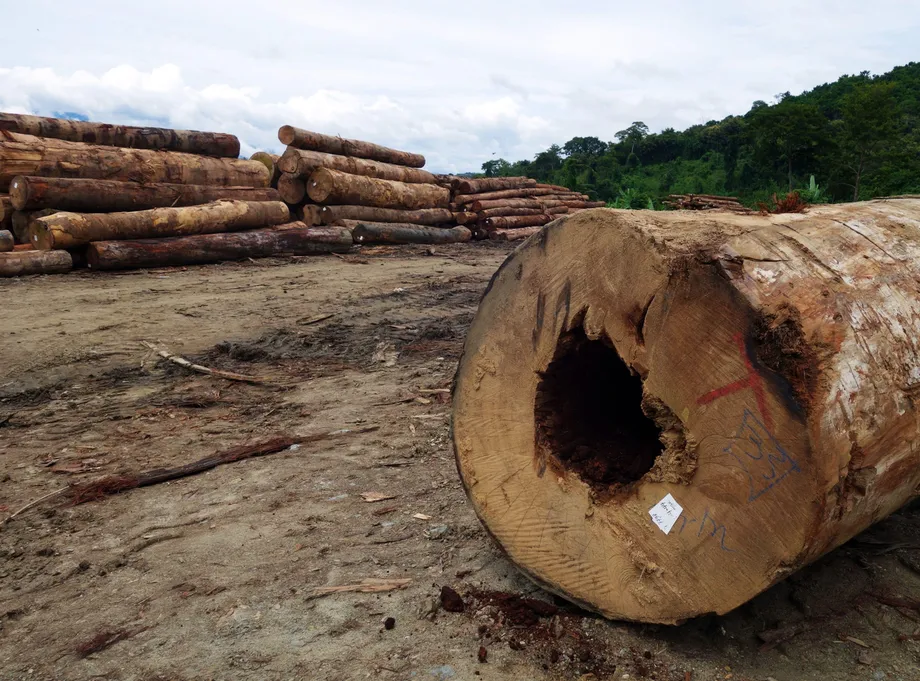
Six young Malaysians are asking the Kuala Lumpur High Court to compel the government to uphold its promise to keep at least half the country under forest cover. Their application cites estimates that 4.27 million to 4.51 million hectares of natural forest have been earmarked for commercial conversion, potentially leaving forest cover at between 47.4% and 49.6% of Malaysia's land area.
Contents
- Six young Malaysians seek to make a national promise binding
- A visit to Johor made the issue personal
- How the 50% promise entered national policy
- What the forest figures actually measure
- Why state powers matter to a federal lawsuit
- What official reserve data can tell the public
- The first legal test is permission to proceed
- Can constitutional rights protect future generations?
- Forests connect public finances with personal anxiety
- Key Points
The government's estimate for 2024 puts forest cover at about 54.6%. The dispute reaches beyond those numbers: the applicants want the court to decide whether repeated government promises create enforceable duties, what protection young people can claim, and how federal authorities should act when states control forests.
Amira Aliya, who was 18 when the case was brought, joined five applicants aged 20 to 30 under the campaign Mana Hutan Kami, meaning "Where is our forest?" They are challenging the Malaysian government and the Minister of Natural Resources and Environmental Sustainability.
Malaysia's own national forestry policy repeats the commitment to retain at least 50% of the country's land as forest and tree cover. Approved by the Cabinet on 11 November 2020 and the National Land Council on 29 January 2021, the document also explains a central difficulty for the lawsuit: forestry falls under state jurisdiction.
The applicants, represented by lawyers Datuk Ambiga Sreenevasan and Lim Wei Jiet, seek declarations that their rights have been violated and a binding order requiring government action. Their requested measures include working through the National Land Council and providing progress updates every 90 days.
A visit to Johor made the issue personal
Aliya's concern took shape during an August 2024 visit to a welfare home in Johor. She went to teach basic life skills to young people from abusive and disadvantaged families, but saw how flooding disrupted everyday necessities.
The home's kitchen, laundry and common area were outdoors. During rainy periods, residents and carers struggled to reach spaces they depended on. Aliya, a student environmental organiser, described the problem in practical terms:
The infrastructure of that home is not made for rainy seasons,
Aliya had already organised workshops on composting food waste through her school's environment and nature club. Repeated monsoon flooding made her feel that individual activities were too small to address the pressures affecting communities around her.
The six applicants bring experiences from several parts of Malaysia. They include climate advocate Abe Lim, 30, from Kuala Lumpur; NGO worker Sitti Fatimah, 25, from Sabah; postgraduate student Winona Elisha Jemak, 23, from Sarawak; and Johor students Lee Yu Dong, 20, Adom Teh, 20, and Aliya, 18. Their ages were given when the application was announced.
How the 50% promise entered national policy
Then prime minister Mahathir Mohamad made Malaysia's forest commitment in 1992, around the Rio Earth Summit. He defended the country's right to use timber for economic development while promising to retain half its land under forest cover.
The forestry policy records the commitment as maintaining at least 50% forest and tree cover, with a condition that developed countries maintain 30% of their land as forest. Its action strategy repeats Malaysia's 50% target.
The pledge was never enacted as a standalone legal obligation. It has, however, been repeated in planning documents and national policy, including at the 80th National Land Council chaired by Prime Minister Anwar Ibrahim. The applicants argue that this repetition gives the promise legal weight.
Lim Wei Jiet, one of the applicants' lawyers, described their position in simple terms:
If you promise something, you have to hold up your end of the bargain,
The policy also identifies concrete steps: improve procedures for changing forest land use, replace areas removed from permanent forest reserves, gazette additional forest areas, and regularly update information on forest and tree cover. Those measures connect the broad pledge to decisions about particular areas of land.
What the forest figures actually measure
The applicants' estimate concerns natural forest earmarked for conversion. Removing those areas from the forest calculation would leave between 47.4% and 49.6% of national land under forest cover. The projected range is 0.4 to 2.6 percentage points below the promised minimum.
RimbaWatch's analysis, cited by the applicants, uses spatial datasets to identify threatened forest. Its natural forest measure excludes industrial plantations. The government uses broader forest and tree cover categories, making the definition central to the dispute.
Abe Lim, a climate researcher and applicant, explained that natural forests contain layers of vegetation and ecological relationships developed over centuries. A plantation generally has a more uniform mix of species and trees of similar ages. Speaking in an April radio interview, she warned:
If we treat plantations and natural forests as interchangeable, we actually risk creating a very, very misleading public impression,
The Forestry Department of Peninsular Malaysia has previously challenged RimbaWatch's definitions of forest, deforestation and forest plantations. Responding to an earlier estimate that about 2.34 million hectares were planned for clearing, the department said the projected loss was too high because the definitions differed.
That earlier calculation used government figures of 18.33 million hectares of forest, or 55.2% of national land, in 2017. It projected a reduction to about 15.6 million hectares, or 47.35%. The department said Malaysia reports forestry information every five years through the Forest Resources Assessment coordinated by the UN Food and Agriculture Organization, and reiterated the 50% commitment.
The court dispute therefore involves both land use plans and measurement: which areas should count toward the national promise, and how authorities should account for natural forest converted to plantations.
Why state powers matter to a federal lawsuit
Article 74(2) of the Federal Constitution, read with List II of the Ninth Schedule, places forestry under state jurisdiction. The national forestry policy says states control their forest resources and make their own forestry laws and policies.
The federal government's executive role is described as providing advice, technical assistance, training and research. A court order directed at the federal government would therefore operate within a system where many decisions about forest land rest with state authorities.
The applicants' request for action through the National Land Council addresses that division of responsibility. They seek national coordination to maintain the promised minimum, rather than relying solely on challenges to individual clearing projects.
The forestry policy itself recognises the consequences of conversion. It defines deforestation as permanent clearing for uses including agriculture, industry, mining, roads, dams, towns and housing. It also warns that tropical rainforest ecosystems are fragile and difficult to restore after continuing disturbance.
What official reserve data can tell the public
The Department of Statistics Malaysia's forest reserve dataset, current through 2024, records the area of permanent forest reserves by state. These are legally gazetted areas, with figures calculated from gazetted reserve maps.
The dataset describes permanent forest reserves under the National Forestry Act 1984 and their management under the National Forestry Policy 1978, amended in 1992. Their four principal functions are protection, production, recreation and research. A reserve can therefore serve different purposes, including timber production under management rules.
Johor's listed reserve area was 432,184 hectares in 2014 and 332,749 hectares in 2017. The department explains that Peninsular Malaysian figures before 2017 included proposed reserves awaiting gazettement; from 2017, only gazetted reserves were counted. Readers comparing those years must account for that change in coverage.
For communities seeking to follow forest decisions, the dataset supplies a record of legal reserve boundaries. The lawsuit's national calculation asks a broader question about forest across different land categories, including areas planned for commercial conversion.
The first legal test is permission to proceed
The High Court must first decide whether to grant leave for judicial review, meaning permission to bring the challenge. One central issue is locus standi, or standing: whether the applicants have a sufficient connection to the alleged harm to bring the case.
A separate dispute over Bukit Cherakah forest in Selangor shows how decisive that question can be. In April 2026, the Federal Court ruled that two environmental NGOs lacked standing to challenge the removal of reserve protection because they were established after the decision. A July account still described the matter as pending before the Federal Court.
Kiu Jia Yaw, who chairs the Malaysian Bar Council's Environment and Climate Change Committee, is not involved in the youths' case. Speaking in a personal capacity, he said the Bukit Cherakah ruling showed the need to strengthen recognition of environmental rights in Malaysia's legal system.
The case's filing and hearing dates have also been described differently. The applicants' announcement gave 28 February 2026 as the filing date, while Aliya's account placed the filing in April. The hearing was initially listed for 14 May, then described as scheduled for 27 July; Aliya's account gives 20 October. Confirmation of the operative hearing date and an explanation of those changes were not given.
- 1992: Malaysia makes its commitment to retain at least half its land under forest cover.
- 11 November 2020 and 29 January 2021: The Cabinet and National Land Council approve the national forestry policy.
- August 2024: Aliya visits the flood affected welfare home in Johor.
- 28 February 2026: The applicants' announcement dates the judicial review filing.
- 20 October: The leave hearing date given in Aliya's account.
Can constitutional rights protect future generations?
The applicants rely on the right to life under Article 5(1) and equality under Article 8(1) of the Federal Constitution. They also invoke legitimate expectation, the argument that repeated public promises should be honoured, and public trust, the principle that public resources should be managed for people now and in the future.
Malaysia's Constitution contains no express right to a healthy environment. Datuk Dr Shad Saleem Faruqi, emeritus professor of law at Universiti Malaya, explained that the applicants must connect environmental protection to existing constitutional rights.
Malaysian judgments provide different approaches. In Tan Tek Seng in 1996, a case concerning dismissal from employment, the court interpreted the right to life to include livelihood. In Kajing Tubek, also decided in 1996, the courts declined to stop a hydroelectric project in Sarawak that would displace thousands of Indigenous people, holding that the project had proceeded according to law.
The youths argue that forest destruction places an unequal burden on people who will live longest with its effects. Their affidavit states:
Today's environmental degradation imposes deferred costs on those who had no role in causing it,
Kiu said fairness between generations already appears in international climate law, Malaysian family law and customary law, or adat. He described adat as requiring people to use the environment without threatening future generations' ability to enjoy it.
The applicants are asking the court to apply those ideas to government responsibility for forests. Their argument brings water supplies, livelihoods, food security and the conditions inherited by future generations into the meaning of the right to life.
Forests connect public finances with personal anxiety
Malaysia's economic exposure gives the case a reach beyond conservation. A 2022 Bank Negara Malaysia and World Bank study found that 54% of bank lending was tied to industries dependent on nature, while 87% was exposed to sectors contributing to environmental degradation. Forest policy therefore concerns businesses and lending as well as communities near clearing sites.
State finances are part of the debate. The Ecological Fiscal Transfer fund was described as RM250 million and rising, intended to support ecological conservation. Dr Lim Teckwyn, an adjunct lecturer in environmental science at the University of Nottingham Malaysia, argued that meaningful compensation to states for conserving forests could require hundreds of billions of ringgit.
Aliya describes the stakes more personally. Heat and environmental decline have made it difficult for her and some peers to imagine their future, including whether to have children. She worries that individual efforts are overwhelmed by damage caused by powerful businesses.
Her sister, Johor assembly member Amira Aisya, supplied an example of action through public institutions. After being elected, she successfully pressed for a Climate Change and Disaster Risk Management Committee within the state assembly.
Aliya's court campaign has drawn thousands of social media comments, including accounts of forest loss from Penang to Borneo and requests to donate or support the case. For her, taking legal action offers a way to answer the feeling of powerlessness. She said:
We need to understand that we can still do something. That this is not the end.
Key Points
- Six applicants aged 18 to 30 are challenging the government over Malaysia's commitment to retain at least 50% forest cover.
- Their application cites 4.27 million to 4.51 million hectares earmarked for conversion, potentially leaving natural forest cover at 47.4% to 49.6%.
- The government estimated forest cover at about 54.6% in 2024; definitions of forest, plantations and tree cover are central to the dispute.
- The applicants seek binding government action, coordination through the National Land Council and progress updates every 90 days.
- Standing, constitutional rights and the division of powers between federal and state governments are central legal issues.
- The national forestry policy repeats the 50% commitment and sets out measures for managing conversion and replacing removed reserve areas.