A paint job earns a science prize
Japanese researchers who painted cattle with white stripes received the 2025 Ig Nobel Prize in biology on September 18 at Boston University, earning recognition for a simple experiment with a practical result: about 50 percent fewer flies landed on the striped animals.
Contents
- A paint job earns a science prize
- How a farmer's problem became a zebra experiment
- What the researchers tested
- Why stripes can disrupt a fly's landing
- What fewer flies could mean for cattle
- Making the pattern last on a working farm
- Where stripes fit into pest control
- A ceremony built around curiosity
- What else won attention in 2025
- Key Points
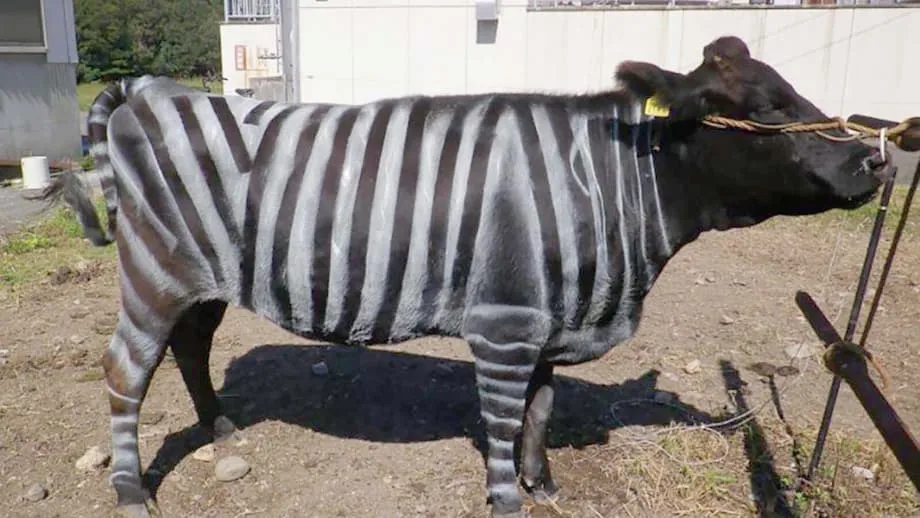
The team tested the approach on Japanese Black cattle, a breed often raised for wagyu beef. Compared with unpainted cows, animals given contrasting white stripes attracted fewer flies to their bodies and legs and made fewer movements to drive the insects away. Painting black stripes on their dark coats produced no improvement, pointing to the visible pattern as the reason for the difference.
The award ceremony matched the playful appearance of the research. Team members waved fake flies, and researcher Tomoki Kojima revealed a shirt with a zebra pattern to cheers from the audience. Behind the performance was a problem familiar to cattle farmers: biting insects cause pain, disturb feeding and rest, and can reduce weight gain and milk production.
The Ig Nobel Prizes were created in 1991 by the magazine Annals of Improbable Research. They recognize work that makes people laugh, then think. The cow experiment offered both, turning an unusual sight into a possible tool for reducing pesticide use and improving animal welfare.
Japan's researchers have now received at least one Ig Nobel for 19 consecutive years. The September 18 ceremony presented ten prizes across science and the arts, bringing attention to subjects ranging from pasta sauce to animal behavior.
How a farmer's problem became a zebra experiment
Kojima, who works at Japan's National Agriculture and Food Research Organization (NARO), said the project began when a cattle farmer asked for help with biting insects. A television segment about zebra stripes suggested a possible way to tackle the problem without relying on another chemical treatment.
Biologists have debated the purpose of zebra stripes for generations. One leading explanation is that the pattern helps keep biting flies from landing. The researchers brought that idea into a farming setting by giving dark cattle the contrasting appearance associated with zebras.
Cattle face more than irritation from these insects. Stable flies and horseflies pierce the skin and feed on blood, causing painful welts and wounds. Stress and disrupted feeding can affect production, while infections sometimes require treatment. Farmers already use insecticides and repellents, but resistance is a growing concern.
The experiment therefore asked a practical question: could changing how a cow looks reduce the number of flies reaching it? A successful visual deterrent would give farmers another way to protect animals, alongside the measures they already use.
The work developed across several stages:
- A cattle farmer asked Kojima for help with biting insects, and a television segment about zebra stripes inspired the idea.
- The researchers tested painted and unpainted Japanese Black cattle, then repeated the setup during a second grazing season.
- On September 18, 2025, the team received the Ig Nobel Prize in biology at Boston University.
- By September 20, Japanese farmers were exploring more durable ways to create the striped pattern.
What the researchers tested
The team rotated each animal through three treatments: white stripes painted on its dark coat, black stripes painted on the same dark coat, and no paint. Water based paint and masking tape were used to make the white stripes.
The black paint treatment served a specific purpose. Painting involves both a smell and the handling of an animal. Applying black paint to an already dark coat allowed the researchers to check those effects without creating the strong contrast of white stripes.
Observers counted flies landing on the cattle's bodies and legs. They also recorded defensive actions, including head shakes, head tossing, tail flicks and leg stamping. Those movements offered another way to assess how much the insects were bothering the animals.
The researchers repeated the setup in a second grazing season to check whether the effect held across time. White stripes again made a clear difference: the painted cattle had roughly half as many fly landings as unpainted animals and spent less time making defensive movements.
Black stripes on black coats did not help. Taken together, the treatments supported the explanation that the visible contrast, rather than the smell of paint, drove the reduction in landings. The main practical limitation appeared quickly, too: the paint faded within days.
Why stripes can disrupt a fly's landing
Flies locate animals using several signals at once. Odor, body heat, movement, shape and color all help guide them. They also respond to the way a surface reflects polarized light, meaning light with a particular orientation.
Black and white areas reflect light differently. Across a striped coat, the reflected light and its polarization change over very short distances. Strong contrast can interfere with several of the visual cues a fly uses while approaching an animal.
A fly's compound eyes are especially good at detecting motion and patterns. During an approach to a uniform surface, the apparent movement of that surface is relatively smooth. This visual movement, called optic flow, helps the insect judge its speed and distance before landing.
Stripes break the view into alternating bands. The apparent movement of one band can conflict with the next, while rapid changes in polarization make the visual scene less consistent. Those conflicting signals can disrupt the insect's landing response.
Small movements of muscles beneath the hide add another changing element. They turn the bright and dark bands into a shifting pattern, making the approaching target harder for a fly to interpret.
The cow experiment fits this explanation: white stripes changed the visual scene on a dark coat, while black paint on black hair did not. The practical result was fewer landings and calmer animals, connecting a question about zebra appearance with a measurable benefit for cattle.
What fewer flies could mean for cattle
Stable flies and horseflies can affect an animal's day from feeding through rest. Their bites cause pain and leave wounds, while the effort of repeatedly shaking, flicking and stamping interrupts other activities. Over a season, the resulting stress can contribute to lower weight gain and milk production.
Industry estimates put the annual cost of biting flies to the United States cattle sector at about $2.2 billion, including lost output and treatment expenses. That figure gives a sense of the scale of the problem beyond an individual farm.
Farmers use insecticide ear tags, treatments poured onto cattle, sprays, trapped bait and barn fans to manage flies. Each has limits. Heavy use of chemicals can encourage resistance, meaning insects become less susceptible to a treatment. Chemical use also brings environmental and worker safety concerns.
Stripes add a different kind of protection by interfering with landing. If fewer flies reach the skin, fewer can bite. That could reduce stress and chemical use, give wounds a better chance to heal, and allow cattle to spend more time eating and resting.
Some wagyu farms reduce grazing during the peak fly season because of pest pressure. A method that makes outdoor conditions more tolerable could give producers greater flexibility in deciding when animals graze.
A pattern that works in fields and pens could also help handlers. Swarming flies bother people as well as cattle and spread pathogens between surfaces. The appeal of the striped approach is therefore both practical and related to animal welfare, with the prospect of protection that uses no pesticide.
Making the pattern last on a working farm
The original paint lasted only days, leaving durability and labor as the main obstacles to routine use. Rain, mud and grooming can wear away the pattern, and painting an entire herd requires time and handling.
Japanese producers have begun exploring more robust coatings that are safe for animals, as well as bleaching coat hair to create white stripes that last longer. Field reports described good tolerance and no negative effects on the cattle. Farmers have also tried stencils and rollers to speed up application during routine handling.
Application schedules and methods for handling large herds are still being refined. Farmers need to know how often to restore the pattern and how to fit the work into existing routines. A cheap material can still become costly if it requires frequent labor.
The pattern itself also needs practical attention. The study used vertical white stripes on black coats. Stripe width, spacing and orientation might matter for different fly species and under different lighting conditions. Cattle with lighter coats may need dark stripes to create sufficient contrast.
Trials across regions and seasons will help clarify which patterns work best and whether a simple template can deliver most of the benefit. A durable method would make the idea easier to use beyond a test plot, particularly during the months when fly pressure is greatest.
Where stripes fit into pest control
Kojima has said the approach could reduce pesticide use and ease concerns about resistance in the environment. Its proposed role is as an extra visual barrier that helps farms use fewer chemicals while retaining other forms of protection.
That approach fits integrated pest management, in which several measures work together to control a pest. On a cattle farm, the striped pattern could be used alongside existing treatments and physical measures rather than taking over every job.
Materials for creating the stripes are inexpensive, so labor will be central to the cost calculation. If fewer bites lead to fewer infections and less need for insecticide treatment, the balance may favor adoption in small and medium herds.
Large operations face a different handling challenge. Mechanized sprayers or paint stations at chutes could make application more practical, while using the method only during peak fly months could reduce the amount of work required.
The researchers' next task is to make the approach easier to use on farms. At the award ceremony, Kojima acknowledged the people who supported the project:
We are grateful to our colleagues, friends and families.
Kojima also said the recognition would encourage the team to continue working toward a practical farming method:
This award will motivate our team to keep trying.
A ceremony built around curiosity
The Ig Nobel ceremony combines scientific recognition with deliberately playful traditions. Nobel laureates present the awards, audience members throw paper airplanes, and each year has a theme. This year's event included a mini opera with a digestion thread.
Winners receive a deliberately comic keepsake as well as attention that can carry their work into classrooms and laboratories. The prizes highlight how an odd question can produce an observation with a useful application, as the striped cattle experiment demonstrated.
The founder of the awards described the idea behind the event:
Every Ig Nobel prize winner has done something that first makes people laugh, and then makes them think.
The Japanese team's fake flies and Kojima's zebra patterned shirt suited that spirit. Their acceptance placed an accessible image in front of the audience: cattle that look unusual because researchers are trying to solve a familiar and costly agricultural problem.
What else won attention in 2025
The cow study shared the stage with research covering food, design, human behavior and other animals. The subjects were unusual, but each involved a specific question that researchers could investigate.
Among the other studies recognized were:
- Testing whether adding Teflon to food could increase its bulk without adding calories.
- Identifying when cacio e pepe sauce begins to clump and how to keep it smooth.
- Finding that rainbow lizards in Togo prefer four cheese pizza to other toppings.
- Showing that garlic eaten by a mother makes her breastmilk smell of garlic, which babies tend to accept.
- Measuring whether having a drink can help someone speak a foreign language more fluidly, using Dutch as the test case.
- Studying alcohol's effects on bats, including their flight and echolocation.
- Documenting the growth of one fingernail over 35 years.
- Examining how foul smelling shoes affect the experience of using a shoe rack from a design perspective.
For cattle producers, the striped cow research offered a particularly direct connection between an unexpected experiment and daily work. A visible pattern reduced fly landings by about half, while the remaining work concerns how to make that pattern durable, economical and convenient to apply.
Key Points
- Japanese researchers received the 2025 Ig Nobel Prize in biology on September 18 at Boston University.
- Japanese Black cattle painted with white stripes had about 50 percent fewer fly landings and showed fewer defensive movements.
- Black stripes on dark coats did not help, supporting a visual explanation for the effect.
- The experiment was repeated during a second grazing season.
- The paint faded within days; farmers are exploring more durable coatings, hair bleaching and faster application methods.
- Biting flies cost the United States cattle sector an estimated $2.2 billion annually in lost output and treatment expenses.
- Stripes could support animal welfare and reduce pesticide use as part of integrated pest management.
- Japan has received at least one Ig Nobel for 19 consecutive years.