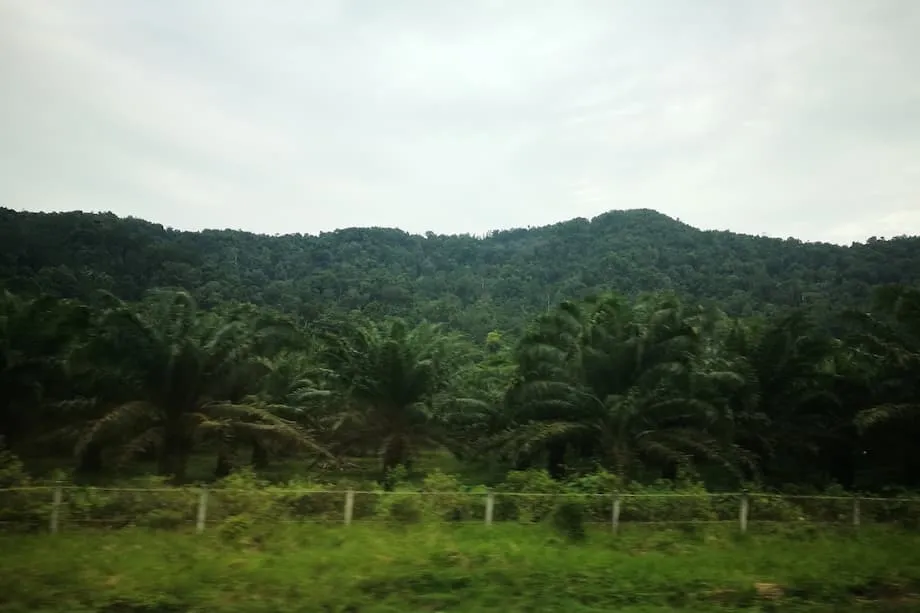
More than 674,000 hectares brought under state control
Indonesia has seized more than 674,000 hectares of palm oil plantations and portions of two nickel mines in a widening campaign against operations that authorities say lack permission to use forest land. As of September 13, 2025, the latest plantation transfers have increased the holdings managed by state owned agriculture company Agrinas Palma Nusantara to 1.51 million hectares.
Contents
- More than 674,000 hectares brought under state control
- A campaign covering millions of hectares
- What happened at the two nickel operations?
- Agrinas takes on a rapidly expanding plantation portfolio
- Why a forest permit matters
- State control comes before prosecution in some cases
- Prabowo puts security forces behind enforcement
- Producers challenge figures as markets weigh the risks
- Communities and forests face their own risks
- What changes for global buyers and domestic industry?
- The next phase tests revenue recovery and legal certainty
- The Bottom Line
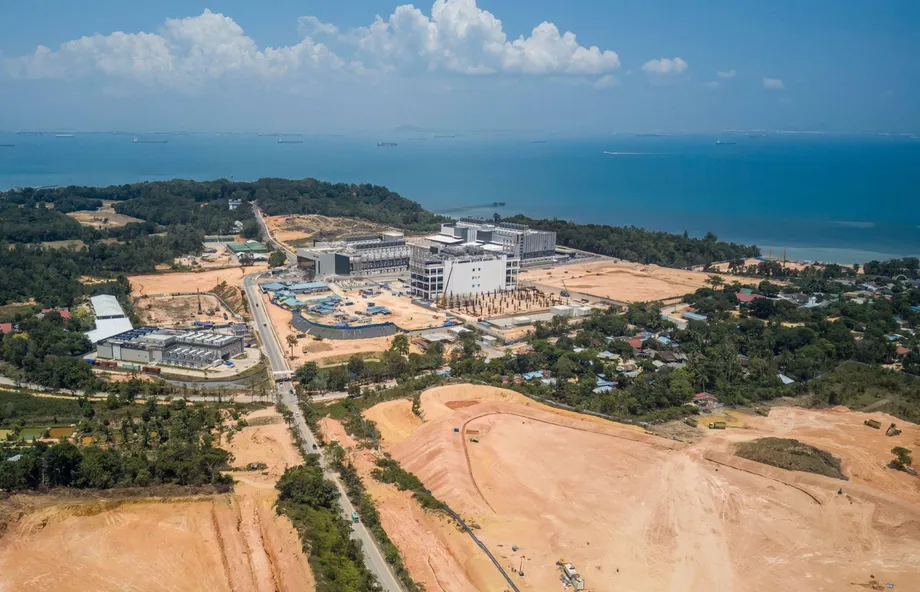
The mining seizures include land used by Weda Bay Nickel on Halmahera, one of the world's largest nickel operations, and a plot operated by Tonia Mitra Sejahtera in Southeast Sulawesi. At Weda Bay, the affected parcel is a quarry supplying construction materials rather than a central nickel extraction site. Its size is small compared with the company's contract area of roughly 45,000 hectares.
Indonesia is the world's largest nickel producer and the largest producer and exporter of palm oil. The campaign therefore reaches into two industries that supply manufacturers and consumers far beyond the country's borders. Nickel goes into stainless steel and electric vehicle batteries, while palm oil is used in food, cosmetics and biofuels.
Officials estimate that illegal or poorly regulated operations deprive the state of roughly 300 trillion rupiah each year in taxes and royalties. They also link those activities to damage to forests and waterways. The government's response combines permit checks, seizures and efforts to recover money from companies operating without the required approvals.
President Prabowo Subianto has made stronger oversight of mining and plantations a political priority. His agenda includes higher mineral royalties, corruption investigations and a greater role for public managers in strategic assets. Supporters see an opportunity for cleaner governance and more public revenue. Investors are watching whether the rules and their enforcement will remain consistent.
A campaign covering millions of hectares
The latest plantation seizures follow a much larger operation earlier in 2025, when teams backed by security forces took control of more than three million hectares of oil palm estates judged to have breached forest rules. The campaign is now moving from securing sites toward managing them over a longer period and recovering profits obtained without the necessary permissions and payments.
Authorities have identified more than 1,000 suspected illegal mines and placed up to five million hectares of oil palm plantations under scrutiny for possible violations. The task force is increasing its mapping work and document checks to establish whether business activities match official forest classifications and operating licences.
The figures describe different parts of the campaign. More than three million hectares were brought under control earlier in the year, while Agrinas now manages 1.51 million hectares after successive transfers. The latest seizure of more than 674,000 hectares adds to that expanding management portfolio.
The main stages described by authorities are:
- Earlier in 2025, teams backed by security forces took control of more than three million hectares of oil palm estates judged to violate forest rules.
- By September 13, 2025, the latest seizure covered more than 674,000 hectares of plantations, while limited parcels at two nickel operations had also been confiscated.
A further phase will target mining operations inside forest zones across about 4.27 million hectares. Officials said enforcement would increase in the coming period, but gave no precise date for that expansion.
What happened at the two nickel operations?
Weda Bay Nickel is a joint venture anchored by Tsingshan Holding Group, with partners including France based Eramet and Indonesia's Aneka Tambang. The complex is a cornerstone of Indonesia's plans to process more nickel domestically, making the seizure relevant even though the affected plot is limited.
Authorities took custody of a quarry used for construction materials within the operation's wider footprint. Because the plot is small relative to the roughly 45,000 hectares covered by the contract, and is outside the central extraction activity, an immediate reduction in mine output is considered unlikely.
Eramet Indonesia said it was assessing the situation, described the parcel as outside the core of production and stressed its intention to comply with regulations. The company sought to reassure stakeholders about the immediate operational consequences:
We do not expect a significant impact on operations.
Tonia Mitra Sejahtera faces a separate case in Southeast Sulawesi. Authorities seized an area it operated on the allegation that mining activity was taking place inside forest land without the required permits.
Officials say reviews are continuing and could lead to more action if audits uncover further breaches. For both major operators and smaller companies, the campaign extends scrutiny beyond the main mine to supporting activities, including quarries located within forest zones.
Agrinas takes on a rapidly expanding plantation portfolio
Agrinas Palma Nusantara is receiving most of the seized plantations. The new state manager is intended to stabilize operations, verify boundaries and bring estates into legal compliance while maintaining production.
The company's work includes auditing documents, resolving the legal status of land and directing profits to the state. Its portfolio has reached 1.51 million hectares after a series of takeovers during 2025, illustrating how quickly the government has expanded direct management of plantation assets.
The immediate approach is to keep estates operating while ownership, boundaries and permissions are examined. Longer term management also involves recovering profits that officials say were earned without proper approvals or payments.
For workers and buyers, continued production is an important part of that arrangement. For the government, the practical task is to turn seized estates into operations with verified boundaries, valid permissions and revenue reaching the public purse.
Why a forest permit matters
Much of Indonesia's land belongs to the legally designated forest estate, known locally as kawasan hutan. Using that land for activities other than forestry requires formal permission, even when a business holds other documents relating to its operations.
Mines need a forest borrow to use permit. This approval sets the permitted boundaries, time limits, fees and obligations to reclaim land after mining. Reclamation means repairing and restoring a site after extraction or related work has finished.
Plantation companies generally need the government to release forest land for conversion before obtaining the land use and business permits that allow them to plant and harvest. Those steps connect the legal status of the land with permission to conduct a particular business on it.
Overlapping maps and uneven governance have complicated the system for years. Some operators have expanded beyond licensed boundaries, opened quarries within forest zones or relied on documents that did not include the specific forest approval they needed.
The task force uses satellite mapping, inspections at sites and document checks to compare actual activities with legal permissions. When a company lacks a valid forest permit, its activity is considered illegal. Authorities can take control of the site, assign management to a public body and calculate money owed.
Those calculations usually cover unpaid taxes, royalties, compensation for using forest land and environmental rehabilitation funds. Royalties are payments to the state connected to extracting natural resources. Rehabilitation funding is intended to cover the work needed to repair damage after mining or plantation activities conclude.
State control comes before prosecution in some cases
A joint task force brings together prosecutors, police, soldiers and government officials. Its teams secure sites and take administrative control, then require companies to return a portion of their profits. Criminal charges are not the immediate step in every case.
Febrie Adriansyah, the assistant attorney general for special crimes and a senior task force figure, described the approach to plantations and mines operating in forest areas:
This enforcement action on forest areas converted into plantations or exploited by miners does not necessarily mean the immediate launch of a criminal prosecution.
Febrie said the priorities were to reclaim control, restore order and recover profits that should have reached the public purse. Authorities retain the option of opening criminal investigations where cases involve fraud, corruption or serious environmental harm.
Seized mines can be placed temporarily under the stewardship of the State Owned Enterprises Ministry. Plantations are transferred to Agrinas. Both arrangements give public managers responsibility for operations while the state addresses permits and financial obligations.
Prabowo puts security forces behind enforcement
Prabowo has pledged firm action against illegal activity in plantations and mining, including security assistance where teams encounter resistance at takeover sites. Describing the government's responsibility to act, the president said:
There is no reason the government would not take action for the sake of the people.
Prabowo also promised to pursue major corruption cases as part of the wider effort to bring strategic industries under stronger oversight:
We will not hesitate in unravelling major corruption cases.
Task force teams have reported pushback at some locations. Soldiers often accompany officials to prevent violence and protect workers at the sites. Supporters welcome the security presence as a way to make enforcement faster and more effective.
Rights advocates are concerned about an expanding military role in civilian affairs. The Forestry Ministry has also asked the military to help protect and rehabilitate forests, widening the debate beyond individual plantation and mine takeovers.
Critics fear a return to a broader military role in civilian life that Indonesia worked to reduce after authoritarian rule ended. Their concern is especially acute where land disputes already intersect with conflict, including Papua.
Producers challenge figures as markets weigh the risks
Eddy Martono, head of the Indonesian Palm Oil Association, has questioned some government figures and argued that several companies and cooperatives hold land use concessions or ownership certificates. He has urged closer consultation with producers to avoid casting suspicion across the whole sector.
His objection brings the permitting dispute into focus. Authorities are checking whether operations have the specific approvals required for forest land, while producers point to the different documents they hold. Resolving those cases requires examining both the land's classification and the scope of each permission.
Mining companies are closely following the audits. The seized parcels at Weda Bay Nickel and other sites are small compared with their wider production footprints, and nickel output has not yet shown a clear effect. Broader reviews could alter project costs and schedules if they reveal larger gaps in permissions.
Financial markets have reflected competing expectations. As Prabowo spoke, the main stock index briefly reached an all time high before retreating, while the rupiah slipped. Investors are weighing the prospect of higher state revenue and fairer competition against the need for predictable rules.
The campaign is unfolding alongside a larger change in the state's economic role. Jakarta has created the sovereign wealth fund Danantara to channel investment and is consolidating assets while giving public managers responsibility for more operations.
A cabinet reshuffle that removed long serving finance minister Sri Mulyani Indrawati has added to questions about policy continuity and the guardrails investors rely on when committing money. The enforcement drive and the reshuffle together have made consistency in government decisions a central business concern.
Communities and forests face their own risks
Indigenous and local communities living in or near the forest estate often lack formal recognition of their land rights. Rights advocates and environmental groups warn that a heavy security presence can leave those residents vulnerable when enforcement teams arrive.
Obtaining legal recognition can involve complex procedures lasting years. Activists also say the rules do not always draw a clear line between corporate encroachment and smallholders carrying out subsistence activities.
Some corporate cases have remained in the courts for years while smaller actors have faced rapid sanctions. The high profile prosecution of palm oil tycoon Surya Darmadi, whose companies were accused of large scale illegal conversion of forest into plantations, underscored public frustration with unequal accountability.
Environmental organizations point to evidence that Indigenous communities can protect forests effectively when their rights are recognized. They want seizures and audits accompanied by legal recognition of customary territories, transparent and fair dispute resolution, and monitoring that includes local people.
Those safeguards matter in places where an enforcement action can become an eviction or a prolonged land dispute. Critics warn that tensions could escalate in areas with histories of conflict unless the government combines its security measures with protection for community rights.
What changes for global buyers and domestic industry?
Indonesia's nickel production sets the pace for global supply. More frequent checks and tighter controls over forest use could delay expansion or increase costs for projects in Sulawesi and Halmahera.
Companies will need accurate boundary maps, the correct forest permissions and budgets for restoring affected land. Jakarta's wider industrial strategy is to process more nickel and copper domestically, adding value inside Indonesia rather than relying on extraction alone.
Officials argue that a credible cleanup will support that strategy by attracting investment tied to supplies that can be traced and shown to comply with the law. Their stated goal is to improve public revenue while supporting industrial growth.
Policy changes abroad add pressure. Recent United States tariffs have increased costs for many Indonesian goods, with limited relief for some processed nickel products depending on eligibility. Producers are seeking a wider range of buyers while building domestic supply chains aligned with Jakarta's processing ambitions.
Palm oil buyers face a different supply concern. If longstanding illegal estates are closed or moved to legal areas, supplies could tighten in the near term. Agrinas is expected to maintain production at the estates it manages while their documents and land status are reviewed.
Many buyers in Europe and Asia require proof that palm oil harvests do not come from recently deforested land. The crackdown could encourage greater investment in tracing supplies, independent audits and satellite monitoring to meet those expectations.
For traders in both industries, purchasing decisions will increasingly depend on proof of origin, current maps, evidence of forest permissions and reclamation plans. Producers able to document lawful supply can protect market access and their ability to secure better prices as customers demand stronger legal and environmental assurances.
The next phase tests revenue recovery and legal certainty
The planned mining operation across about 4.27 million hectares will extend the campaign's reach. Businesses found in violation will be required to return a portion of their profits, and seized mines will be managed temporarily by the State Owned Enterprises Ministry.
Supporters say stronger enforcement can remove illegal competition, improve compliance and increase fiscal returns without restricting legitimate business. Clear permits, better maps and timely royalty payments would also help responsible operators while protecting communities and forests.
Critics point to overlapping laws, complicated licensing, uneven local governance and entrenched corruption networks that have obstructed enforcement for years. They want transparent criteria for seizures, timely resolution of disputes and a clear route to legalization where that is appropriate.
The practical measures of progress will include the number of permits brought into compliance, the money recovered and whether the most serious violators face prosecution. Transparency in selecting and resolving cases, safeguards for communities without formal titles and schedules for environmental rehabilitation will also matter.
Companies face immediate work checking their boundaries against official maps, updating forest permissions, assembling land documents and preparing to demonstrate lawful operations. The government's challenge is to enforce those requirements while maintaining a predictable investment climate that supports growth and jobs.
The Bottom Line
- Indonesia seized more than 674,000 hectares of palm oil plantations and limited parcels at two nickel operations.
- Agrinas Palma Nusantara now manages 1.51 million hectares after plantation transfers during 2025.
- Officials estimate annual losses of roughly 300 trillion rupiah from illegal or poorly regulated operations.
- The Weda Bay parcel is a construction materials quarry, with no significant immediate operational effect expected by Eramet Indonesia.
- More than 1,000 suspected illegal mines and up to five million hectares of oil palm plantations are under scrutiny.
- The next mining enforcement phase covers about 4.27 million hectares of forest zones.
- The task force prioritizes state control and profit recovery, while retaining criminal investigations for serious cases.
- Investors seek consistent rules, while rights groups call for safeguards for Indigenous and local communities.
- Indonesia aims to connect stronger enforcement with higher public revenue and domestic processing of nickel and copper.