Burning national parks put financing plans under pressure
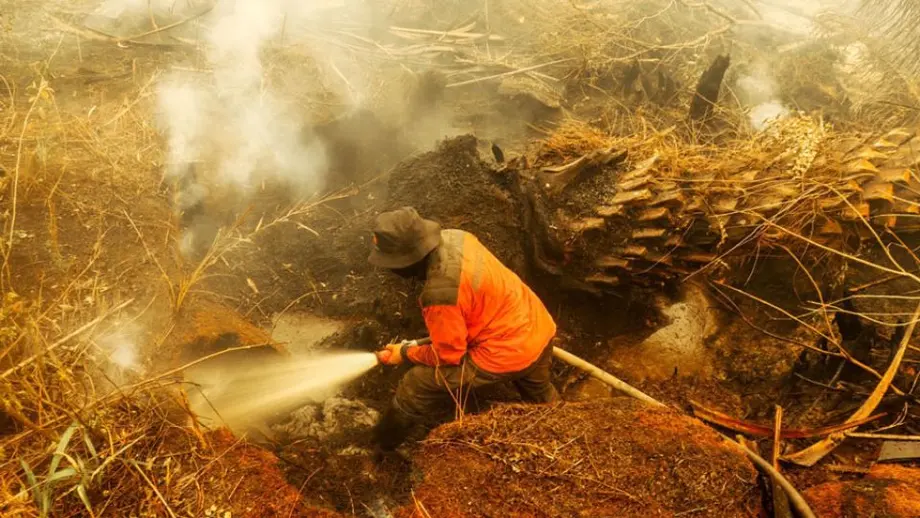
Indonesia is asking international investors and governments to support lasting protection for its forests at COP31 in Antalya, Turkey, while fires are damaging the national parks and wildlife habitats the financing would help preserve. Environmental watchdog Auriga Nusantara recorded at least 70,808 hectares burned inside 47 national parks by September 2026, including parks prioritized for conservation funding.
Contents
- Burning national parks put financing plans under pressure
- What Indonesia wants conservation funding to deliver
- Several measures show the scale of the fires
- Threatened wildlife is losing habitat and food
- Fires threaten the 2030 forest carbon target
- Investors will examine what happens beyond park boundaries
- Japan talks turn broad ambitions into a possible portfolio
- Communities want rights as well as promised benefits
- The energy transition adds another credibility test
- Global finance demands reach beyond forest projects
- Key Points
The Forestry Ministry's SIPONGI fire dashboard recorded 202,004.30 hectares of forest and land burned nationwide between January and July 2026. The dashboard puts that area 69 percent above its 2025 comparison figure, an increase of 82,791.04 hectares. Its estimates combine satellite images with hotspot information, checks on the ground and firefighting reports.
Indonesia's proposal seeks to establish lasting financing for 13 priority national forests and two conservation landscapes that shelter threatened species. The Forestry Ministry has invited international stakeholders to contribute to a White Paper on Indonesia's Conservation Financing, with options ranging from biodiversity credits to wildlife conservation bonds.
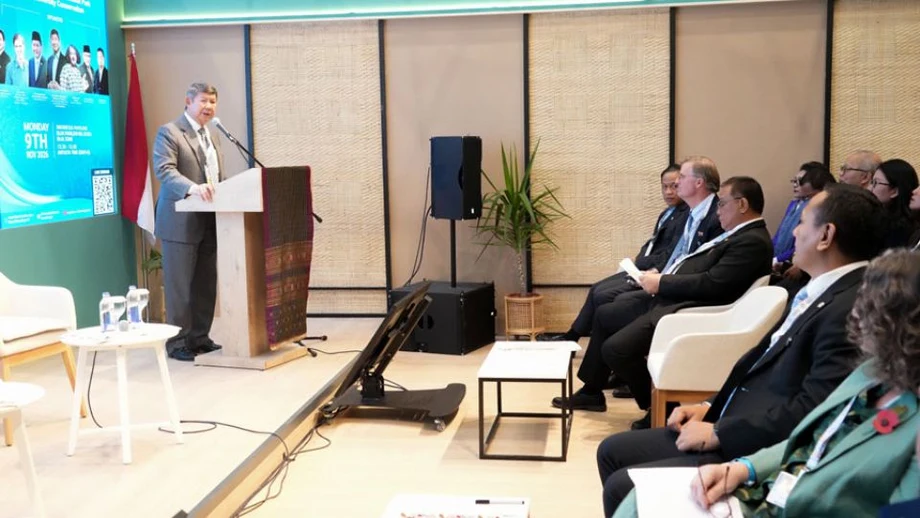
Presidential special envoy for climate change and energy Hashim Djojohadikusumo introduced a task force for innovative national park financing at COP31 on November 9. He said a presidential regulation issued in 2026 had formalized the body, intended to connect government, businesses, philanthropists and international partners.
The central challenge is practical: Indonesia needs money to protect forests, yet continuing fires make potential funders question whether those forests will remain standing. The same damage also threatens a national climate strategy that depends on forests absorbing enough carbon to help balance emissions elsewhere in the economy.
What Indonesia wants conservation funding to deliver
Hashim said Indonesia's 57 national parks protect species of international importance and need financing that lasts beyond individual projects. His proposed measure of success is the extent of habitat and species protection, together with benefits for communities, rather than simply the amount of money raised.
The financing options under discussion would bring different responsibilities. Biodiversity credits would seek payments for measurable gains in nature protection. Wildlife conservation bonds would raise investment linked to conservation objectives. Both would require clear rules about what counts as success and how results are checked.
Project Finance for Permanence takes a broader approach: partners agree on the money, management arrangements and conservation commitments needed to sustain protection over time. An endowment would hold invested capital and use its returns to help pay recurring expenses, such as park management and habitat monitoring.
Deputy Forestry Minister Rohmat Marzuki said the ministry was developing mechanisms intended to improve national park management and produce measurable conservation results. The proposal has not yet specified a total fundraising target, final financing arrangements or a timetable for putting all the mechanisms into operation.
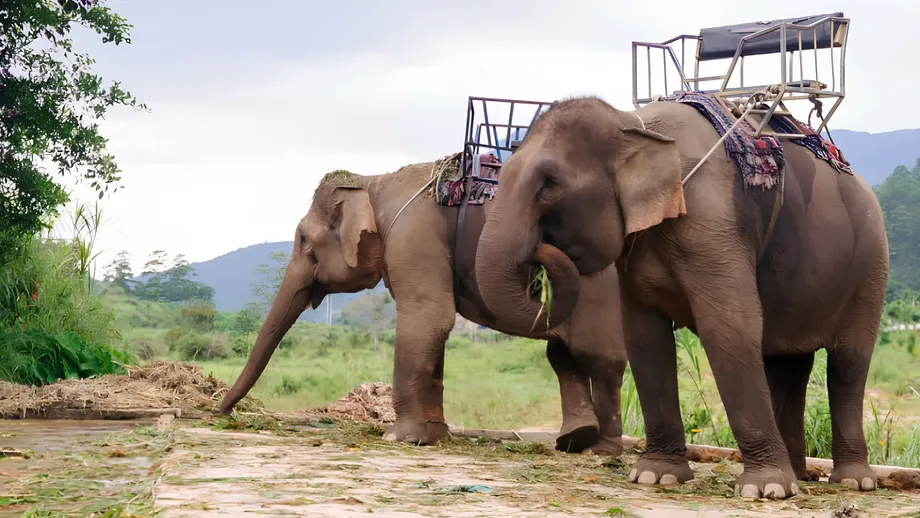
Hashim cited the Pusangan Elephant Conservation Initiative as an example of the intended approach because it combines wildlife protection, habitat restoration and community empowerment. For residents near protected areas, the promised benefit is a conservation programme that supports local livelihoods while maintaining the ecosystems on which wildlife depends.
Several measures show the scale of the fires
SIPONGI's official estimate covers forest and land fires nationwide. Its calculation uses Landsat 8 OLI/TIRS satellite imagery overlaid with hotspot distribution, reports from checks on the ground and suppression reports from Manggala Agni, Indonesia's forest firefighting organization.
Other monitoring efforts give a wider picture as the season progresses. MapBiomas recorded 637,001 hectares burned between January and August 2026. Atlas Nusantara estimated a cumulative area exceeding 1.9 million hectares through September. Auriga's 70,808 hectares concerns land inside national parks, a narrower category than the national totals.
The key dates show how the fire emergency and financing campaign developed:
- January to July 2026: SIPONGI recorded 202,004.30 hectares of forest and land burned.
- January to August: MapBiomas recorded 637,001 hectares burned nationwide.
- By September: Auriga recorded fire damage inside 47 national parks, while Atlas Nusantara estimated more than 1.9 million hectares burned nationally.
- November 9: Indonesia presented its conservation financing task force and discussed forestry carbon cooperation with Japan at COP31.
- 2027 and early 2028: Officials expect to calculate the emissions inventory for the 2026 fires and prepare the results for reporting.
Hotspot counts also vary substantially. The Forestry Ministry recorded 8,685 through October, while Atlas Nusantara recorded 1,108,102 by October 16. A hotspot is a satellite detection of unusual heat; repeated observations and different detection methods can produce very different counts. A common method for comparing these two sets of totals has not been explained.
Threatened wildlife is losing habitat and food
MapBiomas identified 20,363 hectares of burned land within the habitat of tigers, rhinos, elephants and orangutans. That places the damage directly within areas important to the species Indonesia is using to make its conservation funding case.
Sumatran tiger habitat accounted for 7,454 hectares of that burned area. Fewer than 600 Sumatran tigers are estimated to remain in the wild, and the subspecies is listed as critically endangered. Kerinci Seblat National Park and the Ulu Masen-Leuser ecosystem are among its remaining habitats.
Tigers already face poaching, declining prey populations and habitat loss associated with plantation expansion. Fires add another pressure by damaging the land they use to hunt and move between forest areas.
Orangutan habitat lost 5,657 hectares to fire. Conservation group Geopix has warned that the damage affects food sources as well as forest cover. The population estimate cited alongside the habitat figures is about 57,350 orangutans, although populations and threats vary across species and locations.
Papua accounted for 27 percent of the nationwide burned area identified by MapBiomas, Bali and Nusa Tenggara for 23 percent, and Kalimantan for 20 percent. Together, those three regional groupings accounted for 70 percent of the total, showing that the conservation response must extend across widely separated landscapes.
Fires threaten the 2030 forest carbon target
Indonesia aims to make forestry and other land use a net carbon sink by 2030. In simple terms, that sector would need to absorb more greenhouse gases than it releases. Trees remove carbon dioxide as they grow, while fires release stored carbon and damage the vegetation needed for future absorption.
The Copernicus Atmosphere Monitoring Service estimated Indonesia's wildfire emissions in 2026 at 195.15 megatonnes of carbon shortly before COP31, roughly one third of the global fire total. A megatonne is one million tonnes. Carbon mass and carbon dioxide mass use different units, an important detail when comparing these emissions with carbon trading targets.
Syaiful Anwar, a senior policy analyst at the Environment Ministry, said the fires put further pressure on the 2030 goal and require stronger rehabilitation and restoration, particularly on damaged peatlands. Peat contains carbon accumulated in partly decomposed plant material, so burning can release carbon stored below the vegetation as well as in it.
Syaiful said damaged peatlands may never return completely to their previous condition, although restoration must continue. Franky Zamzani, the ministry's director of climate change adaptation, also acknowledged that the fires would affect Indonesia's performance and achievements in international climate negotiations.
The official emissions accounting will take longer than satellite monitoring. Syaiful said the process requires data collection, calculation and quality checks, with work on the 2026 fires expected in 2027 and results prepared for an initial report in early 2028. Those figures will feed into the country's climate transparency reporting.
Investors will examine what happens beyond park boundaries
Bhima Yudhistira, executive director of the Center of Economic and Law Studies, said widespread fires could make prospective investors doubt Indonesia's ability to restore forest canopy. He called for a firm restoration commitment and Indigenous participation in sustainable local economic activities.
Fabby Tumiwa, chief executive of the Institute for Essential Services Reform, said Indonesia has tools and potential to attract conservation funding, but lacks a comprehensive and consistent forest conservation policy. Investors, he said, would examine whether forests are being opened elsewhere while carbon credits depend on preserving forest canopy.
Carbon credits generally represent a measured amount of emissions avoided or carbon removed. A forest project therefore needs reliable monitoring of forest condition, a credible calculation of its climate benefit and arrangements for dealing with later losses, including fire damage.
Indonesia's funding pitch faces two connected tests. Money must improve protection within the chosen landscapes, while national policies must support those gains through fire prevention, restoration and consistent land management. For an investor considering a commitment lasting many years, both determine whether promised conservation results can be maintained.
Japan talks turn broad ambitions into a possible portfolio
Rohmat met Japan's Vice Minister of the Environment Hiroshi Ono at the Indonesia Pavilion on November 9 to discuss forestry projects through the Joint Crediting Mechanism. The bilateral framework supports emissions reduction projects and the sharing of resulting credits under agreed rules.
Indonesia outlined four areas for development: restoring 12 million hectares of degraded land, protecting 50 million hectares from deforestation and degradation, developing social forestry carbon projects across 8.3 million hectares, and supporting 1.4 million hectares of customary forests. Social forestry involves community management or use of forests, while customary forests are associated with Indigenous communities and their traditional rights.
Rohmat identified peatland restoration and mangrove protection as central possibilities. He said projects would need credible methods, environmental and social safeguards, and meaningful community participation. Biodiversity protection and community welfare would form part of their value alongside carbon benefits.
Japan's Green Transformation Emissions Trading System entered its mandatory phase in 2026, and Japan has a target to procure around 100 million tonnes of carbon dioxide by 2030. That creates a potential connection between demand for qualifying credits and Indonesia's restoration ambitions.
The discussions describe a possible project portfolio rather than completed transactions. Translating those areas into financed projects will require agreement on project boundaries, carbon accounting, community participation and the distribution of benefits.
Communities want rights as well as promised benefits
JustCOP, a coalition campaigning for climate justice, criticized Indonesia's COP31 agenda for putting market mechanisms ahead of Indigenous and local community rights. Its criticism followed Hashim's opening of the Indonesia Pavilion on November 9.
WALHI says 70 percent of Indonesia's forest cover in the best condition lies within Indigenous territories and areas managed by communities. Its national campaign coordinator, Uli Arta Siagian, said climate funding was failing to reach the people who protect those forests. Bhima similarly warned that bureaucracy often prevents conservation finance from benefiting communities.
Fikerman Saragih, secretary general of the People's Coalition for Fisheries Justice, known as KIARA, described restrictions affecting coastal communities in North Sulawesi. He said residents had lost freedom to manage mangrove ecosystems claimed by the government as part of Bunaken National Park.
Fikerman's concern is that conservation programmes can treat residents as people implementing official plans rather than as holders of rights over their living spaces and resources. For those communities, the terms of protection determine whether they can continue fishing, managing mangroves and sustaining their livelihoods.
Giorgio Budi Indrarto, deputy director of MADANI Berkelanjutan, called for recognition and protection of community leadership, traditional knowledge and living spaces. These demands give concrete meaning to the government's promise of community benefits: residents want a role in decisions and protection for their existing rights, alongside access to finance.
The energy transition adds another credibility test
Indonesia's reliance on forest absorption is linked to its continuing use of fossil fuels. Renewables accounted for 17.89 percent of the energy mix in April 2026, according to the Energy and Mineral Resources Ministry, below the original target of 23 percent for 2025. The gap was 5.11 percentage points.
President Prabowo Subianto announced a plan in August to develop 100 gigawatts peak of solar capacity over three years. Gigawatts peak describes maximum rated solar output under standard conditions. Actual electricity production depends on sunlight, operating conditions and connections to the power system.
CERAH recorded 19.3 gigawatts of operating coal capacity supplying factories and industrial areas directly, with potential expansion beyond 31 gigawatts. Its executive director, Agung Budiono, urged the government to review carbon markets, stop coal power projects and prioritize renewable energy.
Walhi climate campaigner Patria Rizky Ananda argued that the government's target of 8 percent economic growth relies on resource exploitation that will drive forest loss. Climate Action Tracker rates Indonesia's climate action as critically insufficient.
Environment Minister Mohammad Jumhur Hidayat, outlining Indonesia's negotiating priorities before COP31, said climate policy must also protect development needs:
Our priorities are energy affordability, workers' welfare and protection of local communities. We also oppose unilateral measures that disadvantage developing countries,
That position places affordable energy and employment alongside emissions cuts in Indonesia's negotiating agenda. The policy challenge is to deliver those protections while reducing the pressure on forests to compensate for continued fossil fuel emissions.
Global finance demands reach beyond forest projects
Indonesia is pursuing conservation investment alongside broader climate finance commitments. Franky said the country would press developed nations to deliver US$300 billion annually by 2035 under the New Collective Quantified Goal on Climate Finance agreed at COP29 in Baku.
The wider mobilization ambition is US$1.3 trillion annually by 2035, associated with the Baku to Belém Roadmap. Those global figures cover climate finance more broadly than Indonesia's proposed national park mechanisms.
The United Nations estimates that developing countries will need US$305 billion annually by 2035 for adaptation, nearly ten times the amount they currently receive from wealthy countries. Adaptation means preparing for and reducing harm from climate impacts. Mitigation means cutting the emissions that cause warming. Indonesia wants finance to serve both purposes.
Indonesia is working through formal UN climate negotiations and outreach at its pavilion to seek those commitments and partnerships. Its conservation case now rests on turning that diplomacy into durable protection: restoring burned landscapes, preventing further losses, measuring results and ensuring communities receive a meaningful share of the benefits.
Key Points
- Indonesia is seeking lasting financing for 13 priority national forests and two conservation landscapes at COP31.
- Auriga recorded at least 70,808 hectares burned inside 47 national parks by September 2026.
- SIPONGI recorded 202,004.30 hectares burned nationwide from January to July, while later monitoring estimates show a much larger seasonal footprint.
- Fires threaten Indonesia's goal for forestry and other land use to absorb more greenhouse gases than it releases by 2030.
- Japan and Indonesia are exploring forestry carbon projects involving restoration, peatlands, mangroves and community participation.
- Community organizations want conservation funding to protect rights and livelihoods as well as forests.
- Officials expect calculations for the 2026 fire emissions inventory in 2027, with results prepared for reporting in early 2028.