A romance puts Kerala representation under scrutiny
Param Sundari, released in India on 29 August 2025, has drawn criticism for a heroine whose Malayalam introduction sounds wrong to native speakers and a version of Kerala built around coconuts, backwaters, elephants and toddy. By 8 September, the film had become the focus of a wider argument about how Hindi cinema portrays people from other parts of India.
Contents
- A romance puts Kerala representation under scrutiny
- Why the Malayalam matters
- Coconut comedy and postcard scenery
- Critics, a radio host and an audience member respond
- A familiar argument about casting
- Why familiar stereotypes keep returning
- Copyright complaints widen the dispute
- Regional cinema changes the comparison
- Films that offer a different model
- What more careful representation involves
- The Bottom Line
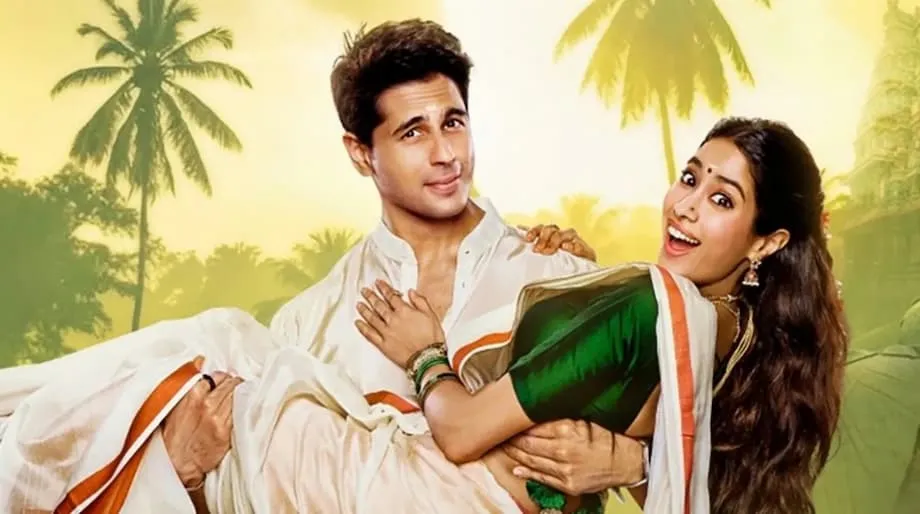
Directed by Tushar Jalota, the romantic comedy stars Sidharth Malhotra as a Delhi entrepreneur and Janhvi Kapoor as a woman from Kerala. Its premise brings together a northern man and a southern woman. Critics and viewers say the cultural details too often turn that encounter into a collection of tourist images and jokes about unfamiliar speech.
The controversy began with the trailer, in which Kapoor's character appeared to mispronounce her own name. Another joke has a friend hear the Kerala destination Nangiarkulangara and ask, "Where is that? Africa?" For those objecting to the film, the line makes ignorance about an Indian place part of the entertainment.
Sundari wears jasmine flowers, climbs coconut trees and even chats with elephants. Reviewers have compared the film to an extended tourism commercial, arguing that its attractive scenery leaves little room for the everyday lives and social reality of the people who live there.
Some viewers welcome the film as a light romance and accept exaggeration as part of its appeal. The disagreement is about where comic freedom ends and a community becomes a stereotype: a simplified image repeated so often that it stands in for real people.
Why the Malayalam matters
Kapoor's introduction in the trailer became an early flashpoint. To Malayali listeners, "Thekkapetta Sundari" sounded like "deceived beauty". The likely intention was a family name closer to "Thekkeppattil". A character struggling with her own name made the language problem especially noticeable.
Malayalis are people associated with Kerala and its principal language, Malayalam. For audiences who speak it, pronunciation carries meaning as well as sound. An unfamiliar accent may be understandable, but a misplaced syllable can change what a line communicates.
Critics heard similar problems across the film's Malayalam dialogue. Their objection was that repeated slips suggested too little attention to guidance, rehearsal and consultation. A romance asking viewers to believe in a Kerala woman depends partly on making her speech feel convincing.
Cross language casting has long been common in Indian cinema. Actors regularly play characters whose mother tongue differs from their own. Dubbing, in which another performer records the dialogue used on screen, once helped smooth those differences. As audiences began placing greater value on authenticity, more actors were expected to deliver the lines themselves.
That shift puts more responsibility on pronunciation, idiom and cultural understanding. Casting someone from another region can work, but the writing and preparation have to give the performer a believable character rather than an accent built around familiar jokes.
Coconut comedy and postcard scenery
Coconut trees repeatedly drive the action in Param Sundari. The couple first meets beneath one. Sundari harvests coconuts when she is upset, and the hero declares his love from the top of a tree. To some viewers, these are playful recurring jokes. To others, their frequency makes Kerala feel like a setting assembled from a narrow list of recognisable objects.
Backwaters, Onam festivities, coconut trees, elephants and toddy supply much of the film's local colour. The criticism concerns how those details are used: scenery and customs become shortcuts for describing a whole place, while the people remain thinly written.
Other scenes add to that impression. A reference to Kerala's near universal literacy plays as a smug jab. A driver drinks toddy before crashing his car. A local man guides the hero to Thekkapettu Homestay while speaking broken English, with his speech becoming part of the joke.
Sundari also challenges the Delhi visitors with the line, "Paratha, Porotta, same, same." The exchange turns the joke back on people who casually treat different foods and cultures as interchangeable. It gives her a moment of resistance, although much of the surrounding humour still presents Malayalis as quaint, exotic and closely associated with coconuts.
The film includes several actors from Kerala in small parts. Critics argue that their presence offers limited help when the roles themselves remain narrowly drawn. A performer who knows the place and language still needs a character with more to do than deliver a local gag.
Critics, a radio host and an audience member respond
Kerala based critics, writers and influencers have led much of the pushback. Their recurring complaint is that the film is attractive on the outside but hollow within, using a living culture as postcard scenery.
Film critic Sowmya Rajendran described the romantic comedy as generic, exhausting and offensive. Her criticism focused on tired cliches hidden behind an exotic Kerala setting and music that overplays the place's foreignness.
Pavithra Menon, a Malayalam radio host and former actor based in Dubai, drew attention with a viral video about the accent and stereotypes. She later clarified that her objection was not personal to Janhvi Kapoor. It concerned the guidance actors receive and the respect owed to audiences who know the language.
Menon argued that proper coaching can make a difference and that Malayali audiences are comfortable laughing at themselves:
Actors can learn accents with the right coaches. Hollywood does it all the time. Kerala audiences love humor and we laugh at ourselves, but 2025 is long past the point where a Malayali woman who cannot speak her own language is a punchline. Bollywood can do better.
Rajiv, an audience member from Bihar, took a more relaxed view. He enjoyed the film as a light introduction to a new place and felt entertainment should have room for artistic freedom:
Maybe this will change gradually. But this much artistic freedom is okay to make the movie interesting.
Those responses explain the divide. Some viewers want a breezy romance with broad comic touches. Others find that the same touches become distracting when they repeatedly misrepresent a language or reduce a character to regional habits.
A familiar argument about casting
Priyanka Chopra's performance in Mary Kom is another reference point in the debate. She received praise and awards for playing the champion boxer from Manipur, then later said that, in hindsight, the role should have gone to someone from the northeast.
Chennai Express became a major commercial success while receiving harsh criticism for its singsong Tamil stereotype. Meenakshi Sundareshwar and Two States also faced objections that they reduced southern identities to a few familiar tropes.
Param Sundari brings the same concern back into view. The objection to cross language casting is not simply that an actor comes from somewhere else. It is that a character built from cliches gives the performer little cultural grounding, and weak writing leaves an accent carrying too much of the role.
Online discussion has also touched on the age gap between Malhotra and Kapoor, the coconut tree scene and the relative absence of Malayali performers in key roles. These strands have widened a controversy whose central focus remains the treatment of Kerala's language and people.
Why familiar stereotypes keep returning
Mehmood's portrayal of a Tamil singer in the 1968 film Padosan illustrates how long accent based caricature has been part of commercial Hindi cinema. Funny pronunciation, regional habits and jokes about unfamiliar places offer an immediate way to signal difference in a crowded theatre.
Social media now allows audiences to challenge those choices in real time. People who recognise an error can share a clip, explain what is wrong and reach viewers far beyond the original cinema audience. Param Sundari's reception shows how quickly a local language complaint can become a national conversation.
Ashok Mishra, the screenwriter of Kathal: A Jackfruit Mystery, argued that comedy should preserve the dignity of the people it depicts:
Just to create some comedy you cannot be using people from different States like Kerala or Bihar or Punjab. It hurts them. We should respect dialects. Caricature happens when you do something deliberately. If you keep people's dignity in mind then you will never make this mistake.
Trade analyst Komal Nahta offered a commercial explanation. He described filmmakers as reluctant to move away from images they believe audiences already recognise:
Culture stereotypes are sometimes done deliberately otherwise people may not be able to identify with those characters. Filmmakers want to stick to the norm because nobody wants to take a chance in a commercial film. They prefer to go by what the public already thinks.
Delhi based reviewer Arnab Banerjee argued that accurate details matter in every genre because films help shape how people understand other places and communities. In his view, research also improves enjoyment by making a fictional world feel real.
Mishra and Nahta describe different pressures within the same process. One places dignity at the centre of writing; the other explains why commercial caution can encourage repetition. Banerjee's argument connects accuracy to the audience's experience rather than treating research as a burden on entertainment.
Copyright complaints widen the dispute
Several influencers who mocked the accents and scenes reported copyright complaints that led to their clips being taken down. Menon's viral video was briefly removed before returning to public view. The interruption intensified discussion of the film and of the space available for criticism.
Copyright gives rights holders control over uses of their work. Fair use concerns circumstances in which material may be used for purposes such as criticism. The takedowns brought that issue into the debate alongside questions about language and casting. The legal basis and final outcome of the individual complaints were not detailed.
Malayalis living abroad also expressed frustration. The response in the Gulf reflected the sting some felt when their culture was reduced to costume and mispronounced words, especially in a film led by a star with an audience across India.
The short chronology shows how the discussion developed:
- Before release, the trailer drew criticism over Sundari's pronunciation of her own name.
- On 29 August 2025, Param Sundari opened in India.
- After release, reviews and audience reactions focused on Malayalam dialogue, coconut jokes and the depiction of Kerala.
- By 8 September 2025, copyright complaints against critical clips and reactions from Malayalis abroad had broadened the controversy.
Regional cinema changes the comparison
Param Sundari arrived as Bollywood continued to struggle after the pandemic to produce dependable blockbusters. Streaming services and nationwide theatrical releases have meanwhile introduced millions of viewers to films in Malayalam, Tamil, Kannada and Telugu.
Subtitles and dubbing allow those films to travel beyond their original language audiences. Viewers who once encountered Kerala mainly through a Hindi film can now compare that portrayal with Malayalam stories whose speech and everyday details come from the place itself.
Param Sundari's domestic earnings were reported at about Rs 34.5 crore during its early run. Lokah, a Malayalam thriller about a female superhero produced by Dulquer Salmaan, crossed Rs 100 crore worldwide within eight days.
The figures describe different markets: Param Sundari's total covers India, while Lokah's includes worldwide receipts. The more useful cultural comparison is that a Malayalam film was attracting substantial business while audiences were challenging a Hindi production's version of Kerala.
Regional cinema's wider reach changes the standard against which such a romance is judged. A Hindi film set in Kerala now enters a market where many viewers already have access to stories told with fluent Malayalam and locally grounded characters.
Films that offer a different model
Godha brought a Punjabi wrestler to Kerala and found humour in the encounter without making the visitor or the setting a target of contempt. Axone used the daily lives of northeastern students in Delhi to tell a warm comedy about food, friendship and prejudice.
Qarib Qarib Single placed a Malayali woman's voice at the centre of its story without turning her background into a gimmick. Together, these examples show how cultural differences can support a film while leaving room for characters to exist beyond them.
Payal Kapadia's festival favourite All We Imagine As Light used original Malayalam lines with the support of a Malayali co dialogue writer. That collaboration supplied a practical foundation for speech that felt rooted in the characters' lives.
Singer Shreya Ghoshal offers a related example from music. Her reputation in southern Indian languages rests partly on the work she has put into diction. Preparation of that kind is also available to film productions asking actors to perform in an unfamiliar language.
Aleena, a writer and poet, placed the dispute within a wider question of who participates in storytelling. She noted that several Indian film industries, including Malayalam cinema, have stereotyped other communities:
This is a larger question of power dynamics and representation. When a story portrays a community without including the real voices of people from the community, it risks becoming skewed and imbalanced. We need to make people participants or stakeholders in the art we are trying to make.
Aleena's argument extends beyond choosing a lead actor. Writers, dialogue collaborators and performers from a community can help determine how its people speak, what they find funny and which details belong in the story.
What more careful representation involves
Dialect coaching, local writing and meaningful casting are practical responses to the problems raised by Param Sundari. Many cost relatively little compared with star fees, location shoots and large marketing campaigns. They can also give a romance sharper banter and more convincing relationships.
Several steps address different parts of the production process:
- Hire dialect coaches early so actors can practise speech patterns and musicality as well as vocabulary.
- Bring in local writers or co writers to check dialogue and suggest everyday details for homes, streets and festivals.
- Cast regional actors in meaningful roles with full characters rather than a single joke.
- Include cultural consultants during scripting, before filming begins.
- Record practice tracks with local speakers and show key scenes to test viewers from the community.
- Use dubbing where appropriate when preparation time is limited.
- Build humour primarily from character, with jokes about place and language playing a smaller role.
These approaches leave room for exaggeration and entertainment. Their purpose is to make the people behind the comedy sound and behave convincingly, so cultural detail supports the romance rather than repeatedly pulling viewers out of it.
Param Sundari's divided reception brings the stakes into focus. Viewers seeking an easy romance may accept its broad strokes, while audiences familiar with Kerala hear and see shortcuts that weaken the experience. Better preparation gives filmmakers more material to work with, not fewer opportunities for humour.
The Bottom Line
- Param Sundari opened in India on 29 August 2025, starring Sidharth Malhotra and Janhvi Kapoor under director Tushar Jalota.
- Criticism centres on mispronounced Malayalam, repeated coconut jokes and a depiction of Kerala built around tourist imagery.
- Pavithra Menon said her objection concerned coaching and respect, rather than a personal attack on Kapoor.
- Copyright complaints briefly removed critical social media clips, including Menon's video, before it returned.
- The film's early domestic earnings were about Rs 34.5 crore; Malayalam thriller Lokah crossed Rs 100 crore worldwide within eight days.
- Some viewers accept the exaggeration as artistic freedom, while critics want more accurate language and fuller characters.
- Godha, Axone, Qarib Qarib Single and All We Imagine As Light offer examples of cultural storytelling grounded in collaboration and preparation.
- Early dialect coaching, local writers, meaningful regional casting and considered dubbing are practical ways to improve representation.