A factory raid becomes a diplomatic crisis
South Korea has reached an agreement with the United States to bring home hundreds of its citizens after federal agents detained 475 people at a battery factory construction site near Savannah, Georgia. As of September 8, 2025, the workers were awaiting administrative arrangements for their release and a chartered flight paid for by Seoul.
Contents
- A factory raid becomes a diplomatic crisis
- What agents encountered near Savannah
- Who was detained and what their visas allowed
- Seoul negotiates a return and seeks lasting changes
- How voluntary departure would work
- Washington defends the operation
- Companies respond as construction stops
- Why factory technicians face a visa bottleneck
- Employer duties and the subcontractor chain
- Families, protesters and Georgia leaders react
- Investment promises meet enforcement pressure
- Restarting the project will require more than a flight
- Key Points
U.S. Immigration and Customs Enforcement said 475 people were detained at the facility, which is part of a manufacturing complex tied to Hyundai and LG Energy Solution. South Korean officials said more than 300 were their citizens, meaning Koreans accounted for more than three fifths of those detained. Homeland Security Investigations described the sweep as its largest enforcement action at a single site.
The operation stopped construction at a project Georgia leaders had promoted as the state's biggest economic development undertaking. It also exposed a practical conflict between two U.S. priorities: attracting foreign investment in advanced manufacturing and enforcing restrictions on who can work in the country.
South Korean companies say their American factories need experienced technicians to install specialized equipment and prepare production lines. U.S. officials say those workers must have permission for the tasks they perform, even when their employers are making investments Washington welcomes.
Seoul expressed regret over the raid and pursued urgent talks for two days before announcing the return agreement. Foreign Minister Cho Hyun was scheduled to leave for Washington to support the repatriation effort and discuss ways to prevent similar cases as more Korean investment projects move forward.
What agents encountered near Savannah
Federal agents executed a judicial search warrant at the battery facility in Ellabell, about 25 miles west of Savannah. Homeland Security Investigations, ICE, and federal and state partners blocked roads, set up staging areas and stopped work while officers processed workers.
ICE footage showed workers standing in lines for searches, some wearing plastic restraints, before being directed onto buses. Most detainees were taken to the ICE Processing Center in Folkston, Georgia. State and federal officials said more than 400 agents participated.
Authorities said the operation followed an investigation lasting several weeks into unlawful employment practices. The warrant named four individuals, but officers detained a much larger group after encountering workers they suspected were living or working in the United States without authorization.
Workers described calls ordering operations to shut down, supervisors gathering crews and uncertainty over who could remain. A South Korean worker told the BBC that some people tried to run and a few ended up in a sewage pond. Many workers who were not detained were separated from others, questioned and then released.
The immediate diplomatic response unfolded quickly:
- Before the raid, investigators examined suspected unlawful employment practices for several weeks.
- During the operation, agents executed the warrant, detained 475 people and halted construction activity.
- After the operation began, South Korean diplomats from Washington and Atlanta went to the site and detention facilities.
- After two days of urgent negotiations, Seoul announced an agreement to bring its citizens home.
- By September 8, administrative work and flight arrangements were still being completed.
Who was detained and what their visas allowed
South Korean officials and immigration attorneys said the detainees included subcontractor employees and specialist technicians sent from Korea to install and calibrate production equipment. Calibration means adjusting machinery so that it operates accurately, an essential step before a factory starts making products.
LG Energy Solution said 47 of its employees were detained, along with many employees of its contractors. Hyundai said none of those arrested were its direct employees. Those statements place the immediate staffing problem among LG personnel and the network of companies working on the construction project.
Some workers had entered through the Visa Waiver Program using ESTA travel authorization, which allows visits of up to 90 days for tourism or business meetings. Others reportedly held B-1 business visitor visas or had overstayed earlier visas. U.S. officials also said some people had entered across the border without inspection.
Business visitor permission does not authorize ordinary productive employment. The central issue for technicians is whether their activities fall within permitted business visits or amount to work requiring a different immigration category. Installing equipment and preparing a production line involve tasks beyond simply attending meetings.
Immigration status and permission to work are separate questions. Someone may be legally present in the United States but lack authorization for a particular job. In limited circumstances, another person may have permission to work while an immigration application or status decision is pending.
Seoul negotiates a return and seeks lasting changes
South Korean diplomats moved to help detainees soon after the operation began. Seoul said negotiations with Washington had been finalized and that its citizens would be repatriated once administrative steps were complete. The charter flight would leave when its schedule and required clearances were arranged.
Kang Hoon-sik, chief of staff to President Lee Jae Myung, told ruling party leaders that the government would also review how technicians are sent to the United States for investment projects. He described both the immediate priority and the changes Seoul wanted to pursue:
We will not let our guard down until we have our people safely back home. We will also review and improve the visa system for those who go to the United States on business trips related to investment projects so that similar incidents won't be repeated.
Foreign Minister Cho Hyun scheduled urgent meetings in Washington. His goals were to help detainees leave voluntarily, avoid long restrictions on future entry and seek predictable visa routes for specialists needed during factory construction.
The workers' return would resolve the immediate detention problem for those covered by the agreement. Seoul was also seeking arrangements that would let future technicians carry out necessary assignments with clear permission, rather than leaving companies uncertain about which travel category fits their work.
How voluntary departure would work
Many detainees were expected to leave voluntarily, agreeing to depart instead of receiving a formal removal order. Such an order can bring lengthy restrictions on returning to the United States. Although voluntary departure generally requires people to cover their travel costs, South Korea said it would pay for the chartered flight in this case.
Atlanta immigration attorney Sarah Owings, who represents several detainees, described the government involvement as unusual:
I do not know of another instance where a government has responded with chartering a flight.
Attorneys said people admitted under the visa waiver program generally have no right to a hearing before an immigration judge and can be returned promptly. Workers who overstayed other visas may face different procedures, depending on earlier immigration orders and any remedies available to them.
Cho's effort to avoid future entry bans therefore mattered beyond securing seats on a plane. The legal arrangements governing departure could affect whether technicians can return for later assignments. The precise flight date, the timing of a full construction restart and the final immigration outcomes for individual workers had not been announced by September 8.
Washington defends the operation
The White House said companies investing in the United States must follow immigration law when bringing in skilled workers. President Donald Trump welcomed foreign investment while saying companies should bring technical staff legally and hire and train Americans.
Tom Homan, the White House border adviser and a former acting ICE director, defended the enforcement approach during television appearances over the weekend. He stated:
It is a crime to work and live illegally in the United States.
Homeland Security Investigations leaders described the battery factory sweep as part of a broader campaign against unlawful employment and related crimes. Since early in the year, federal officials had increased worksite inspections under a policy aimed at prosecuting employers who knowingly use unauthorized labor and removing people without permission to work.
Immigration enforcement accelerated during Trump's current term. Congress provided ICE with additional funding for detention and transport, while department leaders signaled that large operations at factories and construction sites would continue. Homan and Homeland Security leaders argued that unlawful employment harms U.S. workers and allows unsafe practices to spread.
Business groups and some state officials asked for clearer procedures for technical assignments lasting a short time. They said delays in work visa categories had encouraged companies facing urgent construction deadlines to rely on business visitor entries for tasks extending beyond meetings or limited training.
Companies respond as construction stops
Hyundai said it would cooperate fully with the investigation. LG Energy Solution said it was working with authorities to secure the release of its own employees and workers from partner companies, and had suspended most business trips to the United States for the time being.
LG's chief human resources officer, Kim Ki-soo, traveled to Georgia to coordinate the response. Hyundai's North America manufacturing chief, Chris Susock, assumed operational oversight at the site, with instructions to ensure all subcontractors complied with U.S. regulations.
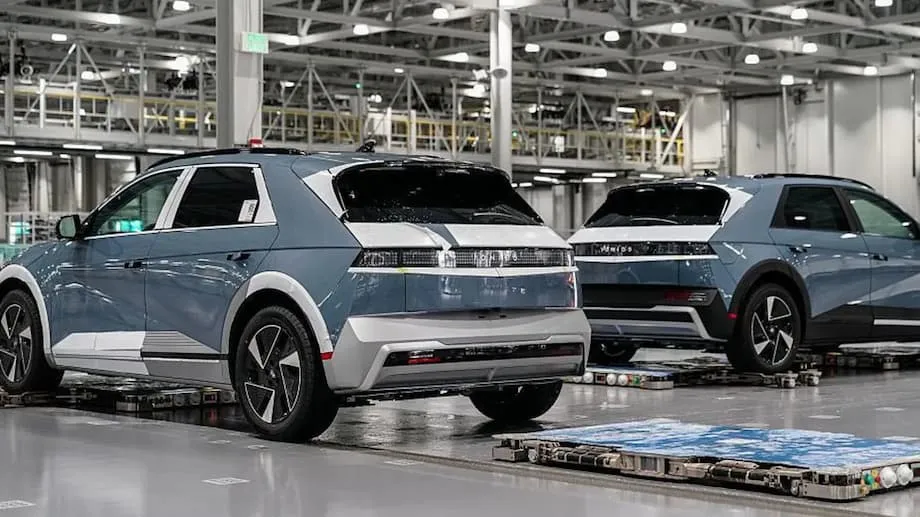
The battery facility is designed to supply the nearby Hyundai electric vehicle assembly plant. Officials had projected several thousand jobs when production reached its full level. The broader Georgia complex covers about 2,900 acres and has been promoted as an anchor for the state's electric mobility corridor.
State and local incentives were intended to attract suppliers around the complex. A pause at the battery plant therefore affects more than the crews installing its machinery: supplier plans and workforce training programs are tied to the project's progress.
Industry officials interviewed in Korean and U.S. media said the expansion of American battery and chip manufacturing depends on rotations of experienced engineers. Their assignments include installing proprietary equipment, finding faults in production lines and training local teams. Those officials also acknowledged that visa delays had led some companies and contractors to stretch travel categories beyond the work they permit.
Why factory technicians face a visa bottleneck
Battery factories require precise installation of equipment carrying high voltage, dry rooms and systems for handling sensitive materials. Many processes use proprietary tooling and methods that are not yet common in the U.S. workforce. Companies therefore rely on technicians familiar with their equipment during construction and the early stages of production.
South Korean conglomerates have committed to large American projects involving cars, batteries, support for chip fabrication and components. Tight schedules make the availability of those technicians a direct concern for factory completion dates and costs.
The H-1B program covers specialty occupations but has an annual limit, receives more applications than available places and uses a lottery. L-1 visas allow companies to transfer managers and employees with specialized knowledge within their organizations, though closer scrutiny and lengthy processing can complicate timing.
B-1 business visitor status covers meetings and limited training rather than ordinary productive work. The visa waiver program allows brief business or tourism visits, rather than general permission to perform tasks on a production site. Firms rotating teams through visits of up to 90 days face enforcement risks when their activities amount to unauthorized work.
Korean industry media reported that dozens of other U.S. projects involving shipbuilding, steel and electrical equipment had paused travel or recalled employees as a precaution. Executives warned that repeated raids could delay factory openings and increase costs unless both governments established clear, rapid routes for technical assignments lasting a short time.
Employer duties and the subcontractor chain
The Immigration Reform and Control Act of 1986 established sanctions for employers hiring people without authorization to work in the United States. Employers must use Form I-9 to verify each hire's identity and permission to work, reviewing the documents presented in good faith.
Georgia encourages electronic checks through E-Verify, which compares information with Social Security and Department of Homeland Security records. The system cannot detect every instance of identity fraud. Document checks, audits and visits to workplaces remain part of enforcement.
Large construction projects involve multiple layers of contractors. A main contractor may require subcontractors to complete their own employment checks, while responsibility for supervising individual workers is spread across several businesses. Investigators can examine records and interview workers to determine who hired them and whether the required checks took place.
Companies or vendors found to have knowingly used unauthorized labor can face civil fines or criminal charges. Depending on the evidence, prosecutors may pursue separate allegations involving document fraud, wage theft or safety violations.
The New York Times reported that the Georgia complex had also faced local scrutiny of safety and labor practices, with at least three worker deaths at the site according to local law enforcement. Company officials said safety was a priority, announced internal reviews and repeated that vendors must comply with the law.
ICE said the employment investigation remained open. No criminal charges had been filed as of the weekend. Investigators were expected to continue examining records seized under the warrant and interviewing workers.
Families, protesters and Georgia leaders react
Demonstrators gathered outside the complex with signs in Spanish and Korean, demanding fair treatment for detainees. Korean American community groups said families were distressed, including spouses unable to contact workers who had left their phones behind when the raid began.
Business leaders in Savannah and Bryan County expressed concern about construction delays and the message the operation sent to foreign investors. Georgia's governor had strongly supported the state's electric vehicle manufacturing expansion and efforts to recruit Korean businesses, while state officials also backed the federal action.
The governor's office stated the legal requirement for companies operating in Georgia:
All companies operating within the state must follow the laws of Georgia and the nation.
Major newspapers in Seoul criticized the timing of the operation, which came days after leadership meetings and announcements of new investment plans. South Korean officials said the country remained committed to U.S. projects while seeking visa arrangements suited to the practical demands of building factories.
LG Energy Solution said its longer term expansion in North America remained on track despite the pause in business travel from Korea to U.S. sites. The immediate challenge was preserving those commitments while resolving staffing and immigration problems.
Investment promises meet enforcement pressure
Washington has pressed South Korean industrial companies to expand in the United States while tightening visa scrutiny and increasing enforcement at workplaces. Trump's public message combines support for investment with an expectation that businesses employ authorized specialists and train American workers.
U.S. tariffs and trade negotiations with Seoul have been connected to large investment pledges in energy, chips, batteries and vehicles. South Korean officials said they obtained tariff relief on some exports after agreeing to expanded investment and purchases in the United States.
Business groups worried that sudden immigration sweeps would add uncertainty and expense to projects the U.S. government had encouraged. For companies, the immediate problem is how to move experienced workers into factories legally and on time. For Washington, the stated goal is to attract manufacturing without allowing employers to bypass immigration requirements.
Georgia's project brings those pressures together at one site. Experienced technicians are needed to install equipment and prepare local teams, while the people performing that work must hold the appropriate permission. Both governments were being asked to turn their investment commitments into workable arrangements for the staff needed to deliver them.
Restarting the project will require more than a flight
Construction was paused after the raid, although the companies said they remained committed to the complex. State leaders have a strong interest in its completion because supplier businesses and training programs depend on the manufacturing expansion.
Returning detainees to South Korea would address the urgent human and diplomatic crisis. Replacing technicians and resuming installation would take additional time, particularly while companies maintained travel freezes and sought clarity on visas for technical support.
The investigation's eventual penalties would depend on evidence about whether companies or subcontractors knowingly employed unauthorized workers or failed to carry out required verification. Meanwhile, Seoul and Washington were focused on completing the return arrangements and preventing similar incidents as other large factories progressed from preparing sites to installing equipment and starting production.
Key Points
- ICE said 475 people were detained at the Hyundai and LG battery construction site in Ellabell, near Savannah.
- South Korea said more than 300 detainees were its citizens and announced a deal to bring them home on a government funded charter flight.
- LG Energy Solution said 47 employees were detained. Hyundai said none of those arrested were its direct employees.
- Many workers were expected to depart voluntarily. Some had entered through ESTA or on B-1 business visitor visas.
- Construction stopped at the battery facility, and LG suspended most business travel to the United States.
- Cho Hyun planned Washington meetings on repatriation and visa arrangements for technicians working on investment projects.
- The White House defended the raid and said foreign companies must bring workers legally and hire and train Americans.
- The employment investigation remained open, with no criminal charges filed as of the weekend.