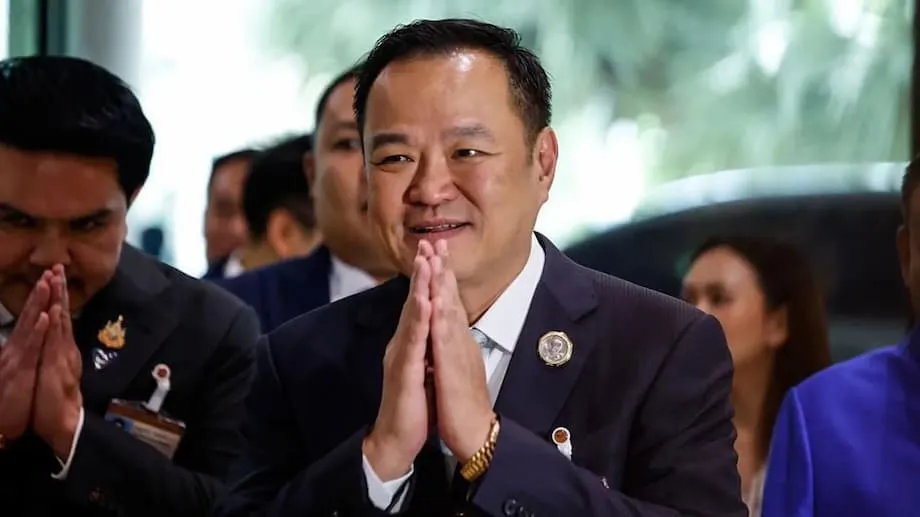
A new prime minister with little time to govern
Anutin Charnvirakul, 58, has become Thailand's third prime minister in two years, taking charge of a minority government after two successive leaders were removed by the Constitutional Court. His Bhumjaithai Party holds just 69 of parliament's 500 seats, yet he secured a clear majority with support extending far beyond his own lawmakers.
Contents
- A new prime minister with little time to govern
- How the Shinawatra government lost power
- Why a party with 69 seats could take charge
- The businessman, health minister and political dealmaker
- Cabinet choices point toward economic stability
- Keeping the Cambodian border calm
- What happens to cannabis policy?
- A constitutional bargain with clear limits
- The election clock shapes every decision
- The Essentials
As of September 8, 2025, his immediate task is to turn that parliamentary support into a functioning administration while preparing for another election. The People's Party, the main opposition force, backed him on conditions that include an election commitment within four months and the start of a process to rewrite the constitution. It will remain outside his government.
Anutin's appointment followed royal endorsement, the formal step the constitution requires for a prime minister to take office. The ceremony also reflected the monarchy's central place in Thai political life. The Senate did not participate in choosing him, a change from the system established after the 2014 coup.
The new leader faces pressure on several fronts at once: weak economic momentum, high household debt, a fragile ceasefire with Cambodia and a constitutional reform bargain with opponents who disagree with him on sensitive political issues. His short term in office will also give voters an opportunity to assess Bhumjaithai before the next campaign.
Thailand's latest change of government follows months of uncertainty. Court rulings and shifting alliances have repeatedly shaped who governs, leaving Anutin with a broad mandate from the parliamentary vote but a narrower base for the everyday work of passing measures and holding a government together.
How the Shinawatra government lost power
Paetongtarn Shinawatra, the daughter of former prime minister Thaksin Shinawatra, was removed by the Constitutional Court over an ethics breach linked to a leaked telephone conversation with Hun Sen, Cambodia's longtime political power broker. The call preceded five days of fighting along the border in July and damaged confidence in her leadership.
Bhumjaithai withdrew from Paetongtarn's coalition after the leak, helping bring down the government. The episode broke trust between coalition partners and gave Anutin an opening to assemble support for his own bid to become prime minister.
Paetongtarn's predecessor, Srettha Thavisin, also from Pheu Thai, had been removed by the court. Her dismissal extended a pattern of judicial intervention affecting leaders backed by the Shinawatra family since the 2006 coup that removed Thaksin.
Pheu Thai was left with few immediate options. Its remaining nominee was in poor health and lacked a strong public profile. Thaksin departed for Dubai for medical treatment, saying he would return for a court hearing. No date for that hearing was given.
The family that had dominated Thai politics for much of the past two decades now faces a weakened political position. Pheu Thai has been pushed to the sidelines, while its reformist rivals remain unable to form a government despite their electoral strength.
The main steps in the political upheaval span several years:
- In 2006, a coup removed Thaksin Shinawatra from power.
- After the 2014 coup, Thailand adopted a political system in which the Senate participated in selecting the prime minister.
- In 2023, the reformist party that preceded the People's Party won the most seats but was blocked from forming a government.
- In July 2025, five days of fighting along the Cambodian border followed the leaked Paetongtarn conversation with Hun Sen.
- By September 8, 2025, Paetongtarn had been removed, Anutin had won parliament's backing and royal endorsement had completed his appointment.
Why a party with 69 seats could take charge
Bhumjaithai's 69 seats amount to 13.8 percent of the 500 seats in parliament. Anutin therefore needed substantial support from other parties to win the premiership. His victory reflects Bhumjaithai's established role as a party able to negotiate across political groupings.
Bhumjaithai previously joined conservative alliances and later served alongside Pheu Thai. It has shifted partners while keeping itself close to the centre of government. After leaving Paetongtarn's coalition, Anutin presented himself as a candidate who could draw votes from different camps without triggering an immediate confrontation with the political establishment.
The People's Party supplied crucial outside support. It is the successor to the dissolved reformist party that won the most seats in 2023. Its agreement with Anutin requires movement toward an election and constitutional change, as well as a joint policy statement before the House is dissolved.
A minority administration lacks a dependable majority of its own in parliament. Anutin's government will therefore need cooperation from lawmakers outside the cabinet to keep functioning. The People's Party has made clear that its support is limited to the period leading toward the election.
The arrangement gives both sides something they want. Anutin gains office and a chance to demonstrate his ability to govern. The People's Party gains a commitment to an early return to voters and a route toward changing the constitution, while retaining its place on the opposition benches.
The businessman, health minister and political dealmaker
Anutin comes from a wealthy family with business and political connections. Before entering politics in the 1990s, he led Sino Thai, a major construction company associated with large infrastructure projects. He took over Bhumjaithai in 2014 and expanded its reach by appealing to voters outside Bangkok and negotiating with factions across the political spectrum.
His period as health minister during the pandemic raised his national profile, while vaccine procurement drew scrutiny. In 2022, he delivered one of his best known policy pledges by decriminalizing cannabis, a first in Asia. That decision helped produce a rapid expansion of retail shops and a continuing argument about how the industry should be regulated.
Anutin presents an easygoing public image on social media. Political insiders describe a skilled operator who follows changes in alliances closely. A trained pilot, he is comfortable with direct outreach in markets and community events as well as negotiations among political leaders.
Speaking to reporters outside parliament after his election, Anutin set expectations for an intensive period in office:
I will work my hardest, every day, no holidays, because there is not a lot of time.
His first weeks will test whether he can deliver visible results while maintaining relationships with the parties whose support he needs now and may need again after the election.
Cabinet choices point toward economic stability
Anutin's first cabinet choices indicate an attempt to restore confidence and revive growth. He tapped veteran technocrat Ekniti Nitithanprapas for the finance ministry and selected experienced figures for energy and foreign affairs. Sihasak Phuangketkeow, a seasoned diplomat, is his choice for foreign minister.
Thailand's economy has been growing slowly compared with regional peers. Weak consumption and high household debt have weighed on confidence, while recent government stimulus efforts have struggled to gain traction. Families carrying large debts have less room to spend, which also limits demand for businesses.
The government's brief timetable makes measures that can be introduced quickly more likely than major reforms. Expectations centre on support for spending, potentially through the repackaging of programs with funds that have not yet been used. Such measures would seek to lift activity before voters return to the polls.
Monetary policy may carry more of the burden. Market economists anticipate further easing by the Bank of Thailand at its next meeting under a new governor, with some expecting a larger interest rate cut to support demand. Lower rates can reduce borrowing costs, although the pressures of household debt and competitiveness take longer to address.
Tourism, the auto industry and small businesses are central to the effort because they support jobs and household incomes. The government will need to provide a steadier policy environment for those sectors while working within its limited time and parliamentary strength.
Lavanya Venkateswaran, Senior ASEAN Economist at OCBC, said the short tenure would limit what Anutin could accomplish:
It remains to be seen what the PM can do in such a short period of time. His role will likely be more geared towards setting the stage for the next election.
Confidence among voters and investors will be an early measure of his performance. Clear communication and coordination with the central bank could help, even though four months offers little time to resolve deeper economic problems.
Keeping the Cambodian border calm
Five days of fighting along the Thai Cambodian border in July killed at least 43 people and displaced tens of thousands before a ceasefire took hold. Preventing another outbreak is one of Anutin's most urgent responsibilities.
The confrontation followed the leaked conversation between Paetongtarn and Hun Sen and became a central part of the court case against her. For the new government, the border crisis combines a security problem, a diplomatic task and a politically sensitive issue at home.
Sihasak's appointment puts an experienced diplomat in charge of repairing relations. Cambodia's prime minister, Hun Manet, has publicly congratulated Anutin, providing a modest opening for calmer communication after weeks of tension.
Anutin, speaking after taking office, said his government would pursue a peaceful approach while prioritizing the protection of Thai lives:
This government will take peaceful measures to resolve the ongoing Thai Cambodian dispute with a firm commitment to mitigating any further Thai casualties.
Making the ceasefire last will require cooperation between the two countries' militaries and close communication over the return of displaced families. Anutin must also manage nationalist pressure within Thailand while reducing the risk of further violence.
A calmer frontier would give families a better chance to return home and reduce political pressure in Bangkok. It would also provide an early result for a government whose time before the next election is limited.
What happens to cannabis policy?
Anutin's return to the centre of government puts cannabis regulation back in focus. As health minister, he pushed through the 2022 decision to remove cannabis from the narcotics list, opening space for medical use and triggering a wave of retail businesses.
The initial framework left gaps that local authorities struggled to police. The previous government considered tighter controls and discussed returning cannabis to criminal law, drawing opposition from small businesses that had entered the sector.
Anutin has said he wants a regulated industry centred on medical treatment and research, rather than unrestricted use. That approach would require clear licensing, quality controls and restrictions on access by young people.
Investors and shop owners want predictable rules, while communities want a voice in where shops may operate. With an election approaching, any new framework will need broad political support if it is to last beyond the current government.
A constitutional bargain with clear limits
The People's Party made constitutional change a condition of its support for Anutin. He pledged to organize a referendum that could lead to a new charter drafted by an elected assembly, replacing the constitution written by a committee after the 2014 coup.
A referendum would ask voters to decide on the proposed route toward constitutional change. The agreement starts that process; drafting and adopting a replacement charter would require further steps.
Supporters of a new constitution want to reduce the influence of unelected institutions and the repeated court interventions that have removed governments since 2006. The Senate's absence from the latest prime ministerial selection has already shifted that decision to the lower house, although courts continue to play a powerful role in political outcomes.
The People's Party and Anutin remain divided over the law protecting the monarchy, known as lese majeste. The progressive movement from which the People's Party emerged called for lighter penalties and a narrower scope for prosecutions. Some of its lawmakers have been convicted under the statute.
Anutin is a strong royalist, and Bhumjaithai has consistently defended the existing law. That disagreement helps explain why the People's Party chose to support his election without joining his cabinet. Cooperation on election timing and constitutional procedures leaves both parties free to maintain their different positions on the monarchy's protection law.
The election clock shapes every decision
Anutin's agreement is described as a commitment to call an election within four months. The expected sequence is a policy statement to parliament followed by dissolution of the House within four months, with voting likely to follow within two months of dissolution. The date of the vote therefore depends on when the House is dissolved.
The short timetable leaves little room for legislation requiring lengthy negotiation. Anutin's early emphasis on appointments and executive decisions reflects that constraint. Progress on border stability or targeted economic relief would give Bhumjaithai results to present to voters as it seeks to expand beyond its established strongholds.
Pheu Thai faces the challenge of rebuilding without an obvious standard bearer after the removal of two successive prime ministers. Its weakened position changes a contest long shaped by the Shinawatra family.
The People's Party enters the approaching race with the most seats, while continuing to face political obstacles created by past legal battles. A wide popular vote victory would increase pressure to allow it to govern. A fragmented result could again make Bhumjaithai a broker between competing camps and give Anutin a route from a brief administration to a longer term in office.
Voters will assess policies alongside the ability of leaders to provide stability after repeated changes at the top. Anutin's immediate challenge is to keep his election and constitutional commitments while showing that his government can act on the economy and protect the border ceasefire.
The Essentials
- Anutin Charnvirakul, 58, is Thailand's third prime minister in two years after winning a clear parliamentary majority and receiving royal endorsement.
- Bhumjaithai holds 69 of 500 seats, leaving his minority government dependent on support outside the cabinet.
- The People's Party backed him in exchange for election commitments, steps toward constitutional change and a joint policy statement. It remains in opposition.
- Paetongtarn Shinawatra was removed over an ethics breach linked to a leaked call with Hun Sen. Her predecessor, Srettha Thavisin, was also removed by the court.
- Anutin selected Ekniti Nitithanprapas for finance and Sihasak Phuangketkeow for foreign affairs as he seeks economic and diplomatic stability.
- July's border fighting with Cambodia killed at least 43 people and displaced tens of thousands. Anutin pledged peaceful measures to prevent further Thai casualties.
- His cannabis agenda centres on medical treatment, research and clearer regulation following decriminalization in 2022.
- The House is expected to be dissolved within four months, with an election likely within two months after dissolution.