605 school closures put November reopening under pressure
Cambodia is accelerating inspections, repairs and mine clearance along its border with Thailand after fighting closed 605 schools, disrupting education for about 150,000 students and more than 6,000 teachers. The Ministry of Education, Youth and Sport aims to restore classes for the 2025 to 2026 academic year, beginning in early November, while preparing temporary classrooms and alternative locations wherever campuses remain unsafe.
Contents
- 605 school closures put November reopening under pressure
- Inspecting buildings before repairs begin
- Temporary classrooms and safer school locations
- Why explosive clearance must come first
- A delayed survey adds to the workload
- School disruption extends into Thailand
- From border fighting to a fragile ceasefire
- The dates shaping school reopening
- Returning families still face difficult conditions
- Budgets, construction and the November deadline
- What could slow the return to class
- Preparing families and teachers for reopening
- What to Know
As of September 7, 2025, the effort brings together two urgent tasks: rebuilding damaged facilities and checking school grounds and access routes for explosives left by the fighting. Deputy Prime Minister and education minister Hang Chuon Naron has directed technical teams to move quickly, with mine clearance approval required before construction crews enter a site.
At a planning meeting chaired by Hang Chuon Naron, the ministry assigned teams to inspect specific schools in Oddar Meanchey and Preah Vihear. Engineers are preparing standard designs for classrooms and libraries, while officials draft budgets for policy approval and construction schedules linked to the new school year.
The closures followed the worst fighting between Cambodia and Thailand in more than a decade. Tensions over stretches of border that have not been formally marked, including areas near historic temples such as Preah Vihear, escalated in late July. Heavy weapons were used, civilians were caught in crossfire, and mass evacuations interrupted education, health care and other public services.
A ceasefire took effect on July 28 after talks hosted in Malaysia. Sporadic incidents and reports of shelling nevertheless kept communities wary. The education ministry plans to open the school year in safer locations away from the border if security conditions prevent work at students' usual schools.
Inspecting buildings before repairs begin
Technical teams must determine which damaged buildings can be repaired and which need replacement. Their inspections will guide construction plans, spending requests and the order in which work can proceed.
The ministry has tasked engineers with finalizing standard designs that meet national safety and accessibility rules. Using shared designs for classrooms and libraries is intended to speed construction while improving the quality and durability of permanent facilities.
Provincial education departments will contribute information about class sizes, water and sanitation needs, and space for libraries and science rooms. Budgets are being prepared alongside the designs so that procurement, the process of arranging purchases and construction contracts, can begin once sites are cleared of hazards.
Local education offices in Oddar Meanchey and Preah Vihear are also tracking damaged classrooms, identifying safe land for temporary structures and listing the supplies needed to keep classes running. Reports from these areas describe building conditions and the resources required until reconstruction is complete.
Temporary classrooms and safer school locations
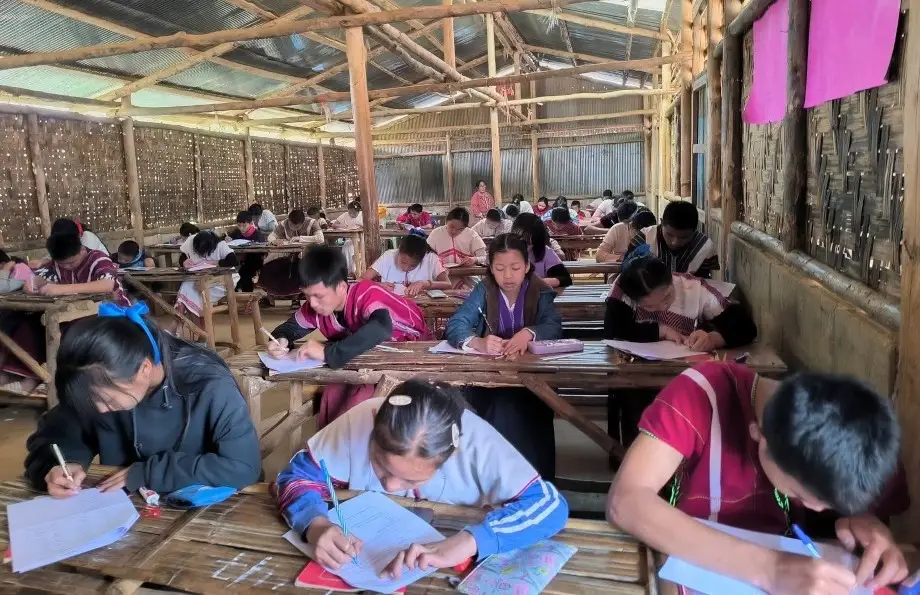
Students will use temporary classrooms and other learning spaces while permanent buildings are repaired or rebuilt. Education teams and local authorities are identifying safe plots close to communities, arranging furniture and teaching materials, and preparing schedules that follow the regular timetable as closely as possible.
The ministry wants to prevent children from losing a term while waiting for construction. Where instability continues, classes will move to safer towns or districts. Transport, safe routes and communication with parents are part of that planning.
Officials say priority will go to students in their final year who face examinations, children with disabilities who need accessible facilities, and younger pupils who need shorter journeys. School administrators are being asked to maintain accurate enrollment records so that every displaced learner is assigned a place in the temporary or alternative system.
Teachers must also locate students scattered among evacuation centers, host communities and villages where families have begun returning. Reliable enrollment lists will help schools organize classes as those movements continue.
Why explosive clearance must come first
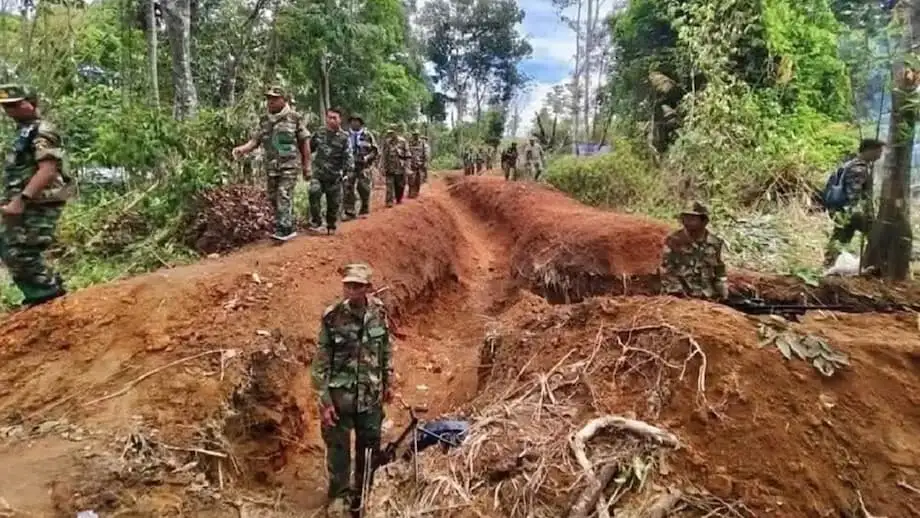
The Cambodian Mine Action and Victim Assistance Authority has called for coordinated clearance at schools, health centers, pagodas, homes and farm fields along the frontier. Families returning home and workers preparing repairs face hazards beyond damaged walls and roofs.
Clearance teams first survey suspected areas and mark dangerous locations. Trained deminers then remove or destroy explosive items, including artillery shells, rockets and anti personnel mines. Unexploded ordnance means ammunition that has been fired or dropped but has not exploded. These objects, and even small fragments, can threaten children walking to school or playing in nearby fields.
The education ministry will align construction schedules with clearance timetables. Repair crews are not to enter a site until mine action teams give clear approval. School grounds and their approaches must be checked so that a repaired classroom can also be reached safely.
Border communities have raised concerns about explosive remnants from the recent fighting. Rights monitors condemned the use of cluster munitions in populated areas. Cambodian officials accused Thai forces of using banned weapons, which Thai officials rejected. Thai authorities accused Cambodia of laying new landmines inside Thai territory.
Independent verification near active conflict zones is limited. Surveying and clearing the affected areas is therefore central to decisions about reopening schools and allowing families to return.
A delayed survey adds to the workload
A comprehensive border survey launched in late 2024 was initially due to finish by the middle of 2025. Fighting has delayed that work, adding pressure as education officials prepare for November.
Mine action leaders have asked development partners, including the United Nations Development Programme, to expand support for impact assessments, clearance and victim assistance. Impact assessments help identify where explosive hazards are affecting communities and where clearance is needed.
Education planners are coordinating with that appeal so construction can begin when a campus is declared safe. The work must cover access as well as the building itself, because students, teachers and construction crews all need safe routes into the site.
School disruption extends into Thailand
Thailand temporarily closed 751 schools in eastern and northeastern provinces near the border, including Ubon Ratchathani, Sisaket, Buri Ram, Surin, Sa Kaeo and Chanthaburi. Cambodia's 605 closures and Thailand's 751 amount to 1,356 schools affected by closure measures across the two countries.
Thailand's Public Works Department inspected damaged buildings in seven provinces and established damage assessment centers. Hundreds of houses were reported hit, alongside government facilities that included schools and hospitals.
The U.S. Embassy in Thailand issued a broad travel warning during the escalation and described emergency measures taken by Thai authorities. In its public advisory, the embassy warned U.S. citizens about travel near the frontier:
The U.S. citizens are advised to avoid all travel to the area within 50 kilometers of the Thailand Cambodia border due to ongoing military conflict in the region.
Inside Cambodia, the disruption extended beyond classrooms. Dozens of health facilities closed, while mass evacuations placed pressure on the services still operating. Reopening schools therefore depends partly on restoring the basic services that children and teachers need around them.
From border fighting to a fragile ceasefire
Cambodia and Thailand agreed to halt fighting after the July 28 meeting in Malaysia. The pause followed weeks of clashes that killed civilians and soldiers and drove more than one hundred thousand people from their homes.
Families left border villages for shelters in schools, pagodas and open fields. Air power and rocket artillery were used near disputed temple areas, cultural sites sustained damage, and both countries accused the other of starting the fighting.
U.S. President Donald Trump described his outreach to the two leaders in a public social media post. Explaining the goal of those contacts, he wrote:
Both Parties are looking for an immediate Ceasefire and Peace
U.S. pressure helped bring the talks forward, while mediation by the Association of Southeast Asian Nations, or ASEAN, led by Malaysia, remains central to subsequent steps. Cambodian authorities also said that a number of soldiers captured during the fighting remained in custody across the border, leaving another source of tension near communities preparing to reopen schools.
The dates shaping school reopening
The education effort follows a sequence of survey delays, fighting and displacement. The immediate target is the start of the school year in early November, with safe alternative locations planned where construction cannot begin in time.
- Late 2024: A comprehensive border survey began, with completion initially expected by the middle of 2025.
- Late July 2025: Fighting escalated after months of tension over stretches of frontier that had not been formally marked.
- July 28, 2025: A ceasefire took effect following talks hosted in Malaysia.
- By the middle of August 2025: World Health Organization partners reported that internal displacement in Cambodia had fallen from its peaks as families began returning.
- September 7, 2025: Education officials were preparing inspections, designs, budgets, temporary classrooms and coordination with clearance teams.
- Early November 2025: The 2025 to 2026 academic year is due to begin.
The ceasefire has created space for education planning, but access can change quickly in border districts that have experienced periodic flare ups for years. Reports of sporadic incidents and shelling have continued to affect confidence in returning.
Returning families still face difficult conditions
World Health Organization partners reported that fewer people remained internally displaced in Cambodia by the middle of August, as families began going home. Many others were still living in crowded shelters with limited water, sanitation and access to health services.
Children in temporary sites have little privacy, irregular access to clean water and few places to study. Teachers are dealing with their own losses while checking on students living in different locations. These pressures can lead to absenteeism, anxiety and lost learning.
Families need predictable timetables, safe journeys and a return to daily routines. The ministry's approach links classroom reopening with transport, health services and social support, alongside the physical repairs.
Temporary classrooms will need reliable water and sanitation, shade to manage heat, and secure storage for learning materials. Repaired schools must include accessible toilets, basic handwashing points and fencing to keep children away from nearby clearance zones.
Education officers are coordinating with local health departments to monitor student welfare. Teachers running combined classes or split shifts while buildings are completed will also need support.
Budgets, construction and the November deadline
Officials are drafting budgets based on conditions at each site, the standard designs and the extent of repairs. Funding is expected to involve government resources and development partners, while mine action would draw on existing clearance programs and new appeals.
The total cost and a reopening date for each school have not been given. Budgets still require policy approval, and the November target depends on calm along the frontier, access for inspection and clearance, and the availability of construction materials and contractors.
The Cambodian Mine Action and Victim Assistance Authority has requested more international support to complete impact assessments and send clearance teams more widely across the border area. Education planners are matching their work to those clearance needs so that construction can begin once approval is given.
Where fieldwork cannot start in time, the ministry plans to run the first term from safe sites away from the border. The aim is to give every learner a classroom place even while their usual school remains under repair.
What could slow the return to class
Unexploded ordnance and renewed insecurity are the most immediate risks to site access. Seasonal rains, damaged infrastructure and the movement of teachers and families could also delay work or make attendance harder.
- Explosive hazards can keep construction crews out until surveys and clearance are complete.
- Fresh incidents along the frontier could restrict movement or trigger further evacuations.
- Rain and poor roads can delay deliveries of cement, roofing and classroom furniture.
- Damage to electricity and water networks can require generators or water delivered by truck, adding costs.
- Teacher shortages can develop when staff remain displaced or work split shifts across temporary sites.
- Children in remote communities may face longer journeys to alternative schools, affecting attendance and safety.
Officials intend temporary classrooms and alternative locations to keep lessons going while engineering and clearance teams complete their work. Those arrangements also require supplies, staff and safe access to function consistently.
Preparing families and teachers for reopening
Provincial education departments will be important sources of information about temporary classrooms and alternative schools. Families and staff can help local planning by checking announcements and confirming where each child is enrolled.
Safe routes matter as much as the destination. Families should avoid marked or suspected hazardous areas around former fighting zones, while school committees can help arrange shared transport or walking groups for younger children.
Regular attendance and basic study routines at home can help children keep learning as schedules stabilize. Parents and teachers should also watch for signs of stress and ask local health workers about available support.
For border communities, reopening will mean bringing together several practical pieces: a safe building or temporary space, a teacher, learning materials, water and sanitation, and a route children can use without entering hazardous areas. The ministry's plan seeks to restore those conditions while permanent repairs continue.
What to Know
- Fighting closed 605 Cambodian schools, disrupting about 150,000 students and more than 6,000 teachers.
- Hang Chuon Naron has directed inspections, repair planning and preparation of temporary classrooms, including work in Oddar Meanchey and Preah Vihear.
- Mine action teams must approve sites before construction crews enter.
- Standard classroom and library designs, budgets and policy approvals are being prepared for the 2025 to 2026 school year, beginning in early November.
- Classes will move to safe alternative locations where border conditions prevent construction or reopening.
- Thailand temporarily closed 751 schools, bringing the combined number of closures across both countries to 1,356.
- The July 28 ceasefire followed talks in Malaysia, but security tensions, explosive hazards and displacement continue to affect reopening plans.
- Families and teachers are being encouraged to follow local education notices, confirm enrollment and plan safe routes to class.