Hanoi pairs its political pledge with practical support
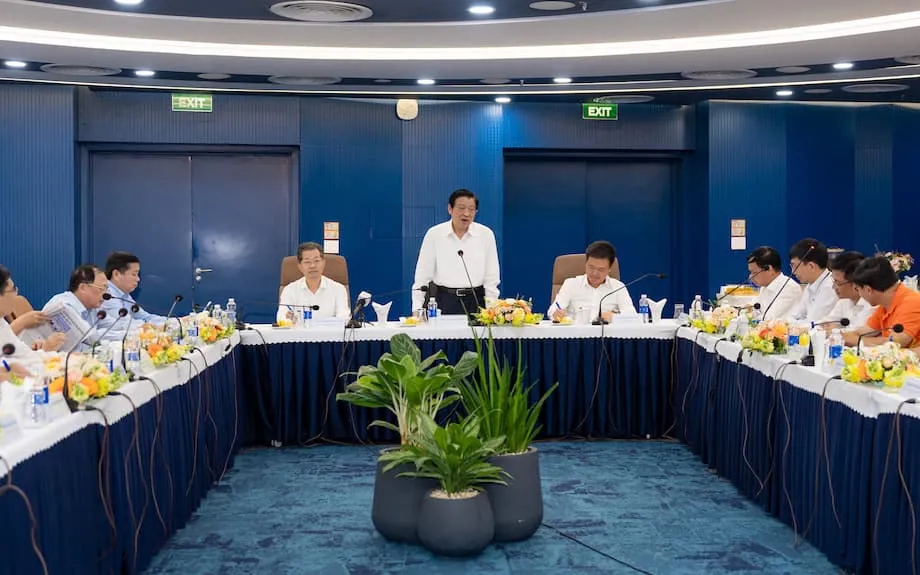
Vietnam has reaffirmed its support for an independent Palestinian state alongside Israel during talks in Hanoi between Phan Dinh Trac, a Politburo member, Secretary of the Communist Party of Vietnam Central Committee and head of its Commission for Internal Affairs, and Azzam Najib Mustafa Al-Ahmad, Secretary General of the Palestine Liberation Organization (PLO). The meeting brought together a longstanding political commitment, concern over the war in Gaza, and plans for closer cooperation.
Contents
- Hanoi pairs its political pledge with practical support
- What the Vietnamese and Palestinian leaders discussed
- What Vietnam means by a two state solution
- The $350,000 aid pledge and development plans
- Palestinian recognition and relief at the United Nations
- A friendship that began in 1968
- Earlier Gaza crises and enduring public connections
- How Hanoi balances solidarity and ties with Israel
- What the East Asian effort means for Palestinians
- What to Know
Trac said the Vietnamese Party, State and people valued their friendship with Palestine, a relationship formed during difficult years and sustained across generations. Both sides agreed that the bond should be preserved, strengthened and passed to the next generation. Their talks followed a reception for the Palestinian delegation hosted by Communist Party General Secretary To Lam.
Vietnam's position combines support for Palestinian rights with a call for a negotiated peace that provides security for Palestinians and Israelis alike. Trac reaffirmed support for the Palestinian people's just cause and a two state solution grounded in international law and United Nations resolutions. He expressed concern about the continuing war in Gaza and its severe humanitarian toll, urging all involved to reach a ceasefire and work toward a lasting resolution.
The message also sits alongside Vietnam's domestic ambitions: building a modern industrial economy, reaching upper middle income status by 2030 and high income status by 2045. Hanoi linked its development goals with a commitment to an international order governed by rules and a just peace for both peoples. Its practical commitments include humanitarian assistance, training and the sharing of experience in public administration.
What the Vietnamese and Palestinian leaders discussed
Trac called for a State of Palestine living in peace and security alongside Israel, protection for civilians and urgent humanitarian access in Gaza. Humanitarian access means allowing relief workers and essential supplies to reach people who need them. In Gaza, Vietnam's statements have connected that demand with the wider need to end fighting and find a sustainable political settlement.
The two sides also discussed closer coordination in international forums and stronger relations between the Communist Party of Vietnam and the PLO. Their proposals included more delegation exchanges and cooperation between people and institutions. They agreed to pursue concrete projects that fit Palestinian needs and Vietnam's capabilities, including training and the sharing of governance experience.
Al-Ahmad thanked Vietnam for what he described as a faithful friendship extending from wartime solidarity to present diplomatic support. He presented To Lam's reception as an expression of trust and enduring kinship between the two peoples. Explaining what the reception meant to the Palestinian delegation, the PLO Secretary General said:
A reception like this conveys a deep sense of trust, loyalty, and the enduring relationship between Vietnam and the peoples of the world
Al-Ahmad also expressed gratitude for Vietnam's consistent support in international forums. The visit concluded with commitments to expand contacts and turn those ties into practical cooperation across education, health and governance. No timetable for those projects was given.
What Vietnam means by a two state solution
Vietnam supports an independent, sovereign State of Palestine existing beside the State of Israel. Sovereignty means that a state governs itself. The two state approach seeks to give both peoples a country of their own, with arrangements that allow them to live in peace and security.
Hanoi's position aligns with United Nations resolutions and the principle of self determination, the right of a people to decide their political future. It calls for geographic arrangements based on the 1967 borders, East Jerusalem as the Palestinian capital, and security guarantees for both peoples. Borders, refugees and Jerusalem are among the final status issues that would need a negotiated settlement.
Vietnam has paired those political goals with immediate demands: an enduring ceasefire, the release of hostages, compliance with international humanitarian law and unobstructed aid delivery. International humanitarian law sets rules for conduct during war, including the protection of civilians. Vietnam has also urged compliance with provisional measures ordered by the International Court of Justice and with relevant UN resolutions.
At an emergency special session on the Palestinian question, Vietnam's Permanent Representative to the United Nations, Ambassador Dang Hoang Giang, argued that equal footing at the UN would create better conditions for negotiations and a just peace. Setting out Vietnam's position on Palestinian membership, he said:
Vietnam stands with Palestine in exercising its inalienable right to self determination and supports its early admission as a full UN member
Giang added that full membership would strengthen the prospects for a two state solution and lasting peace in the Middle East. His remarks condemned violence against civilians, called for restraint by all parties and stressed the central role of the United Nations Relief and Works Agency (UNRWA) in emergency assistance for Palestinian refugees.
The $350,000 aid pledge and development plans
Deputy Prime Minister and Foreign Minister Bui Thanh Son announced an additional $350,000 in humanitarian assistance for Palestinians at the fourth Conference on Cooperation among East Asian Countries for Palestinian Development (CEAPAD) in Kuala Lumpur on July 11. The money is to be delivered through relevant international organizations and is intended for immediate relief and recovery after conflict.
Japan launched CEAPAD in 2013. The forum brings together East Asian partners from ASEAN, South Korea and Japan to coordinate training, the strengthening of institutions and economic support for Palestine. Its development work concerns the skills and public services that Palestinians need alongside emergency assistance.
Delegates in Kuala Lumpur expressed deep concern about the Gaza crisis, urged a ceasefire and adopted the CEAPAD IV Action Program to align projects with Palestinian priorities. Vietnam said it would continue sharing development experience in public administration, agriculture and vocational training, while working with partners to mobilize resources for reconstruction.
Son restated the political position guiding those programs. Speaking at CEAPAD IV, the Deputy Prime Minister and Foreign Minister said:
Vietnam supports the creation of an independent and sovereign Palestinian state with East Jerusalem as its capital, based on relevant UN resolutions and agreements
Vietnam has also pressed for humanitarian access through multilateral events. Official speeches and notes sent to the UN during the International Day of Solidarity with the Palestinian People in late November 2024 included calls for humanitarian corridors, coordination to keep aid convoys away from military operations, and respect for medical neutrality. Medical neutrality means protecting medical workers, facilities and their ability to care for people during conflict.
Palestinian recognition and relief at the United Nations
Vietnam supported and co sponsored the UN General Assembly move in May 2024 to expand Palestine's rights as an observer. The vote followed the blocking in the Security Council of a draft to admit Palestine as a full UN member. Hanoi urged the Council to consider full membership favorably.
The General Assembly measure expanded Palestine's ability to participate at the UN while its status remained that of an observer. Vietnam's argument was that a path through UN rules could support direct negotiations and create better conditions for reducing tensions. Giang's call for admission placed Palestinian participation in international diplomacy alongside the pursuit of a two state settlement.
State President Luong Cuong marked the International Day of Solidarity with the Palestinian People in November 2024 by sending messages to UN Secretary General, the President of the General Assembly, the head of the UN Committee on the Exercise of the Inalienable Rights of the Palestinian People, and Palestinian President Mahmoud Abbas.
Cuong's letters reiterated solidarity, lamented the immense suffering in Gaza and expressed willingness to help with mediation and aid. In those messages, the Vietnamese President wrote:
Vietnam reaffirms strong support for and solidarity with the Palestinian people in their just struggle for independence and freedom
Vietnamese diplomats have also called for UNRWA's ability to operate to be protected. The agency is the main provider of education, health care and relief for millions of Palestinians. Its work is central to maintaining daily life in Gaza and the West Bank during crises, connecting the diplomatic debate with the immediate needs of families.
A friendship that began in 1968
Vietnam and the PLO established relations in 1968, when North Vietnam was still at war. Their relationship developed through diplomatic recognition, visits by Palestinian leaders and shared memories of struggles for national liberation. The PLO opened a mission in Hanoi in 1976, and that mission became an embassy in 1982.
Vietnam recognized the State of Palestine on November 19, 1988, shortly after the Palestinian Declaration of Independence. Yasser Arafat visited Vietnam many times, making his last visit in 2001. Palestinian leaders viewed Vietnam's experience of national liberation as a source of strength for their own cause.
The main milestones trace how wartime solidarity became an established diplomatic relationship:
- 1968: Vietnam and the PLO established relations.
- 1976: The PLO opened a mission in Hanoi.
- 1979: During Vietnam's conflict with China, the PLO supported Hanoi and condemned Beijing's actions.
- 1982: The PLO mission in Hanoi became an embassy.
- November 19, 1988: Vietnam recognized the State of Palestine.
- 2001: Arafat made his last visit to Vietnam.
- May 2024: Vietnam supported the General Assembly measure expanding Palestine's observer rights.
- November 2024: President Luong Cuong sent messages marking the International Day of Solidarity with the Palestinian People.
- July 11: Bui Thanh Son announced an additional $350,000 in humanitarian assistance at CEAPAD IV in Kuala Lumpur.
Support also flowed from the Palestinian side during Vietnam's own regional crisis. The PLO's backing for Hanoi in 1979 forms part of the history behind the Vietnamese leadership's description of a friendship sustained through difficult years.
Earlier Gaza crises and enduring public connections
Vietnam condemned attacks on civilians during the Gaza war of 2008 to 2009 and again in 2014. It called for restraint, an end to military operations and a return to negotiations. Those positions followed the same broad principles repeated in Hanoi: respect international law, protect civilians and seek talks leading to a viable two state arrangement.
A planned visit to Vietnam by Israel's president did not go ahead after the deadly raid on the Gaza flotilla in 2010. Together with Vietnam's statements during earlier Gaza wars, the episode forms part of the history of its response to the conflict.
Cultural exchanges, student delegations and friendships between people have continued alongside official relations. They have kept Palestine visible in Vietnam even as both countries pursued their own development goals. The shared memory of struggles against colonial rule, from Dien Bien Phu to Palestine's search for statehood, continues to shape how many Vietnamese view the conflict.
The Gaza war has revived sympathy for Palestinians, particularly among younger Vietnamese who connect images from Gaza with accounts of air raids on Hanoi in the 1970s. Activists and artists have organized modest events, discussions and translations of Palestinian poetry. These efforts operate within rules limiting large public gatherings, while adding a personal and cultural dimension to diplomatic relations.
How Hanoi balances solidarity and ties with Israel
Vietnam's leaders describe their approach to foreign policy as bamboo diplomacy. The image is of bamboo bending with the wind while remaining firmly rooted. In practice, it describes flexibility in relations with other countries while retaining core principles.
Vietnam maintains longstanding solidarity with Palestine in international forums while developing economic and technological relations with Israel, including trade and defense items. Its approach allows productive relationships with partners that are at odds with one another. Vietnamese officials have generally avoided directly accusatory public language toward Israel while voting and issuing letters in support of Palestinian rights.
Hanoi's practical response has been to base its statements on international law, support UN processes, provide humanitarian assistance and offer help with reconstruction and the strengthening of institutions when fighting ends. Those choices connect its political principles with its wish to preserve economic ties and security cooperation across a wide range of states.
For Palestinians, Vietnam's approach offers diplomatic backing and contributions within its means. For Hanoi, it keeps the pursuit of a negotiated settlement alongside relationships with Israel and other partners. The combination is cautious and calibrated, with civilian protection and a two state settlement remaining central to its public position.
What the East Asian effort means for Palestinians
Vietnam's engagement forms part of a wider East Asian effort through CEAPAD and related initiatives. The forum focuses on development, training and the strengthening of institutions, areas in which Vietnam considers its experience relevant. Its proposed contributions draw on work in poverty reduction, public administration, agriculture and vocational training.
Emergency relief and development programs address different needs. Humanitarian assistance is aimed at people suffering now, while training and stronger institutions support the public services and livelihoods needed for recovery. Vietnam's aim is to help create conditions in which a political agreement can take root, alongside efforts to mobilize reconstruction resources.
Vietnam also speaks from the experience of a former colony that rebuilt after long wars. Its support for a negotiated two state settlement aligns with many ASEAN members and with broader UN calls for a ceasefire, civilian protection and accountability for breaches of humanitarian law. That position gives its diplomacy a place in discussions among countries of the Global South.
Engagement through regional and international forums can help connect Arab states, Western partners and Asian countries prepared to contribute aid, training and investment once a political process advances. Vietnam has signaled that it will contribute within its means to relief delivery, recovery planning and the diplomacy needed to turn commitments into agreements.
The message remains consistent across the Hanoi talks, UN statements and CEAPAD programs: violence against civilians must stop, hostages must be released, international law must be respected, and a credible political process must address borders, security and refugees. Vietnam's renewed pledge brings those demands together with practical assistance and a friendship dating back to 1968.
What to Know
- Phan Dinh Trac and PLO Secretary General Azzam Najib Mustafa Al-Ahmad met in Hanoi after a reception hosted by Party General Secretary To Lam.
- Vietnam supports a Palestinian state alongside Israel, with arrangements based on the 1967 borders and East Jerusalem as the Palestinian capital.
- Hanoi calls for a lasting ceasefire, civilian protection, hostage release and unobstructed humanitarian assistance.
- Vietnam supported and co sponsored the May 2024 UN General Assembly move expanding Palestine's observer rights and backs full UN membership.
- Bui Thanh Son announced an additional $350,000 in humanitarian aid at CEAPAD IV in Kuala Lumpur on July 11.
- Cooperation plans cover education, health, governance, public administration, agriculture and vocational training.
- Vietnam and the PLO established relations in 1968. Vietnam recognized the State of Palestine on November 19, 1988.
- Vietnam maintains solidarity with Palestine while developing economic, technological, trade and defense ties with Israel.