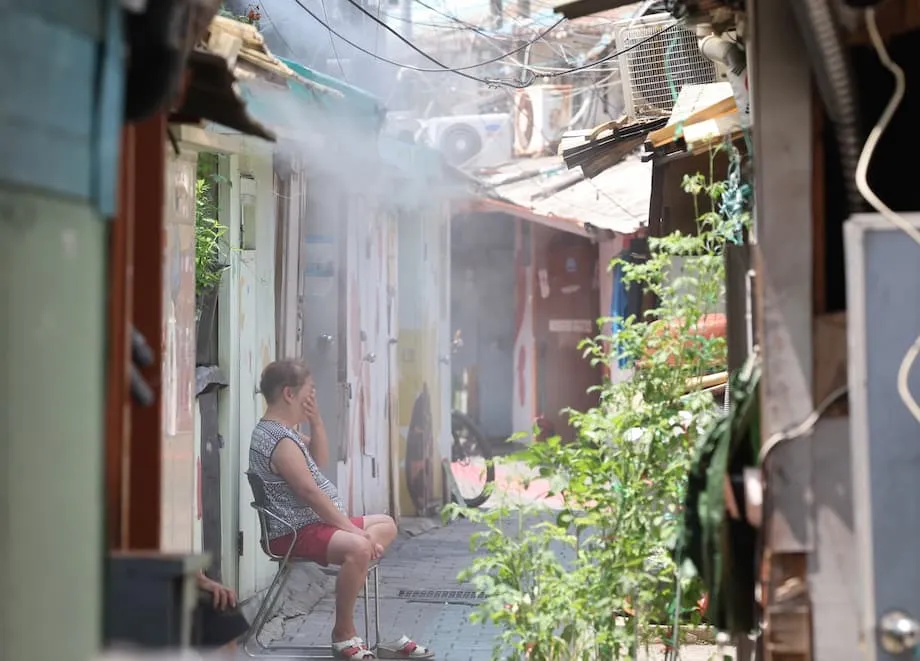
More homes for one in a shrinking population
South Korea had about 10.1 million households consisting of one person in 2024, up from about 9 million in 2020. For the first time, more than 10 million people were living alone, and these households accounted for over 42 percent of all households. The milestone is changing demand for housing, patterns of spending and the support people need when family members do not share their home.
Contents
- More homes for one in a shrinking population
- Older residents and younger adults drive the change
- Seoul shows how quickly households have changed
- Property investors turn toward homes for one
- Different shopping habits, weaker consumption growth
- Living alone brings freedom and risks of isolation
- Smaller households increase energy use per person
- An East Asian shift with different pressures
- Government and community responses extend beyond housing
- Adapting to a society with more people living alone
- Key Points
The Ministry of Interior and Safety put the registered population at 51.2 million at the end of 2024, down from 51.8 million in 2020. Population decline has slowed, yet the number of households occupied by one person has continued to grow. South Korea is therefore facing two changes at once: fewer people and more people maintaining separate homes.
Between 2020 and 2024, the registered population fell by about 600,000, while the number of people living alone rose by about 1.1 million. Those changes help explain why a shrinking population can still create demand for additional homes, particularly smaller rental properties.
Single-person households are now the largest household category, ahead of households with two, three or four people. Men account for 50.1 percent of people living alone and women for 49.9 percent, making the national split almost even.
Older people living without a spouse, younger adults seeking independence, expensive housing and delayed family formation all contribute to the change. Its consequences reach beyond the front door: businesses must respond to different customers, cities must address isolation, and energy policy must account for appliances and heating being shared by fewer people.
Older residents and younger adults drive the change
South Korea is among the world's fastest aging societies. Out of 5.65 million households with members aged 65 or above, 2.13 million seniors live alone. The number of seniors living alone rose by 37.8 percent from a year earlier.
The death of a spouse can leave an older person managing a home alone. Children moving to urban centers can also leave parents without relatives nearby. For these residents, everyday needs such as companionship and help with household tasks become part of the wider discussion about social support.
People in their 20s and 30s account for 3.2 million of the country's roughly 10 million single-person households. Moving out of the parental home was traditionally closely associated with marriage. Many younger Koreans now regard a home of their own as a step toward independence, while delaying marriage or choosing not to marry.
High housing costs, uncertainty about employment and rising living expenses make starting a family difficult. Some younger adults choose to live alone while concentrating on careers or personal growth. The same household arrangement can therefore reflect personal preference, financial pressure or a major change in family circumstances.
Fewer marriages and fewer children also contribute to smaller households as the population ages. South Korea's fertility rate remains among the lowest in the world despite a slight uptick in 2023. Fertility rate means the average number of children a woman would have under the birth patterns measured for that period.
Seoul shows how quickly households have changed
Nearly half of South Korea's single-person households are concentrated in the Seoul metropolitan area. The capital region attracts young professionals and retirees, making housing for people living alone a central issue for its communities and property market.
Seoul's share of households occupied by one person rose from 29.5 percent in 2015 to 39.3 percent in 2023. That is an increase of 9.8 percentage points in eight years, showing how quickly the city's household mix has shifted.
Nationally, the proportion rose from just 7 percent in 1985 to 24 percent in 2010, before reaching over 42 percent. The milestones illustrate a change extending across several decades:
- 1985: People living alone accounted for 7 percent of households nationally.
- 2010: Their share had reached 24 percent.
- 2015: Seoul recorded a share of 29.5 percent.
- 2020: South Korea had about 9 million single-person households and a registered population of 51.8 million.
- 2023: Seoul's share reached 39.3 percent.
- 2024: The national total reached about 10.1 million, while the registered population stood at 51.2 million at year end.
Smaller households are becoming more common worldwide as fertility falls and family structures change. South Korea's pace is particularly striking in a society where family ties and living across generations have long been valued.
Property investors turn toward homes for one
Demand for smaller apartments, rental units and officetels is soaring. Officetels are buildings combining residential and office uses. These forms of housing are drawing attention as more residents seek accommodation suited to living alone.
The Living Company and Greystar Real Estate Partners have launched major investments in South Korea, betting on sustained demand for compact rental homes managed professionally and equipped with amenities aimed at singles.
The shift is encouraging a move from building properties to sell toward building properties to rent. Under the first model, a developer constructs homes and sells them to buyers. Under the second, the homes remain rental properties, with an operator responsible for managing them and collecting rent.
Building specifically for rental use is common in the United States and Europe but remains new in South Korea. Foreign investment, including a joint venture between the Canada Pension Plan Investment Board and a Korean developer, signals confidence in the sector's growth potential.
Strict tenancy rules, including rent caps, may limit operators' flexibility and returns. Investors must weigh the demand for smaller homes against restrictions on the rental income those properties can generate.
Different shopping habits, weaker consumption growth
People living alone tend to direct their spending toward convenience foods, dining out, leisure and personal care. A home with one resident has different purchasing needs from a household raising children or sharing expenses across several adults.
The Bank of Korea estimates that population aging and the rise in solo living are reducing annual consumption growth by about 1 percent. Consumption growth measures how quickly spending increases, so a reduction means purchases are growing more slowly.
Older adults make up a growing share of households occupied by one person. They tend to save more and spend less, especially while preparing for retirement. Younger Koreans are spending less on major items such as education and home furnishings as marriage and childbearing are delayed.
The Korea Chamber of Commerce and Industry warns that South Korea could face a prolonged consumption slump unless consumer confidence recovers, regardless of income growth or demographic policy. Confidence matters because people who feel uncertain about their finances may postpone purchases even when their income rises.
Businesses face a mixed picture. More homes occupied by one person create customers for convenient products and smaller rental properties, while an aging population and delayed family formation can weaken spending in other parts of the economy.
Living alone brings freedom and risks of isolation
A 2022 survey found that 62 percent of single-person households in South Korea experienced loneliness. In 2023, more than 3,600 cases of so-called "lonely deaths," involving people dying alone and unnoticed, were recorded.
Living independently can offer personal freedom and control over daily routines. It can also bring loneliness, depression and social isolation. Older residents are particularly vulnerable, while younger adults can face isolation compounded by high living costs and uncertain employment.
Dr. Kim Eun-jung, a sociologist at Seoul National University, described the rise in solo living as a change in people's expectations of family and work, with consequences for public support:
The rise in single-person households is not just a matter of numbers. It reflects deep changes in how Koreans view family, work, and personal fulfillment. But as more people live alone, we must rethink our social safety nets and community support systems.
Seoul's city government has launched the "Loneliness-Free Seoul" initiative, a plan covering five years that includes activities to build community connections, mental health support and financial aid for isolated youths.
Experts warn that mental health challenges associated with living alone are likely to deepen as the trend continues. Without stronger support networks, more residents may struggle to find companionship or assistance when their circumstances become difficult.
Smaller households increase energy use per person
A recent study found that rapid growth in households with one or two people accounted for about 81 percent of the increase in greenhouse gas emissions from South Korean residential buildings between 2015 and 2023.
Smaller households tend to use more energy per person because heating and appliances are shared by fewer residents. A refrigerator or a heated room serves one person in a home occupied by a single resident, while the same equipment can serve several people in a larger household.
Technological advances have offset some of the effect, but the growth of smaller households poses challenges for South Korea's carbon neutrality goals. Carbon neutrality means balancing greenhouse gases released into the atmosphere with amounts removed or otherwise offset.
Policymakers are considering energy conservation and carbon reduction measures tailored to the changing household structure. Options include incentives for appliances that use less energy, shared facilities in apartment complexes, and urban planning that encourages community living while protecting privacy.
Housing policy and climate policy therefore meet at a practical point: how to provide homes suited to people living alone while limiting the energy each resident needs.
An East Asian shift with different pressures
Japan, Taiwan and China also face aging populations, low fertility and shrinking household sizes. South Korea is part of that broader East Asian pattern, although its pace of change is among the fastest.
Household sizes remain very different around the world. Denmark has an average of 1.8 people per household, compared with 8.4 in Senegal. Those figures illustrate the wide range of living arrangements even as many countries move toward smaller households.
South Korea's experience combines rapid aging with persistent gender and economic inequalities. Financial circumstances and expectations surrounding marriage can affect who is able to establish a family, as well as who decides to live independently.
Experts participating in a recent Asia Society Policy Institute roundtable described the barriers facing people considering marriage and children:
Population decline and low fertility rates are not due to unwillingness to marry, but to significant challenges in committing to marriage and starting a family. Lower-income men and highly educated women are most affected, leading to more single-person households.
Their assessment places the difficulty of committing to family life at the center of the discussion. Housing costs, employment uncertainty and gender inequalities connect the rise in solo living to the conditions under which people make personal decisions.
Government and community responses extend beyond housing
South Korea's government is responding with financial incentives, regulatory reforms and social programs. President Yoon Suk Yeol has proposed a ministry dedicated to demographic issues, with attention to workplace and cultural attitudes as well as financial support and childcare.
Expanded parental leave for men, tax support for companies that support families, and efforts to improve the balance between work and personal life are on the agenda. These measures seek to address some of the pressures associated with starting and raising a family.
Experts argue that support must also reach people whose households consist of one person. Mental health services and community programs tailored to both younger and older residents are part of that response.
Addressing gender inequality, supporting multicultural families and integrating foreign workers are also receiving recognition as ways to help stabilize the population. These concerns extend the debate beyond cash payments and childcare alone.
The Catholic Church and other community organizations are providing social support, organizing events for large families and offering programs to help people living alone develop relationships and a sense of community.
Adapting to a society with more people living alone
High housing costs and job insecurity continue to deter younger people from starting families. The rare increase in fertility in 2023 still leaves the rate far below the level needed to sustain the population over the long term.
Some experts suggest adapting to population decline rather than trying to reverse it. Their proposals include investing in young professionals, encouraging seniors to remain active in the workforce and embracing immigration to maintain economic vitality.
South Korea must also respond to people already living alone. Compact housing, mental health services, community connections and energy conservation address different parts of their daily lives. Policies aimed at increasing births sit alongside the need to support a household structure that has already become the country's most common.
The shift brings independence for many residents and vulnerability for others. Its practical consequences are visible in rental investment, slower consumption growth, the demand for social support and the energy needed to operate millions of separate homes.
Key Points
- South Korea had about 10.1 million single-person households in 2024, accounting for over 42 percent of all households.
- The registered population fell from 51.8 million in 2020 to 51.2 million at the end of 2024.
- People in their 20s and 30s account for 3.2 million single-person households, while 2.13 million seniors live alone.
- Smaller rental homes are attracting investment from The Living Company, Greystar Real Estate Partners and a Canada Pension Plan Investment Board joint venture.
- The Bank of Korea estimates that aging and solo living reduce annual consumption growth by about 1 percent.
- A 2022 survey found loneliness in 62 percent of single-person households; more than 3,600 lonely deaths were recorded in 2023.
- Growth in households with one or two people accounted for about 81 percent of the increase in residential greenhouse gas emissions between 2015 and 2023.
- Responses include Seoul's loneliness initiative, family support measures, community programs and proposals to adapt to population decline.