A Personal Pursuit With a Public Impact
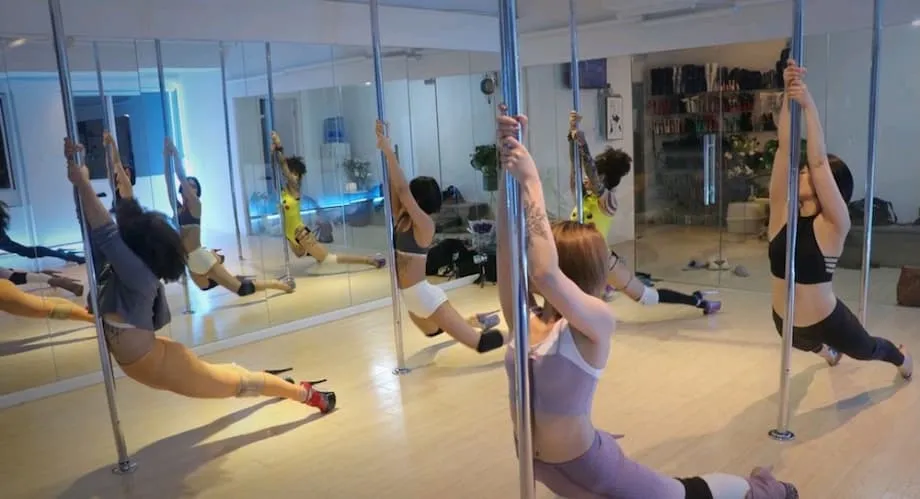
At S-pole in Shanghai, women come to class with different ambitions: to get stronger, relieve the pressure of work and family life, explore their creativity or feel more comfortable in their bodies. Some prepare for competitions. Most are pursuing something more personal than a place on a stage.
Contents
- A Personal Pursuit With a Public Impact
- How an Imported Fitness Trend Found Local Roots
- Inside the Studio, Different Reasons to Keep Dancing
- Strength Can Change Ideas About Beauty
- Turning Movement Into Mental Health Advocacy
- From Studio Practice to Shanghai's Nightlife
- Growing Acceptance Still Has Limits
- Different Settings Bring Different Reactions
- Art, Sport and a Choice About Identity
- Key Points
Tutu, a student and assistant manager at the school, describes pole dancing as a way to discover herself, develop confidence and build self-love. Lena, who has a background in martial arts, says it has helped her explore her feminine side while giving her a reason to stay active. Their experiences show how an activity often surrounded by assumptions can become part of an ordinary routine of exercise, friendship and personal growth.
Across Shanghai, university students, young professionals, mothers and entrepreneurs are taking up the discipline. Studios offer places to learn demanding movements, but they also bring together people who are reconsidering expectations about how women should look, behave and express themselves.
Shanghai's reputation for modernization and cultural experimentation provides a setting for that change. Pole dancing has moved from a niche fitness interest toward a more familiar form of exercise and artistic expression. Its growing acceptance reaches beyond studios into nightlife venues, online communities and conversations among friends and families.
Acceptance is still uneven. Dancers encounter social stigma, criticism online and expectations about femininity. Performers and venue operators also work within rules governing public entertainment. The experience of Shanghai's dancers is therefore a story of increasing freedom in everyday life, alongside boundaries that remain part of it.
How an Imported Fitness Trend Found Local Roots
Modern pole dancing began gaining traction in major Chinese cities, including Shanghai, in the early 2000s, as fitness trends from abroad influenced urban lifestyles. Its development in China has followed a different course from the associations familiar in the United States and Europe, where pole dancing is often linked to strip clubs and adult entertainment.
In Shanghai's studios, the emphasis is commonly on athletic ability, artistry and the confidence that comes from learning something difficult. Pole dancing is rarely connected to strip clubs in this setting. Students approach it as exercise requiring strength, flexibility and resilience, as well as a means of expressing themselves through movement.
China also has a much older history of performance using poles. During the Song dynasty, male performers used them in acrobatic displays. Centuries later, the cabaret culture of Shanghai in the 1930s brought together glamorous dance acts and influences from East and West.
Today's dancers draw inspiration from that historical legacy as well as international styles. Their routines can combine traditional Chinese dance, contemporary movement and global influences, giving the discipline a local character while keeping it connected to a wider artistic world.
Olivia Bingyu Wang's experience reflects that meeting of traditions. She began with traditional Chinese dance in Canada before moving to Shanghai. Cultural perceptions initially made her hesitant about pole dancing, but she came to embrace it as a way to broaden her artistic skills and challenge social expectations.
Inside the Studio, Different Reasons to Keep Dancing
S-pole's students bring different lives and responsibilities into the same learning space. A university student may be looking for a creative outlet, while a working parent may want time away from daily pressures. The studio community accommodates those different motivations without making public performance the central goal.
Yingying and Juzi use pole dancing to relieve stress connected with work and family life. Their reasons for attending help explain why the activity's appeal extends beyond competitions or entertainment. A class can be valuable because of how someone feels while taking part and afterward, rather than because it leads to an audience.
Tutu places discovery, confidence and self-love at the center of her experience. Lena's martial arts background offers another perspective: pole dancing has allowed her to explore a different side of herself while sustaining her motivation to exercise.
Competition remains part of the scene, giving some students a goal and an opportunity to test their skills. For most participants described here, however, the main rewards are personal growth and community. Training becomes a shared activity in which individual progress matters more than outside approval.
That combination helps explain the studio's role. It is a place for physical practice, but also a setting where women with different backgrounds can support one another while working through difficult movements and changing ideas about themselves.
Strength Can Change Ideas About Beauty
Wang's training brought her into direct contact with a tension between physical strength and the cultural ideal of thinness in China. As she progressed, she recognized that building strength would change her body. Accepting a more muscular frame became part of learning the discipline.
Her experience connects the physical demands of pole dancing with body positivity, an approach that encourages people to value their bodies beyond narrow appearance standards. For Wang, learning to appreciate what her body could do also meant reconsidering how she felt about its shape.
Wang documented her progress on social media and used her platform to challenge beauty standards. The changes she described were therefore both private and public: she was adjusting her own expectations while inviting others to consider a broader idea of what strength and femininity could look like.
Other students describe confidence in different terms. Lena's exploration of femininity and Tutu's focus on self-love show that there is no single identity participants must adopt. The common thread is having room to decide what movement and physical expression mean for themselves.
For women facing strict expectations about appearance and behavior, that room can matter. Pole dancing offers a way to assert an identity through practice, creativity and the experience of becoming more capable, rather than through conformity to one preferred body type.
Turning Movement Into Mental Health Advocacy
Wang has also used pole dancing to bring attention to mental health. She choreographed pieces interpreting different mental health disorders, making movement a medium for discussing experiences that can be difficult to express in words.
Her advocacy includes concern for underserved populations. Through dance and her online presence, she seeks to challenge stigma and encourage more open conversations about mental health. Artistic expression gives her another way to approach subjects that people may find uncomfortable or hard to discuss.
Her work gives pole dancing a purpose beyond exercise or performance alone. A routine can carry a personal story or address a social issue, using the same combination of physical control and creativity that students develop in training.
For participants such as Yingying and Juzi, the mental benefit is described more directly as relief from everyday stress. Together, these experiences show the different roles dancing can play: a break from pressure for some people, and a form of public advocacy for others.
From Studio Practice to Shanghai's Nightlife
Shanghai's nightlife provides another setting for pole dancing. SYSTEM Shanghai, a club known for programming that crosses genres, includes it alongside live music, electronic acts and experimental art. Its events bring dance into a broader mix of cultural expression.
At The Pearl Bar and Cabaret, pole dancing appears in circus style shows with aerial silks, contemporary dance and fire performance. These productions attract local and international audiences, placing the discipline within Shanghai's varied entertainment scene.
The two settings reveal different possibilities for the same form. In a studio, a student may dance mainly for personal satisfaction. In a club or cabaret, a performer may build a routine around music, theatrical presentation and an audience. Athletic skill and artistic choices connect those experiences.
Shanghai's history of combining cultural influences helps explain why such performances have found space in the city. Contemporary venues continue that experimentation by bringing together forms that might otherwise be presented separately.
Public performance also brings additional responsibilities. Organizers must shape shows around the expectations of audiences and the official standards that govern entertainment, making the conditions of a professional performance different from those of a private class.
Growing Acceptance Still Has Limits
Hai Xiaohan, the founder of S-pole, sees a broader shift toward self-love and greater openness in Chinese society. Students are now more comfortable sharing their interest online and face less criticism than in the past. Support from friends and family has become more common.
Pole dancing has even helped create connections at work. An interest that someone might once have kept private can become a subject of conversation and a way to find common ground with colleagues. Such changes make acceptance tangible in daily relationships.
Online criticism and slut-shaming nevertheless persist, including criticism from other women. Participants continue to encounter judgments that connect their dancing with assumptions about sexual behavior or respectability. Most describe their motivation as dancing for themselves rather than seeking male attention.
Public venues face a different kind of pressure. The experience of Shanghai's first burlesque club illustrates how creative businesses can attract scrutiny from authorities concerned with public morality. Performers and organizers must adapt their shows to official standards while exploring the limits of artistic expression.
Social acceptance and permission to stage a public show therefore operate at different levels. A supportive family or studio community can make participation easier, while venue operators still have to navigate regulations. Both affect how openly dancers can pursue and present their work.
Different Settings Bring Different Reactions
Shanghai's growing acceptance sits alongside more contested responses elsewhere. In Taiwan, a couple's decision to hire pole dancers for their son's graduation prompted controversy, police action and public debate. The episode showed how the setting of a performance can become central to arguments about sexuality, tradition and appropriate behavior.
Generational differences are part of those arguments across Chinese-speaking societies. An activity understood by participants as art, exercise or celebration may meet different expectations from people outside that community. In mainland China, the association with fitness and artistry has helped pole dancing gain legitimacy, even as performers continue to navigate social expectations and official scrutiny.
Shanghai's voguing and LGBTQ dance communities offer a parallel experience. These communities create spaces for people to express themselves, yet often keep a low public profile to avoid unwanted attention from authorities. One voguing participant described people coming to studios to escape environments that restrict their expression.
The connection lies in the importance of the space itself. A studio can offer room to move, experiment and find support when other parts of someone's life feel restrictive. The social pressures surrounding pole dancing and other dance communities make that sense of belonging a meaningful part of participation.
Art, Sport and a Choice About Identity
Pole dancing in Shanghai occupies several roles at once. It is a demanding physical discipline, a form of artistic storytelling and, for some participants, a way to challenge expectations about gender and appearance. Its appeal comes partly from allowing those purposes to coexist.
Competitions and showcases give dancers opportunities to develop their abilities and receive recognition. Everyday classes provide a different foundation: repeated practice, personal discovery and support from other students. Both contribute to the scene, but the experiences of S-pole's students place ordinary participation at its center.
Women who take up the discipline are making concrete choices about their time, bodies and creative interests. Some want greater strength. Others want stress relief, confidence, friendship or a way to communicate an experience. Those choices connect individual changes with broader shifts toward greater acceptance of diversity and individuality.
Stigma, traditional expectations about women and regulatory scrutiny remain challenges. Venues, performers and advocates are working to create safer, more inclusive places to participate through private classes, public performances and online communities.
Shanghai's pole dancing scene shows cultural change taking shape through those daily activities. A student accepting a stronger body, a family supporting a new interest or a dancer sharing a routine online can each make an unfamiliar practice more ordinary. The community's continuing work rests on creativity, mutual respect and the freedom to pursue something personally meaningful.
Key Points
- Modern pole dancing gained traction in Shanghai and other major Chinese cities in the early 2000s, with an emphasis on fitness and artistic expression.
- S-pole students describe confidence, stress relief, self-love and community as central reasons for taking part.
- Olivia Bingyu Wang uses pole dancing to challenge narrow beauty standards and advocate for mental health awareness.
- SYSTEM Shanghai and The Pearl Bar and Cabaret include pole dancing within wider music, dance and theatrical programs.
- Family and social acceptance have grown, while online shaming, expectations about women and official scrutiny continue.
- Studio classes, competitions and performances give dancers different ways to pursue strength, creativity and personal expression.