Yichun's permit reviews put lithium supply under pressure
Eight mines flagged for permit discrepancies in July, a suspension at battery giant CATL's Jianxiawo mine on August 9, and a September 30 deadline for updated resource assessments have put Yichun, in China's Jiangxi province, at the centre of a regulatory crackdown with consequences for electric vehicles and batteries worldwide.
Contents
- Yichun's permit reviews put lithium supply under pressure
- How a lithium boom became a regulatory reckoning
- What the revised mining rules require
- Why Yichun's licences are under scrutiny
- The dates shaping the crackdown
- Prices rebound as companies face consolidation
- What anti-involution means for lithium producers
- Why battery supply chains outside China are affected
- Cleaner mining brings costs for companies and communities
- Key Points
China, the world's largest producer and processor of lithium, brought sweeping revisions to its Mineral Resources Law into force in July 2025. The changes classify lithium independently as a strategic mineral, tighten mining approvals and require operators to meet stricter environmental and safety standards. They are reshaping an industry that expanded rapidly during the battery boom, then struggled with oversupply and collapsing prices.
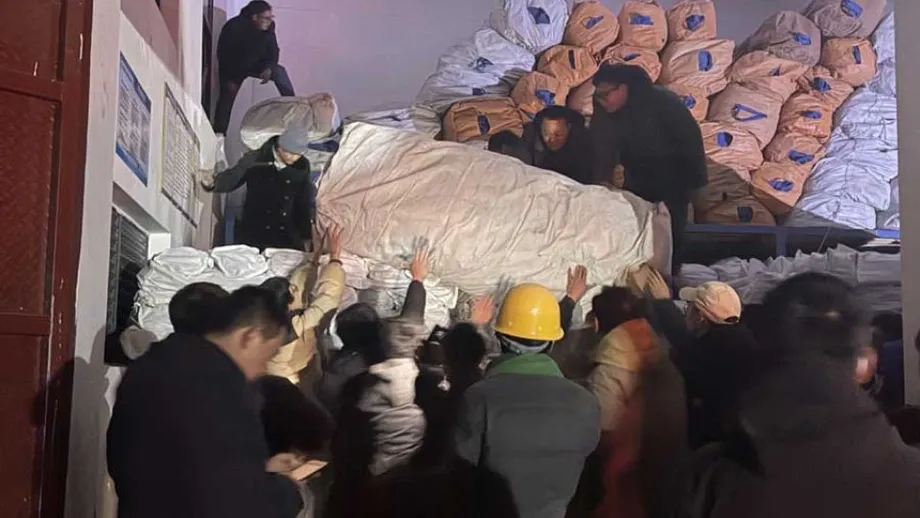
CATL, the world's largest battery manufacturer, suspended operations at Jianxiawo because its permit expired during a regional audit. The shutdown was expected to last at least three months. Other mines in Yichun face scrutiny over whether their permits accurately describe the minerals they extract, while companies in Qinghai province have also been ordered to stop operating until they obtain proper lithium extraction permits.
The immediate concern for battery makers is supply. Closing or suspending mines can reduce the lithium available to processors, helping prices recover but making purchasing decisions harder. For smaller mining companies, the same rules bring higher costs and a greater risk of closure. For communities near extraction sites, the reforms promise stronger protection against pollution and damage to the surrounding environment.
As of August 25, the crackdown combines several government priorities: cleaning up mining, reducing wasteful competition and bringing extraction into line with national resource strategies. Its reach extends beyond the mines themselves to the technologies used to process lithium and the international manufacturers that depend on Chinese batteries.
How a lithium boom became a regulatory reckoning
China's lithium industry expanded for years under a drive to produce as much as possible, encouraged by growing demand for electric vehicles, or EVs, and the batteries that power them. Local governments looking to build their economies issued mining permits readily, sometimes stretching or bypassing regulatory boundaries.
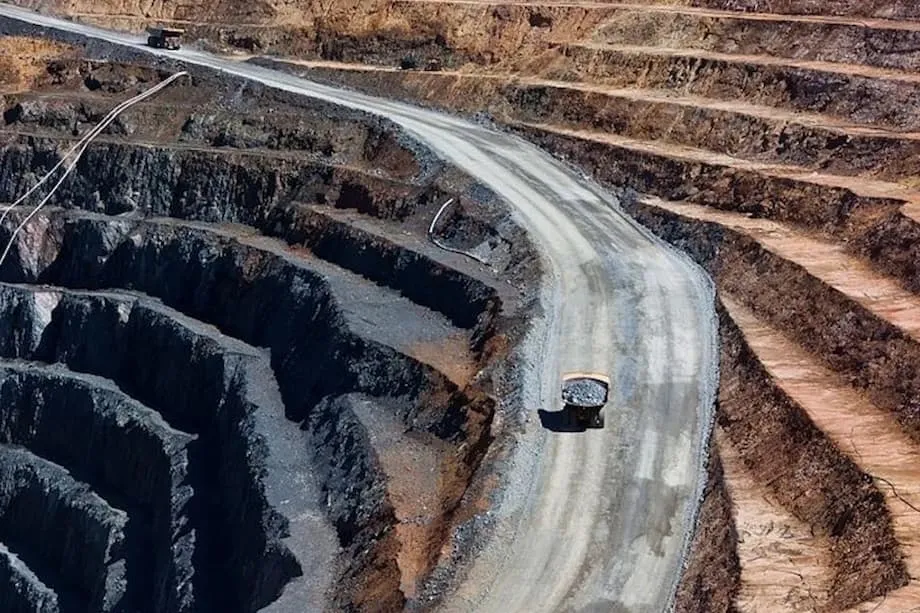
Yichun became a major centre of that expansion. Smaller operators, including companies with high production costs and some without proper licences, entered the market. Lithium was sometimes extracted from mines registered for other materials, allowing projects to advance through gaps in the permitting system.
Lithium prices reached record highs in late 2022. As supply caught up with demand, prices collapsed by nearly 90% in 2023. The rapid reversal left producers facing too much capacity, fierce competition and pressure on profits, alongside environmental damage associated with poorly controlled mining.
About 30% of Jiangxi's lithium mica capacity was idle in early 2025, with many mines operating at a loss. That figure, discussed in an account of the new regulatory era, shows the scale of the industry's difficulties before the latest permit enforcement. Lithium mica is the mineral material from which these operations extract lithium.
Policymakers are responding to environmental harm, unstable markets and concerns about the security of an important resource. The revised law is intended to support more sustainable growth and reinforce China's global position in lithium, while removing speculative, outdated or noncompliant operations.
What the revised mining rules require
The July reforms represent the most extensive overhaul of China's mining laws in decades. Lithium's independent classification as a strategic mineral raises the requirements for entering the industry and places extraction under closer national oversight.
The Ministry of Natural Resources, or MNR, now holds approval authority for mining rights covering strategic minerals. This replaces the mixture of local and provincial approvals that allowed different interpretations and gaps in enforcement. A company's ability to obtain local backing is therefore less decisive when national approval is required.
Deposits must contain at least 0.4% lithium oxide, written chemically as Li2O, to qualify as lithium orebodies. Ore grade describes how much of a useful substance is present in the material being mined. The threshold matters for operations previously registered as clay or kaolinite mines that also extract lithium, because they may need to change their classification.
Environmental and safety requirements also become stricter. Operations must comply with green mine criteria, including environmental impact assessments, funds for restoring mined land and strict liability for pollution. These requirements make planning for damage prevention and restoration part of the conditions for operating.
The wider policy campaign also targets what officials call "vicious competition": selling below cost, building redundant capacity and competing in ways that weaken the industry. Measures include bans on predatory pricing and coordinated production cuts. Together, the rules seek to reduce oversupply and support a more disciplined industry with stronger technology and compliance.
Why Yichun's licences are under scrutiny
The Yichun Natural Resources Bureau flagged eight mines in July 2025 and required them to submit updated resource reserve reports and correct licensing problems. Those reports describe the resources a mine holds, helping authorities assess whether its registered activity matches what it actually extracts.
Many affected operations had been extracting lithium under permits issued for other minerals. During the boom, this legal uncertainty allowed development to move quickly. The new approach requires companies to resolve those discrepancies, with September 30, 2025, set as the deadline for resubmitting reserve and ore grade assessments in Yichun.
CATL's suspension brought the issue to wider attention because Jianxiawo has contributed to China's growing lithium supply. The Jianxiawo mine suspension followed the expiry of its permit amid the regional audit, with the shutdown expected to last at least three months.
Industry analysts discussing the mine's contribution to supply and the market response to closure reports described its importance in these terms:
CATL's mine in Jiangxi has been a major contributor to rapidly growing supplies of lithium in China, the world's top processor of the battery material. Reports of its closure in September caused lithium stocks to rally sharply.
Qinghai's orders to halt extraction until proper permits were obtained show that enforcement extends beyond Jiangxi. The national campaign seeks to eliminate illegal mining, protect the environment and bring extraction into line with the government's resource priorities.
The dates shaping the crackdown
The industry's present difficulties developed across a price boom, a sharp downturn and a new phase of legal enforcement. Several dates explain how those pressures came together:
- Late 2022: Lithium prices reached record highs as demand for batteries and electric vehicles supported rapid expansion.
- 2023: Prices collapsed by nearly 90% as supply caught up with demand.
- Early 2025: About 30% of Jiangxi's lithium mica capacity was idle, and many mines were losing money.
- June 2025: The Guangzhou Futures Exchange's lithium carbonate price rose 29% from the previous month.
- July 2025: The revised Mineral Resources Law took effect, Yichun flagged eight mines for permit discrepancies, and the Ministry of Commerce imposed export controls on key battery technologies.
- August 9, 2025: CATL suspended production at Jianxiawo following the expiry of its permit.
- September 30, 2025: Yichun's deadline falls for resubmitting reserve and ore grade assessments.
The September deadline is the next specified point at which compliance reviews could bring further enforcement. Industry analysts expect additional scrutiny and possible suspensions, although abrupt closures across a large number of mines are considered unlikely because of the risk of destabilising domestic and global supply chains.
Prices rebound as companies face consolidation
Lithium carbonate prices have rebounded after a prolonged slump as suspensions at Jianxiawo and other Yichun mines reduce domestic output. The 29% monthly increase on the Guangzhou Futures Exchange in June reflected concern about supply constraints. Shares in mining companies also rallied on enforcement news.
Companies now face different pressures depending on their costs, permits and financial strength. Smaller operators with expensive production or weak compliance are being squeezed. Larger, integrated companies with stronger compliance records are better placed to consolidate their positions. An integrated company controls several stages of production rather than relying entirely on outside suppliers.
Greater consolidation is expected to improve product quality and make supply more stable over time. In the immediate period, however, permit reviews and shutdowns can interrupt output and make prices more volatile. A producer may benefit from higher prices while a battery manufacturer faces a larger bill for raw materials.
An assessment of the Yichun regulatory challenges described both the government's objectives and the market reaction:
The regulatory crackdown aims to bring discipline to the industry, ensure environmental protection, and align extraction activities with national resource strategies. The market has responded with sharp increases in lithium prices and mining company shares, reflecting concerns about potential supply disruptions.
What anti-involution means for lithium producers
Chinese policymakers use "anti-involution" to describe their campaign against wasteful, destructive competition. In lithium, electric vehicles and even drones, investment encouraged by local governments has contributed to excess capacity, price wars and falling profits.
The problem is straightforward: when too many businesses expand at once, production can grow faster than demand. Companies then compete by cutting prices, sometimes below their costs, weakening their ability to keep operating. Local governments may continue backing projects to protect regional economic activity, even when the wider industry already has more capacity than it needs.
President Xi Jinping has called for a "unified national market" to reduce regional protectionism and encourage sustainable growth over a longer period. For lithium, the campaign includes restrictions on sales below cost and coordination of local shutdowns to reduce the repeated swings between rapid expansion and financial distress.
An account of the wider policy debate described the measures under discussion and the changes unnamed experts considered necessary:
Authorities are now urging companies to reduce internal competition, with measures like production cuts and price hikes expected. Experts say tackling over-competition requires redesigning local government incentives, focusing on long-term advantages like talent and research, and protecting intellectual property.
The proposed shift reaches beyond individual mines. It asks local governments to put less weight on adding production capacity and more on the skills, research and intellectual property that can support competitive businesses over time.
Why battery supply chains outside China are affected
China supplies about 60% of the world's lithium-ion batteries and processes the vast majority of lithium suitable for battery production. Its influence therefore covers both the material extracted from the ground and the industrial steps needed to make that material useful to battery manufacturers.
Electric vehicle makers and other manufacturers depend on those connected activities. A mining interruption can affect raw material availability, while restrictions on processing technology can make it harder for companies elsewhere to establish alternative production systems.
In July 2025, China's Ministry of Commerce imposed new export controls on key battery technologies, including lithium carbonate and lithium hydroxide processing. The measures are intended to protect domestic industry and preserve China's leading position in the global battery supply chain.
The United States and Europe have become increasingly concerned about reliance on Chinese lithium and battery components. The Atlantic Council, discussing the security risks associated with that dependence, stated:
China's control allows it to restrict access to batteries, posing risks to US national security, especially in times of conflict.
Original equipment manufacturers, or OEMs, in the automotive industry are seeking a wider range of suppliers for rare earths and battery materials. Some are investing in domestic mining and refining; others are exploring technologies that reduce their dependence on supply chains controlled by China.
Building those alternatives takes time and money. China's speed and scale of investment have made diversification difficult, while the new technology export controls add another constraint. For governments and manufacturers pursuing electric transport and cleaner energy, reliable access to lithium remains a strategic priority.
Cleaner mining brings costs for companies and communities
Unregulated lithium extraction has caused water pollution, habitat destruction and safety hazards in affected communities. The revised law's environmental provisions aim to address those costs through stronger operating standards, restoration funding and liability for pollution. Effective enforcement remains a challenge.
Mining communities also face economic pressure when operations close or reduce production. Local governments can lose revenue, and workers can lose jobs. Smaller companies may struggle to pay for the environmental, safety and licensing changes required to continue operating.
Centralised approvals and stricter standards mean new mines can take longer and cost more to develop. That can slow China's response when demand changes. Some investment could move to countries with looser regulations, although those locations may carry greater geopolitical risks.
CRU Group, discussing the effect of closing permitting loopholes on project development, described the trade-off:
Closing the legal loophole will also mean China's investors will no longer be able to respond quickly to meet market needs. Mining regimes with stricter regulations have much slower due process, and capex costs are significantly higher.
Capex means capital expenditure, the money needed to develop assets such as mines and processing facilities. Higher development costs and longer approval procedures can limit how quickly producers add supply, even when rising prices make new projects attractive.
The September 30 assessment deadline in Yichun will test how companies adapt to the new requirements. China's policy seeks cleaner extraction and a more stable industry, while companies, workers and battery buyers face the immediate costs of permit reviews, production interruptions and a changing market.
Key Points
- China's revised Mineral Resources Law took effect in July 2025, tightening oversight of lithium as a strategic mineral.
- The Ministry of Natural Resources now approves strategic mineral mining rights, and lithium deposits must meet a 0.4% lithium oxide threshold.
- Yichun flagged eight mines for permit discrepancies, while CATL suspended Jianxiawo production on August 9 following permit expiry.
- Yichun's deadline for updated reserve and ore grade assessments is September 30, 2025.
- The Guangzhou Futures Exchange's lithium carbonate price rose 29% in June from the previous month, amid concern about supply constraints.
- China's anti-involution campaign targets destructive price competition and redundant capacity, alongside stronger environmental requirements.
- China supplies about 60% of global lithium-ion batteries, making its mining rules and battery technology export controls consequential for manufacturers worldwide.