Old Factories, New Crowds and Plans for 9,428 Homes
Seongsu-dong's next transformation could reach 250 meters into Seoul's skyline. The Seoul Metropolitan Government has approved plans for apartment complexes across four districts covering 528,000 square meters in the Seongsu Strategic Renewal District, with 9,428 homes, including nearly 2,000 rental apartments. A waterside park stretching 960 meters and new cultural facilities are also part of the redevelopment.
Contents
- Old Factories, New Crowds and Plans for 9,428 Homes
- How a Footwear District Became a Cultural Destination
- Why Newtro Fits Seongsu's Streets
- What Reusing a Building Looks Like
- Red Bricks, Arches and the Memory of Industry
- How Local Policy Tries to Protect the Neighborhood
- The Cost of Becoming Popular
- Towers and a Startup Campus Signal Another Transformation
- Celebrity Investment Reflects Growing Property Interest
- What Seongsu's Experience Means for Urban Renewal
- Key Points
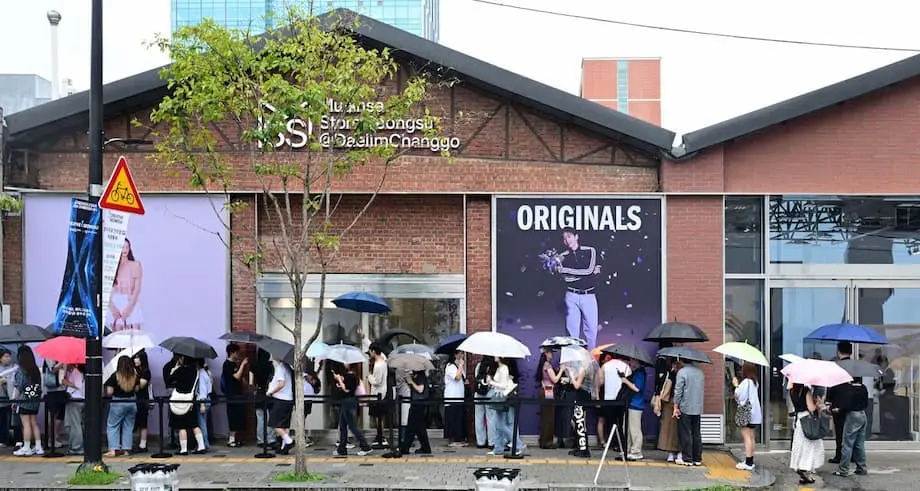
Those ambitions are taking shape in a neighborhood whose appeal grew largely from keeping old buildings standing. Former shoe factories, warehouses and industrial premises now house cafes, galleries and shops. Customers queue outside Musinsa Store Seongsu@Daelim Changgo, while international brands use the area's industrial spaces for temporary stores and installations.
As of August 24, 2025, Seongsu-dong's transformation brings together two approaches to changing a city: finding new uses for existing buildings and undertaking major redevelopment. Both attract investment. Their effects on the factories, small businesses and residents already there are central to the neighborhood's future.
Rising rents have accompanied its popularity. Between 2019 and 2022, 90% of local handmade shoe businesses closed amid economic pressure and changing consumer habits. Measures to protect local commerce remain part of the district's response, even as developers, celebrities and major brands deepen their interest.
Seongsu is often called the "Brooklyn of Seoul," a comparison rooted in its mixture of industrial heritage and artistic activity. Its story is also about who can continue working and living in a place once its old buildings become desirable.
How a Footwear District Became a Cultural Destination
Seongsu-dong's industrial history dates to the 1930s. During the 1960s and 1970s, it became a center of South Korea's footwear industry, with factories and suppliers gathering in the same area. That concentration made the neighborhood a busy manufacturing zone known for shoes rather than fashionable shops.
The 1997 Asian financial crisis brought a steep decline. Vacant factories and deteriorating infrastructure became part of the landscape, leaving buildings whose original economic purpose had weakened but whose physical structures remained.
Entrepreneurs and artists later saw possibilities in the high ceilings and red brick walls. Urban renewal in SoHo and Brooklyn provided inspiration. The opening of Daelim Changgo as a cafe and art gallery in 2016 helped signal the change, and the late 2010s brought a broader wave of cafes, galleries and boutiques.
The neighborhood's transition can be traced through several milestones:
- 1930s: Seongsu-dong's industrial roots began to develop.
- 1960s and 1970s: Footwear factories and suppliers made the area a manufacturing center.
- 1997: The Asian financial crisis accelerated industrial decline.
- 2014: Seoul designated the area a "Seoul-type urban regeneration demonstration area."
- 2016: Daelim Changgo opened as a cafe and art gallery in a former rice mill.
- 2019 to 2022: Economic pressure and changing consumer habits accompanied the closure of 90% of local handmade shoe businesses.
- Early 2024: TWICE member Jihyo bought a building in Seongsu-dong 2-ga for 4 billion won.
Seongsu's transformation therefore developed through business decisions, cultural activity and public policy over several years. Its industrial buildings supplied the spaces in which much of that change occurred.
Why Newtro Fits Seongsu's Streets
Professor Kim Nan-do of Seoul National University coined "newtro," a combination of "new" and "retro." In Seongsu, the term describes an approach that brings vintage appearances together with contemporary tastes, rather than replacing every trace of the past.
Older visitors can find reminders of the 1990s, while younger crowds seek visually distinctive experiences suited to Instagram. Preserved or restored commercial buildings and townhouses, many with relatively few floors, give those experiences a setting connected to the neighborhood's history.
Seongsu was Seoul's most hashtagged neighborhood on Instagram in 2022. Daily visitor numbers exceeded 20,000, surpassing the luxurious Cheongdam-dong shopping district. That popularity helped turn an industrial area into a destination for locals and tourists seeking culture, shopping and food.
The attraction extends beyond individual stores. Colorful street art, niche boutiques and culinary destinations contribute to an environment where visitors can move between different kinds of activity. Common Ground, a shopping mall made from shipping containers, adds another example of the area's unconventional commercial spaces.
Seongsu's authenticity, variety and capacity to change while retaining visible reminders of its origins underpin its appeal. The same qualities have made it attractive to brands and influencers seeking connections with Generation Z and millennial audiences.
What Reusing a Building Looks Like
Adaptive reuse means giving an existing building a new purpose. In Seongsu, a structure built for manufacturing or storage can become a cafe, gallery or shop while retaining parts of its original form. The approach has made industrial heritage an active part of commerce and culture.
Daelim Changgo Gallery is a prominent example. Once a rice mill, it became a cafe and art space whose opening helped establish the direction of the neighborhood's transformation. Its industrial setting became part of the visitor experience.
Other businesses combine several activities within a single destination. Anderson Vintage brings together a retro shop and a digital restaurant. ORER operates as a cafe, gallery and boutique. Zagmachi combines a cafe, bookstore and space for live music, giving customers several reasons to spend time in the same premises.
Dior and Adidas have hosted temporary stores in Seongsu, combining industrial surroundings with art installations and digital experiences. Local brands Gentle Monster and Ader Error also use these spaces for immersive experiences involving several senses.
These projects have changed what an old factory or warehouse can contribute to the local economy. A building once organized around production can now accommodate exhibitions, shopping, performances or social gatherings, sometimes within the same space.
Red Bricks, Arches and the Memory of Industry
The Mellower Seongsu Flagship Store, designed by Nordic Bros Design Community, occupies a former plating and dyeing plant. The project preserved the existing structure and inserted a modern "Creative Box," intended to support creativity and community activity.
Its design allows the old industrial framework and a contemporary addition to occupy the same building. The retained structure gives visitors a physical connection to the site's earlier use, while the new element accommodates its current purpose.
The Fillome Building by Sosu Architects takes a related approach to neighborhood identity. Large red brick arches refer to Seongsu's character as an area combining industrial and other uses. The building provides commercial and residential space for a local family.
Fillome also uses pilotis, supporting columns that leave space open beneath part of a building. Together with its arches and brickwork, that arrangement combines modern amenities with references to the surrounding urban fabric.
Red brick buildings, many dating back decades, give Seongsu a recognizable appearance within Seoul's dense cityscape. Preserving or referencing those materials helps create visual continuity even when a building's activities change.
The architectural idea is that the "thickness of time" can accumulate in a place: older structures remain visible as new uses arrive. Mellower and Fillome show different ways of carrying that memory into spaces designed for present needs.
How Local Policy Tries to Protect the Neighborhood
The Seoul Metropolitan Government's 2014 designation made Seongsu a demonstration area for urban regeneration. Its goals included better living conditions, a stronger local economy and the restoration of regional identity through a sustainable, integrated approach.
Urban regeneration here involves improving an existing neighborhood and its economic life. Policies sought to support local businesses, prevent gentrification and restrict the arrival of large franchises. Gentrification describes a process in which investment and growing popularity bring rising costs that can push established residents or businesses out.
Seoulsup-gil, a street in Seongsu-dong, was designated a sustainable development zone. Businesses are encouraged to use red brick exteriors, and large franchises face limits. Those measures seek to preserve both the street's appearance and the mix of businesses that gives it a distinct identity.
Seongdong-gu also advocates changes at the national level, including reforms to lease laws and rent regulations. Its approach seeks to balance redevelopment, regeneration and the reuse of buildings while creating economic benefits for both landlords and tenants.
The policies recognize that protecting a neighborhood involves more than retaining attractive walls. A shop can depend on affordable rent, predictable lease conditions and a customer base as much as on the condition of its premises.
The Cost of Becoming Popular
Seongsu's growing appeal has brought rising rents and the closure of established businesses. The loss of 90% of local handmade shoe businesses between 2019 and 2022 is especially striking in a neighborhood whose identity was built around footwear production.
Economic pressure and changing consumer habits contributed to those closures. The result is a shift in the activities that sustain the area: businesses making goods have lost ground as shopping, dining and cultural experiences draw increasing attention.
Academic studies suggest that deliberately created commercial streets and specialized zones do not necessarily improve the survival rates of local stores. Stores opening during or soon after regeneration projects can experience lower survival rates, indicating temporary gentrification effects.
The concern is practical. An influx of customers and investment can make a street busier while individual businesses still struggle to remain open. Support for established businesses and reasonable rents is therefore central to lasting economic stability, alongside physical improvements.
Old and new activities nevertheless continue to coexist. Vintage motorcycles share the streets with delivery scooters. Somunnan Seongsu Gamjatang serves traditional Korean food alongside fashionable temporary stores and newer dining destinations.
That mix helps explain both Seongsu's appeal and the difficulty of protecting it. The neighborhood attracts visitors partly because older working and everyday life remain visible within a changing commercial environment.
Towers and a Startup Campus Signal Another Transformation
The Seongsu Strategic Renewal District introduces a much larger scale of construction than the conversion of individual factories. Approved apartment complexes reaching up to 250 meters would reshape the Han River skyline and rival some of Seoul's tallest buildings.
The plan covers four districts and 528,000 square meters. Of its 9,428 planned homes, nearly 2,000 would be rental apartments, roughly one in five. Cultural facilities and the planned waterside park stretching 960 meters would accompany the housing and improve public access to the Han River.
Seoul also plans to build one of the world's largest startup campuses on a former concrete factory site. That proposal would add a major entrepreneurship center to a neighborhood already associated with creativity and urban innovation.
Major construction companies are competing for redevelopment contracts. Lotte Engineering & Construction, POSCO E&C, Hyundai Engineering & Construction and GS Engineering & Construction are among the companies seeking work in the area.
Seongsu's emergence as a wealthy residential destination in Gangbuk, northern Seoul, has increased its attraction for property investors. The scale of planned construction also creates tension with efforts to retain the neighborhood's existing communities and character.
The projects promise homes, public spaces and economic opportunities. Their place in Seongsu's transformation depends on how large developments fit alongside smaller businesses, existing residents and the industrial buildings that helped make the neighborhood desirable.
Celebrity Investment Reflects Growing Property Interest
Jihyo, a member of the K-pop group TWICE, bought a building in Seongsu-dong 2-ga in early 2024 for 4 billion won, approximately $2.9 million. She paid in cash.
The building was completed in 1986 and lies within the Seongsu Strategic Maintenance Zone. Expectations of further appreciation are tied to redevelopment in the area. Jihyo registered as a housing rental business entity.
Her purchase reflects a broader pattern of celebrities buying property in desirable locations as a financial strategy and a sign of status. In Seongsu, that interest adds to investment by developers and the growing presence of major commercial brands.
The neighborhood's safety, social cohesion and creative energy also make it attractive to families and young professionals. Its appeal therefore spans visitors seeking a temporary experience and people or businesses making a longer commitment to the area.
What Seongsu's Experience Means for Urban Renewal
Seongsu shows how existing industrial buildings can support a new local economy. Cafes, galleries, shops and cultural spaces have made use of structures left behind after manufacturing declined, giving the neighborhood a distinctive role in Seoul's commercial and cultural life.
Its experience also places the benefits of investment beside the costs of rapid change. New uses have attracted crowds and increased property interest, while rising rents and business closures have threatened parts of the working community that shaped the area.
Seongdong-gu's response combines support for local businesses, limits on some franchises, attention to architectural identity and calls for stronger national protections. Those measures sit alongside ambitious housing and startup development plans.
For cities dealing with industrial decline, Seongsu offers lessons in reusing buildings and balancing investment with community needs. Preserving tradition and encouraging economic growth remain connected tasks: the character drawing people to the neighborhood comes from its businesses and residents as well as its bricks.
Key Points
- Seongsu-dong has turned former factories and warehouses into cafes, galleries, shops and cultural spaces.
- Its newtro appeal combines vintage architecture with contemporary experiences.
- Seoul's 2014 regeneration designation supported improvements to living conditions, local commerce and neighborhood identity.
- Between 2019 and 2022, 90% of local handmade shoe businesses closed amid economic pressure and changing consumer habits.
- Approved redevelopment plans include 9,428 homes, nearly 2,000 rental apartments and towers reaching up to 250 meters.
- A waterside park stretching 960 meters and a major startup campus are among the planned additions.
- Jihyo's purchase of a building for 4 billion won reflects rising celebrity and investor interest.
- Protecting established businesses and reasonable rents remains central to preserving the neighborhood's character.