A record month with an uneven recovery
Japan welcomed 3.43 million international visitors in July 2025, setting a record for the month even as arrivals from Hong Kong and South Korea fell sharply. Figures released by the Japan National Tourism Organization (JNTO) showed that growth slowed to its weakest pace of the year, with gains from mainland China and the United States helping offset those regional declines.
Contents
- A record month with an uneven recovery
- Why the weak yen keeps drawing visitors
- How a manga prediction spread travel fears
- Weather added to the disruption
- China and the United States supported growth
- Visitor spending brings benefits and crowding
- Changes planned for insurance, shopping and entry
- Japan's appeal within Asia-Pacific
- A larger annual total is forecast
- Key Points
Visitors from Hong Kong fell by 36.9% compared with July 2024, while arrivals from South Korea dropped by 10.4%. Typhoon disruptions and widespread rumors of an impending earthquake affected travel from both markets. Meanwhile, arrivals from mainland China rose by 25.5%, and those from the United States increased by 10.3%.
Japan attracted 24.9 million overseas visitors between January and July 2025, an increase of 18.4% over the same period in 2024. The growth followed a record 36.9 million international travelers in 2024, when Japan surpassed its visitor totals from before the pandemic and strengthened its position as one of the world's leading destinations.
The July figures capture two developments happening at once. Japan continued to draw large numbers of travelers, supported by a weak yen and strong demand for its food, culture and attractions. Some nearby markets, however, experienced a sudden loss of confidence as social media spread disaster fears and severe weather disrupted flights.
For hotels, shops, airlines and local authorities, the result was a busy summer with different pressures in different places. Growth brought more customers and spending, while cancellations and reduced flight services affected businesses dependent on particular Asian markets. The national record also kept attention on crowding in popular destinations and plans to change how Japan manages international tourism.
Why the weak yen keeps drawing visitors
The weak yen has been a major driver of Japan's tourism growth. In 2024, the currency traded between ¥140 and ¥160 to the US dollar, compared with around ¥110 in 2019. A dollar therefore bought more yen, making food, shopping and cultural experiences more affordable for many foreign travelers.
Visitors from the United States, Europe and parts of Asia have been especially attracted by that currency advantage. The appeal extends across very different kinds of holidays, from Tokyo's neon streets and Kyoto's historic temples to skiing in Hokkaido and visits to the quieter countryside of Kyushu.
Japan's efficient transport network, reputation for hospitality and international marketing campaigns have also supported demand. Travelers can combine modern city attractions with traditional cultural experiences, while the country's range of destinations gives them options beyond its busiest urban centers.
The Mastercard Economics Institute's 2025 travel trends report placed Tokyo and Osaka among the world's top trending summer destinations. It also described travelers placing greater priority on dining, nature and wellness experiences than on traditional sightseeing.
Concerts and sports tournaments have added reasons to visit, while social media, anime and manga continue to influence travel choices. Those attractions help explain why Japan's appeal remained strong even during a month when weather disruptions and disaster rumors discouraged some visitors.
How a manga prediction spread travel fears
Ryo Tatsuki, a Japanese manga artist, became central to the summer's most unusual tourism disruption. Her 1999 work, "Watashi ga Mita Mirai," translated as "The Future I Saw," described dreams that some readers later connected to real disasters, including the devastating 2011 Tohoku earthquake and tsunami.
A 2021 reprint included a new prediction that a major disaster would strike Japan on July 5, 2025. Social media posts and YouTube influencers spread the claim across Hong Kong, Taiwan and South Korea, turning a story from a comic book into a concern that affected holiday decisions.
Hong Kong was particularly affected. The manga has a cult following there, and a popular feng shui master encouraged followers to avoid Japan during the summer. Airline bookings fell as the warning circulated, with some carriers reducing flights by up to 30% because demand had collapsed.
Bloomberg Intelligence figures showed that weekly arrival bookings from Hong Kong for late June to early July dropped by as much as 83% compared with the same period a year earlier. That sharp fall in bookings preceded the 36.9% decline in actual July arrivals from Hong Kong.
Yoshihiro Murai, governor of Miyagi Prefecture, publicly addressed the effect of the rumors on tourism and asked people to disregard the speculation:
The rumors are starting to affect tourism. I ask people not to take the speculation seriously.
Japan's Meteorological Agency also issued statements explaining that earthquakes cannot be predicted with scientific accuracy. It urged people to base disaster preparedness on facts rather than fiction. The cultural authority of manga and memories of past disasters nevertheless helped the warning gain traction across the region.
Weather added to the disruption
Typhoon activity in East Asia disrupted flights and travel plans, particularly for visitors from South Korea and Hong Kong. Airlines scaled back routes, while some travelers postponed or canceled trips because of safety concerns.
South Korean arrivals fell by 10.4% in July compared with the same month in 2024. Hong Kong's decline was larger, at 36.9%, with both markets affected by the combination of weather disruption and earthquake fears.
The two pressures affected travel through different routes. Typhoons interfered with flights and planned journeys, while the earthquake rumor weakened demand before some trips began. Together, they contributed to a temporary downturn in arrivals from these markets despite Japan's record national total.
The dates behind the tourism boom and the disaster rumor show how the summer developed:
- 1999: Ryo Tatsuki's "Watashi ga Mita Mirai" was published, describing dreams that readers later linked to disasters.
- 2011: The Tohoku earthquake and tsunami became one of the events readers associated with the manga.
- 2021: A reprint included a prediction of a major disaster on July 5, 2025.
- 2024: Japan welcomed a record 36.9 million international travelers.
- Late June to early July 2025: Weekly arrival bookings from Hong Kong fell by as much as 83% compared with a year earlier.
- July 2025: Japan received a record 3.43 million visitors for the month, despite falling arrivals from Hong Kong and South Korea.
China and the United States supported growth
Mainland China supplied one of the strongest increases in July, with arrivals rising by 25.5%. Demand from people who had delayed travel and improved flight connections helped support the increase.
Chinese tourism to Japan had lagged in 2023 and early 2024 because of pandemic restrictions and economic challenges. Its recovery became stronger in 2025. In June alone, mainland China sent nearly 800,000 visitors to Japan, more than any other country that month.
The United States also contributed to July's growth, with arrivals increasing by 10.3%. Airlines reported expanded capacity, and Tokyo ranked as a leading global destination for American travelers. More available flights gave travelers greater opportunity to act on that demand.
The weak yen, together with Japan's reputation for safety, cleanliness and distinctive experiences, made the country especially attractive to US visitors. Taiwan, Singapore and Australia were other markets showing strong growth.
Japan's July record therefore depended on more than a broad rise across neighboring countries. Growth from China, the United States and other markets helped sustain the national total while two important regional markets contracted.
Visitor spending brings benefits and crowding
International tourists spent $53.3 billion in Japan in 2024, an increase of 38% from 2023 and 16% above the 2019 level. Average spending per visitor reached ¥226,851.
The tourism sector contributed $257.3 billion to the national economy and supported more than 5 million jobs. That wider contribution and the money spent directly by international visitors describe different parts of tourism's economic role: foreign visitor spending is one component of the sector's broader activity.
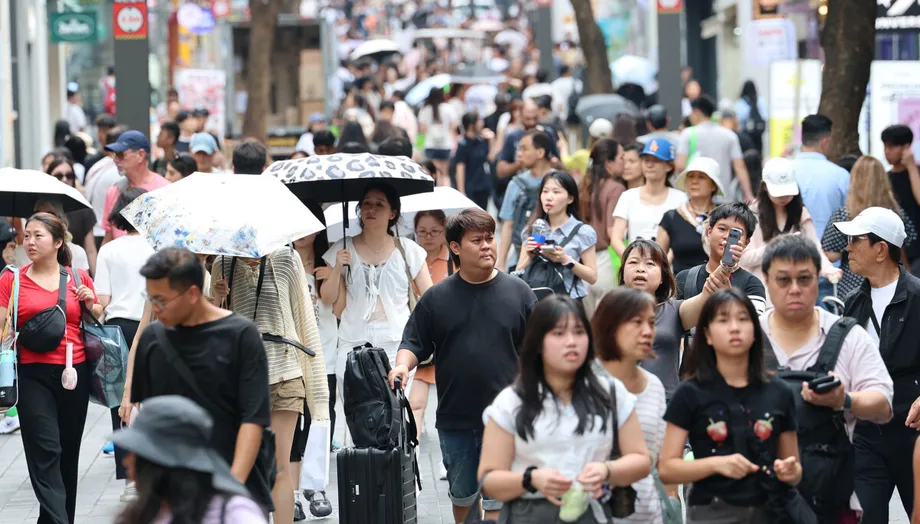
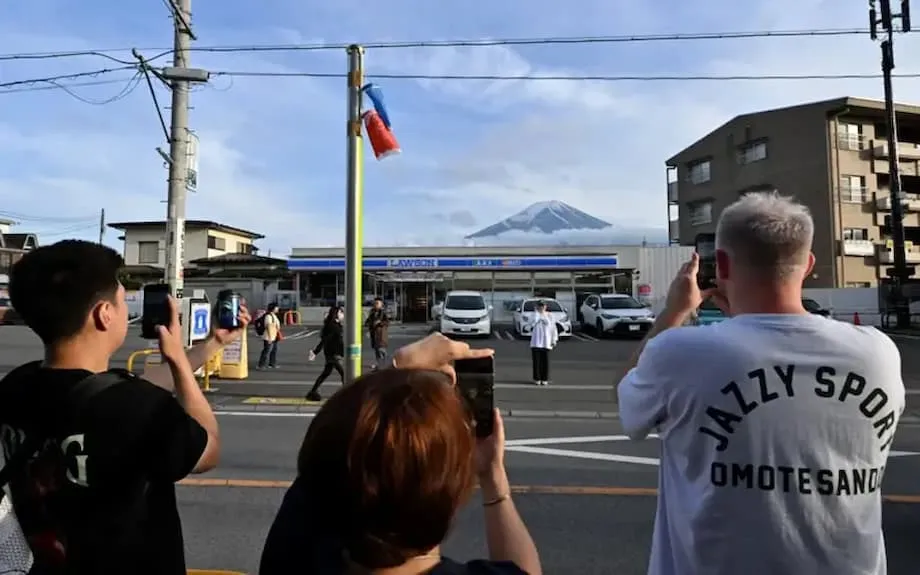
Hotels, restaurants, transport services and shops benefit when visitors spend money. Continued growth also brings pressure to places where large numbers of people gather, particularly Kyoto, Mount Fuji and Tokyo.
Local governments have introduced rules and sustainable tourism initiatives to manage crowds, protect cultural sites and improve the experience for residents and visitors. Measures include limiting access to certain attractions, promoting less familiar destinations and encouraging responsible behavior.
Overtourism means that visitor numbers put more pressure on a place than it can comfortably manage. Japan's challenge is to preserve the economic benefits of tourism while reducing the strain on its cultural heritage, environment and everyday community life.
Changes planned for insurance, shopping and entry
Japan is targeting 60 million international visitors and ¥15 trillion in annual tourism spending by 2030. Authorities are pursuing policy changes intended to manage the demands that accompany those ambitions.
One major change on the horizon is a requirement for incoming tourists to have private health insurance. The aim is to prevent unpaid medical bills left by foreign visitors and ensure that travelers can cover unexpected healthcare expenses. Similar requirements exist in the European Schengen area and other destinations.
Authorities also plan to revise the tax-free shopping program and introduce an electronic travel authorization system for travelers from countries whose citizens can enter without a visa. Such a system would add an electronic authorization step for those visitors.
Other measures include tightening entry requirements for people with outstanding debts or unpaid taxes. The policies are intended to protect Japan's healthcare, administrative and social systems while preserving the benefits of international tourism.
As of August 24, 2025, no implementation dates were given for these changes. For prospective travelers, the insurance requirement and other entry measures remained changes to watch as Japan developed its tourism policies.
Japan's appeal within Asia-Pacific
Asia-Pacific accounted for eight of the world's top 15 trending summer travel destinations in Mastercard's 2025 report. Japan's strong performance was part of that wider regional pattern, with outbound travel from Singapore, China and India booming.
Japan consistently ranked as a preferred destination because of its value, safety and cultural appeal. Tokyo and Osaka's presence among the leading summer destinations reflected demand for major cities, while interest in nature and wellness supported a broader range of travel experiences.
Travelers across the region were increasingly motivated by dining, wellness and time in natural settings rather than traditional sightseeing alone. Major events, pop culture and favorable exchange rates also influenced where they chose to go.
Those preferences connect with several parts of Japan's appeal. Food and shopping benefit from a favorable exchange rate, anime and manga inspire travel interest, and destinations outside the largest cities can serve visitors looking for nature or a quieter holiday.
Japan's experience in July also showed how quickly demand from nearby markets can change. Strong regional interest existed alongside the effects of a viral rumor and disrupted flights, making the mix of visitors as relevant to tourism businesses as the national total.
A larger annual total is forecast
JTB, a leading Japanese travel agency, estimated that Japan could receive 40.2 million inbound travelers in 2025. That would exceed the record 36.9 million welcomed in 2024.
Expo 2025 in Osaka and the opening of the JUNGLIA theme park in Okinawa were expected to attract more visitors. Together with Japan's established cultural, urban and natural attractions, these events and new destinations supported an optimistic industry outlook for the rest of 2025 and beyond.
The January to July total of 24.9 million visitors, up 18.4%, showed that Japan had already built substantial momentum. July's record added to that growth, even though the month's increase was the slowest of the year.
Natural events, currency movements and global economic trends continued to shape the outlook. The earthquake rumor added another pressure: social media could spread a claim quickly enough to affect bookings, flight schedules and travel decisions across several markets.
Japan remained a destination offering considerable variety and value to travelers. For policymakers and tourism businesses, the task was to support continued growth while protecting cultural sites, the environment and the communities receiving visitors. July's figures showed both the strength of demand and the need to respond when weather or public confidence disrupted it.
Key Points
- Japan welcomed 3.43 million international visitors in July 2025, a record for the month, while growth slowed to its weakest pace of the year.
- Arrivals reached 24.9 million between January and July, up 18.4% from the same period in 2024.
- July arrivals from Hong Kong fell by 36.9% and those from South Korea by 10.4%, amid typhoon disruptions and viral earthquake rumors.
- Mainland Chinese arrivals rose by 25.5%, while arrivals from the United States increased by 10.3%.
- Japan's Meteorological Agency said earthquakes cannot be predicted with scientific accuracy and urged preparedness based on facts.
- International visitors spent $53.3 billion in Japan in 2024, while crowding prompted management measures in popular destinations.
- Planned policy changes included private health insurance for tourists, revised tax-free shopping and electronic travel authorization.
- JTB forecast 40.2 million inbound travelers in 2025. Japan's 2030 targets were 60 million visitors and ¥15 trillion in annual tourism spending.