Loans, Digital Skills and a Wider Trading Network
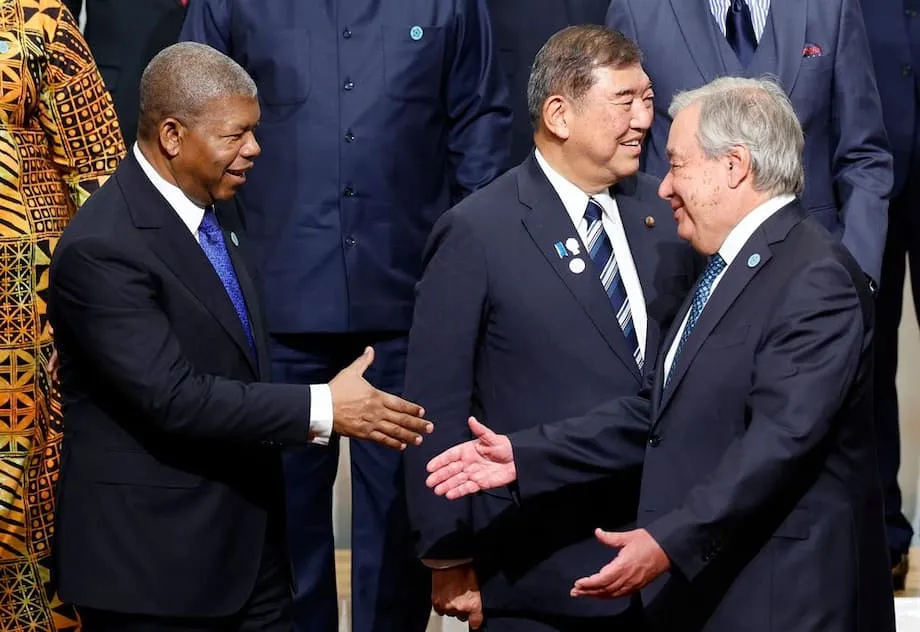
Japan has pledged $5.5 billion in loans for Africa and announced plans to train 30,000 artificial intelligence experts over three years, placing finance and skills at the centre of its development partnership with the continent. Prime Minister Shigeru Ishiba presented the initiatives at the Ninth Tokyo International Conference on African Development, known as TICAD 9, in Yokohama, Japan.
Contents
- Loans, Digital Skills and a Wider Trading Network
- A Partnership Built Around African Priorities
- Why Affordable Finance Matters
- Training 30,000 People for AI and Digital Work
- A Young Population and a Growing Need for Opportunity
- Connecting Africa With Indian Ocean Economies
- Japanese Businesses Expand Their African Presence
- African Leaders Seek a Stronger Global Voice
- Japan's Offer in a More Competitive Africa
- Key Points
The summit brought together leaders from 49 African countries, international organisations and the private sector. Its agenda reached beyond financial assistance to include a proposed Indian Ocean–Africa economic zone, greater business investment, opportunities for young people and women, and a stronger African voice in international institutions.
Japan is seeking a larger role in Africa's growth as the United States scales back aid programmes and China expands its economic presence. Its stated approach centres on partnership, technology transfer and businesses that address local needs while creating jobs.
The announcements connect three practical needs. Infrastructure and electricity require affordable financing. Digital industries need people with technical skills. Businesses need access to markets beyond their own borders. Japan's plan addresses all three, while African leaders are pressing for changes to the financial and political systems that shape their choices.
The commitments also bring a question of delivery into focus. Loans must reach useful projects, training must connect people with employment, and trade proposals must create opportunities for African businesses. Japan's agenda combines these goals, although the summit announcements did not give detailed lending terms or a timetable for establishing the proposed economic zone.
A Partnership Built Around African Priorities
TICAD began in 1993 as a multilateral forum led by Japan and organised with the United Nations, the African Union Commission, the United Nations Development Programme (UNDP) and the World Bank. Its guiding principles are African ownership and international partnership: African countries set their development priorities, while international partners help support them.
The conference has developed from a gathering centred on donor assistance into a platform for investment, business and innovation. TICAD 9's theme, "Co-create Innovative Solutions with Africa," reflects Japan's ambition to work with African partners as equals in developing projects and solving problems.
The partnership's development can be traced through several milestones:
- 1993: TICAD was launched to support African development through African ownership and international cooperation.
- 2015 to 2024: The number of Japanese or Japanese-funded company sites in Africa increased by 40%, reaching 948 sites in 40 countries.
- 2024: Direct investment into Africa reached a record $97 billion, while the continent's economic growth outpaced the global average.
- TICAD 9 in 2025: Japan announced its $5.5 billion loan commitment, training for 30,000 AI experts over three years and a proposal for an Indian Ocean–Africa economic zone.
The growing business presence gives Japan's investment agenda an existing base. The 948 sites represent company locations, rather than a count of individual companies, and their spread across 40 countries shows the geographical reach of Japanese commercial activity.
Why Affordable Finance Matters
Japan's $5.5 billion loan commitment is to be arranged through the African Development Bank. The funding targets infrastructure, electrification and industrialisation, areas that need substantial investment before they can support wider economic activity.
African governments face pressure from mounting debt burdens while trying to obtain affordable capital for development. A loan provides money that must later be repaid. Its cost therefore matters: expensive borrowing leaves governments with more to repay and less room to finance other priorities.
Angola's President João Lourenço, who also chairs the African Union, described the financing difficulties facing African countries and connected them directly to investment needs:
The African continent continues to face persistent barriers and limited, complex access to international financing ... many African countries have been rated as high-risk borrowers, making them barely eligible for low-cost capital. Yet such capital is absolutely essential for investment in infrastructure, electrification, industrialization, and technological advancement.
A borrower rated as high risk can find it harder or more expensive to obtain a loan because lenders are concerned about repayment. Lourenço's argument is that countries need access to reasonably priced money to build the infrastructure and industries that support development.
Japan presents responsible lending as part of its partnership model, with the aim of avoiding the debt traps experienced by some African borrowers. The practical task is to finance development while keeping repayment burdens manageable.
Training 30,000 People for AI and Digital Work
Japan plans to train 30,000 AI experts across Africa over the next three years under the Japan Africa Co-Creation for Industry framework. The programme is intended to accelerate digital transformation, create jobs and help young Africans take part in growing technology industries.
Artificial intelligence refers to computer systems that carry out tasks such as identifying patterns or using information to support decisions. Training people to develop and use these tools is part of the broader effort to bring digital technology into businesses and public life.
Ishiba linked the training agenda to future economic growth, identifying digital and creative industries as areas where developing people's skills would matter:
The development of human resources in new fields such as digital-related industries, including AI, and creative industries will be one of the foundations for accelerating future growth.
African universities, UNDP and Japanese companies are expected to work together on the programme. Its goals include technical instruction, entrepreneurship and job placement, so that participants can use their skills to build businesses or find work in their home countries.
The connection between training and employment is central to the initiative. Teaching a technical skill is one step; helping someone turn it into a job or a viable business is another. Japan's programme brings those activities together within its industrial cooperation agenda.
A Young Population and a Growing Need for Opportunity
Africa's population is expected to exceed 2.4 billion by 2050, with a median age of 24.4 years. The continent is set to remain the world's youngest for decades. A median age divides a population into two equal groups, with half younger and half older than that age.
A large young population can support economic growth when people have access to education, skills and employment. This potential benefit is often called a demographic dividend. Japan's digital training initiative aims to help young Africans participate in the global digital economy and narrow the gap in access to technology and the skills needed to use it.
Youth and women form a central part of the wider TICAD 9 agenda. Japan's ABE Initiative already provides African young people with opportunities for education and internships in Japan, supporting the transfer of knowledge and relationships that can continue after participants return home.
The AI programme builds on that approach by focusing on industries with strong growth potential. The Yokohama Declaration, the summit's concluding document, calls for investment in people, technology transfer and the empowerment of youth and women.
The declaration also supports stronger partnerships between governments and businesses, alongside regional integration. Together, these priorities seek to connect individual opportunities in education and employment with broader economic development.
Connecting Africa With Indian Ocean Economies
Ishiba's proposal for an Indian Ocean–Africa economic zone would deepen economic connections between Africa, India, the Middle East and other economies around the Indian Ocean. Trade, investment and better connectivity are the main elements of the proposal.
The aim is to open opportunities for African businesses and support regional value chains. A value chain covers the stages involved in making and selling a product. When those stages take place across several countries, businesses can participate in a larger production network instead of serving only their domestic market.
Japan strongly supports the African Continental Free Trade Area (AfCFTA), which seeks to make trade across African borders easier. The proposed economic zone fits that ambition by seeking wider connections for a continent Japan views as a market, a supplier and an investment destination.
The proposal also connects with Japan's Free and Open Indo-Pacific strategy, which places importance on resilient institutions, connectivity and the development of people's skills. In the TICAD agenda, those priorities link trade routes and investment with the institutions and workforce needed to support them.
Japanese Businesses Expand Their African Presence
Japanese or Japanese-funded company sites in Africa grew by 40% between 2015 and 2024, reaching 948 locations across 40 countries. That expansion supports Japan's move towards a development relationship in which private investment and business activity take a larger role alongside aid.
Some Japanese firms are applying drones and AI to efforts against malaria. Others are providing electricity in places beyond the reach of existing power grids. These projects connect commercial activity with practical needs in health and energy.
The business goal is to create models that can continue operating while generating local employment and innovation. Electricity provision and disease prevention are also examples of how investment can address problems that affect people's daily lives.
Kei Yoshizawa, a senior adviser at the Japan International Cooperation Agency (JICA), has described Japanese aid as encouraging self-reliance and contributing to the creation of new African businesses. The investment agenda builds on that approach by linking assistance, skills and commercial activity.
Japan captures its intended relationship in a shift from "Made in Japan" to "Made with Japan." The message is that African partners should help shape and produce solutions, with benefits shared through cooperation rather than a relationship centred mainly on the delivery of outside assistance.
African Leaders Seek a Stronger Global Voice
TICAD 9 also addressed peace, stability and the international institutions that influence African development. Discussions included African leadership in resolving conflicts, building institutions and addressing the causes of instability.
United Nations Secretary-General António Guterres called for changes to both the UN Security Council and the international financial system. He connected African representation with the continent's ability to shape decisions affecting its future:
Africa must have a stronger voice in shaping the decisions that affect its future. That includes long overdue reform of the Security Council, where, incredibly, Africa has no permanent member ... and an overhaul of today's unjust and unfair international financial architecture that must enhance African representation and endorse a strong African voice in the decisions being made.
The Security Council has no permanent African member. Guterres's call places political representation alongside access to finance, linking influence over international decisions with the resources countries need for development.
The Yokohama Declaration reaffirms support for multilateralism, meaning countries working together through international institutions. It also includes commitments concerning Security Council reform, nuclear disarmament and responsible global governance.
Climate finance, the energy transition and disaster risk reduction are further priorities in the declaration. Africa's exposure to climate pressures makes funding and cooperation in these areas part of the wider development discussion, alongside infrastructure, employment and stability.
Japan's Offer in a More Competitive Africa
Japan's announcements come as several major powers seek closer African relationships. The United States has reduced its aid footprint, China has expanded lending and economic engagement, and Russia and India are also working to deepen ties with the continent.
China's recent move to set tariffs on imports from 53 African countries to zero adds a trade dimension to that competition. Tariffs are taxes charged on imported goods, so removing them can make access to a foreign market more attractive to exporters.
Japan is seeking to distinguish its approach through quality investment, technology transfer, responsible financing and support for solutions led by Africans. Its focus on training and business development also reflects an effort to build relationships that last beyond individual aid projects.
Africa's economic scale helps explain the international interest. Direct investment reached a record $97 billion in 2024, and the continent's economy grew faster than the global average. Its population is projected to reach 3.8 billion by 2100, creating the potential for a much larger workforce and consumer market.
Poverty, inequality, conflict and climate change continue to limit that potential. Affordable finance, technology and skills are central needs in Japan's TICAD 9 agenda. Sustained cooperation, African ownership and the ability to adjust programmes to changing needs will determine how the commitments translate into opportunities for people and businesses.
Key Points
- Japan pledged $5.5 billion in loans through the African Development Bank for priorities including infrastructure, electrification and industrialisation.
- The Japan Africa Co-Creation for Industry framework will support training for 30,000 AI experts across Africa over three years.
- A proposed Indian Ocean–Africa economic zone would connect African economies more closely with India, the Middle East and other Indian Ocean partners.
- Japanese or Japanese-funded company sites in Africa increased by 40% from 2015 to 2024, reaching 948 locations in 40 countries.
- The Yokohama Declaration supports skills, technology transfer, opportunities for youth and women, regional integration and cooperation between governments and businesses.
- African representation, peace, climate finance and reform of international institutions formed part of the summit's wider agenda.
- Japan is expanding an approach centred on investment, innovation and partnership amid growing international competition for African economic ties.