Valid Visas, Interrupted Studies and Growing Uncertainty
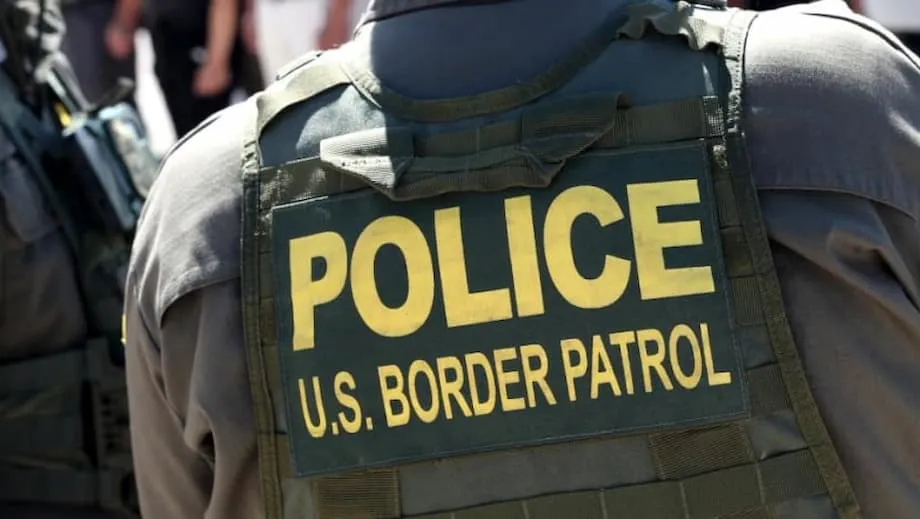
More than 70 Chinese students carrying valid documents have been deported from the United States since July 2021, according to the Chinese embassy in Washington, including more than 10 cases since November 2023. Behind those figures are researchers separated from experiments, students unable to return to their apartments and academic careers interrupted at airport immigration counters.
Contents
- Valid Visas, Interrupted Studies and Growing Uncertainty
- How Airport Screening Can End an Academic Career
- Device Searches Add Another Layer of Risk
- The National Security Rules Behind the Scrutiny
- How the Dispute Developed
- Beijing's Protests and Pressure on Scientific Cooperation
- Universities Try to Keep Students Studying
- A Death in Detention Raises Oversight Concerns
- US Higher Education Faces a Loss of Confidence
- Chinese Migration Also Grows at the Southern Border
- Key Points
As of August 23, 2025, prolonged detention, questioning about research and political connections, searches of electronic devices and sudden visa cancellations have become a source of tension between Beijing and Washington. US authorities cite national security concerns. Chinese officials describe the treatment as discriminatory and politically motivated.
Mao Ning, a spokeswoman for China's foreign ministry, has described Chinese citizens undergoing questioning in small, dark rooms, sometimes for more than 70 hours. According to her account, some were questioned about matters unrelated to their stated reason for traveling. In many cases, visas were canceled and entry refused on national security grounds despite travelers holding valid documentation.
A Yale graduate student midway through her PhD was sent back from Washington's Dulles airport and barred from returning for five years, leaving an apartment and continuing experiments behind. A scientist arriving for a postdoctoral position at Harvard Medical School was turned away at Boston Logan International Airport after questioning about his master's studies in China and possible connections between his research and the Chinese military.
US Customs and Border Protection (CBP) does not publish detailed statistics on airport refusals, leaving the full scale uncertain. The embassy's reported cases represent a small fraction of the nearly 300,000 Chinese student visas issued in the year ending in September 2023. For those affected, however, the consequences extend through laboratories, university departments and international research partnerships.
How Airport Screening Can End an Academic Career
Chinese students and scholars describe arriving with valid visas and acceptance letters from prestigious universities, then being stopped for additional screening. Questions have covered their research, education and possible links to Chinese institutions. Some travelers have had electronic devices searched, spent days in detention and been deported with bans on returning lasting up to five years.
A visa allows someone to travel to a US port of entry and request admission. Border officials still decide whether that person can enter. For students, this means that university admission and a visa can be followed by a refusal at the airport, even after a degree program has begun.
Kiwi Zhang, a computer science student, had his US visa revoked at the border while returning from a conference. He was accused of sharing research with the Chinese government, an accusation he denies. He was deported and barred from the United States for five years.
Joyce, a student accepted to Harvard, is afraid to leave the United States because she fears being refused reentry. David Yang, a PhD candidate, has described stress and a loss of motivation as uncertainty grows over whether he can finish his studies.
Students facing these decisions can lose access to laboratories, colleagues and the daily work needed to complete a degree. Researchers elsewhere in the same project may also have to delay experiments or reorganize collaborations when a colleague cannot return.
Device Searches Add Another Layer of Risk
US border agents have broad authority to search electronic devices without a warrant under the border search exception to the Fourth Amendment. This exception gives officials at the border search powers that differ from those generally used inside the country.
The practice, traditionally used for travelers from countries facing strict visa requirements, is being applied more widely, including to citizens of allied countries and to Chinese students and scholars. For researchers carrying academic work and personal communications, a device search can become another part of an already lengthy examination.
Legal experts warn that refusing a device search can lead to visa revocation and denial of entry. Legal protections also vary by location. A federal court ruling currently bars warrantless phone searches at New York's JFK Airport, while travelers elsewhere face different conditions.
Some travelers have responded by carrying temporary phones or keeping information in cloud storage. Universities have advised students to avoid sensitive subjects online and prepare for the possibility of sudden visa revocation. These precautions reflect anxiety about both what border officers may examine and how the information may affect admission.
The National Security Rules Behind the Scrutiny
A US rule introduced in 2020 bars Chinese postgraduate students with links to China's military-civil fusion strategy. That strategy encourages civilian universities to support military development, placing some academic institutions within the scope of US security screening.
The Australian Strategic Policy Institute estimates that 95 civilian universities in China have ties to the defense sector. Those connections make it difficult for US officials to distinguish between academic work and research they consider potentially sensitive.
Nearly 2,000 Chinese students in STEM fields were denied visas on these grounds in 2021 alone. STEM covers science, technology, engineering and mathematics. Scrutiny has since extended to medical sciences and other subjects, with reasons for refusal often vague or unexplained.
Secretary of State Marco Rubio has pledged tighter vetting of applications from mainland China and Hong Kong, particularly for students connected to the Chinese Communist Party or working in critical fields such as artificial intelligence. The Trump administration has also reduced visa durations for some Chinese students in advanced technology fields from five years to one year.
US officials place these measures within a wider agenda addressing espionage, foreign influence on campuses and both legal and undocumented immigration. Critics describe the actions as politically motivated and discriminatory. Students must navigate those competing positions while making immediate decisions about travel, research and where to continue their education.
How the Dispute Developed
The current strain on academic exchange has accumulated through successive policy changes, visa decisions and diplomatic complaints. Several dates show how the restrictions and reported cases developed:
- 1979: The United States and China signed their landmark Science and Technology Agreement.
- 2020: A US rule barred Chinese postgraduate students with links to China's military-civil fusion strategy.
- 2021: Nearly 2,000 Chinese students in STEM fields were denied visas on those grounds.
- Since July 2021: The Chinese embassy in Washington recorded more than 70 deportations of students holding valid documents.
- Year ending in September 2023: Nearly 300,000 Chinese student visas were issued.
- Since November 2023: The embassy recorded more than 10 of the reported student deportation cases.
- 2024: The United States had more than 1.1 million student visa holders.
The figures measure different parts of the system: visa issuance, refusals, deportations and the population already studying in the country. Together, they show a large educational relationship in which individual border decisions can have lasting consequences.
Beijing's Protests and Pressure on Scientific Cooperation
China has lodged formal complaints following reported incidents and urged US authorities to investigate and correct their actions. Chinese officials accuse Washington of politicizing and weaponizing academic research and using national security concerns to suppress Chinese students.
Beijing says the treatment obstructs normal exchanges and damages the foundation of scientific and educational cooperation. Its objections extend beyond individual students to the atmosphere surrounding cultural contact and relations between people in the two countries.
The US-China Science and Technology Agreement, signed in 1979, has also faced uncertainty. Renewals have been taking place in increments of six months instead of the usual terms of five years, adding instability to a longstanding framework for cooperation.
Suspicion runs in both directions. The US government warns Americans traveling to China about arbitrary enforcement of local laws, including exit bans and detention, with particular concern for dual nationals. Chinese students in the United States worry about surveillance and pressure from both governments.
For students and scholars, that atmosphere can make ordinary academic contact feel risky. Their work depends on exchanging ideas and maintaining relationships across borders, while the governments overseeing those borders increasingly describe such connections through the language of security.
Universities Try to Keep Students Studying
Universities have been providing legal resources and academic accommodations as students face detention, deportation or canceled visas. Some have advised students to avoid protests or certain online posts because of concerns about their visas.
Other institutions have asked the government to allow students who are detained or deported to continue their programs remotely. Universities have also called for continued stipends for students unable to remain in the United States, seeking to preserve both their studies and financial support.
Graduate students, postdoctoral researchers and laboratory leaders have contacted lawyers, filed lawsuits and pressed institutions for assistance. Some students have obtained temporary restraining orders to prevent deportation. Such orders temporarily stop an action while a court considers the dispute.
The American Civil Liberties Union and other advocacy groups argue that government actions violate due process and discourage free speech on campuses. Due process means that government decisions affecting a person's rights must follow legal procedures.
Immigration lawyers say students holding visas have the same First Amendment rights as US citizens, including protections for speech. Their temporary immigration status nevertheless leaves them exposed to sudden changes. Visa revocations linked to minor infractions or political activity, often without clear explanations, have left students and universities searching for answers.
A Death in Detention Raises Oversight Concerns
A 52-year-old Chinese woman detained at the Yuma Border Patrol station in Arizona died by suicide after overstaying her visa. Initial reports indicated that agents failed to carry out required welfare checks, bringing attention to conditions in custody and the reliability of detention records.
Representative Pramila Jayapal, a key member of the House subcommittee overseeing immigration, challenged the handling and documentation of those checks:
There is no excuse for why agents cannot verify if some of the necessary welfare checks occurred or why some of the documented welfare checks were incorrectly reported.
The woman's death has become part of broader concern about the treatment and safety of people held by immigration authorities. The reported failures center on a basic duty of custody: checking on a detained person's welfare and accurately recording whether those checks happened.
Students recounting their own detention experiences have described windowless rooms, questioning lasting hours or days, and interrogation about research, political beliefs or social media activity. Those accounts, alongside the death in Yuma, have increased demands for oversight and treatment that protects the dignity and safety of everyone detained.
US Higher Education Faces a Loss of Confidence
The United States has long been the leading destination for international students, with more than 1.1 million student visa holders as of 2024. Chinese students form the largest group, contribute billions of dollars to the US economy and participate across university teaching, research and campus life.
Faculty members warn that visa revocations and border refusals threaten universities' ability to attract international talent. They also see a risk to the country's reputation for openness and academic freedom, qualities that have helped draw generations of students.
Chinese students have long pursued US education for its prestige and opportunities. Many now describe anxiety, defensiveness and pessimism about their prospects. Some fear leaving the country during their studies, while others are considering destinations with clearer rules.
Chinese enrollment has declined, and students are considering Europe, Canada, Australia and Hong Kong. Education consultants report greater interest in alternatives to the United States, citing concerns about safety and whether students will be welcome.
US educated Chinese professionals have contributed to China's development while carrying positive views of American openness. The current climate threatens those connections as well as immediate university enrollment. A student choosing another destination takes a different route through professional networks, research partnerships and future employment.
Chinese Migration Also Grows at the Southern Border
Beyond university admissions and airport screening, a growing number of Chinese nationals have sought entry through the US southern border. In 2023, US Border Patrol arrested more than 22,000 Chinese nationals there, many of whom claimed asylum after arriving.
Some traveled through the Darién Gap in Panama, a dangerous section of the route toward the United States. Economic instability, political repression and restrictive policies in China have helped drive the movement, with migrants using social media to find information and support.
Asylum is protection sought by people who fear persecution in their home country. Chinese applicants have a high approval rate, but people settling in the United States still face language barriers and a mixed reception from established Chinese American communities.
Policy experts have recommended expanding access to regular visa routes, improving language resources for border officials and strengthening partnerships with community organizations that help newcomers settle. Those proposals address access and reception as restrictions make traditional visa pathways less accessible.
Students, researchers and people seeking asylum face different immigration procedures, yet each group encounters decisions with immediate effects on where they can live, work or study. For Chinese students already attached to US universities, the central concern remains whether they can enter or return, retain their legal status and complete the work they began.
Key Points
- The Chinese embassy in Washington reported more than 70 student deportations since July 2021, including more than 10 since November 2023.
- Students and scholars have faced prolonged questioning, device searches, visa cancellations and bans on returning lasting up to five years.
- A US rule introduced in 2020 targets Chinese postgraduate students with links to military-civil fusion, while scrutiny has extended across academic subjects.
- US officials cite national security and espionage concerns; Beijing calls the treatment discriminatory and damaging to educational cooperation.
- Universities are providing legal help and seeking remote study options and continued stipends, while some students have secured temporary court protection.
- A Chinese woman's death in custody in Yuma brought scrutiny of required welfare checks and detention records.
- Students are considering other study destinations as uncertainty disrupts research and weakens confidence in US academic exchange.
- More than 22,000 Chinese nationals were arrested at the US southern border in 2023, many seeking asylum.