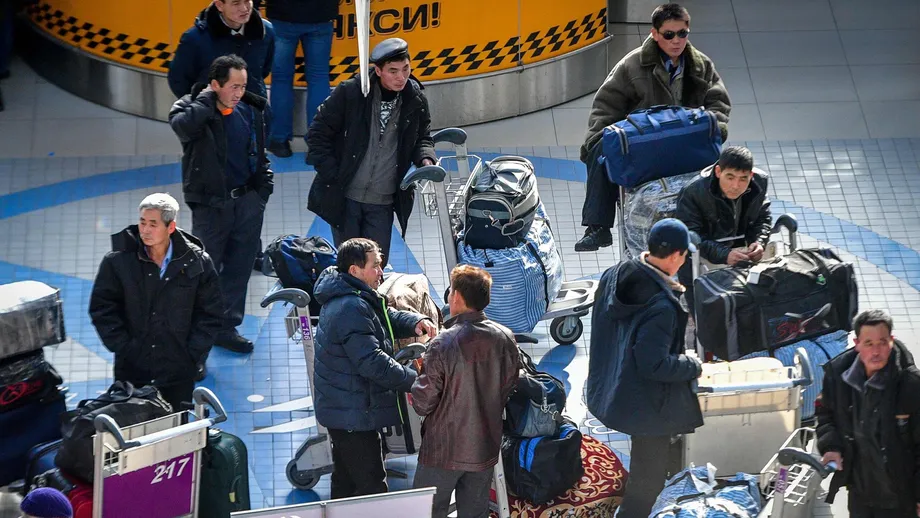
Thousands of Workers Reportedly Entered China Despite Sanctions
About 3,000 North Korean workers reportedly arrived in Hunchun, in China's Jilin Province, by March 2024, followed by another 500 in Dandong, Liaoning Province, in May. Most were young women assigned to garment factories and seafood processing plants, according to sources familiar with relations between China and North Korea.
Contents
- Thousands of Workers Reportedly Entered China Despite Sanctions
- What the UN Restrictions Were Designed to Stop
- How Border Closures Interrupted the Labor System
- Why Factories in Northeastern China Want Workers
- What Workers Face Beyond the Workplace
- Years at Sea on Chinese Fishing Vessels
- Crew Testimony Describes Contracts Without a Way Home
- China's Denial and the Diplomatic Stakes
- How Seafood and Garments Reach Overseas Buyers
- Key Points
The reported arrivals put renewed attention on a system that earns foreign currency for Pyongyang while exposing workers to allegations of surveillance, confiscated wages and restrictions on their freedom. Negotiations to accept more North Korean workers were also reportedly taking place in other Chinese regions.
United Nations Security Council sanctions adopted in 2017 sought to stop North Korea from earning money through its citizens working abroad. The measures were intended to restrict revenue that the international community believes supports the country's nuclear and missile programs.
China is nevertheless believed to host as many as 100,000 North Korean workers, according to estimates attributed to the United Nations and nongovernmental organizations. Their reported employment extends from manufacturing and seafood processing to fishing vessels operating far from Chinese shores.
As of June 30, 2025, the controversy brings together three connected issues: whether China is enforcing its international obligations, whether workers can freely leave their jobs, and whether goods made through forced labor are reaching overseas buyers. Chinese officials deny wrongdoing and say cooperation with North Korea takes place within international law.
What the UN Restrictions Were Designed to Stop
The Security Council adopted Resolution 2397 in 2017 in response to North Korea's continued nuclear and ballistic missile tests, which defied earlier international agreements and resolutions. The sanctions framework restricted work authorizations for North Korean nationals and required the repatriation of workers earning income abroad by December 2019.
Foreign currency is money earned in another country's currency. For North Korea, sending citizens overseas provides access to that money because workers must surrender much of their pay to the government. The sanctions target this flow of income, which the international community believes helps finance prohibited weapons programs.
The reported arrivals in Hunchun and Dandong came more than four years after the repatriation deadline. Together, the two groups amounted to about 3,500 people. Negotiations elsewhere suggest that those locations may form part of a wider effort to resume overseas labor deployments.
The estimate of as many as 100,000 workers describes a much larger population than the arrivals reported in those two cities. A verified current total, and a complete breakdown of where those workers are employed, have not been given.
How Border Closures Interrupted the Labor System
North Korea has long selected citizens for work abroad, including in China and Russia, under strict government supervision. Workers have limited control over their movements and must send most of their earnings to the state, retaining only a small portion for themselves.
COVID-19 border closures temporarily stopped the movement of workers. Many North Koreans already overseas became stranded and could not return home. When travel restrictions eased in 2023, China began repatriating some workers, before reports of renewed arrivals pointed to the first large deployment since the pandemic.
The sequence shows how the labor system moved from a formal repatriation deadline to pandemic isolation and then renewed dispatches:
- 2017: The UN Security Council adopted sanctions intended to restrict North Korea's earnings from workers abroad.
- December 2019: The deadline for repatriating North Korean workers arrived.
- During the COVID-19 pandemic: Border closures halted new deployments and left many workers overseas.
- 2023: Easing travel restrictions allowed China to begin returning some workers to North Korea.
- By March 2024: About 3,000 workers reportedly arrived in Hunchun.
- May 2024: Another 500 reportedly entered Dandong.
The renewed movement matters because returning some workers and accepting new groups can happen within the same broader period. The central issue is whether employment that generates income for Pyongyang continues despite the sanctions.
Why Factories in Northeastern China Want Workers
China's northeastern industrial provinces have faced population decline, labor shortages and slowing economic growth. These areas, often described as the country's Rust Belt, include the border regions where the new arrivals were reported.
Many young Chinese people are reluctant to take factory jobs or work in rural areas. North Korean workers can fill vacancies in garment production and seafood processing, giving employers access to labor described as cheap and reliable.
Economic demand also meets political calculation. Analysts have suggested that accepting workers could help Beijing rebuild relations with Pyongyang after the disruption caused by pandemic border closures. North Korea's closer relationship with Russia and changes in the United States' approach to Pyongyang add to China's interest in maintaining influence over its neighbor.
The reported arrangements are considered unlikely to be decisions made by local authorities alone. Their sensitivity suggests involvement or approval from the central government in Beijing, although no specific authorization has been identified. Labor recruitment in this setting touches foreign policy as well as the needs of individual factories.
What Workers Face Beyond the Workplace
Investigations by the Environmental Justice Foundation (EJF), journalists and human rights organizations describe North Korean workers living under constant surveillance by their government's security agents. Their working days often exceed 12 hours, while most of their wages are confiscated by the North Korean state.
Workers reportedly face harsh living conditions, little or no freedom of movement and restrictions on communication with their families. These controls reach beyond the factory floor or fishing deck: they affect where people can go, whom they can contact and whether they can leave.
The accounts describe conditions that meet International Labour Organization indicators of forced labor. In simple terms, forced labor involves people being made to work without a genuine ability to refuse or leave. Long hours become especially serious when combined with confinement, surveillance and the loss of control over pay.
The sanctions issue and the human rights issue are connected through the same wage system. Money earned overseas is largely taken by the government, while the people doing the work retain little income and limited freedom. The workers therefore bear the immediate personal cost of an arrangement that also generates revenue for Pyongyang.
Years at Sea on Chinese Fishing Vessels
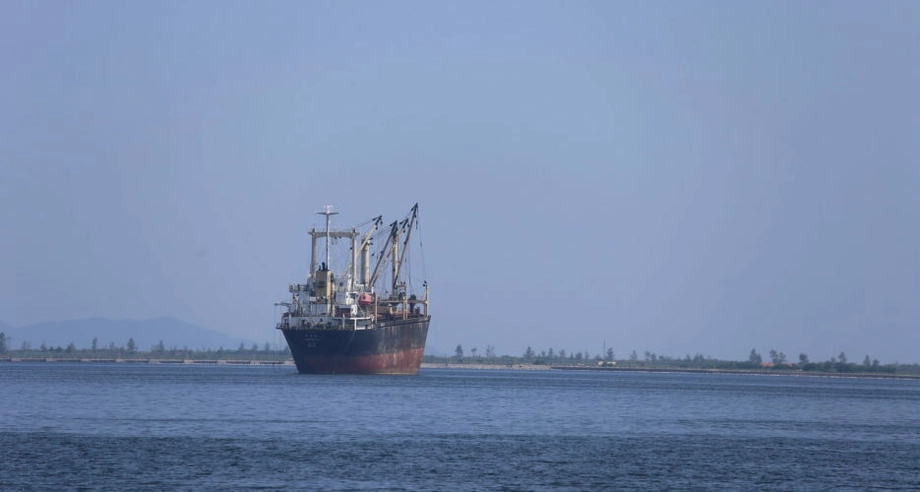
A 2024 EJF investigation identified at least 12 Chinese tuna longliners operating in the Indian Ocean that employed North Korean crew between 2019 and 2024. Longliners catch fish using long lines fitted with baited hooks, often operating far from the ports where their crews originally boarded.
Indonesian and Filipino crew members described North Korean workers being kept at sea for up to a decade. They said workers were transferred between vessels to avoid detection, prevented from leaving ships and denied the use of mobile phones.
Steve Trent, EJF's chief executive and founder, described the findings as a severe failure of oversight:
The use of North Korean labor on board Chinese fishing vessels is a damning indictment of the failure to regulate our oceans. Illegal fishing and human rights abuses can be found almost without exception on board China's distant-water vessels. However, the use of North Korean forced labor for such long periods is a particularly severe example of the egregious misconduct uncovered by EJF.
Transfers between ships are central to the allegations. A worker moved to another vessel instead of being brought to port can remain isolated even after a contract ends. The reported practice also makes it harder for authorities checking vessels in port to identify who has been working at sea.
Crew Testimony Describes Contracts Without a Way Home
An Indonesian crew member described six North Koreans who remained at sea after the end of their contracts. The account points to a gap between a written employment period and a worker's actual ability to return home:
Six Koreans were not allowed to go home even after they completed their four-year contract. They were just moved from one ship to another.
Another crew member described the distress visible among North Korean workers and compared their prolonged isolation with the difficulty of spending even six months at sea:
Every time we saw them, they looked very stressed. Even six months at sea are too long for me. I could not imagine it being for years.
The testimony gives a concrete account of what restricted movement means aboard a fishing vessel. Finishing a contract does not bring a journey home when other people control transfers, access to shore and contact with the outside world.
Restrictions on phones and family communication deepen that isolation. For workers who cannot leave the ship, the workplace also becomes the place where they live for years, with few opportunities to seek help beyond the crew around them.
China's Denial and the Diplomatic Stakes
Chinese officials have generally rejected allegations that the country's fishing operations or cooperation with North Korea violate international rules. Foreign Ministry spokesperson Lin Jian stated China's position in response to the allegations:
China all along carries out offshore fishing in accordance with laws and regulations. China's relevant cooperation with the DPRK is conducted within the framework of international law.
DPRK is the abbreviation for North Korea's official name, the Democratic People's Republic of Korea. Lin's statement places both fishing activity and cooperation with Pyongyang within China's stated commitment to international law.
The investigations describe a different picture, including transfers allegedly intended to conceal workers from port inspections. Those allegations put enforcement at the center of the dispute: international restrictions depend on governments checking who is employed, where they work and whether they can return home.
China's relationship with North Korea also involves historical ties, border stability and security concerns. Analysts have interpreted renewed labor deployments as a possible effort to repair relations after a period of cooling. An argument linking the lack of major anniversary celebrations in 2023 to that cooling contains a date error: the 75th anniversary of diplomatic relations fell in 2024.
North Korea's strengthening relationship with Russia adds another reason for Beijing to maintain close ties. Accepting workers may serve that political interest while meeting demand from Chinese employers, although the motives attributed to Beijing remain analysis rather than an announced government explanation.
How Seafood and Garments Reach Overseas Buyers
Seafood, garments and other products made with North Korean labor can enter markets across Asia, Europe and the United States. The concern extends beyond the country where the work takes place because finished goods and fish can pass through international supply chains before reaching consumers.
Products associated with forced labor can conflict with import bans and ethical sourcing standards in destinations including the United States, the European Union and Japan. Buyers therefore face a practical problem: knowing the company that sells a product may give them only part of the information needed to understand how it was made.
Fishing presents particular challenges because vessels operate far from shore and can transfer catches or crew at sea. Transshipment means moving a catch from one vessel to another. Without close monitoring, those movements can make it harder to follow fish from the vessel that caught it to its final market.
EJF and other human rights groups have called for mandatory transmission of vessel positions, stronger port controls and the elimination or close monitoring of transshipment. These proposals target the places where ships, catches and workers can become difficult to track.
Trent argued that responsibility extends from China to the governments responsible for vessels and the bodies regulating seafood markets:
The ripple effects of this can be felt far and wide, with the fish caught using this illegal labor reaching seafood markets across the world. China bears the bulk of the responsibility, but when products tainted by modern slavery can be found on our own plates, it is clear that collective responsibility needs to be taken by Flag states and regulating bodies as well.
A flag state is the country where a vessel is registered. Better checks by those governments, ports and buyers would address different stages of the same chain, from identifying workers aboard a ship to tracing the seafood sold abroad. Human rights groups argue that stronger enforcement and transparency are needed to protect workers and give the sanctions practical force.
Key Points
- About 3,000 North Korean workers reportedly arrived in Hunchun by March 2024, followed by 500 in Dandong in May.
- UN sanctions adopted in 2017 sought to restrict overseas labor revenue and required worker repatriation by December 2019.
- Estimates attributed to the UN and nongovernmental organizations put the North Korean workforce in China at as many as 100,000.
- EJF identified at least 12 Chinese tuna longliners employing North Korean crew in the Indian Ocean between 2019 and 2024.
- Worker accounts describe confiscated wages, surveillance, restricted movement and years at sea without returning home.
- China says its fishing activities and cooperation with North Korea comply with international law.
- Human rights groups seek stronger port inspections, vessel tracking and supply chain checks to prevent exploitation.