A public acknowledgment with lives at stake
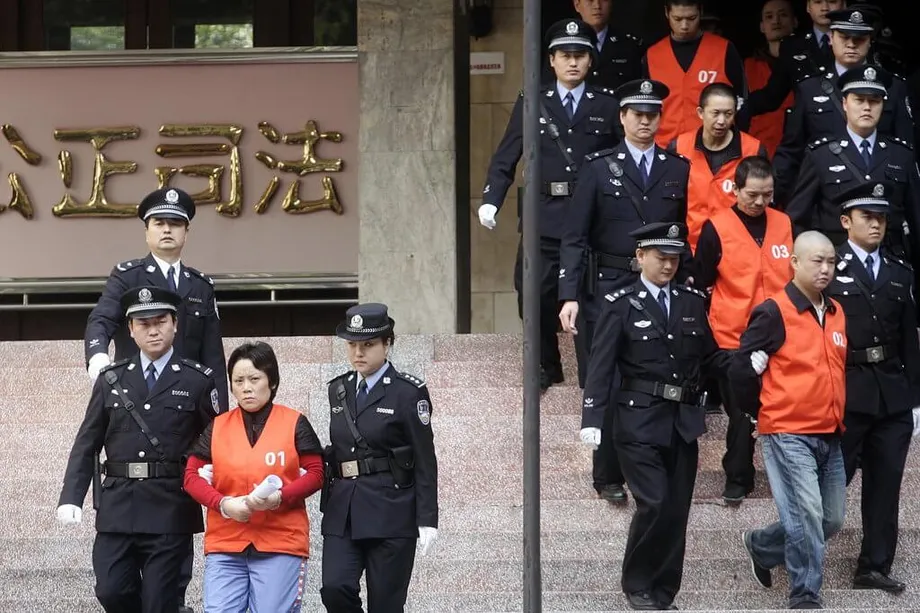
China's Supreme People's Procuratorate (SPP), the country's top prosecutorial authority, announced in June 2024 that it would establish a new investigative department to pursue judicial officers who violate citizens' rights. Its stated targets included unlawful detention, illegal searches and torture, practices that authorities have often denied when allegations came from the United Nations and human rights groups.
Contents
- A public acknowledgment with lives at stake
- What prosecutors promised to investigate
- The cases and reforms behind the debate
- How RSDL isolates suspects
- From Party discipline to liuzhi
- Why banning coerced confessions has not ended abuse
- The cost to lawyers, activists and families
- International criticism and China's defense
- Accountability within an expanding detention system
- Key Points
The announcement amounted to a rare public acknowledgment that such abuses persist within China's justice system. It also put a concrete question before prosecutors: whether a new department can hold officials accountable when detainees, their families and their lawyers often struggle to obtain information about what happens in custody.
Several cases illustrate the stakes. A senior executive at a mobile gaming company based in Beijing died in custody in April 2024 after more than four months of detention in Inner Mongolia. Authorities said he took his own life. He had been held under Residential Surveillance at a Designated Location (RSDL), a system that can isolate suspects from lawyers and relatives for extended periods.
Other cases publicized by the SPP involved a suspect who died in 2022 after alleged torture with electric shocks and plastic pipes, and police officers jailed in 2019 after starvation and sleep deprivation left a detainee in a vegetative state. Together, the cases brought attention to the distance between legal protections and the treatment people can experience after detention.
As of June 26, 2025, the central issue remained how the promised crackdown would operate alongside detention systems that give investigators extensive control over suspects and restrict outside scrutiny.
What prosecutors promised to investigate
The SPP described the new department's task as investigating judicial officers who "infringe on citizens' rights" through practices including unlawful detention, illegal searches and torture. The pledge placed misconduct by people working within the justice system directly within the prosecutor's stated priorities.
China has faced decades of criticism from human rights organizations, the United Nations and foreign governments over forced confessions, arbitrary detention and the treatment of dissidents. The announcement changed the official rhetoric by publicly recognizing abuses that authorities have frequently rejected when raised from outside the country.
The cases publicized by the SPP also showed that some abuses have led to criminal punishment. The 2019 case involved jail sentences for police officers whose treatment of a detainee caused devastating injury. Yet the continued appearance of cases involving death and severe mistreatment points to a problem extending beyond a single investigation.
Public anger over these incidents emerged even within China's tightly controlled media environment. The response gave the crackdown immediate human significance: families wanted answers about deaths in custody, while people facing investigation needed protection before abuse occurred.
The cases and reforms behind the debate
China's efforts to restrict coerced confessions and its use of secretive detention have developed alongside one another. The main dates show how promises of legal protection have coexisted with systems that isolate suspects:
- 2012: RSDL was introduced, and an amendment to the Criminal Procedure Law prohibited the use of confessions obtained through torture as evidence.
- 2015: The campaign against human rights lawyers and activists known as the 709 crackdown began.
- 2018: The National Supervision Law replaced the Communist Party's shuanggui disciplinary detention system with liuzhi.
- 2019: Police officers were jailed for starvation and sleep deprivation that left a detainee in a vegetative state.
- 2022: A suspect held under RSDL died after alleged torture involving electric shocks and plastic pipes.
- 2023: According to Safeguard Defenders, 26,000 people were placed in liuzhi, an average of 71 a day.
- April 2024: The gaming company executive died in custody in Inner Mongolia.
- June 2024: The SPP announced its new investigative department targeting abuses by judicial officers.
The timeline brings two parts of the story together. China has introduced rules intended to prevent torture and wrongful convictions, while retaining or expanding forms of detention in which access to lawyers, relatives and ordinary judicial safeguards is limited.
How RSDL isolates suspects
Residential Surveillance at a Designated Location allows police to hold people in secret locations for up to six months. Despite its name, the system can involve detention away from a person's home, with little contact with the outside world.
RSDL is officially justified as a way to investigate serious crimes. It has also been widely used against human rights lawyers, activists and dissidents. People held under it are often denied access to legal counsel and family, and can remain without charge for extended periods.
Reports of abuse under RSDL include sleep deprivation, beatings and psychological pressure. For a detainee, losing contact with a lawyer removes someone who could challenge the detention or raise allegations of mistreatment. For relatives, isolation can make it difficult to learn about the person's health or conditions.
The executive's death in April 2024 drew attention to those conditions. He had spent more than four months in custody before authorities said he took his own life. His detention under RSDL raised concerns about the secrecy surrounding the system and the protections available to someone held within it.
From Party discipline to liuzhi
For decades, the Chinese Communist Party (CCP) used shuanggui to detain and interrogate Party members suspected of corruption or disloyalty. The Party's internal disciplinary body operated the system, which became known for secrecy, limited legal safeguards and torture used to extract confessions. Human Rights Watch and other organizations documented deaths and severe abuse.
The National Supervision Law replaced shuanggui with liuzhi, or "retention in custody," in 2018. The change broadened the system beyond Party members to people exercising "public power," including civil servants and business executives. The wider reach also extends to educators and hospital administrators.
Under liuzhi, detainees can be held for up to six months without access to lawyers or family. The process operates outside the regular judicial system. Safeguard Defenders put the number detained in 2023 at 26,000, equivalent to an average of 71 people each day.
Liuzhi facilities use padded cells, guards around the clock and strict rules intended to prevent suicide. Reports of torture, forced confessions and psychological abuse have nevertheless continued. A criminal defense lawyer described most clients as people who "would succumb to the pressure and agony," with only a tiny minority able to resist.
The change from shuanggui to liuzhi therefore involved more than a new name. A detention mechanism previously associated with internal Party discipline acquired a basis in national law and a broader group of people who could be subjected to it.
A Chinese legal expert described that shift in these terms:
In the past, it was extra-legal. Now, some critics call it 'legally illegal.'
The criticism concerns the gap between establishing a detention power in law and giving a detainee practical ways to challenge its use. Liuzhi's legal status exists alongside restrictions on access to the people who could help a suspect contest treatment or detention.
Why banning coerced confessions has not ended abuse
China's 2012 amendment to the Criminal Procedure Law prohibits confessions obtained through torture from being used as evidence. The Supreme People's Court has also called for criminal justice reforms, and rules excluding unlawfully obtained evidence were introduced to discourage police misconduct and wrongful convictions.
Putting those protections into practice can be difficult. Defense lawyers face barriers to obtaining medical inspection records and interrogation recordings, both of which may help establish how a confession was obtained. Investigators rarely testify in court to answer allegations of misconduct.
China Law Translate's analysis of exclusionary rules describes another limit: the absence of the "fruit of the poisonous tree" doctrine found in other legal systems. In plain language, that doctrine concerns evidence discovered through an unlawful act. Without it, a court may exclude a coerced confession while still allowing evidence investigators obtained because of that confession.
China's heavy reliance on admissions of guilt, together with a conviction rate exceeding 99%, creates strong incentives to secure confessions. A legal ban must therefore work against investigative practices in which an admission can carry enormous weight.
The practical issue for a defendant is whether a protection can be enforced. A person alleging torture needs a way to obtain records, present the allegation and have those responsible answer it. Restrictions at any of those stages can weaken the protection written into law.
The cost to lawyers, activists and families
The 709 crackdown, which began in 2015, targeted hundreds of human rights lawyers and activists through detention, disbarment or imprisonment. Charges often included "subversion of state power." Many of those targeted have described torture and other abuse in custody.
Ding Jiaxi, a prominent rights lawyer, was subjected to prolonged sleep deprivation, forced to sit on a "tiger bench" for days and exposed to propaganda played at maximum volume. His case shows how physical restraint and psychological pressure can be combined during detention.
Sophie Luo, Ding's wife, described both her husband's commitment to political freedom and the toll his treatment took on their family:
You have dedicated your life to China's democracy and freedom, but this government doesn't appreciate it at all… In return for your patriotism, they torture you and lock you up. Can you consider leaving China, and choosing another life?
Other prominent cases include writer Yang Hengjun, an Australian citizen who has been denied adequate food and medical care, and citizen journalist Zhang Zhan. Zhang has undertaken repeated hunger strikes and been subjected to force feeding, treatment human rights groups classify as torture.
Lawyers who defend dissidents or expose abuses can themselves face harassment, disbarment and imprisonment. That pressure affects more than the individual lawyer. It can deter others from accepting sensitive cases or speaking publicly about injustice, leaving detainees with fewer people willing or able to represent them.
Ordinary citizens also bear the consequences of abusive detention. The cases involving the gaming executive and the detainee left in a vegetative state show why the debate extends beyond political prosecutions to the basic safety of people in custody.
International criticism and China's defense
The United Nations Committee Against Torture has repeatedly criticized China's detention practices and the implementation of its legal reforms. In its most recent review cited in the debate, the committee called for the closure of secret jails and an end to the crackdown on lawyers and activists.
The committee described its concern about the persistence of abuse:
serious concern over consistent reports indicating that the practice of torture and ill-treatment is still deeply entrenched in the criminal justice system.
Chinese officials have continued to defend the country's legal system. At a 2024 press briefing, Foreign Ministry spokesperson Hua Chunying pointed to government efforts to strengthen legal protections:
In recent years China has been promoting the rule of law and has made great efforts in all regards, including on opposing torture.
The disagreement centers on implementation as well as legislation. The committee has said reforms have not been fully implemented or enforced, while limited transparency, independent oversight and accountability continue to weaken confidence in official assurances.
International pressure has occasionally contributed to the release of prominent detainees. Human rights advocates argue that foreign governments should press more firmly for accountability and connect diplomatic or economic engagement to improvements in human rights. Broader change has remained limited.
Accountability within an expanding detention system
President Xi Jinping's campaign against corruption has led to the detention and punishment of hundreds of thousands of officials. The government presents it as an effort to clean up the Party and public administration. Critics argue that it also removes political rivals and strengthens Xi's control.
The expansion of liuzhi to a wider range of people connects that campaign to the daily work of businesses, schools, hospitals and government offices. A system once centered on Party members can now reach people in other positions associated with public power.
Limited judicial oversight and secret detention create concerns about abuse, extortion and the suppression of dissent. Legal scholars warn that giving such detention a formal legal structure can still erode public trust and weaken citizens' rights when meaningful safeguards are missing.
The SPP's pledge addresses one part of that problem: investigating officials accused of unlawful detention, illegal searches and torture. Its practical importance lies in whether people can report abuse, whether investigators can establish what happened and whether those responsible face consequences.
The June 2024 announcement offered a public commitment to confront misconduct. The experience of detainees and their families, the barriers facing defense lawyers and the continued use of isolation remain central to judging how far that commitment reaches.
Key Points
- The SPP announced a new investigative department in June 2024 to pursue abuses including torture, unlawful detention and illegal searches.
- Cases publicized by prosecutors included deaths in custody and mistreatment that left a detainee in a vegetative state.
- RSDL permits detention in secret locations for up to six months, often with restricted access to lawyers and relatives.
- Liuzhi replaced shuanggui in 2018 and broadened detention beyond Communist Party members. Safeguard Defenders recorded 26,000 people placed in liuzhi in 2023.
- China bans the use of confessions obtained through torture, but lawyers face obstacles obtaining evidence and challenging investigators.
- Lawyers, activists, business figures and ordinary citizens have faced severe consequences from abusive detention.
- China defends its legal reforms, while the United Nations Committee Against Torture has criticized persistent abuse and weak enforcement.