Magnet shipments plunge as factories run short
China's exports of rare earth magnets fell by more than 50% in May 2025 compared with April, the steepest monthly decline since 2012, according to Chinese customs data. Shipments to Germany dropped 55%, those to the United States fell 77%, exports to South Korea declined 81%, and deliveries to Japan were down 57%.
Contents
- Magnet shipments plunge as factories run short
- Why these metals matter so much
- How the restrictions unfolded
- Why shipments are getting stuck
- Car production feels the first shock
- Electronics and defense face shrinking inventories
- Trade talks meet a lasting licensing system
- Europe and India seek more secure supplies
- The United States tries to rebuild production
- Australia expands while recycling gains attention
- Diversification takes longer than inventories last
- Key Points
Those figures show how quickly restrictions on a small group of materials can reach factory floors around the world. Ford stopped production of its Explorer SUV at its Chicago plant for a week in May. Suzuki suspended production of its Swift car. European automotive suppliers have also shut plants and production lines as supplies became harder to obtain.
Beijing introduced export controls in April 2025 on seven rare earth elements and related products, including high performance magnets. The measures came in response to escalating trade tensions and punitive tariffs imposed by the United States. They added the materials to China's export licensing system for goods with both civilian and military uses.
By June 26, the disruption had exposed a dependence that extends far beyond electric vehicles. Rare earths are needed for renewable energy equipment, advanced electronics, aerospace manufacturing and defense systems. Manufacturers in the United States, Japan, India and Europe have halted or reduced production, while supply managers warn that further interruptions could follow as inventories shrink.
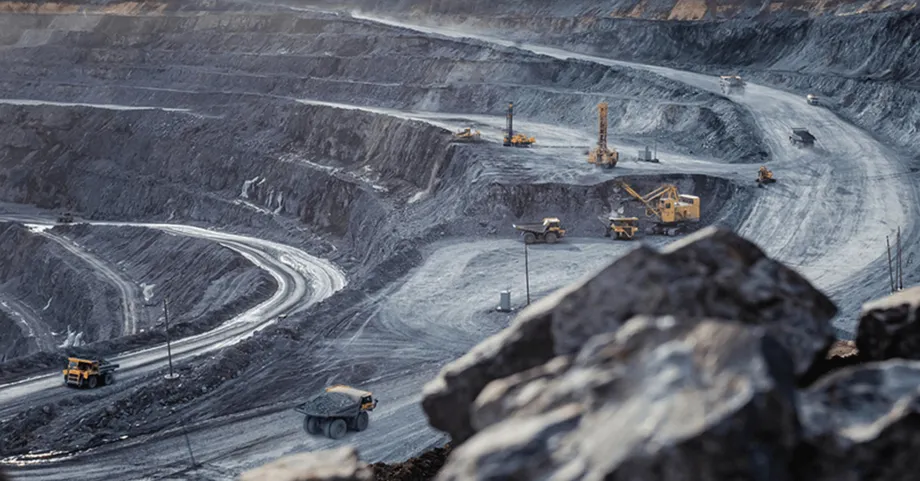
China accounts for about 60% of global rare earth production and nearly 90% of refining. Other countries are seeking new suppliers, expanding processing plants and exploring recycling, but replacing the country's tightly connected network of mines, refineries and magnet factories will take years.
Why these metals matter so much
Rare earth elements are a group of 17 chemically similar metals with magnetic, optical and catalytic properties. Those properties help equipment produce magnetic forces, handle light or support chemical reactions. Despite their name, the metals are relatively abundant in the Earth's crust. The difficult part is extracting them and refining them into usable materials, a process that is costly, technically complex and environmentally challenging.
Magnets made using neodymium, dysprosium and terbium are important components in electric vehicle motors, wind turbines and fighter jets. They also appear in much smaller devices, including the motors that move car seats and operate windshield wipers. A shortage can therefore affect an ordinary vehicle as well as a sophisticated military aircraft.
A single F-35 fighter jet contains nearly 900 pounds of rare earths, while a Virginia-class submarine uses more than 9,000 pounds. Rising demand for electric vehicles and the transition to clean energy have increased the need for these materials across civilian industries, too.
China's position rests on more than its mineral deposits. Its industry, backed by the state, has invested heavily in refining capacity, research and education, creating substantial advantages in cost and technology. Jost Wübbeke, managing partner at the consultancy Sinolytics, described the reach of that supply network:
The whole world economy relies on these magnets from China. If you stop exporting those, it will be felt across the globe.
Western countries allowed much of their rare earth industry to move to China over several decades, attracted by lower costs and fewer environmental regulations. The United States now produces almost none of its own rare earth magnets and relies on imports from China and, to a lesser extent, Japan and Vietnam.
How the restrictions unfolded
China's April measures placed seven rare earths and associated products under its dual use export license system. Exporters must obtain permission to ship controlled goods, giving Beijing a way to influence supplies during its trade dispute with Washington.
The practical effects developed quickly:
- April 2025: China imposed export controls on seven rare earth elements and related products amid rising trade tensions with the United States.
- May 2025: Rare earth magnet exports fell by more than 50% from April, and Ford halted Explorer production in Chicago for a week.
- By June 26, 2025: Production interruptions, delayed licenses and shrinking inventories were pushing manufacturers and governments to seek faster approvals and alternative supplies.
Chinese officials have struggled with a surge of license applications, uncertainty over export codes and difficulties checking the composition of shipments. Those administrative problems have compounded the pressure created by the restrictions themselves.
Nabeel Mancheri, founder of the Global Rare Earth Industry Association, said the workload had caught officials unprepared:
It surprised the bureaucracy in Beijing. They didn't think it could be so much work. What I hear from the Chinese side is that it was even a shock for themselves.
For manufacturers abroad, a license application is now another step between ordering a component and receiving it. Even when permission is granted, slow customs clearance can leave factories waiting for parts they need to keep production running.
Why shipments are getting stuck
China's licensing system requires exporters to provide detailed information about customers further along the supply chain and the eventual uses of their products. Gathering those details complicates trade negotiations and raises concerns about disclosing intellectual property and other sensitive business information.
Customs classification creates another problem. All permanent rare earth magnets use the same international product classification, known as an HS code, whether or not they contain controlled elements. Officials therefore need more information than the code alone provides, and shipments can require testing at Chinese ports.
David Merriman of Project Blue said the number of tests exporters need has exceeded the capacity of China's official testing channels. Some shipments have been delayed because they contained trace impurities of listed rare earths, even when those elements were not deliberately added to the product.
Government agencies have also disagreed over how strictly to apply the restrictions. The security apparatus has been reluctant to approve licenses for foreign companies, seeking to preserve bargaining power in negotiations with the United States.
China's Ministry of Commerce has pledged to streamline approvals, but only about a quarter of export license applications have been approved. Procedures remain opaque and differ between provinces. Some applications have been rejected on procedural grounds, while others require companies to disclose sensitive information.
Car production feels the first shock
Automotive manufacturing has experienced some of the most visible disruption. European supplier plants and production lines have already closed, with further outages expected as inventories run out. Ford's interruption in Chicago and Suzuki's suspension of Swift production show how the supply problem can reach major vehicle brands.
Benjamin Krieger, secretary general of the European Association of Automotive Suppliers, known as CLEPA, warned that the industry's connections across borders were spreading the effects:
With a deeply intertwined global supply chain, China's export restrictions are already shutting down production in Europe's supplier sector.
Germany's automotive industry association, the VDA, has warned that output could soon grind to a halt without an improvement in supplies. Some export licenses have been granted, but slow customs clearance and uncertainty over future deliveries continue to make production planning difficult.
Automakers are exploring motors that use little or no rare earth material. Such designs could reduce their dependence on Chinese supplies, but the alternatives are not yet scalable or cost effective. Manufacturers facing immediate shortages cannot quickly replace all the components already used in their vehicles.
Michael Dunne, an automotive consultant, described the potential scale of the disruption in the United States:
China could bring America's automotive assembly plants to a standstill.
Electronics and defense face shrinking inventories
Aerospace manufacturers, semiconductor companies and military contractors are also affected. The United States defense industry is particularly exposed because rare earths are needed for advanced weapons and communications systems, alongside their use in aircraft and submarines.
A survey by the American Chamber of Commerce in China found that 75% of United States firms expect their rare earth stocks to be exhausted within three months. The finding points to a narrow window for companies seeking new deliveries while navigating the licensing process.
Rare earth prices have risen, procurement costs have increased and export quantities have shifted sharply. The United States, the European Union and India face manufacturing difficulties as shortages reach industries that depend on these materials.
Companies are responding by trying to stockpile supplies, investing in research to reduce rare earth use and lobbying governments for support. Their immediate priority is keeping factories supplied, while their longer term challenge is finding reliable sources beyond China's production network.
Trade talks meet a lasting licensing system
Washington and Beijing have held talks aimed at resolving their trade differences, while the European Union has sought faster license approvals for its companies. These diplomatic efforts address both the commercial disruption and China's use of rare earth supplies as bargaining power.
Arthur Kroeber, founding partner of Gavekal Dragonomics, said exports to commercial customers could resume while Beijing still limits the opportunity to build large reserves:
It's quite likely that they will restart exports to commercial users, but not in amounts that would permit stockpiling.
China's licensing regime appears likely to remain in place rather than serve only as a temporary response to tariffs. Gabriel Wildau, managing director at Teneo, warned that supply cutoffs would remain an ever present threat, reflecting Beijing's intention to maintain bargaining power over Washington and other governments.
A timetable for restoring dependable deliveries has not been given. Manufacturers must therefore manage both the current backlog and uncertainty about the quantities they will be able to obtain later.
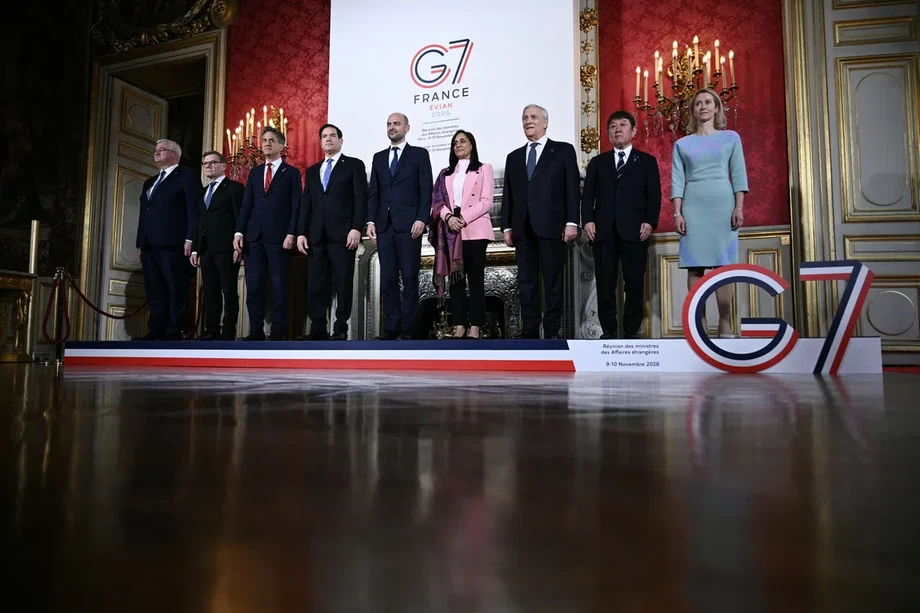
G7 leaders have recognized the economic and national security risks posed by rare earth shortages. They have pledged a joint response to deliberate market disruptions and efforts to diversify production and supplies. China's scale and its connected production chain, from mining through magnet manufacturing, make it a difficult competitor to replace.
Europe and India seek more secure supplies
The European Union relies on China for 98% of its rare earth magnets. The European Commission aims to produce 7,000 tons of magnets within the EU by 2030, supported by new mining, refining and recycling projects, including developments in Estonia and France.
Europe's plans address several stages of production because securing mined material alone leaves the need for refining and magnet manufacturing unresolved. A complete separation from China is considered unthinkable in the short term, and alternative sources will take years to develop.
India has the world's fifth largest rare earth reserves, yet it lacks the refining capacity needed to turn those resources into materials for advanced technology. It consequently remains dependent on Chinese exports despite having substantial deposits of its own.
Indian efforts to diversify supplies include partnerships with the United States, Australia and Central Asian countries. Those efforts have yet to produce substantial results. India's situation illustrates the difference between possessing minerals underground and having the industrial capacity to supply usable materials to manufacturers.
The United States tries to rebuild production
American factories producing rare earth magnets moved overseas about two decades ago. Attempts to restart domestic manufacturing have faced high costs, environmental concerns and a shortage of technical expertise.
Mountain Pass in California, the only United States rare earth mine, has struggled to compete with China's low processing costs. It has only recently begun separating rare earths at the mine site. Separation is a necessary step in turning mined material containing different elements into products suitable for further manufacturing.
New companies are attempting to rebuild other parts of the supply chain. Phoenix Tailings in Massachusetts is working to produce rare earth metals domestically, but its output is tiny compared with that of Chinese factories.
Expanding American production will require substantial investment, government support and time. Manufacturers facing shortages need materials now, while mines, processing facilities and the expertise to operate them cannot be expanded at the same speed as an export restriction takes effect.
The United States therefore faces two linked tasks: securing imports to keep existing factories working and rebuilding domestic capacity to reduce exposure to future interruptions. The movement of production overseas has left gaps across several stages, from processing minerals to making finished magnets.
Australia expands while recycling gains attention
Australia has emerged as a potential alternative supplier because of its rich deposits and growing government support for mining and processing. Lynas Rare Earths, the largest producer outside China, operates the Mt Weld mine in Western Australia and refines rare earths in Malaysia.
Iluka Resources and Arafura Rare Earths are building new processing plants, with government loans supporting expansion. These projects could help broaden the range of suppliers available to manufacturers seeking to reduce dependence on China.
Australia still faces limits of its own. Most processing takes place overseas, and environmental concerns have delayed the development of domestic refining capacity. Building a complete supply chain will take years, while China's cost advantage remains difficult to match.
Recycling is another option, particularly in the European Union, which aims to meet up to 50% of demand through recycled materials by 2050. Recovering rare earths from existing products could provide an additional source, but current infrastructure is inadequate and legal and financial barriers remain.
New mines, refineries and recycling operations address different parts of the same shortage. Their value depends on whether material can move through all the necessary stages and reach manufacturers in a form they can use.
Diversification takes longer than inventories last
China's share of global rare earth extraction has fallen from 80% to 60% over the past decade as projects in Australia, the United States and Canada have expanded. That is a decline of 20 percentage points, yet China retains nearly 90% of refining and remains the dominant force in the market.
Building alternative supply chains is expected to take at least a decade. The work requires extensive infrastructure, international partnerships and government support, alongside the investment needed to compete with China's established industry.
Manufacturers are trying to bridge that gap through stockpiling, research into products that use fewer rare earths and requests for government assistance. Those measures operate on different schedules: inventories can help with an immediate interruption, while new designs and production facilities require much more time.
The April restrictions have exposed how dependence on a single supplier can affect ordinary cars, clean energy equipment, electronics and military systems at once. Countries are racing to expand their options, but their factories still depend heavily on the materials and magnets moving through China's licensing system.
Key Points
- China imposed export controls in April 2025 on seven rare earth elements and related products, including high performance magnets.
- Magnet exports fell by more than 50% in May compared with April, the steepest monthly decline since 2012.
- Only about a quarter of export license applications have been approved, with testing delays, procedural problems and disagreements between agencies slowing shipments.
- Ford, Suzuki and European automotive suppliers have experienced production interruptions, while electronics, aerospace and defense companies also face supply pressure.
- China accounts for about 60% of rare earth production and nearly 90% of refining, despite a decline in its share of extraction over the past decade.
- The European Union, United States, Australia and India are pursuing new production, partnerships and recycling, but alternative supply chains are expected to take at least a decade to build.
- China's licensing system appears likely to remain in place, leaving manufacturers exposed to further supply interruptions during trade disputes.