Holiday Journeys Home Stretch Into Hours
Thousands of travellers returning to Hong Kong through Shenzhen Bay have faced lengthy queues, crowded transport stops and traffic jams during recent holiday periods, as growing demand puts pressure on one of the main gateways between Hong Kong and mainland China.
Contents
- Holiday Journeys Home Stretch Into Hours
- Why More Hong Kong Residents Are Travelling North
- Easter and Labor Day Show the Pressure
- Queues Continue Beyond Immigration
- What Creates the Bottlenecks at Shenzhen Bay?
- Authorities Add Staff, Information and Traffic Controls
- Passengers and Drivers Describe the Strain
- Congestion Reaches Beyond the Checkpoint
- What Changes Are Being Considered?
- Key Points
Some travellers reported waiting more than an hour to clear customs, while others spent several additional hours caught in traffic. At the Hong Kong-Zhuhai-Macao Bridge, some private car owners said their return journey took nearly three hours. The delays have extended beyond border processing to the buses, taxis and roads needed to complete the trip home.
Shenzhen Bay was originally designed to handle about 60,000 crossings a day, but daily traffic now often exceeds 90,000, especially during peak periods. That puts the reported busy-day flow at least 30,000 crossings above the original figure, or roughly 50% higher.
Recent Easter and Labor Day travel illustrated the scale of demand. Official statistics showed more than 600,000 border crossings over just a few days, with most movements passing through land checkpoints such as Shenzhen Bay, Lok Ma Chau and Lo Wu. On peak days, more than 90,000 people entered Hong Kong, with Shenzhen Bay handling a substantial share.
For families returning from shopping, leisure trips or visits to relatives, the practical problem is a journey with several possible queues. Clearing the border may be followed by another wait for transport, then a slow trip through congested roads. Authorities have increased staffing, issued travel advice and tightened traffic controls, but heavy holiday demand continues to overwhelm parts of the system.
Why More Hong Kong Residents Are Travelling North
Shenzhen's proximity makes it a convenient destination for short trips. Hong Kong residents travel there for shopping, dining, entertainment and family visits, while business and social ties generate further journeys across the border.
The reopening of borders after the pandemic has brought large numbers of travellers back during weekends and public holidays. Easter, Labor Day and the Mid-Autumn Festival are among the periods when residents take the opportunity to head to mainland China.
The Greater Bay Area initiative has also encouraged closer economic and social connections between Hong Kong, Macau and cities in Guangdong province. In everyday terms, stronger connections mean more reasons for people to cross the border, whether to spend money, see relatives or conduct business.
School schedules add another layer of demand. The end of exams has encouraged families to travel north during holidays, filling seats in private vehicles and on public transport. When many of those families return at similar times, pressure builds at the checkpoints and on the routes serving them.
Easter and Labor Day Show the Pressure
Recent holiday travel brought both large passenger totals and warnings of further heavy traffic. The figures describe different measures: crossings over several days, entries into Hong Kong on peak days, and expected use of land checkpoints during a holiday.
- During the recent Easter and Labor Day holidays, official statistics recorded more than 600,000 border crossings over just a few days. Most used land checkpoints, including Shenzhen Bay, Lok Ma Chau and Lo Wu.
- On peak days, more than 90,000 people entered Hong Kong, with Shenzhen Bay carrying a significant portion of that flow.
- During the recent Labor Day holiday, more than 570,000 people were expected to use land crossings. Shenzhen Bay, Lok Ma Chau and Lo Wu each faced tens of thousands of entries and exits daily.
A crossing is a movement through the border, so a journey out of Hong Kong and a later return each contribute to the traffic passing through checkpoints. Those movements also create demand for connecting transport on both sides.
Shenzhen Bay's popularity concentrates a large share of that demand in one place. Other crossings are available, but many travellers continue to prefer Shenzhen Bay because it is convenient for their journeys.
Queues Continue Beyond Immigration
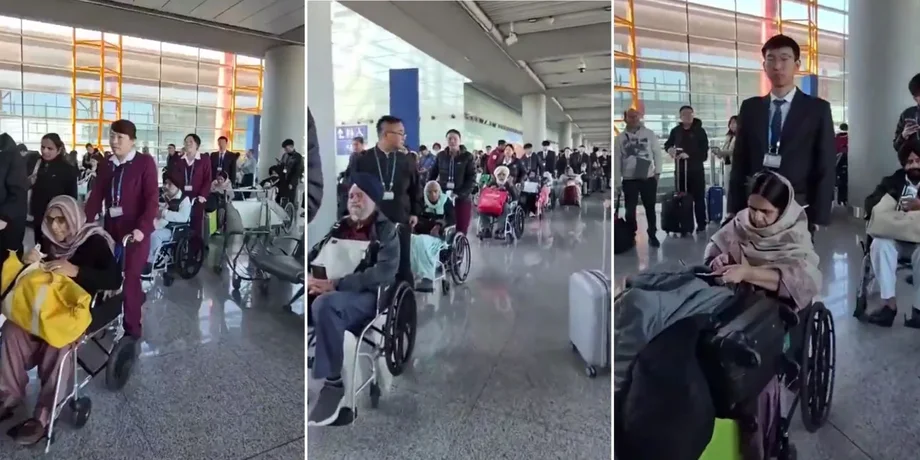
Travellers have described crowds stretching for dozens of metres, with thousands waiting either to complete border formalities or to board shuttle buses. Images and accounts circulating on social media showed the long queues, sometimes described as "human dragons".
Some passengers reported spending more than an hour passing through customs. Others encountered another lengthy delay outside the checkpoint, where taxis were difficult to obtain and traffic stood still.
An unnamed traveller described waiting for a taxi after reaching the border transport area:
I had to wait nearly an hour just to get a taxi. The queue was endless, and the traffic outside the checkpoint was at a standstill. It was the worst congestion I've ever experienced at the border.
Private motorists have also faced severe delays. Some said it took nearly three hours to cross the Hong Kong-Zhuhai-Macao Bridge and return to Hong Kong, showing that the pressure has extended beyond Shenzhen Bay.
For passengers, the total delay depends on how these stages combine. A long border queue, a wait for a vehicle and slow traffic can turn a short return trip into a journey lasting several extra hours.
What Creates the Bottlenecks at Shenzhen Bay?
Shenzhen Bay's congestion reflects both the number of people arriving and the ability of surrounding facilities to move them onward. The checkpoint's original capacity of about 60,000 crossings a day is being tested by flows that often exceed 90,000 during busy periods.
Roads and public transport facilities are frequently overwhelmed. Even when passengers finish border checks, the supply of taxis, buses and space for private vehicles can struggle to match the crowd leaving the checkpoint.
Illegal parking and unauthorised passenger pickups add to the difficulties. Vehicles stopping in unsuitable places, together with unclear traffic flow, can create bottlenecks and confusion around already busy transport areas.
Local officials and transport experts have described the combination of high demand, inadequate infrastructure and weak coordination between transport services as making congestion a "new normal" at Shenzhen Bay on weekends and holidays.
Alternative routes offer some scope to spread the traffic, but travellers' preference for Shenzhen Bay keeps demand concentrated there. Improving the journey therefore involves both processing people at the border and moving them efficiently through the surrounding area.
Authorities Add Staff, Information and Traffic Controls
Authorities on both sides of the border have acknowledged the congestion and introduced measures intended to reduce delays. Hong Kong's Immigration Department has launched a mobile app providing updates on waiting times at major crossings, allowing travellers to compare conditions before choosing a route.
Additional immigration counters and staff are deployed during peak periods to speed up processing. These measures target the time passengers spend completing border checks.
Police and transport officials have also stepped up traffic management. Their work includes directing vehicles, managing the flow around checkpoints and acting against illegal parking or unauthorised pickups.
Public advisories urge travellers to plan ahead, avoid the busiest hours and consider other crossings, including Lok Ma Chau, Man Kam To and the Hong Kong-Zhuhai-Macao Bridge. Spreading journeys across different routes and times can reduce the number of people arriving at one checkpoint together.
Heavy holiday volumes have nevertheless continued to strain the system. The expectation that more than 570,000 people would use land crossings during the recent Labor Day holiday illustrates the scale of demand that staffing and traffic measures must accommodate.
Passengers and Drivers Describe the Strain
Travellers have used social media to call for better coordination and more transport options. Their complaints focus on repeated holiday disruption and the time lost between reaching a checkpoint and finally getting home.
One unnamed traveller questioned the recurring delays and called for a stronger response from authorities:
Why do we have to suffer through this every holiday? Can't the authorities do more to coordinate traffic and provide more transport options?
Taxi drivers and bus operators have also raised concerns about the facilities available for serving large crowds. Some drivers reported difficulty finding passengers willing to pay high fares for long journeys, while others complained about a shortage of designated places to pick up and drop off passengers.
An unnamed bus driver described the repeated trips needed to carry waiting passengers:
There were so many people waiting for the shuttle bus that we had to make multiple trips just to clear the queue. Some passengers waited over 45 minutes for a ride.
Those accounts show why passenger numbers alone tell only part of the story. A large crowd needs vehicles, suitable boarding areas and road space at the same time. Pressure on any one of those can prolong the journey.
Congestion Reaches Beyond the Checkpoint
Residents living near border crossings also experience the effects of heavy traffic. Persistent noise, crowded streets and queues of vehicles have become sources of frustration and complaints.
Urban planning is a central concern because growth in travel has outpaced the development of supporting infrastructure. Border facilities, nearby roads and public transport connections all form part of the same journey, and each needs to cope with the flow passing through.
Closer economic ties bring benefits through travel, spending and personal connections, while also increasing the work required to manage people and goods moving between Hong Kong and mainland China.
Public safety is another concern. Overcrowding and traffic jams increase accident risks and can create difficulties during emergencies, when people and vehicles need room to move.
Transport experts have called for a comprehensive review of policies governing travel across the border, stronger coordination among government agencies and investment in expanded transport hubs, additional crossings and better public transport links. The aim is to address the full journey rather than a single queue.
What Changes Are Being Considered?
Longer term measures under consideration or being implemented include expanding capacity at key crossings, adding transport facilities and improving road layouts. Each addresses a different part of the congestion, from processing passengers to providing space for vehicles.
Shenzhen's government is accelerating construction of new transport hubs and expanding the metro network to connect directly with border checkpoints. Hong Kong is also investing in new facilities and improving coordination between transport services.
Other proposals involve using current traffic information, digital ticketing and automated systems to manage the movement of people and vehicles. Such tools can help operators organise services around changing demand.
Encouraging use of less crowded checkpoints and providing incentives for travel outside peak periods are also among the proposed approaches. Public information campaigns can help travellers choose routes and departure times that place less pressure on the busiest crossings.
No completion dates or detailed delivery schedules were given for the infrastructure plans described. Travellers continue to face the immediate task of planning around holiday peaks, while authorities work on staffing, transport coordination and the facilities needed to handle larger flows.
Key Points
- Thousands of travellers returning to Hong Kong have faced long border queues, waits for transport and traffic jams during recent holidays.
- Shenzhen Bay was designed for about 60,000 crossings a day, while reported daily flows often exceed 90,000 during busy periods.
- Official statistics recorded more than 600,000 crossings over a few days during recent Easter and Labor Day travel.
- Some travellers reported more than an hour at customs, nearly an hour waiting for a taxi, or more than 45 minutes waiting for a shuttle bus.
- Authorities have added staff and counters, provided waiting time updates, strengthened traffic controls and advised travellers to consider other routes.
- Plans include larger transport hubs, improved roads, better public transport connections and tools to manage passenger and vehicle flows.