A demographic milestone reaches classrooms and care homes
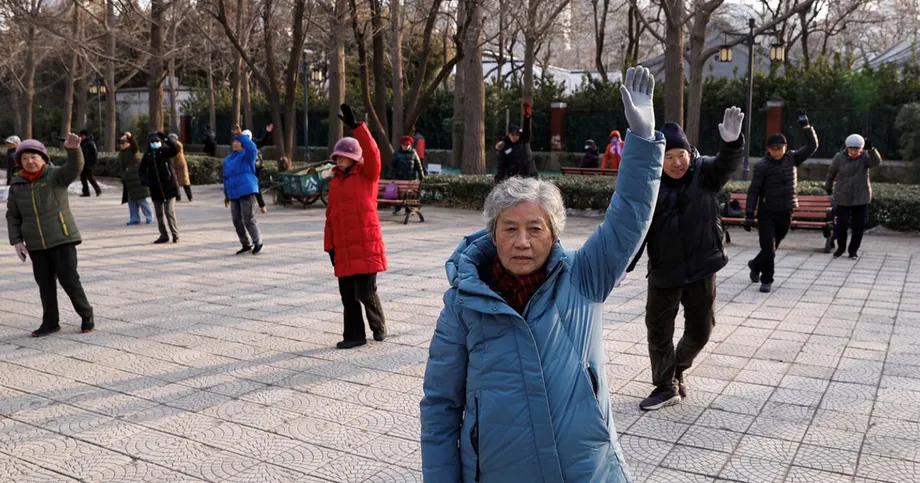
China had 223.65 million people aged 65 and older in 2025, compared with 212.76 million children aged 0 to 14, according to figures attributed to the National Bureau of Statistics' China Statistical Yearbook 2026. The elderly dependency ratio reached 23.1%, exceeding the child dependency ratio of 22% for the first time.
Contents
- A demographic milestone reaches classrooms and care homes
- What the dependency ratios mean
- How the balance changed over a decade
- Kindergartens find a new purpose
- Rural school reuse becomes a planning task
- Teacher training shifts toward eldercare
- Older consumers want learning and connection
- Aging is accelerating, with large regional differences
- Public finances and workforce policy face pressure
- Key Points
The difference represents 10.89 million more older people than children. People aged 65 and above accounted for 15.9% of the population, while children made up 15.1%. Together, the two groups produced a total dependency ratio of 45.1%.
Across several cities, the shift is already changing how buildings and workers are used. A former kindergarten in Jinan has become a community eldercare center. A conversion project in Changzhou involves idle premises belonging to a public kindergarten. Guangzhou Preschool Education College has added a qualification in smart health and eldercare services and management.
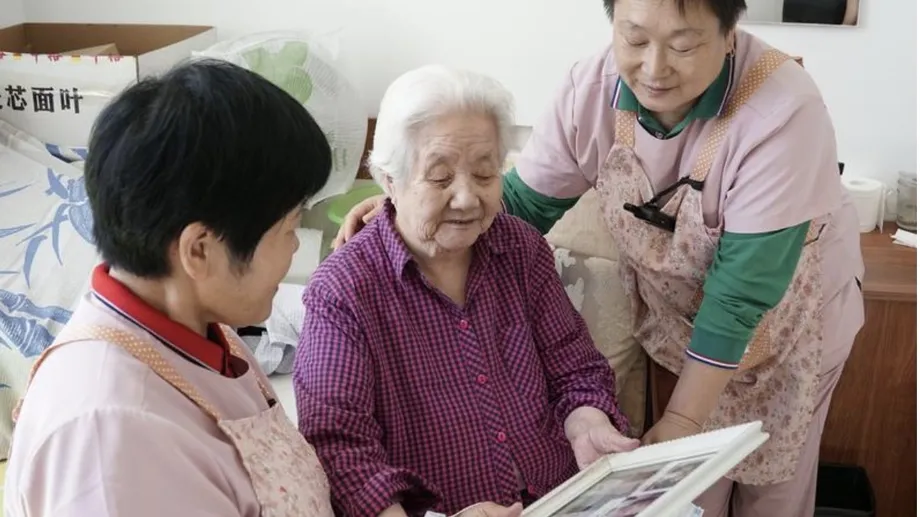
China's changing population is creating two demands at once: adapting services where fewer children enroll, and expanding care, meals, activities and education for older residents. The response extends beyond nursing homes to teacher training, rural school buildings and classes in artificial intelligence and drone operation.
The crossover also comes during a wider population decline. Figures released by the National Bureau of Statistics on January 19 put China's population at 1.40489 billion at the end of 2025, down 3.39 million from a year earlier. There were 7.92 million births and 11.31 million deaths during the year, marking a fourth consecutive annual population decline.
What the dependency ratios mean
A dependency ratio compares people in particular age groups with those aged 15 to 64. Under this definition, China's 2025 elderly ratio means there were about 23 people aged 65 or older for every 100 people of working age. The child ratio means there were about 22 children for the same 100 people.
The combined figure of 45.1% therefore describes roughly 45 children and older adults for every 100 people aged 15 to 64. The population shares of 15.9% and 15.1% use a different denominator: everyone in the country, including children and older adults.
Actual financial responsibilities depend on employment, earnings, savings, pensions and family arrangements. People aged 15 to 64 include students and people without paid work, while some older adults continue working or support themselves through pensions and assets.
The World Bank's age dependency dataset lists China's total ratio for 2025 at 44%, compared with the yearbook figure of 45.1%. The bank identifies United Nations population estimates and World Bank staff estimates as its data sources, providing a separate statistical series.
How the balance changed over a decade
China's elderly dependency ratio rose from 15% in 2016 to 23.1% in 2025. That is an increase of 8.1 percentage points, or 54% relative to its starting level. In practical terms, the number of older people per 100 people of working age increased from 15 to about 23.
The sequence shows how the two ratios moved toward their crossover:
- 2016: The elderly dependency ratio stood at 15%.
- 2021: It reached 20.8%, passing 20% for the first time.
- 2024: The elderly ratio reached 22.8%, just below the child ratio of 23%.
- 2025: The elderly ratio rose to 23.1%, while the child ratio fell to 22%.
Statista's historical dependency overview places the change in a longer cycle. China's total dependency ratio stayed below 40% between 2005 and 2017. Falling birth rates had reduced child dependency, while around 2010 growing elderly dependency began offsetting that decline.
Kindergartens find a new purpose
Changzhou's first project to convert idle premises belonging to a public kindergarten into an eldercare facility was signed on July 30. It concerns the Shunyuan Ercun Kindergarten site in Xuejia town, in the city's Xinbei district. An opening date for the converted facility was not given.
Jinan's Sanjiaoxian Comprehensive Elderly Care Service Center occupies a former private kindergarten in the Baohua Street area of Tianqiao district. The kindergarten had operated for more than 30 years before its change of use.
Jinhua, in Zhejiang province, offers an earlier example. A kindergarten that had been open for 25 years was converted into a community nursing home in 2023.
Some kindergartens are also exploring combined childcare and eldercare services. These local responses show how the same demographic shift can reduce demand for one service while increasing demand for another. Buildings previously devoted to children can become places where older residents receive care close to their communities.
Rural school reuse becomes a planning task
Hebei has moved beyond individual conversions with a plan for managing and reusing idle primary and secondary school buildings. Five provincial departments jointly issued it: education, development and reform, finance, natural resources, and agriculture and rural affairs.
The plan calls for standardized management, different approaches for different properties, and multiple forms of reuse. The participation of five departments brings school administration, public spending, land management and rural development into the same process.
The plan covers idle buildings, land and supporting facilities at public primary and secondary schools and kindergartens resulting from school-layout changes, closures or mergers. Its four principles are government coordination, sustainable and full utilization, prevention of state-asset loss, and locally adapted conversion.
The procedures include inventory and registration; clarifying ownership and classifying disposition; drawing up and implementing plans; and updating registration and completing write-offs. Facilities may be reused for education, economic development, public services or comprehensive redevelopment. County-level governments are responsible for implementation, with the departments carrying out their respective duties.
The full plan text or an official notice is not provided, so its precise requirements and implementation timeline cannot be checked. The available account outlines the procedures and responsibilities but gives no detailed timetable.
Rural population movement adds another layer to the change. As residents move toward towns and cities, some village schools lose pupils even while older residents remain nearby. Population aging and fewer children can deepen that local imbalance.
Former schools in different places are being reused as nursing homes, eldercare centers and dining facilities for older people. These uses address different needs: somewhere to live with care, somewhere to receive community services, or somewhere to obtain a prepared meal. The practical task is matching an unused property with the services its surrounding population needs.
Teacher training shifts toward eldercare
Guangzhou Preschool Education College added two programs in 2025: smart health and eldercare services and management, and stage art design and production. The eldercare program is intended to address demand for workers in Guangzhou's health and care industries.
The change brings an institution associated with educating young children into training for services used by older adults. Its new eldercare qualification links health services, care provision and management, broadening the range of jobs for which students can prepare.
Education institutions face a different adjustment from building owners. A kindergarten conversion changes the use of a property. A new college program changes the skills entering the labor market. Together, the examples show how population change affects both physical facilities and the people needed to operate services.
Older consumers want learning and connection
Universities for older adults, open universities and care providers have recruited teachers for music, calligraphy, dance and wellness classes. Recruitment has also extended to people able to teach AI applications, video production and drone operation.
The subjects show the breadth of the silver economy, a term for goods and services aimed at older consumers. Alongside personal care and health needs, it includes cultural activities, learning and opportunities to spend time with other people.
Research into older adults' interest based learning describes spending on hobbies as one of their main consumption categories. It identifies enjoyment, social connection and belonging as reasons people pay for classes and activities. A regular lesson can provide both a skill to practice and a group to return to.
For education providers, the recruitment notices point toward a market broader than traditional leisure classes. Older learners are also being offered access to newer technologies. The demand for instructors creates another possible destination for teaching skills as institutions adjust to changing enrollment patterns.
Aging is accelerating, with large regional differences
China's population share aged 65 and above rose from 14.2% in 2021 to 14.9% in 2022, 15.6% in 2024 and 15.9% in 2025. The increase between 2021 and 2025 was 1.7 percentage points.
Provincial figures show that some places are further along. In 2024, people aged 65 and older accounted for 21.9% of Liaoning's population and 20.3% of Shanghai's. The shares were 19.4% in both Jilin and Heilongjiang, and 18.9% in Chongqing.
Heilongjiang's figure appears in its 2024 statistical bulletin, jointly released by the Heilongjiang Provincial Bureau of Statistics and the National Bureau of Statistics' Heilongjiang survey team on April 16, 2025. The province had 30.29 million permanent residents at the end of 2024: 2.54 million aged 0 to 14, or 8.4%; 21.87 million aged 15 to 64, or 72.2%; and 5.88 million aged 65 and older, or 19.4%. The population figures come from the 2024 population-change sample survey covering five people per thousand, and the bulletin identifies its data as preliminary statistics.
Source documents and underlying 2024 population counts for the other places in the regional comparison are not provided.
The difference matters for service planning. A national total can guide the scale of pension and health spending, while the local age structure helps determine where care workers, community meals and accessible facilities are most urgently needed. The distribution of older residents also helps explain why the reuse of schools is becoming a local government concern.
A medium scenario in the China Population Forecast Report 2023 projects that people aged 80 and older could account for 3.7% of the population in 2030 and 11% in 2050. Those projections depend on assumptions about births, deaths and other population changes. They point to growing demand for services suited to people at more advanced ages, alongside activities for healthier, younger retirees.
Public finances and workforce policy face pressure
RAND's population aging brief projects fewer than two people of working age for each person aged 65 or older by 2050. It also says China's population could fall by about 250 million from roughly 1.4 billion by that year.
RAND identifies pressure on pensions, health care and public finances as major consequences. A smaller workforce means fewer potential contributors relative to the number of older people drawing benefits. Its analysis also considers competition for military funding and a smaller pool of potential recruits, while describing recruitment as a concern for the longer term rather than an immediate problem.
China's policy response combines support for families with measures to extend working lives. RAND describes a 2024 directive from the State Council General Office containing 13 measures covering childbirth, childcare, housing, employment and education. It also discusses the gradual increase in retirement ages toward 63 for men and 58 for women by 2040.
RAND argues that pension changes also require attention to contribution rates, benefit calculations and eligibility. Those choices concern how much workers and employers pay, how much retirees receive, and when people qualify. For households, they connect the national demographic shift to the timing of retirement and the income available afterward.
The local conversions and training changes address a more immediate part of the same challenge. China needs to maintain services for children and families while redirecting some buildings, workers and spending toward a growing older population. The 2025 crossover gives that adjustment a concrete statistical marker.
Key Points
- China's elderly dependency ratio reached 23.1% in 2025, exceeding the child ratio of 22% for the first time.
- The country had 223.65 million people aged 65 and above and 212.76 million children aged 0 to 14.
- Kindergarten conversions in Changzhou, Jinan and Jinhua illustrate changing demand for local services.
- Hebei's five department plan addresses the reuse of idle primary and secondary school buildings.
- Colleges and education providers are expanding into eldercare training and classes for older learners.
- Longer term policy choices concern pensions, health care, retirement and support for families raising children.