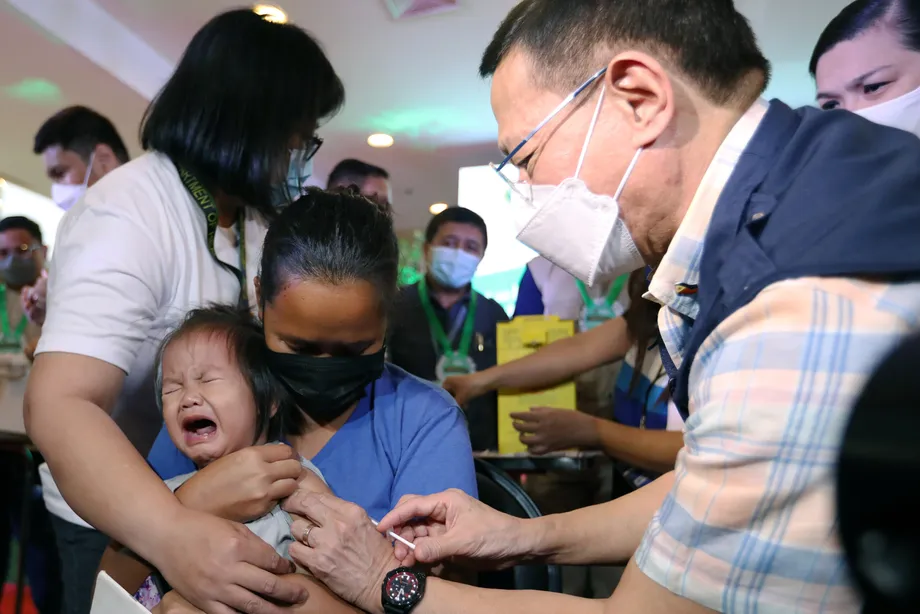
85,907 Children Still Missed Their First DTP Dose in 2023
The Philippines reduced the number of children missing their first routine diphtheria, tetanus and pertussis vaccine to 85,907 in 2023, down 47% from 163,000 in 2022. The decline moved the country out of the 20 nations with the largest numbers of these children and into 36th place worldwide.
Contents
- 85,907 Children Still Missed Their First DTP Dose in 2023
- What Zero-Dose Means for a Child
- The Recovery Followed Severe Pandemic Disruption
- How Vaccination Efforts Reach More Families
- Tracking Missed Children and Protecting Vaccine Supplies
- Trust Remains a Barrier at the Household Level
- Why 96% Coverage Still Leaves a Completion Gap
- A National Gain Against a Difficult Global Picture
- Keeping Services Within Reach
- Key Points
The figures, described in a major study published in The Lancet study and corroborated by World Health Organization and UNICEF data, mark a substantial improvement after the disruption of the COVID-19 pandemic. Between 2020 and 2022, the Philippines recorded 1 million children without a first DTP dose and ranked fifth globally for the highest number of unvaccinated children.
Children who have not received that first dose by their first birthday are described as zero-dose children. Their number is a central measure of whether routine vaccination services are reaching families.
The country's progress comes with a substantial unfinished task. Although coverage of the first DTP dose reached 96% in 2023, only 62% of eligible children received all the recommended doses of key vaccines by their first birthday. Starting vaccination and completing it remain two different challenges.
Health Secretary Teodoro Herbosa has set a goal of 95% full immunization coverage by 2025. As of June 26, 2025, the figures described here show how much ground the country recovered in 2023 and the gaps its continuing vaccination efforts are intended to close.
What Zero-Dose Means for a Child
The DTP vaccine protects against diphtheria, tetanus and pertussis, also known as whooping cough. Its first dose is used as a practical indicator of access to basic health services because it is a cornerstone of routine childhood immunization.
A child who misses that first dose may also be missing other routine vaccines. Children outside the vaccination system face greater risks from preventable diseases, including measles, polio and pertussis. Reaching them requires health services to find families who have not yet entered routine care, while helping other families return for later doses.
The 2023 decline amounted to 77,093 fewer zero-dose children than in 2022, based on the reported totals of 163,000 and 85,907. Even after that reduction, tens of thousands of infants still needed to be reached.
The Recovery Followed Severe Pandemic Disruption
COVID-19 lockdowns and restrictions on movement kept families from routine medical appointments. In the Philippines, those interruptions contributed to a sharp increase in zero-dose children during 2020 and 2021.
The Lancet study describes a wider setback: global coverage of key vaccines fell sharply during the pandemic, and many countries have yet to return to the levels recorded before it. The Philippine recovery therefore forms part of a broader effort to restore services and vaccinate children who missed scheduled protection.
The main dates show both the disruption and the continuing response:
- 2020 and 2021: Pandemic restrictions disrupted routine care, contributing to a sharp rise in zero-dose children in the Philippines.
- 2020 to 2022: The country recorded 1 million zero-dose children and ranked fifth globally for the highest number of unvaccinated children.
- 2021: The Philippines ended polio transmission, a milestone later highlighted by UNICEF.
- 2022: The number of zero-dose children stood at 163,000, while full immunization coverage was 60%.
- 2023: Zero-dose children fell to 85,907, first DTP dose coverage reached 96%, and full immunization coverage rose to 62%.
- 2024 to 2025: The National Immunization Acceleration Plan prioritizes reaching children who remain unvaccinated.
- 2025: The Department of Health aims to achieve 95% full immunization coverage.
The WHO's Big Catch-Up campaign and Philippine acceleration plans focus on recovering lost ground, particularly among the most vulnerable populations. The pandemic also prompted new approaches to finding missed children and monitoring vaccination work.
How Vaccination Efforts Reach More Families
The Philippine response combines government leadership, international partnerships, community engagement and technology. These efforts address several parts of the same problem: finding missed children, helping families accept vaccination and making sure health workers can deliver effective vaccines.
The Department of Health and Department of Education launched Bakuna Eskwela, a school vaccination program targeting students in Grades 1, 4 and 7. Its catch-up work aims to reach children who missed routine injections during infancy, especially those affected by pandemic disruption.
School vaccination serves children who are older than the infants counted in the zero-dose measure. Within the wider immunization effort, it provides another opportunity to reach those whose earlier protection was incomplete.
Local health workers, youth advocates and religious leaders also promote vaccination in communities where families are difficult to reach or hesitant about vaccines. In the Bangsamoro Autonomous Region in Muslim Mindanao, or BARMM, Muslim religious leaders have actively encouraged immunization.
Coalitions at national and local levels support this work, alongside significant investment from partners including USAID and the Australian Government. The National Immunization Acceleration Plan for 2024 to 2025 keeps the remaining unvaccinated children at the center of the response.
Tracking Missed Children and Protecting Vaccine Supplies
The Real Time Vaccination and Monitoring Analysis toolkit, known as RT-VaMA, was developed with UNICEF support to track vaccination progress as work takes place. It streamlines data collection and helps teams identify gaps sooner.
Health teams can use those findings to organize rapid mop-up activities, returning to vaccinate children missed during earlier efforts. Faster information helps connect the record of a missed vaccination with the practical task of reaching that child.
Investments in cold chain management, supply logistics and health worker training support vaccine delivery. The cold chain is the refrigerated storage and transport system that keeps vaccines effective until they are administered.
The Philippines faces particular delivery challenges because it is an archipelago with more than 2,000 inhabited islands. Reaching remote communities requires both transport and reliable temperature control, including in places with limited infrastructure.
Vaccination coverage therefore depends on more than the availability of doses. Vaccines must remain effective during their journey, trained workers must be able to administer them, and families must be able to reach a service or receive a visit.
Trust Remains a Barrier at the Household Level
Vaccine hesitancy continues to complicate efforts to reach every child. The Dengvaxia dengue vaccine controversy weakened public trust, while misinformation and myths about vaccine safety continue to make some parents reluctant to vaccinate their children.
Dr. Jennifer Lou Lorico-De Guzman, medical coordinator for the national immunization program in Taguig, described the concerns health workers encounter and their efforts to explain vaccination to families:
There are myths that these particular vaccines give you the disease itself. So, there's a lot of controversies. We are trying to educate the public about the importance of vaccines.
Health workers and community advocates have responded with visits from door to door, providing information and addressing concerns directly. Those conversations give families an opportunity to raise the specific worries that may be keeping a child from vaccination.
Grandparents also have substantial influence over vaccination decisions in some communities. Communication efforts must therefore reach the people involved in deciding whether a child receives a vaccine, including family members beyond the parents.
Community outreach and reliable delivery work together. A family may need reassurance about safety, a more accessible vaccination service, or both. Religious leaders, youth advocates and local health workers play different roles in helping those services reach households.
Why 96% Coverage Still Leaves a Completion Gap
The Philippines recorded 96% coverage for the first DTP dose among children under one in 2023, placing it 75th among 204 countries. That measure shows how widely children received an initial dose.
Full immunization coverage was much lower, at 62%. A fully immunized child has received all recommended doses of the key vaccines by the first birthday. Families must therefore be reached repeatedly, across the vaccination schedule, for early access to become complete protection.
The difference between the two measures was 34 percentage points in 2023. Full immunization coverage increased from 60% in 2022 to 62% in 2023, a gain of two percentage points, while remaining 33 percentage points below the Department of Health's 95% goal.
The 95% target is intended to help prevent outbreaks of diseases such as measles and polio. The practical challenge is to bring children into routine vaccination and keep them connected to services until their recommended doses are complete.
The Department of Health is also working to address gaps in vaccination records, particularly for children vaccinated in private facilities. More complete records are part of the effort to identify who has received vaccines and who still needs them.
A National Gain Against a Difficult Global Picture
More than 14.5 million children worldwide did not receive basic vaccines in 2023, according to the CDC immunization facts. Most lived in countries with low or middle incomes, and more than half were concentrated in just 10 nations.
The Philippines had previously been among the five largest contributors to the global zero-dose total. Its move to 36th place shows a substantial change in its position, even while large gaps persist elsewhere.
The CDC also describes one in five children worldwide as still lacking access to lifesaving vaccines. Zero-dose children are heavily concentrated in areas affected by conflict and countries with limited resources, particularly in sub-Saharan Africa and South Asia.
Routine vaccination is also a major investment in health. Each dollar spent on immunization saves $52 in countries with low or middle incomes, while fully immunizing a child in the world's poorest countries costs just $18.
Dr. Jonathan Mosser, senior author of the Lancet study, described both the value of vaccination and the pressures slowing its progress:
Routine childhood vaccinations are among the most powerful and cost-effective public health interventions available, but persistent global inequalities, challenges from the COVID-19 pandemic, and the growth of vaccine misinformation and hesitancy have all contributed to faltering immunization progress. These trends increase the risk of outbreaks of vaccine-preventable diseases, underscoring the critical need for targeted improvements to ensure that all children can benefit from lifesaving immunizations.
Keeping Services Within Reach
The Department of Health, WHO and UNICEF are working to connect immunization more closely with broader health strategies so that adolescents, mothers, newborns and children benefit from vaccination. World Immunization Week and continuing school campaigns are part of that sustained push.
The Philippine experience brings together several practical approaches: monitoring vaccination progress quickly, mobilizing trusted local voices and focusing services on communities that remain difficult to reach. Continued investment is intended to keep those efforts operating beyond individual campaigns.
UNICEF Acting Representative Behzad Noubary pointed to earlier public health achievements and called for continued support for the national program, especially in communities at the end of the delivery network:
Routine immunization has saved many lives in the Philippines by eliminating maternal and neonatal tetanus, containing measles outbreaks, and ending polio transmission in 2021. The government's continued investment in the national immunization programme will build resilient, sustainable systems, especially in the last mile. Our children's future, where they are healthy, protected, surviving, and thriving, is the dose of good news we need in unpredictable times.
The remaining task is concrete: reach the 85,907 children counted as zero-dose in 2023, sustain access for new groups of infants and help children complete their recommended vaccinations. The improvement in first doses provides a stronger starting point, while the 62% completion rate shows where continued attention is needed.
Key Points
- Zero-dose children in the Philippines fell 47%, from 163,000 in 2022 to 85,907 in 2023.
- The country moved out of the global top 20 for zero-dose children and ranked 36th.
- First DTP dose coverage reached 96% in 2023, but full immunization coverage was 62%, up from 60% in 2022.
- The Department of Health aims for 95% full immunization coverage by 2025.
- Community outreach, school vaccination, RT-VaMA monitoring and stronger vaccine delivery support efforts to reach missed children.
- Vaccine hesitancy, misinformation, incomplete records and delivery across remote islands remain challenges.
- Globally, more than 14.5 million children missed basic vaccines in 2023.