A small machine takes aim at a demanding daily treatment
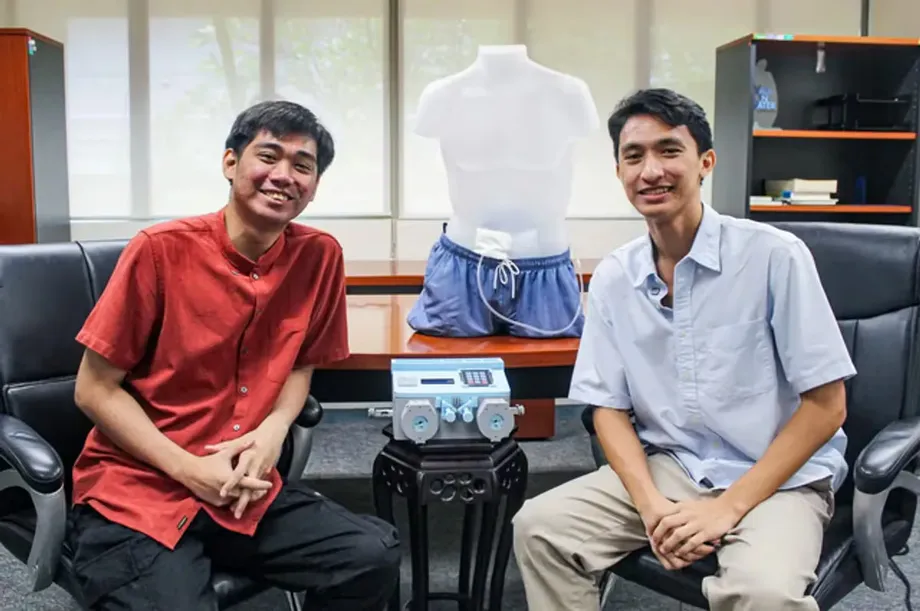
University of the Philippines Diliman graduates Andrew Jacob Buensalido and Allyson Cabrestante have developed a home dialysis assistant whose first prototype used about P6,000 in raw materials. Their invention, BiDaKidney, combines a controlled pump, weight sensors and a clamp to help patients manage the repeated fluid exchanges required for peritoneal dialysis.
Contents
- A small machine takes aim at a demanding daily treatment
- How dialysis at home works
- A family conversation became an engineering project
- What the pump, sensors and clamp do
- Why the P6,000 figure matters
- A growing need, measured in different ways
- Insurance and household support shape access
- What the Dyson recognition brings
- The milestones behind the next decision
- Key Points
The project won the Philippine national prize in the 2026 James Dyson Award and reached the international competition's Global Top 20. Global winners are scheduled to be announced on November 4, with a prize of about P2.39 million available to support further development and commercialization.
For patients, the central ambition is practical: reduce the work involved in managing treatment at home. The device moves dialysis fluid, measures transfers and tracks time, taking over tasks that otherwise require repeated attention from patients or caregivers.
Cabrestante, a mechanical engineering graduate and one of the inventors, described the team's intended destination:
Our ultimate goal for patients is for them to have BidaKidney, something they can take home or even to work, so they can realize the potential of peritoneal dialysis as a truly flexible, at-home treatment option.
BiDaKidney is still a prototype. Its eventual selling price, regulatory clearance, clinical testing results and date of availability have not been announced. The developers are exploring production options, with medical requirements and compliance costs expected to affect the price.
How dialysis at home works
Dialysis helps remove waste and excess fluid when a person's kidneys can no longer do enough of that work. Hemodialysis, the treatment used by most Filipino dialysis patients, sends blood through a special filter outside the body, usually during repeated visits to a treatment center.
Peritoneal dialysis uses the lining inside the abdomen as the filtering surface. A special liquid called dialysate enters the abdomen through a tube. Waste and excess fluid move into that liquid, which is later drained and replaced with fresh solution.
Buensalido said the team learned that patients manually control fluid lines and weigh bags while monitoring treatment cycles lasting three to four hours, repeated several times a day. Fluid remains in the abdomen for part of the cycle, while exchanges and measurements require direct attention.
Home treatment can reduce journeys to a dialysis center, but it brings medical routines into the household. Patients and caregivers must manage supplies, keep connections clean and follow the prescribed treatment schedule. A smaller machine could help with some of those tasks while treatment continues under medical supervision.
A family conversation became an engineering project
Buensalido's sister, pediatric nephrologist Dr. Socorro Marie, brought the problem to his attention by describing the difficulties patients faced with home peritoneal dialysis. A nephrologist is a doctor who specializes in kidney disease; a pediatric nephrologist treats children.
Buensalido and Cabrestante began developing their response as a capstone project during their fourth year at UP Diliman. Over two semesters, they moved from drawings and three dimensional models to a working prototype.
The development process involved repeated testing and adjustments to the pump, sensors, clamp and control system. Rather than creating a new method of filtering waste, they concentrated on the physical steps patients already perform during peritoneal dialysis.
That focus shaped the device's role as an assistant. For a household repeating treatment throughout the day, weighing bags and watching fluid transfers can compete with work, caregiving and rest. The inventors aimed to reduce that repeated manual workload.
What the pump, sensors and clamp do
BiDaKidney's controlled pump moves dialysis fluid through standard tubing. Its built in weight sensors track the amount transferred, giving the system a way to monitor fluid movement instead of leaving each measurement to the patient.
A clamp controlling two tubes directs the flow and is intended to help prevent leaks and backflow, meaning liquid moving in the wrong direction. The device also tracks time. Together, these components automate selected steps while using standard peritoneal dialysis supplies.
Cabrestante explained the division of work between the patient and the machine:
BiDaKidney is like having an assistant for the patient; instead of the patient having to do the weighing, BiDaKidney handles everything. It manages the weighing and fluid transfer processes, and also keeps track of the time.
The design is described as partly automated because its role centers on fluid handling and monitoring. Patients would still need their prescribed dialysis solution, appropriate supplies and guidance from their care team. For families, the intended benefit is fewer manual treatment tasks rather than a different form of kidney care.
Why the P6,000 figure matters
Buensalido put the raw material cost of the first prototype at about P6,000. Cabrestante said the team's market search found some existing peritoneal dialysis cyclers priced at P500,000 to P600,000, with rental prices of P100,000 to P150,000 a month.
Those figures describe different stages of a product's life. The P6,000 amount covers prototype materials; a finished medical device must also carry the costs of production, clearance and compliance. Buyers would need the final product price to judge how much money the device could save them.
Buensalido said the price could change as development proceeds:
This price will still possibly go up or down depending on the medical clearance, how much that would cost, medical regulations, and compliance.
A family's treatment spending also extends beyond equipment. Dialysis solution and other supplies are recurring needs. The machine's affordability will therefore depend both on its eventual price and on how the continuing costs of treatment are paid.
A growing need, measured in different ways
Figures cited in the award announcement put the number of Filipinos receiving dialysis at 64,845 in 2024, up from 53,296 in 2023. That is an increase of 11,549 people in one year, or about 22 percent.
Cabrestante cited a larger figure from the team's study, attributing it to the Philippine Renal Disease Registry: 180,000 dialysis patients, with 96 percent undergoing hemodialysis and 2 percent peritoneal dialysis. The registry figure's year and population definition were not specified, leaving its relationship to the annual counts unclear.
An academic article, Gaps and challenges, describes a related population: patients with end stage renal disease, meaning kidney disease severe enough to require replacement treatment. It reports 94 percent using treatment center hemodialysis, 4 percent peritoneal dialysis and 2 percent kidney transplantation.
The academic article's percentages include transplant recipients, while Cabrestante's figures describe dialysis patients. Both sets place hemodialysis far ahead of peritoneal dialysis. For BiDaKidney's developers, the opportunity lies in making a comparatively uncommon home treatment easier to manage.
Insurance and household support shape access
The academic paper describes an existing Philippine policy intended to encourage peritoneal dialysis. PhilHealth introduced its PD-First Z-Benefit Package in 2014, promoting the treatment as the first option for eligible patients with end stage renal disease.
The paper says the package allows coverage of 90 to 120 bags of peritoneal dialysis solution each month, equivalent to three or four daily. At the time of publication, however, the authors said practice covered only three bags a day. Patients prescribed more faced additional payments or insufficient treatment.
PhilHealth also expanded coverage to 156 hemodialysis sessions in June 2023, enough for three sessions weekly across a year. The paper traces earlier limits of 45 sessions in 2013, 90 in 2015 and 144 in 2020. These are historical policy milestones rather than a statement of current entitlements.
Patients face practical barriers beyond reimbursement. The authors identify caregiver burden, exhaustion, limited confidence in treating oneself and preferences for supervised care. They also describe shortages of infrastructure, trained personnel and financial support for peritoneal dialysis.
Geography adds another concern: hemodialysis centers are concentrated in urban areas, making access harder for people in rural communities. Home treatment could reduce travel for suitable patients, but families still need supplies, training and dependable medical support.
The paper also discusses home hemodialysis, a different treatment from BiDaKidney's peritoneal dialysis. It cites New Zealand, where 52 percent of patients used home hemodialysis in 2016, while identifying insurance and reimbursement barriers to that approach in the Philippines.
What the Dyson recognition brings
BiDaKidney reached the Global Top 20 alongside Sentinel, a concrete damage sensor developed by De La Salle University graduate Aldrei Ong. The 2026 shortlist marked the first time two Philippine entries had reached that stage of the competition.
A panel of 12 Dyson engineers based in the United Kingdom, United States, Singapore, Malaysia and the Philippines selected the finalists. Entries were assessed on functionality, design process, originality and commercial viability. Sir James Dyson will select the global winners.
Buensalido and Cabrestante said the recognition offered a chance to draw attention to the people behind the engineering problem. The inventors described what they hoped it would bring:
Beyond the award itself, we are grateful for what this recognition brings: the opportunity to spotlight the difficult realities patients and families face in managing dialysis, and to build connections with the people who can help us make those realities less difficult.
For the team, those connections could support the move from a university project toward production. The next practical challenge is combining affordable manufacturing with the medical requirements that shape the finished device.
The milestones behind the next decision
BiDaKidney's progress sits alongside years of changes in dialysis coverage and rising treatment demand. The key milestones show how a student project entered a much larger healthcare challenge:
- 2014: PhilHealth introduced the PD-First Z-Benefit Package for eligible patients.
- June 2023: PhilHealth expanded hemodialysis coverage to 156 sessions annually.
- 2023 to 2024: Dialysis recipients rose from 53,296 to 64,845 in figures cited in the award announcement.
- Over two university semesters: Buensalido and Cabrestante developed and refined a working BiDaKidney prototype.
- 2026: BiDaKidney won the Philippine national Dyson award and reached the Global Top 20.
- November 4, 2026: Global award winners are scheduled to be announced.
The November decision could bring funding for further development. For patients, the more consequential milestones will be medical clearance, a final price and dependable access to the device and its required supplies.
Key Points
- UP Diliman graduates developed BiDaKidney to assist with fluid transfers, weighing and timing during peritoneal dialysis.
- The first prototype used about P6,000 in raw materials; the eventual retail price remains undecided.
- A pump, weight sensors and a clamp automate selected tasks using standard dialysis supplies.
- The project won the Philippine national Dyson award and reached the 2026 Global Top 20.
- Global winners are scheduled to be announced on November 4.
- Insurance coverage, supplies, training and medical support remain central to making home dialysis accessible.