Turning Local Gas into Global Goods
Azerbaijan is transforming its natural gas reserves into a high-value industrial export engine through its urea production. In the first nine months of 2026, the country shipped 19,060 tonnes of urea to France, valued at $5.71 million, and 30,950 tonnes to South Africa, worth $14.43 million. These specific transactions mark a deliberate shift away from traditional regional trade toward established markets in Europe and Africa. The expansion illustrates how a commodity product can generate significant economic value when connected to efficient manufacturing and modern maritime logistics.
Contents
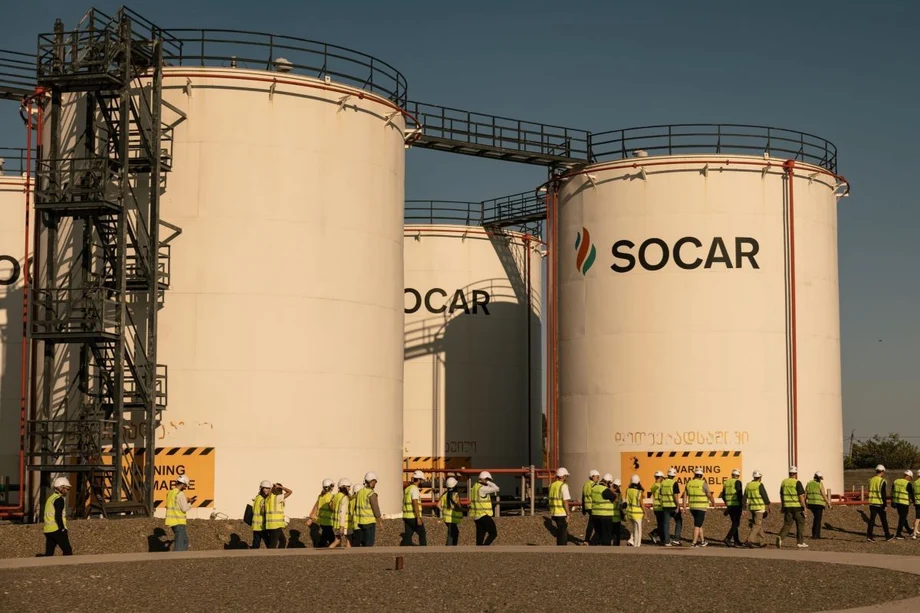
At the center of this strategy is the SOCAR Carbamide complex in Sumgayit. Commissioned in January 2019 with a total investment of approximately €800 million, the facility uses natural gas as its primary feedstock to produce ammonia and subsequently urea. The plant consumes up to 435 million cubic meters of natural gas annually, demonstrating a direct link between domestic energy resources and international industrial output. The facility's design allows it to reach an annual production capacity of approximately 660,000 tons, with production already exceeding 652,000 tons in 2024.
The commercial results of this industrial model have been substantial. According to World Bank data based on UN Comtrade, Azerbaijan exported 564,922 tonnes of urea worth approximately $126.2 million in 2024. Brazil emerged as a significant buyer with 52,965 tonnes, while shipments to the United States reached 4,240 tonnes. Ukraine, Romania, and Turkey served as other major destinations for the fertilizer.
Looking ahead to the full year of 2025, export revenues are projected to reach approximately $170.77 million from 543,532 tonnes. Canada has become the second-largest destination for Azerbaijani urea, purchasing 70,242 tonnes worth $20.54 million. Argentina and India also feature prominently among principal buyers, highlighting the global reach of these shipments.
Expanding Beyond Regional Markets
Azerbaijan's growing relationships with buyers across Europe, Africa, North America, South America, and Asia reduce its dependence on a narrow group of regional markets. This geographical diversification offers considerable strategic value for a commodity influenced by agricultural demand and seasonal purchasing patterns. The return to established markets like Bulgaria and the United Kingdom, alongside stronger sales to Romania, demonstrates the country's ability to rebuild commercial relationships and identify new opportunities.
The strategy aims to transform individual transactions into long-term supply agreements, providing exporters with greater predictability and strengthening the country's position against established global fertilizer producers. Shohrat Mirzayev, head of the production department at SOCAR Carbamide, explained that the plant exports to nearly 15 countries, primarily along the Black Sea coast. He noted that while domestic demand is met, the plant is actively researching opportunities to broaden its export markets further.
The production efficiency of the plant has improved significantly over time. The facility now satisfies the domestic market's demand with only 20 percent of its output, a notable improvement from the initial plan to allocate up to 30 percent. This efficiency allows a larger share of production to be directed toward international sales, where prices and volumes can be optimized based on global market conditions.
Logistics play a crucial role in this expansion. Fertilizers are traded in substantial volumes, and shipping costs significantly influence the competitiveness of suppliers. To address this, the Azerbaijan Caspian Shipping Company (ASCO) has expanded its international dry-cargo fleet through the acquisition of two Handysize vessels. The $60 million project, financed through a $42 million European Bank for Reconstruction and Development loan and $18 million in ASCO resources, represents a significant investment in maritime capacity.
These vessels, with deadweight capacities of approximately 38,000 tonnes each, are designed to carry dry bulk commodities, including fertilizers, grain, and industrial materials. Their flexible dimensions allow them to access a wider range of ports than larger bulk carriers. The strategic importance of this investment extends beyond transporting Azerbaijani products, as the vessels can participate in third-party cargo markets, diversify revenue streams, and strengthen the country's presence in global maritime trade.
Digital Transformation in Manufacturing
In January 2026, SOCAR Carbamide joined the World Economic Forum's Global Lighthouse Network and received its Digital Lighthouse Award. It became the first fertilizer plant worldwide to receive this distinction. The recognition followed the implementation of 42 digital and artificial intelligence-based solutions, marking a significant step in the modernization of the country's chemical industry.
The reported results of this digital transformation are substantial. Productivity increased by 21 percent, and natural gas efficiency improved by 24 percent. Carbon emissions declined by 19 percent, and process waste fell by 72 percent. Unplanned downtime was reduced by 82 percent, while approximately 70 percent of employees acquired new skills through professional development programs.
These achievements matter commercially because natural gas is the principal feedstock in urea manufacturing. Improving the efficiency with which it is converted into fertilizer directly strengthens the economics of production and the industry's ability to compete internationally. The digital lighthouse status highlights the plant's ability to integrate advanced technology into traditional heavy industry, setting a benchmark for other manufacturing facilities in the region.
The sustainability report from SOCAR for 2025 provides further context for this industrial success. The total supply-related expenditure across SOCAR's subsidiaries reached AZN 6,376 million in 2025, representing an increase of 17 percent compared to the previous year. Of this amount, AZN 2,757 million was spent on the procurement of goods and materials, while AZN 3,618 million was allocated to services.
Notably, 88 percent of total supply chain expenditures were allocated to local suppliers in 2025. This represents an increase of 6 percentage points compared to the previous year, demonstrating a strong commitment to local economic development. The procurement of goods and materials expenditure increased by 6 percentage points compared to the previous year, further solidifying the domestic industrial base.
Energy and Industrial Integration
The integration of energy resources with industrial manufacturing is a key feature of Azerbaijan's economic strategy. The use of natural gas for urea production reduces reliance on imported fertilizers and creates a value-added export product. The SOCAR Carbamide plant uses natural gas, water, and atmospheric air as primary raw materials, creating a self-sufficient production cycle.
The plant's ability to meet domestic demand with a smaller share of its output allows for greater flexibility in export strategies. Shohrat Mirzayev highlighted that the plant aims to raise its output capacity to 660,000 tons in 2025, fully utilizing its design limits. This capacity expansion is supported by continuous improvements in production efficiency and digital technology.
The strategic positioning of the plant also considers transportation costs. Exporting to neighboring countries, particularly those along the Black Sea coast, is considered more advantageous due to lower logistics costs. However, the expansion into markets like France, South Africa, and Canada demonstrates the viability of longer-distance shipping, supported by the improved maritime capabilities of ASCO.
SOCAR has established a corporate-level Monitoring, Reporting, and Verification framework for systematic collection, validation, consolidation, and management of emissions data across assets. The framework supports integration of more accurate, measurement-based emissions accounting, particularly for methane emissions. This focus on sustainability and measurement-based accounting aligns with global standards and enhances the competitiveness of Azerbaijani products in international markets.
The combination of domestic energy resources, internationally recognized manufacturing technologies, expanding export relationships, and growing maritime capabilities makes the urea business a model for industrial diversification. Few sectors illustrate the connection between industrial diversification and energy policy as clearly as the urea industry in Azerbaijan.
Looking Toward Future Growth
Azerbaijan's urea business is becoming more than a fertilizer production operation. It combines domestic energy resources with advanced manufacturing and global trade. The strategy reflects a broader economic ambition: capturing more value from domestic energy resources while establishing a stronger position in global fertilizer supply chains.
The expansion into France and South Africa strengthens the country's approach to market diversification. France offers access to one of Europe's major agricultural economies, while South Africa provides an entry point into the African fertilizer market. These developments, alongside the return to Bulgaria and the United Kingdom, demonstrate the country's ability to identify and capitalize on opportunities in established markets.
As the industry moves forward, the focus will remain on improving production efficiency, expanding export markets, and optimizing logistics. The digital transformation of the SOCAR Carbamide plant has set a new standard for the industry, and the continued investment in maritime capacity ensures that Azerbaijani products can reach global customers efficiently.
The integration of local suppliers into the supply chain, with 88 percent of expenditures allocated domestically, ensures that the benefits of industrial growth extend throughout the economy. This holistic approach to industrial policy, combining energy, manufacturing, and logistics, positions Azerbaijan as a key player in the global fertilizer market.
The Bottom Line
- Azerbaijan exported $5.71 million of urea to France and $14.43 million to South Africa in the first nine months of 2026, marking a strategic expansion into new markets.
- SOCAR Carbamide plant, with an annual capacity of 660,000 tons, uses 435 million cubic meters of natural gas annually to produce urea, with only 20 percent needed for domestic demand.
- The country's maritime capabilities are expanding, with the Azerbaijan Caspian Shipping Company acquiring two Handysize vessels for a total of $60 million to support fertilizer exports.
- In January 2026, SOCAR Carbamide became the first fertilizer plant worldwide to receive the World Economic Forum's Digital Lighthouse Award, recognizing significant improvements in productivity and efficiency.
- SOCAR's 2025 sustainability report highlights a 17 percent year-over-year increase in supply-related expenditure to AZN 6,376 million, with 88 percent of expenditures allocated to local suppliers.